
|     |
|
| |

 Pūrva Samīra - A Japanese tribute to Odissi- Ratna Bharati Acharyae-mail: ratnabharati@gmail.com Photos: Rahul Naag Production December 17, 2025 Date: 10 December 2025 Venue: The Stein Auditorium, India Habitat Centre Pūrva Samīra emerged as a heartfelt tribute to Odissi from Japanese dancers Ayako Sakina, Haruko Tanaka, Sachiko Murakami, Yukie Satoh, and Kaori Naka. Three years ago, they initiated an online study forum for Japanese Odissi practitioners, designed to deepen the theoretical and cultural understanding essential to a classical Indian dancer, even though most participants were already seasoned artistes with 20 to 40 years of experience. This collective endeavour went beyond mere technique and was focused on their artistic, historical and spiritual relationship with the form of Odissi. With a sincere and disciplined approach to Indian classical dance, and drawing on their shared journey, experience, and artistic achievements, they aspired to bring this evolving sadhana back to Indian soil. It is from this vision that the performance titled Pūrva Samīra was conceived and finally realized as a symbolic homecoming of their devotion to Odissi. The evening commenced on time with a traditional lamp-lighting, followed by a Mangalacharan where all artistes invoked the shloka "Angikam bhuvanam" in unison, their synchronized precision setting a tone of collective reverence. Each dancer then took the stage in turn for solo presentations, allowing the audience to witness individual journeys into Odissi. Sachiko Murakami opened the solo segment with "Sri Krishna Keshavam Madhavam" a Krishna stuti choreographed by Guru Rojalin Mohapatra. The piece carried a gentle, lilting bhakti rasa, which Sachiko rendered with sincerity, aligning her movement with the devotional tone of the choreography. 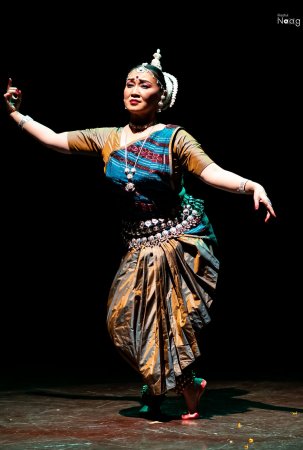 Sachiko Murakami 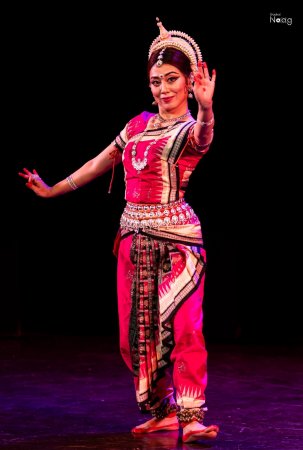 Yukie Satoh The second presentation, "Purṇanga Baradi Pallavi" by Yukie Satoh, showcased a finely crafted composition by Guru Ratikant Mohapatra. As a pure nritta form, Pallavi demands strong, clearly articulated footwork in unerring alignment with rhythm, and Yukie rose to this challenge admirably; with further refinement mobility and facial expression, her performance can deepen even more. "Vaidheisa Vilas" by Kabi Samrat Upendra Bhanja followed, showcasing his signature wordplay where phrases seamlessly unfold. The piece depicts Sita adorning herself before her wedding to Rama, and Haruko Tanaka brought out this delicate moment with understated charm - a soft smile, a gentle sparkle in the eyes, and an overall sweetness that made the abhinaya engaging to watch. The choreography, attributed to Guru Kelucharan Mohapatra, allowed space for fine detailing. 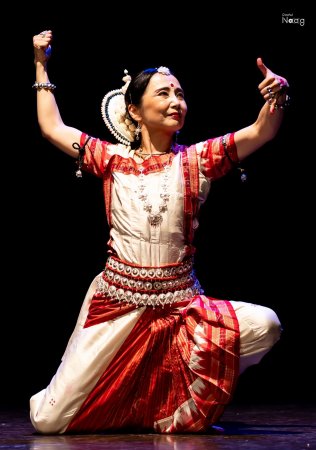 Haruko Tanaka 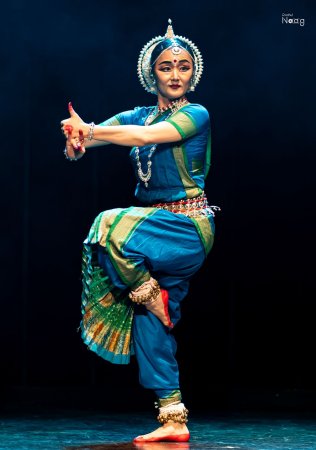 Kaori Naka Next came a power-packed "Shivashtak" by Kaori Naka, choreographed in Guru Debaprasad Das style. Her energy, stances, stage coverage, and expressions were outstanding, though the footwork occasionally lacked strength. Yet her commanding stage presence wove a vivid portrayal of dynamic, tandava inflected devotion pulsing with spiritual fervor. Ayako Sakina then took on the ashtapadi "Yahi Madhava," which portrays Radha as a Khandita Nayika confronting Krishna's infidelity. This demanding abhinaya piece by Guru Kelucharan Mohapatra revealed Ayako's earnest endeavour; her heartfelt commitment shone through in every nuanced attempt to embody its emotional depth. 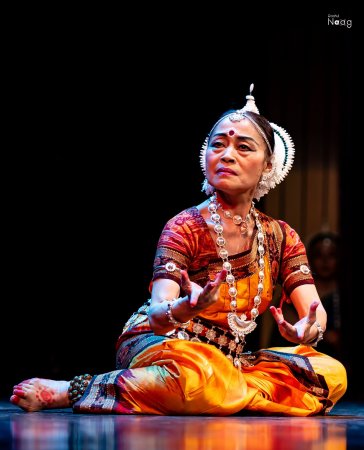 Ayako Sakina Sachiko returned with a second piece, "Rameti Sharanam," centred on the devotion of Sabari for Lord Rama. This piece was choreographed by Guru Rojalin Mohapatra. Sachiko's expressions indicated that she had internalized the emotional subtext of the story - especially in the concluding moment when Sabari bows to Rama's footprints, a scene that felt deeply emotional. In both of Sachiko's pieces, the choreography still offered room to polish and deepen certain finer nuances at key moments. Yukie's solo Moksha provided neat closure, though a full ensemble finale would have amplified the collective spiritual arc beyond the brief end shloka reunion. The presence of Guru Kumkum Lal - who was instrumental in planting some of the earliest seeds of Odissi in Japan in the 1980s - gave the evening a special depth, linking the form's early transmission to its present flourishing on Japanese soil. In Japan she taught and performed extensively, nurturing what began, as she recalled, in a small kitchen space into a flourishing tree of Odissi practice, a transformation both moving and admirable. For the Japanese dancers, performing before her felt like an artistic homecoming, offering their years of sadhana back to the source that once carried Odissi across the seas and filling Pūrva Samīra with emotional resonance, historical continuity, and gentle affirmation. Also in attendance were Odissi exponent Guru Jyoti Srivastava and the Director General of the Japan Foundation, Mr. Koji Sato, whose presence affirmed the institutional and artistic value of this cross-cultural dialogue. Pūrva Samīra ultimately emerged as a heartfelt and dignified tribute to Odissi by a dedicated group of Japanese dancers. Across items, one could sense years of tapasya, disciplined practice and an unshakable emotional bond with the form. Their work did not come across as mere imitation; rather, it reflected a sincere attempt to live within the aesthetics, grammar and spirit of Odissi, offering an evening that was as moving in its cultural significance as in its artistic content.  Ratna Bharati Acharya is an Odissi practitioner with a deep passion for the classical, folk, and traditional art forms of India, particularly those of Odisha. Her current focus involves an in-depth exploration of these artistic traditions, researching into their origins and subtle intricacies. Through her writing and storytelling, she strives to share these narratives with children as well as international audiences, especially dancers living beyond India's borders. |
