
|     |
|
| |

 Reflections on a winter Odissi recital- Srishti Kashyape-mail: kashyapsrishti3@gmail.com Photos: Pallavi Gaur December 15, 2025 Date: 30th November 2025 Venue: Triveni Kala Sangam (Amphitheatre) Organiser: Kiran Nadar Museum of Art Raaginni Hindocha's Odissi recital unfolded as a study in devotion, discipline, and the quiet authority that comes from deep training. She performs with a joy so palpable that the boundary between performer and spectator often dissolves. Having trained under Guru Sharmila Biswas since 2015, Hindocha carries the unmistakable rigour of her lineage. As a student still learning the nuances of Odissi myself, I often found that I wanted to hold onto fragments of her understanding - to carry them back into my own practice. 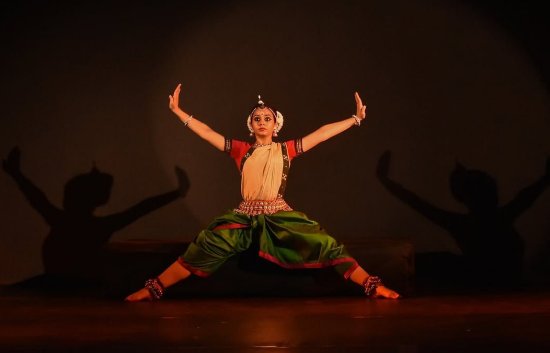 The evening opened with Ramasthakam, an invocation tracing the achievements of Lord Rama from childhood to the battle of Lanka. The stage was veiled in soft artificial fog, immersed in blue light - an unmistakable homage to Vishnu for those attuned to its symbolism. This atmospheric blend created a mythic temperature before a single movement began. Hindocha entered seamlessly into a dialogue between vīra and śānta rasas; her abhinaya was controlled but emotionally transparent. She did not appear to be "performing" Rama's journey so much as narrating it from within, and the precision of her footwork lent the choreography a quiet gravity befitting Rama's dharmic resolve. One occasionally wished for a slightly longer dwell in key narrative pauses that might have amplified the internal journey she was tracing. These rests, held just a breath longer, could have enriched the rasa progression even further. The second piece, Sthiti, composed by Guru Sharmila Biswas, honoured the bandhya nrutya techniques of the Gotipua tradition - a demanding vocabulary intertwining yoga and the foundational structures of Odissi: chauka, tribhangi, padasthiti, bhangi. This composition requires strength, balance, and meditative concentration in equal measure. Negotiating the discipline of riyaz, one can understand immediately why Sthiti is seen as an ideal practice piece: its internal logic, its insistence on stability, and its deep rootedness in form offers several insights. In a work so dependent on stillness and alignment, there were rare instants when the transitions between postures felt a touch rushed. Allowing those shifts a fraction more time could highlight the architecture of the piece, especially given her already considerable technical command. 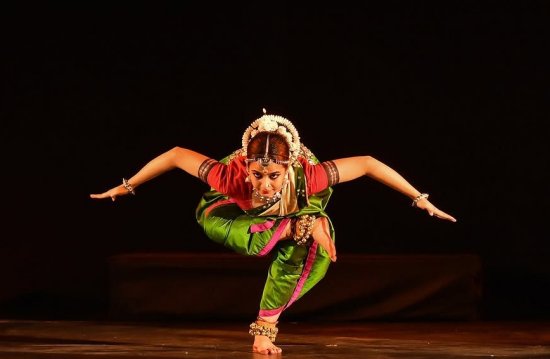 The recital concluded with an Annamacharya keertanam in Telugu, built around the devotee's playful accusations and profound surrender before the divine. At its opening, a single white spotlight carved out a small, concentrated circle on the stage. When Hindocha stepped into it, she seemed to become the "divine puppeteer" the piece invoked. The stark light sharpened her silhouette, making every transformation in her abhinaya register with striking clarity. The devotee begins by teasing the divine as a "clever puppeteer," swollen with pride at the importance granted to him - yet the dance slowly reveals that such irreverence is possible only for a soul deeply intimate with its deity. Hindocha's shift from exasperation to transcendence was the most memorable moment of the evening. On Delhi's bone-chilling winter nights, it is especially heartening to witness an artiste bring such warmth to the stage. The air around the Triveni Kala Sangam amphitheatre may have been sharp and unforgiving, but Hindocha created her own microclimate - one shaped by devotion, discipline, and the sincerity of her artistic journey. And perhaps that is the best part of watching an artiste still deepening her craft: there is already so much to admire, yet the glimpses of what the coming years might hold, promise an even richer radiance. As the city steps into its annual classical season, with dancers across disciplines preparing to meet audiences despite the cold, this recital feels like an early promise of what the winter might hold. It reminds us that even in the coldest months, art continues to kindle something gentle within us.  Srishti Kashyap is training in Odissi under Madhur Gupta at Sangeet Vidya Niketan, New Delhi. She is pursuing her B.A. (Hons) in English at Dyal Singh College, University of Delhi. Before turning to Odissi, she completed her Visharad in Sattriya under Guru Durgeshwar Baruah of the Assam Satra Mahasabha. Her engagement with literature and dance converges in her writing, where she aims to blend analytical clarity with the empathy that comes from lived practice. |
