
|     |
|
| |

 Colourful tapestry of Bharatanatyam performances- Satish Surie-mail: satishism@yahoo.co.in Photos: Prof K.S.Krishnamurthy December 4, 2025 AISWARYA DILEEP: A JOURNEY FROM DEVOTION TO DIVINE UNION On the evening of 9th November, the intimate stage of Seva Sadan, Bangalore, lit up with the vibrant presence of Aiswarya Dileep, a dedicated disciple of Acharya Indira Kadambi. What unfolded was not merely a Bharatanatyam recital but a luminous immersion into devotion - an offering shaped by tradition, tempered by rigorous training, and animated by the dancer's own inner fire. 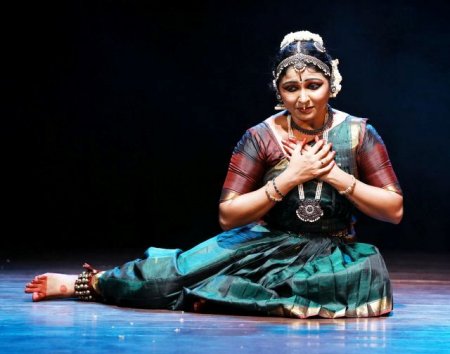 Aiswarya Dileep The performance opened with an invocation to Lord Muruga, the radiant deity embodying purity, courage, and irresistible grace. Aiswarya portrayed the enchantment of Muruga's union with Valli - his gentle mischief, playful disguises, and the divine compassion that infuses the lore. With clean lines, articulate mudras, and unforced poise, she established from the outset a compelling stage presence and an instinctive flair for narrative. This led seamlessly into a Muruga Kautvam, the dynamic Tanjore Quartet composition in raga Gowla. As a tribute to the Lord's majesty, the piece showcased the dancer's technical assurance: precise adavus, a strong araimandi, and nritta anchored in uncompromising clarity. The imprint of Indira Kadambi's pedagogy - rooted, exacting, and deeply aesthetic - was unmistakable. Yet within this disciplined frame, Aiswarya's individuality pulsed - fresh, spirited, and quietly confident. The evening's emotional and technical fulcrum was the varnam, that majestic centrepiece of the traditional margam. Opting for "Adi Shivane" - K.N. Dandayudhapani Pillai's celebrated composition in the plaintive expanse of raga Todi, set to adi tala - Aiswarya embraced a formidable canvas demanding both athletic stamina and emotional maturity. The refrain, "Adi Shivane kaanave asai kondenadi," is an aching invocation, a devotee's raw longing distilled into a single line. Aiswarya's abhinaya drew the viewer into the private storm of a nayika whose human yearning dissolves into the soul's thirst for the eternal. With controlled expressiveness and unwavering conviction, she mapped the subtle terrain where sringara transforms into madhura bhakti, illuminating the spiritual architecture embedded in Pillai's composition. In the anupallavi, Shiva emerged as the cosmic dancer - the primordial pulse of existence. Aiswarya's movements expanded into assured arcs, capturing both the mystery and magnificence of the tandava. By the time she reached the charanam, the narrative had crested into a spiritual reckoning. It's defiant exhale - "Why fear the world's gaze? My love is no hidden flame" - shattered the nayika's hesitations. Here, her portrayal surged into bold abandon, articulating the seeker's fragile identity against the vastness of the divine with delicately shifting postures, glances, and breath. The moment of communion - when individual desire dissolves into cosmic consciousness - was rendered with a dreamlike tenderness that lingered long after the lights dimmed. Balancing this emotional density were the exhilarating jathis, delivered with crisp articulation and kinetic vibrancy. Under Indira Kadambi's commanding nattuvangam, the rhythmic passages crackled with precision and vitality. Far from being decorative interludes, they served as the heartbeat of the unfolding spiritual arc - each tala cycle a pulse of yearning, each flourish a step toward transcendence. A thoughtfully placed interlude followed in the form of a Purandaradasa Devarnama, "Kadegola tarenna chinnave" in Yaman Kalyan. Here, vatsalya rasa bathed the stage with maternal warmth. Aiswarya transformed into Yashoda with disarming levity - her glances soft, her gestures rounded, the sahitya blooming into intimate vignettes. Yashoda cajoles Krishna to return the butter churning stick with promises of generous scoops of benne, and subtle nods to Krishna's leela flowed with playful ease as he outwits Yashoda on every occasion. This work served as a gentle reprieve, allowing her narrative finesse to shine as raga and expression intertwined in luminous harmony. The emotional peak returned with the Padam "Edai kandu nee iccha kondai magale" by Marimuthu Pillai, in Kalyani raga and adi tala set to the original dance composition of Kalanidhi Narayanan. Here, Aiswarya embodied a mother torn between frustration, fear, and a dawning awe. Her abhinaya was delicate yet penetrating - each contraction of the rekha, each tremor in the torso, each shift of gaze revealing the mother's perplexity at her daughter's forbidden devotion to the ascetic wanderer. The portrayal carried irresistible poignancy: propriety's brittle surface cracking to reveal the soul's involuntary recognition of divinity. The Thillana in Misra Sivaranjani, a composition of Maharajapuram Santhanam, crowned the evening with exuberance. Aiswarya's nritta unfurled as a euphoric release - korvais bursting into rhythmic arabesques, extensions slicing the air with the gleam of Muruga's vel, footwork aligning in mantra-like precision with the talam's triumphant stride. The music ensemble elevated the evening to a rare finesse: Rajeev Rajagopalan's vocals embroidered the air with nuanced shades of grief and joy, while Harsha Samaga on the mridangam shaped a textured rhythmic dialogue. Shyam Kalyan's violin lent a silken lyricism, and Vivek Krishna's flute wove luminous threads of melody. At the centre of this sonic constellation, Acharya Indira Kadambi's choreography and commanding nattuvangam provided the performance its lustre and spine. In this finely wrought recital, Aiswarya Dileep - musically sensitive, emotionally attuned, and displaying an indefatigable stamina that carried her unfalteringly through the evening - emerged as a poised and promising young voice in Bharatanatyam's unfolding continuum. TAT TVAM ASI - FINDING THYSELF In the midst of a cultural landscape often dominated by thematic Bharatanatyam productions that gravitate towards narrative spectacle or contemporary interpretations, Neha Mondal Chakravarty's solo" Tat Tvam Asi", presented on the 10th November at the Bangalore International Centre, stands as an extraordinary, rare offering. Rooted in the Upanishadic Mahavakya Tat Tvam Asi, which expresses the non-duality of self and the cosmos, Neha Mondal transformed this ancient wisdom into a visceral, introspective meditation on surrender (sharanagati) as the ultimate gateway to self-realisation. Trained at Kalakshetra and now based in Singapore, Neha brings a rare maturity to her performance, steeped in both classical rigour and profound inner devotion. In Tat Tvam Asi, she eschewed the flashy virtuosity often associated with Bharatanatyam in favour of deep, contemplative abhinaya, allowing the audience to immerse themselves in the emotional and spiritual nuances of bhakti rasa. Over seventy minutes, the production unfolded as a meditation on surrender, love, and ego-dissolution, with each segment leading the audience toward the same realisation: "Thou Art That." 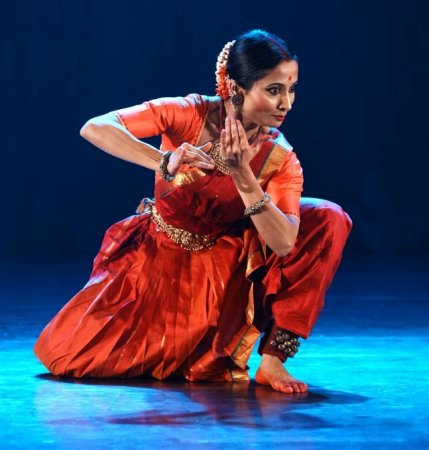 Neha Mondal The work is structured episodically, like a garland of devotional vignettes, each a self-contained universe that reflects on different aspects of Vaishnava devotion. From Andal's bridal mysticism to Radha's overwhelming longing, from Chaitanya Mahaprabhu's ecstatic gaura-lila to the magnetic pull of Jagannatha's Ratha Yatra, the performance wove together diverse elements of bhakti. Quieter moments, such as Yashoda's tender vatsalya (motherly love), the gopis' collective madness, and Arjuna's battlefield surrender, offered emotional relief without diluting the intensity of the work. Each vignette built toward a singular, transformative truth: that the dissolution of the individual ego ultimately leads to the blissful recognition of oneness with the Divine. What truly set this production apart was Neha's masterful control of energy. Her nritta passages were crisp, geometrically precise - a hallmark of her Kalakshetra lineage - yet they never felt mechanical. Each movement pulsed with the inner rhythm of prana (life force), as though the footwork itself was tracing the dissolution of the individual self into the infinite. In the abhinaya-heavy sections, Neha's face became a canvas of divine intoxication, moving seamlessly between the aching viraha of Radha to the blissful prema of union. Her portrayal of Chaitanya Mahaprabhu stood out as particularly moving - the body swaying uncontrollably, collapsing to the floor, and rising again in waves of ecstatic surrender. The emotional and kinetic apex of the evening arrived with Chaitanya Mahaprabhu. What began as subtle, controlled swaying quickly erupted into the wild, uncontainable fervour of gaura-prema: the body moving in unrestrained devotion, arms flung wide, collapsing to the ground only to be propelled into explosive leaps. In this ecstatic state, Neha, with palpable intensity, silently roared "Krishna!". This was no stylised portrayal of ecstasy but the kind of authentic, divine possession. The sequence culminated in a fetal curl, followed by the gradual uncoiling of the dancer's body - a powerful metaphor for the individual soul's complete dissolution into the ocean of Radha-Krishna prema. Throughout, Neha's nritta remained impeccable: her araimandi as rock solid as ever, her teermanams razor sharp. Yet, every jati felt like an offering, not a display of technique for its own sake.. Complementing this precision was an original score whose fluid ragas traced the dancer's emotional journey from yearning to illumination. The minimalist costuming stripped the stage of distraction, drawing attention to Neha's luminous expressivity and internal stillness. What set Tat Tvam Asi apart was its quiet integrity. It did not explain or dramatise philosophy; it simply was philosophy made visible. The dancer did not announce Advaita - she embodied it, allowing the audience to encounter the ineffable through her surrender. Tat Tvam Asi marked a milestone in Bharatanatyam: rigorous yet ecstatic, classical yet inwardly revolutionary, luminous and transformative. DAMARU- DUALITY: A RESONANT EXPLORATION OF SHIVA'S PRIMAL RHYTHM Conceived and choreographed by acclaimed Bharatanatyam dancer Vidhya Subramanian, this production is a collaborative creation by the Sparsha Dance Ensemble. Bringing together the expressive artistry of Vidhya Subramanian, Anu Bhaskararaman, Anisha Parameswaran, Archa Shajukumar, Manasa Vijaychander, Pranathi Ramadorai, Sandhya Venkiteshwaran, and Subashree S., showcasing their collective strength in ensemble work. This ambitious production, presented at the Bangalore International Centre on 11th November, used Lord Shiva's hourglass-shaped damaru not as a mere symbol, but as a living metaphor for the cosmic dance of creation and dissolution, sound and silence, Purusha and Prakriti, movement and stillness. The work opened with a meditative invocation, set to the dhrupad "Damaru har kar baaje," along with the Ardhanari Stotram of Adi Shankara, tuned by Vijay Kumar. The stage was bathed in a cosmic twilight, and the dancers entered in a meticulously synchronised formation, their anklets mimicking the faint, anticipatory pulse of the damaru before it strikes. What followed was a margam-inspired structure, ingeniously reworked around the central theme, combining pure nritta sequences with complex teermanams and jatis performed in perfect geometric symmetry. The lines of dancers expanded and contracted like the damaru's conical shape, while an exceptional sequence saw the dancers executing korvais that accelerate and decelerate in patterns that visually mirrored the asymmetrical beats of the damaru. 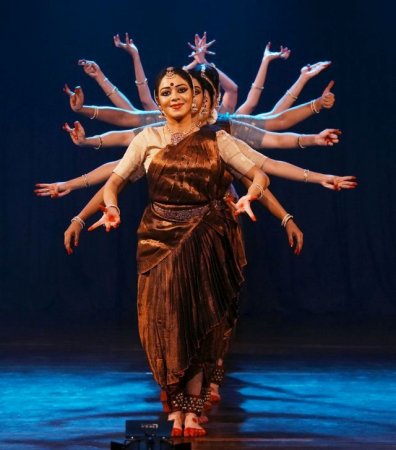 Damaru However, it was in the abhinaya segments that the work truly transcended. The emotional and philosophical heart of Damaru: Duality lies in a daring reinterpretation of K.N. Dandayudhapani Pillai's ragamalika pada varnam, "Samiyai azhaittodi va sakhiye". Traditionally a plea of the lovelorn nayika to her friend, Vidhya's choreography transformed it into the jivatma's desperate, ecstatic call to dissolve into the cosmic rhythm of Shiva's damaru. Performed by the entire Sparsha Ensemble, with Vidhya herself in the role of the central nayika, the varnam was a masterclass in thematic depth and technical brilliance. The ragas - Todi → Mohanam → Vasanta → Devamanohari - shifted like the pulsating cones of the damaru, each transition underscored by subtle lighting changes and breathtaking group formations that echoed the instrument's geometry. Vidhya stripped the varnam of its romantic cliché, layering it with Shaiva metaphysics: the beloved who "hides the woman in half his body" becomes a direct evocation of Ardhanarishvara, and the nayika's anguish at the Lord's delay symbolises the soul's torment in samsara. The explosive teermanams replicated the asymmetric creation-dissolution beats of the damaru, made visible through split-second ensemble synchronisation. Vidhya's abhinaya remained peerless - eyes that burn with longing one moment and melt into bliss the next, her hastas sculpting both fire and stillness. The ensemble's mirroring of Purusha and Prakriti energies - slowly merging into a unified form during the charanam sancharis - drew audible gasps from the audience. The varnam format was reimagined to explore dualities without forsaking devotion. The central varnam (set in ragamalika, with orchestral support led by a stirring vocal and mridangam ensemble) portrayed the nayika's yearning not for a distant lover-god, but for union with the cosmic energy embodied in the damaru's primal sound. Vidhya's expressive abhinaya transformed the piece into a meditation on the tension between tangible form and intangible spirit, the young and the aged, earth and sky. 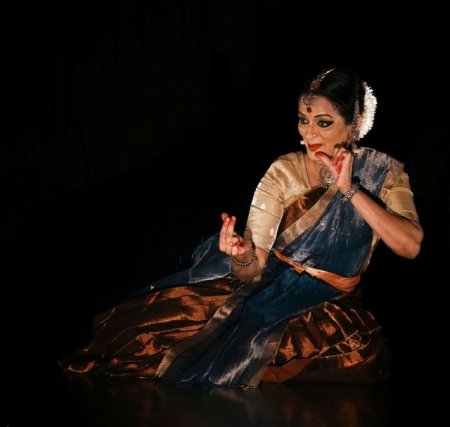 Vidhya Subramanian Immediately following this intense metaphysical crescendo, Vidhya brought the audience to a hushed silence with the delicate thumri. Performed solo, and titled "Antaranga" with the ensemble seated behind her as witness-sakhis, she transformed the classic lament of a nayika gazing at her reflection into the soul's final, tender questioning of duality itself. Each iteration of the line "mukh dekhta darpaṇ bar bar" was rendered with heartbreaking slowness, as Vidhya's imagined mirror slowly dissolved, symbolising the merging of reflection and reflected. Her abhinaya conveyed micro-expressions of ache, wonder, and surrender - eyes glistening with unshed tears, lips trembling with both pain and approaching bliss. When the imaginary mirror "fell" and she folded into complete stillness, it was the quietest, most devastating moment of the evening - the damaru's thunder reduced to a single, trembling heartbeat. In that moment, the audience felt the echo of Kabir's words: "Ghoonghat ke pat kohl, Tohe piya milenge" - Lift the veil, and you will see the Beloved. After this intimate surrender, the stage exploded into expansive grandeur with one of the evening's most ambitious sequences: a group piece dedicated to the Chausath Yogini, the 64 fearsome yet benevolent tantric goddesses who surround Shiva in the open-roofed temples of Hirapur, Bheraghat, and Morena. Titled simply Prakṛti, this section makes explicit that the Yoginis are not mere attendants but the roaring, multi-formed manifestations of Shakti - nature as wild power, creation as fierce grace. The choreography, breathtakingly cinematic, saw the eight dancers of Sparsha forming a perfect mandala on stage - a nod to the actual circular, open-roofed Yogini temples where the sky itself is the ceiling. As the dancers rose one by one, invoking each Yogini through vocal cues and mridangam syllables, the music (orchestrated by Vidhya and her team) moved through an ascending-descending Ragamalika, with rhythmic cycles that perfectly embodied the damaru's primal vocabulary. The dancers performed the same korvai first forward, expanding the formation, and then in reverse, contracting, a rhythmic palindrome that mirrors the damaru's twin sounds: creation and destruction happening simultaneously. Each Yogini was briefly embodied - one dancer broke from the circle, flashed a terrifying mudra (such as Chamunda's skull or Kali's protruding tongue), then returned to the mandala as another emerged. The emphasis was not on literal depiction, but on the terrifying beauty of Prakṛti: nature as both nurturer and destroyer. The climax came when Vidhya entered as Bhairavi, the 64th + 1st Yogini, and the ensemble froze in a tableau of swirling energy around her. A single, prolonged roll on the mridangam mimicked the damaru's endless reverberation, and the lights cut to a deep sky-blue, symbolising the open roof of the Yogini temple. This sequence was not dance as spectacle but ritual theatre - the raw tantric power of the feminine divine made visible through impeccable Bharatanatyam technique. The ensemble shone brightest in the group choreographies depicting Shiva's tandava. Here, each Sparsha dancer was a soloist in her own right, yet the synchronisation between them was nothing short of miraculous. Their unity without losing individuality created a profound sense of cosmic balance, mirrored in the duality of Shiva's dance. Musically rich, with compositions thoughtfully rearranged to underscore duality, and visually austere yet evocative, Damaru was philosophical without being preachy, innovative without abandoning Bharatanatyam's soul. It offered a rare balance of traditional rigour and modern sensibility, a performance that resonated both intellectually and emotionally. 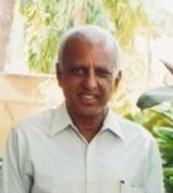 Bangalore based Satish Suri is an avid dance rasika besides being a life member of the Music and Arts Society. |
