
|     |
|
| |

 Nobuntu: The fascinating female A-Cappella- Manjari Sinhae-mail: manjari@sinha.com Photos: Siva Sottallu December 3, 2025 The filled-to-capacity Leila Gordon Theatre at the Reston Community Centre (RCC) in Reston, Virginia, US, reverberated with thrilled shrieks of joy when Nobuntu, a fascinating female a-cappella quartet from Zimbabwe, performed recently as part of RCC's Professional Touring Artist series. Internationally acclaimed for their appealing performances, Nobuntu was nominated for the International Women of the Year Award in London in 2015 and is a two-time winner of the Best Imbube Group Award at the Bulawayo Arts Awards 2017 and 2019. They have performed at festivals and concert halls in Italy, Austria, Germany, Belgium, the Czech Republic and throughout the African continent. The ensemble was a huge critical success at 'Trance-Vocal' in Frankfurt and 'Voice Mania' in Vienna. Their tour to Canada included performances in Toronto, Winnipeg, Vancouver and Victoria. The word Nobuntu is an African concept that values humbleness, love, unity and family from a woman's perspective. The ensemble represents a new generation of young African women singers who preserve and celebrate their culture, beauty, and heritage through art. The ensemble's mission is their belief that music can be a vehicle for change, one that transcends racial, tribal, religious, gender, and economic boundaries. Back at home, Nobuntu is involved in various community initiatives for women in the arts in underprivileged communities. The group has made dozens of television and radio appearances throughout Africa and Europe, promoting the culture of their homeland. 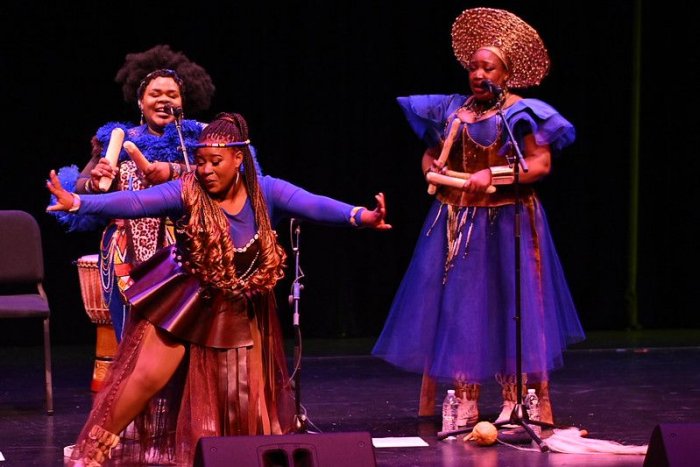 Their captivating performance at the RCC was presented as a Trio because one of the artists from the Nobuntu Quartet, comprising Duduzile Sibanda, Zanele Manhenga, Thandeka Moyo, and Zoleka Nomakhosi Dhlamini, was unable to join them this evening. The versatility of the three women vocalists was evident in their rich repertoire, which comprised a variety of traditional Zimbabwean songs, Afro-Jazz and Gospel. They impressed not only with their pure, tuneful voices but also with their proficiency in playing traditional instruments such as the Mbira (thumb piano) and minimalistic percussion, along with singing. Their organic, authentic dance movements augmented the enjoyment of the enthusiastic audiences. 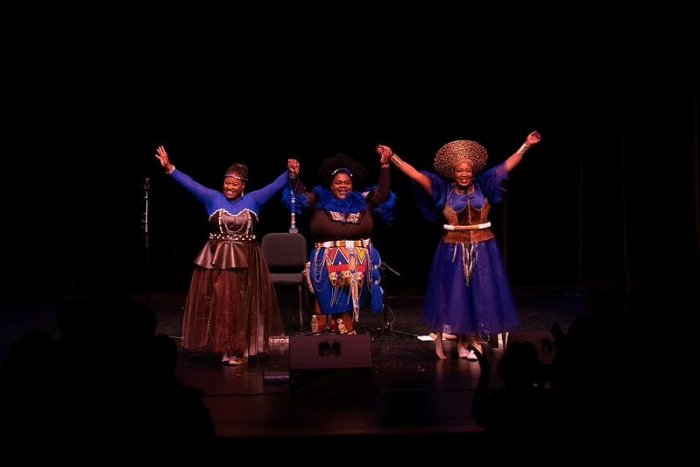 The program opened with "Linso Lyamoyo" in Tonga, one of the languages spoken in Zimbabwe. The song was about their dreams and aspirations as people, which are broken if not achieved. The song also advised letting other people live their dreams, because they would be unhappy if they didn't. "Black tax", the next song was about the values in their traditional culture regarding taking care of their parents and grandparents. It used to be a duty and honour to take care of them, but lately, due to cultural integration, some people feel burdened to take care of their loved ones and call it a 'black tax'. The song says, "Be glad that you can take care of your parents." "Qina" was a song that encouraged women to be strong and to advocate for themselves. The song pleads, "If you don't stand up for yourself, no one else will". "Lean on me" by Bill Withers was about friendly support during difficult times. It was an enthusiastic rendition by Nobuntu about the much-needed message that strengthens the bond between people. A Letta Mbulu song, "Not Yet Ohuru", meant "We are not yet free." This song was released in the early years before South Africa gained its independence from the Apartheid system. The emotionally charged singers reiterated, "We as Nobuntu feel this song still rings true now, as it did then. We are not yet free as a society if women do not have equal opportunities and equal pay with our male counterparts."  "Avumile" was a victory song, sung with verve in their voices, and the song "Unkulunkulu Mulhe" praised the presence of God and the beauty this brings in people's lives all the time, before they concluded with "Inganekwane - Outro" that cautioned when a folklore has finished, we all must take a lesson from the story and apply the knowledge to our very existence. The encore invited them to sing "People Get Ready", a gospel-influenced track that displayed the growing sense of social and political awareness in 60's America. The song "Homeless" honoured the pioneer of 'Imbube' music, Lady Smith Black Mambazo, who has taken Imbube music to world stages. The lovely Trio dressed in their colourful native attire established an instant rapport with the audience, whom they also invited to sing along with them. An absolutely alluring evening indeed!  Manjari Sinha is a musicologist and an acclaimed classical music and dance critic. She has an MA in Sanskrit from Allahabad University, MA in Music from Vikram University, Ujjain; Sangeet Prabhakar in Hindustani Vocal, Tabla, Sitar and Kathak dance from Prayag Sangeet Samiti, Allahabad; and further training in Sitar under Guru Pt. Arvind Parikh in the lineage of Ustad Vilayat Khan. She has authored a book on Ustad Bade Ghulam Ali Khan, commissioned & published by Roli Books. She has contributed the chapter on Kathak for 'Indian Dance: the Ultimate Metaphor'. Her articles in English and Hindi on Music, Dance, Art & Culture are regularly showcased in a variety of leading journals and periodicals. |
