
|     |
|
| |

 Brilliant performances by Harshita Dadheech and Nilesh Singha- Vijay ShankerVijaydance@gmail.com October 12, 2025 PANCHKANYA BY HARSHITA DADHEECH The premiere of Panchkanya on September 20 at NCPA's Experimental Theatre, Mumbai, was a rare evening of poetry, dance, and devotion coming together in a seamless Kathak narrative with the pre-dominance of abhinaya, as Harshita Sharma Dadheech, successfully transported the audience to a level of character dramatization of the five principal characters of Ahalya, Draupadi, Kunti, Tara and Mandodari. Panchkanya (five women) is conceptualized and scripted by Dr. Puru Dadheech, who is among the senior most Kathak mentors of the country. Along with his wife Dr Vibha Dadheech, their enriching and outstanding contribution towards the propagation and promotion of Kathak dance, spans for over six decades. While Panchkanya was presented as a narrative piece in a story telling format in which the technical quality and style of Kathak was intact in the "Dadheech Shaili" of Kathak, the story was woven with a variety of pure dance pieces like todas and tukdas, interpretative expressions like parans and Kavitts, which highlighted the rhythmic strength and technical brilliance of Kathak. This clever balance of narrative intensity with vigorous layakari (complex rhythm) gave the work its vibrancy, ensuring that audiences experienced both the delicacy of abhinaya and the excitement of nritta. 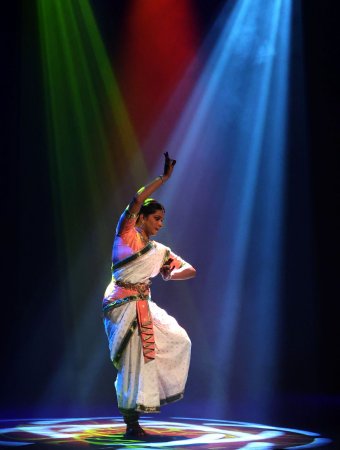
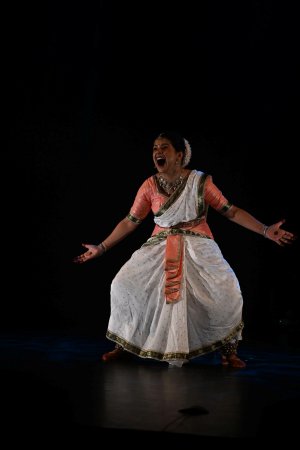
Harshita's abhinaya was outstanding as she succeeded in the lively interpretation of the anguish of Ahalya when she was cursed by the saint and was waiting anxiously for the redemption with the touch and blessings of Lord Rama; The emotional turmoil of Draupadi as she declares to take revenge; The Bali–Sugreev Yuddh to the dheerodhat portrayal of Ravana's arrogance and conceit, in spite of being repeatedly warned by his wife Mandodari. The Ravana Vadh (death) sequence was performed with soul stirring intensity. The baithaki bhav (seated expressions) of Kunti's sorrow touched the heart of the spectators. Harshita's ability to connect with her viewers emotionally, while maintaining the technical integrity of the Dadheech Shaili, elevated her performance to a higher level of artistic brilliance. Lighting design by Pratyush Dadhich made the performance quite spectacular, executed with finesse by Saurabh, added a breathtaking visual dimension to the performance. Each of the five Nayikas was portrayed with a distinct colour - white for Ahalya, red for Draupadi, yellow for Kunti, light blue for Tara, and green for Mandodari. The opening shloka was staged with particular brilliance as each name was invoked with a sharp beam of the corresponding colour lighting the stage, culminating in a moment where five different colours were portrayed through five different Devi postures. Musically it was an enriching experience with the commendable musical rendering by Vaibhav Mankad, melodious sitar by Alka Gujar, tabla by Kaushik Basu that provided the solid rhythmic base. Damayanti's padhant (recitation) infused the essence of Kathak into the narrative format. Piyush Raj's commentary was short but effective, and his use of the manjira as accompaniment gave the performance a refreshing authenticity rarely seen on modern Kathak stages. Altogether, Panchkanya was an artistic and enriching experience of dramatization, and deserves to be performed on more platforms. PRAYANAM BY NILESH SINGHA One of the leading male classical dancers of Mumbai, Nilesh Singha rendered a brilliant Bharatanatyam performance for the Padmini Festival organised by Rasa Bodhi Foundation at Saraswathi auditorium in Sion. The programme was held on 21st September. The spiritual quality, blending well with fine technique and lucid expressions, elevated the performance. 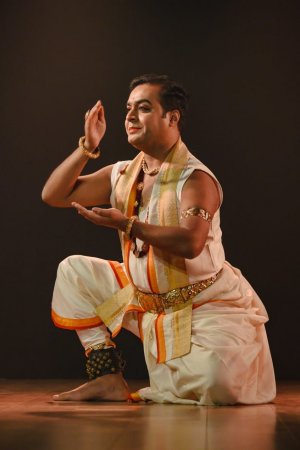 Nilesh Singha The performance titled Prayanam, (Inward Journey) commenced with a beautiful Abhang in praise of Lord Panduranga "Adhi rachali Pandhari" was sung with spiritual fervour by young talented singer Sujesh Menon. It was followed by the Tamil composition by the saint poetess Andal, an extract from Nachiyar Tirumozhi in which the poetess feels envious and complains to the conch (shanku) that "you are so lucky as you are touched by the nectar like lips of the Lord." The gopis too are envious as the conch enjoys the intimacy of the Lord. This interpretative sequence was executed with the musical stringed folk instrument known as Bhapang. This was a novelty for the audience. Besides the conch, the Sudarshan Chakra and the Gadha was also depicted in another Marathi composition in praise of Lord Narayana. In the depiction of Gadha, Lord Hanuman is also depicted in this number as he is the only God who uses the Gadha, which was gifted to him by Kubera. It was interesting to note how Nilesh combined different compositions in varied languages in order to portray the glory and grandeur of the Lord with the underlining emphasis of devotion. Nilesh also explained the significance of the theme before performing, that enhanced the intensity of the performance. The last number was unusual as the Odia composition portraying ardent devotee Salabeg, who was a Muslim poet completely devoted to Lord Jagannath, was performed in the Bharatanatyam style. In spite of being a victim of leprosy, he was consistently writing in praise of the Lord and it was a miracle when he asks the Lord, "I am like the dead lotus, please remove me" and he offers the lotus and touches the lotus feet of the Lord and suddenly realises that the touch was special with the divine intervention, as he was completely free from the disease and attains moksham. The abhinaya of Nilesh was soul stirring, creating a lasting impression on the packed audience on a Sunday morning. Nilesh Singha is among the best Bharatanatyam exponents of the country and has established Shivoham Academy along with his late partner Mubina Bandukhwala, who was an accomplished exponent and sadly left all of us quite early. Functioning fruitfully for more than a decade, Shivoham has successfully trained several dance aspirants and some of them have become professionals too. Nilesh was ably supported by Sujesh Menon on vocal, Venkatesh on mridangam and Kumar Krishnan on flute. The festival also featured Amit Kumar for contemporary dance with the depiction of Dwell Within and thematic presentation of Kaikeyi by Bharatanatyam dancer Shivangi Vikram from Ahmedabad.  Vijay Shankar is a Kuchipudi and Kathakali exponent, teacher, bilingual journalist, arts critic and actor. |
