
|     |
|
| |

 Rhythm and Reverence: Celebrating life and worship in dance- Satish Surie-mail: satishism@yahoo.co.in October 12, 2025 NAMAN Photos: Prof K.S.Krishnamurthy In the hushed anticipation of a monsoon-kissed evening, Seema Krishnan unveiled 'Naman' at Bangalore's Seva Sadan on the 19th September, her first foray as curator through Krishnam Performing Arts Academy, in a luminous tribute to Kathak's timeless tattva karanas and the rasa of surrender. What began as a personal homage to gurus like Pandit Birju Maharaj and the Lucknow gharana's ethereal lineage blossomed into a collective pranaam, where footwork thundered like monsoon drums and abhinaya whispered secrets of the divine. Seema, the academy's artistic director and a Kathak virtuoso whose own performances evoke the fluidity of the art form, orchestrated this 90-minute spectacle with the precision of a tukra's geometry, blending solo introspection with ensemble fervour. 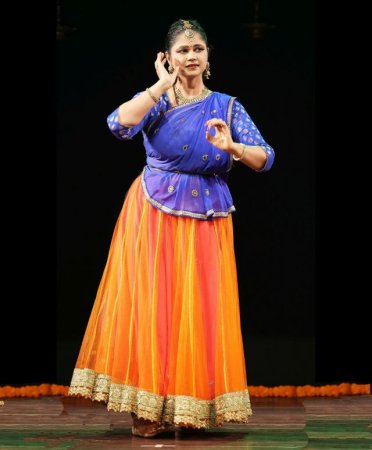 Seema Krishnan The opening invocation set the sthayi of reverence as Seema Krishnan stepped onto the stage in resplendent attire, her presence mirroring Krishna's playful allure. The bhajan "Dekhat chabi Shyaam sundar," a composition of Pandit Birju Maharaj and choreographed by Durga Arya, became a masterclass in nritta-abhinaya fusion in Seema's solo rendition. Her gat bhav unfolded with serpentine turns, eyes aglow with shringara as she traced the flute bearing Shyaam Sundar's charms - each chakkar a coy glance, each upaj a ripple of ecstatic zeal. 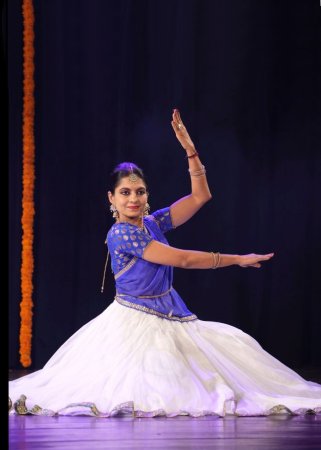 Priya Rao 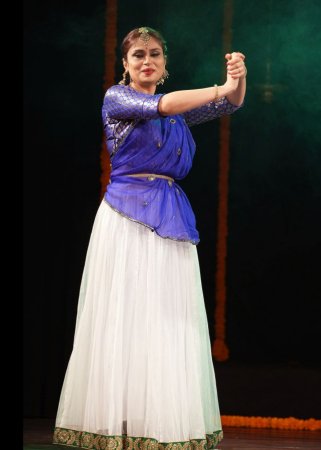 Shweta Kallianpurkar From this intimate solo, the evening expanded into collective energy with a Teentaal technical piece in raag Sohni, choreographed by Hari and Chetana, under whose tutelage Seema has honed her artistry. Here, Seema, joined by Priya Rao and Shweta Kallianpurkar, ignited the stage with synchronised footwork, their ghungroo cascades evoking the freshness of a pastoral dawn. Priya's crisp tukdas sparred with Shweta's expansive toda, while Seema wove the strands into a vibrant jugalbandi - pure kinetic poetry that left the audience breathless at the academy's disciplined synergy. 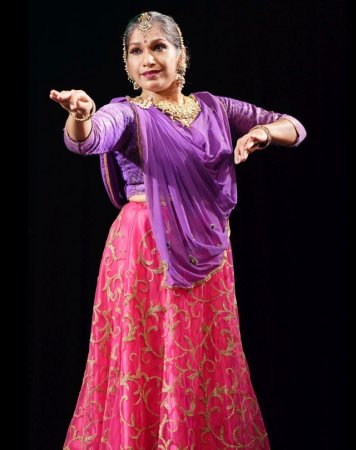 Sampada Pillai Sampada Pillai's Kathak triumphed in Rohini Bhate's choreographic masterpieces. She opened with a Dhrupad-based Ganapati Vandana, set in the rare 7½-beat Taal Neel and the auspicious raag Hamsadhwani, composed and choreographed by Rohini Bhate. This meditative invocation to Lord Ganesha set a serene tone, with Pillai's deliberate karanas unfolding like a slow revelation. Her footwork, synchronised with the taal's asymmetric pulse, etched the rhythmic nom-tom syllables into the air, creating a hypnotic flow. Pillai's mudras vividly sculpted Ganesha's attributes - his elephantine trunk, modak, and vahana - while her abhinaya conveyed a devotional plea for blessings. Bhate's choreography balanced technical precision with spiritual depth. Pillai's graceful ascent through the alaap-like movements embodied Bhate's vision of Kathak as a philosophical inquiry, setting a profound foundation for the evening. The performance accelerated into a Jhaptaal segment set in the brisk 10-beat cycle (2-3-2-3), where Pillai unleashed a cascade of rhythmic abandon through Amad, Tatkar, Paran, and Tukde. Bhate's abstract compositions showcased her innovative approach to rhythm, with Pillai's crisp footwork and lightning fast chakkars navigating the taal's syncopated beats with exhilarating precision. Her Tatkar dialogued with the tabla's improvisations, while her Parans and Tukde culminated in sharp tihais that landed flawlessly on the sam. The Amad, infused with the bhav of Krishna's Govardhan Leela, elevated the segment beyond pure dance. Pillai's mudras painted Krishna lifting Mount Govardhan to protect Vrindavan, her swaying torso and playful glances capturing his divine defiance. Bhate's choreography here married technical virtuosity with narrative depth, reflecting her ability to draw from mythology while pushing Kathak's rhythmic boundaries. Pillai's seamless blend of vigour and grace made this segment a vibrant celebration of divine play. The artiste's performance culminated in Daksha Yagna, a Lamchad Kavit set to the evocative poetry of Lachhu Maharaj and choreographed by Bhate. This piece narrated the mythological tragedy of Daksha's grand ritual, Sati's self-immolation, Shiva's wrath, and Vishnu's consolation. Pillai's portrayal was a masterclass in emotional and technical finesse. The opening depicted the yagna's opulence through commanding chakkars and vivid mudras evoking the sacrificial fire. As Sati, Pillai's abhinaya conveyed her inner turmoil - torn between loyalty to her father and devotion to Shiva - with expressive eyes and subtle gestures. The climactic moment of Sati's immolation was heart wrenching, with Pillai's deliberate movements and flame like mudras embodying spiritual surrender. Shiva's rage erupted through vigorous Parans and forceful footwork, the stage trembling under Pillai's dynamic spins. The final tableau, with Vishnu's soothing presence, was rendered with serene tenderness, Pillai's fluid gestures signalling divine reconciliation. Bhate's choreography, blending the rhythmic cadence of Lamchad Kavit with mythological depth, showcased her ability to transform Kathak into a vehicle for cathartic storytelling. 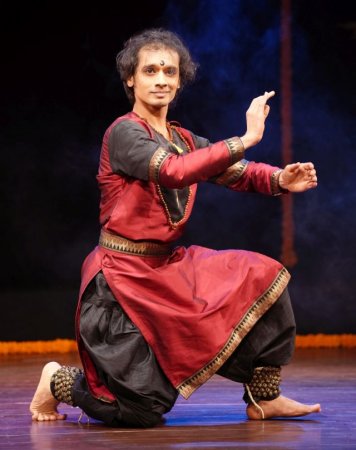 Sharat Prabhat Following Pillai's intense narrative arc, Sharat Prabhat, a versatile and talented Kathak artiste, offered a tender interlude with a Ram Bhajan based on Tulsidas's Sri Ramachandra Kripalu. This piece served as a bhakti balm, its devotional serenity contrasting the preceding intensity. Prabhat's exposition highlighted Lord Rama's glory - his compassion, valour, and divine beauty - culminating in a heartfelt prayer for Rama's lotus feet to reside in the devotee's heart. Sharat's performance was a masterclass in understated elegance. His abhinaya brought the poetry's devotional essence to life, with gentle mudras depicting Rama's bow, serene demeanour, and radiant presence. The choreography emphasised nritya, with fluid movements and expressive glances conveying the surrender of bhakti. Prabhat's footwork, though restrained, was precise, complementing the bhajan's melodic flow. The choreography allowed Sharat to linger on emotional nuances, his gestures evoking the intimacy of a devotee's dialogue with the divine. This interlude, with its lyrical grace, offered a moment of solace, balancing the evening's dynamic range. 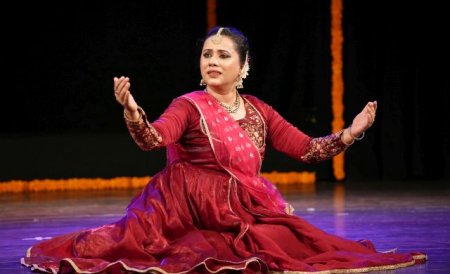 Surashree Bhattacharya The evening then reached its cathartic peak with Surashree Bhattacharya of Kathak Kendra, who offered a spellbinding ode to the season of rains. Her presentation, a monsoon crescendo set in raag Miyan ki Malhar and Teentaal, unfolded like a khayal in motion - an ever-shifting landscape of rhythm, melody, and mood. The choreography, steeped in the fluid idiom of khayal inspired Kathak, cascaded in 16-beat waves, each cycle carrying the audience deeper into the sensorial expanse of the monsoon. She was ably supported by the evocative vocals of Prathima Athreya, the dynamic tabla and padanth of Biswajeet Paul, and the resonant strains of Subramanya Hegde's sitar, who together formed a sonic canvas of clouds, thunder, and rain. Bhattacharya's interpretative depth was immediately apparent in her tatkar. What began as soft, tentative footwork, like the hesitant drizzles of an early shower, gradually swelled into thunderous cascades as her feet thundered in dialogue with the tabla. The taans burst forth like sudden cloudbursts, electrifying the stage with their unpredictable brilliance. Her chakkars, spun with hypnotic velocity and control, conjured images of swirling sheets of rain, enveloping the viewer in their dizzying momentum. In a striking interlude of gat bhav, she painted the peacock's joyous abandon, her mudras evoking the iridescent strut and flutter of feathers as the bird danced ecstatically to the season's arrival. The performance's emotional zenith was reached with a thumri that gave voice to the prasiddha patika nayika - the archetypal heroine awaiting her beloved. Bhattacharya's abhinaya traced the arc of longing, her expressive eyes and delicate gestures brimming with virah, the pangs of separation, before seamlessly transforming into sambhog, the ecstatic joy of union. Her playful bol-banaav, with lilting accents and subtle rhythmic improvisations, teased the audience as much as it embodied the nayika's coyness. A gentle sway of the hips, a tilt of the head, and the subtlest of smiles conveyed teasing desire before dissolving into movements of consummate embrace. Seema's debut curation triumphed in its emotional arc: from Krishna's flirtations to Shiva's ire, Rama's resolve to Malhar's melancholy - a garland of naman that resurrected Kathak's soul in contemporary cadence. KUMUDA Photos: Sarayu Rao Universal Rasikas The presentation on September 24, 2025 at Seva Sadan, Bangalore, curated by Shilpa Abhiram of Ekatvam Kala Shale, unfolded as a poignant and deeply personal tribute. Conceived in memory of her grandmother Kumuda, whose life and influence shaped Shilpa's artistic path, the evening was not only a celebration of art but also an act of remembrance and gratitude. What began as a commemorative gesture expanded into a gathering of music and dance that honoured both familial legacy and timeless tradition. 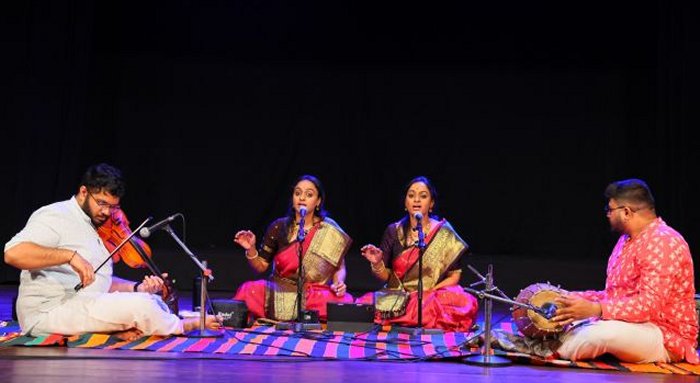 Meghana and Chandana Keshavamurthy The event opened with a musical interlude by Meghana and Chandana Keshavamurthy, accompanied by Karthik Pranav on violin and Abhay Sampagethaya on mridangam. Their voices, steeped in bhakti, created an immediate aura of sanctity. The fluidity of their singing, imbued with both discipline and emotion, resonated with the intimate ambience of Seva Sadan, drawing the audience into a shared spiritual space. 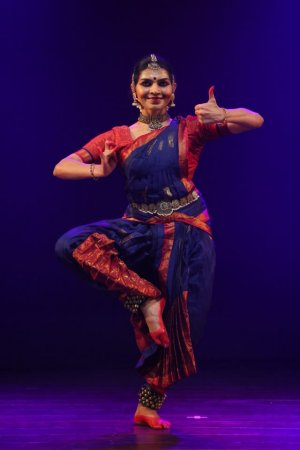 Ashwathi This set the stage for a Bharatanatyam recital titled 'Prana' by Ashwathi, disciple of Lakshmi Parthasarathy Athreya, whose presence carried youthful vigour. She began with 'Shakti Anjali', an invocation to the divine feminine principle, Shakti, the eternal source of creation. Set in Khanda Jati Triputa Tala (seven beats), the choreography by her Guru highlighted Shakti's paradoxical duality: as the compassionate nurturer who shelters and as the fierce warrior who destroys negativity. Through measured footwork, strong postures, and fluid arm movements, Ashwathi captured this contrast, presenting Shakti as both mother and protector. Her second piece, Adi Shankaracharya's Ardhanareeswara, explored the seamless integration of masculine and feminine energies. Through alternating sequences of tandava (vigour, force, masculine) and lasya (grace, softness, feminine), the choreography revealed the philosophical depth of the concept - two halves forming an indivisible whole. Lord Shiva, fierce with serpents and skulls, was juxtaposed with Parvati's gentle beauty, their coexistence symbolising cosmic equilibrium. Ashwathi's expressive delineation, alternating between strength and delicacy, offered an evocative glimpse into this union of opposites. Her recital concluded with a shloka dedicated to Dhanvantari, the celestial healer. Rendered with simplicity and reverence, the piece extended beyond the stage, carrying a universal message of well-being and compassion. As the prayer invoked health for humanity, it also reminded the audience of art's ability to transcend performance, becoming prayer and offering. 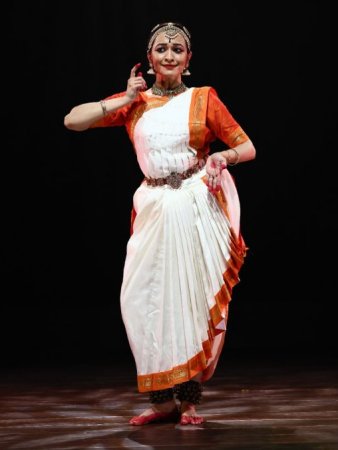 Shilpa Abhiram The second half of the evening featured Shilpa Abhiram's (disciple of Lakshmi Parthasarathy Athreya) own Bharatanatyam presentation, which turned to the towering figure of Adi Shankaracharya. Portrayed as Dakshinamurthy - the cosmic teacher - Shankaracharya's role as philosopher, poet, and saint found embodiment through Shilpa's nuanced performance. She wove together episodes of his life and legacy: his establishment of the four sacred mathas that anchor Advaita Vedanta, his expositions on Brahman as the singular ultimate reality, and the lyrical beauty of the Kanakadhara Stotra, which invokes divine prosperity. Set to a thoughtfully designed music composition by Karthik Hebbar, Shilpa's performance traversed both intellectual and emotional landscapes. Intricate rhythmic passages brought a kinetic vibrancy, while her subtle abhinaya lent depth to philosophical ideas, making abstract truths palpable. Her interpretation of Shankaracharya's contributions to Patanjali's philosophy further underscored his bridging of intellectual inquiry with spiritual wisdom. The performance culminated with a portrayal of the present-day Sharada Peetham at Sringeri Mutt, linking the saint's historical legacy to its living continuity. The imagery was at once reverential and celebratory, inviting the audience to reflect on the timelessness of his teachings. Shilpa's nuanced expressions and dynamic footwork revealed the discipline of training while also revealing the devotion that animated the evening. The program thus became a convergence of memory, philosophy, and art. The tribute to Kumuda lent it a deeply personal touch, reminding the audience of how inspiration often flows through generations, shaping journeys and legacies. In its seamless fusion of soulful music, evocative dance, and spiritual depth, the evening left a lingering impression of reverence, technical excellence, and emotional resonance. BHAKTI VAIBHAVA: EXPANDING BOUNDARIES, ONE DANCE AT A TIME Photos: Shalini Jain The Bharatanatyam performance of 'Bhakti Vaibhava' by Matangi Nrithyakshetra, held on September 25, 2025, at Seva Sadan in Bangalore, unfolded as a standout rendition of Purandaradasa's composition, "Rama naama payasekke Krishna naama sakkhare". Choreographed by Matangi Prasan and performed by her ensemble - Lakshmi G, Megha Kashyap, Vedika Kirana, Janhavi, Vismayee Nag P, Dhruti Bhaktavatsalan, Praseedha V G, Sayuri, Annie Kurian, Samanvita K, Irene, Samvrittha, and Arya Rakesh - the piece captured the essence of the composition's opening statement that everything offered to the Almighty yielded ultimate sweetness. Matangi Prasan's choreography infused the traditional devaranama with innovative flourishes, as the group's synchronised footwork and expressive abhinaya evoked the divine nectar of Rama and Krishna's names. Each dancer brought a distinct energy, yet their unity reflected the collective prayer described as a nritya yagna. 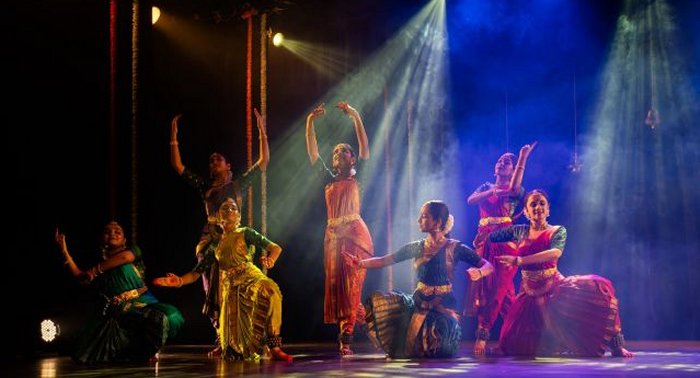 Bhakti Vaibhava The ensemble followed this evocative opening with a mesmerising performance of Adi Shankaracharya's 'Ganesha Pancharatna'. Choreographed by Matangi Prasan, the piece unfolded through three vivid sanchari bhavas, each narrating a distinct story of Lord Ganesha's divine intervention. The first depicted a mischievous mouse wreaking havoc in a village, prompting the villagers to appeal to Ganesha for help. The dancers' nimble movements captured the mouse's antics, while their collective plea invoked Ganesha's presence. The deity subdued the mouse and, in an act of compassion, transformed it into his vehicle after its plea for forgiveness. The second sanchari explored the story of Kubera, the god of wealth, whose arrogance led him to host a lavish feast to showcase his opulence. Ganesha, portrayed with playful dominance, consumed everything, leaving Kubera humbled. The dancers conveyed Kubera's pride and its undoing with powerful contrast, culminating in Parvati's solution of offering a simple cup of kanji, which underscored the triumph of humility over pride. The third sanchari brought to life Vyasa's request to Ganesha to transcribe the Mahabharata without pause. When the quill broke, Ganesha honoured his commitment by breaking his tusk to continue writing. The ensemble's movements reflected Vyasa's urgency and Ganesha's resolve, with the act of breaking the tusk portrayed with striking intensity, symbolising sacrifice and integrity. Each narrative wove tradition with innovation, reflecting Matangi Prasan's ability to bridge the classical and contemporary. The cohesive performance, marked by intricate nritta and heartfelt abhinaya, transformed the Ganesha Pancharatna into a vibrant offering. 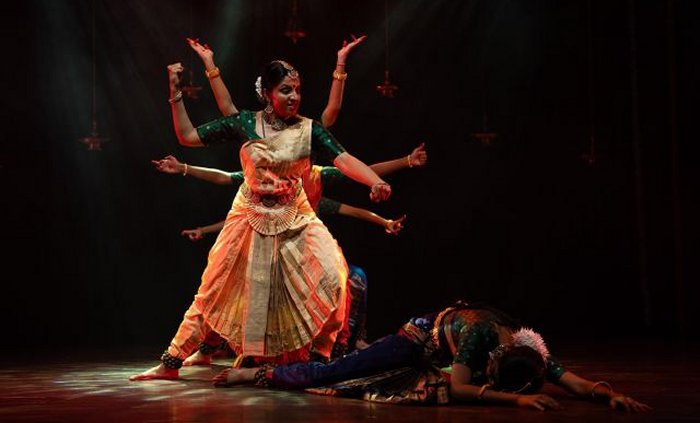 The performance then reached a profound crescendo with the varnam "Maathe malayadwaja pandya sanchate" in raga Khamas, composed by Muthiah Bhagavatar. Performed under Matangi Prasan's choreography, the piece celebrated the Divine Feminine during Navaratri. The opening depicted the births of Ganesha and Subrahmanya, with playful sibling rivalry brought to life through humour. The narrative then shifted to the fierce Chamundeswari, her annihilation of Mahishasura, Raktabeeja, Chanda, and Munda evoked with dynamic intensity. A highlight of the varnam was the portrayal of various forms of the Goddess, from the gentle and nurturing demeanour of Shatodari Shankari to the awe-inspiring fierceness of Chamundeshwari. Through nuanced facial expressions, graceful hand gestures, and flowing movements, the dancers painted a vivid and immersive picture of divine femininity. The incorporation of subtle karanas added a sculptural and rhythmically precise edge to the ensemble's movement vocabulary, enhancing the visual and emotive depth of the performance. The celebratory procession on Vijayadashami followed, marked by rhythmic precision and joyous formations. The varnam also explored the multifaceted shakti of the Supreme Mother, manifesting as Saraswati, Lakshmi, and the transformative Kundalini traversing the chakras. Through flowing sequences, the dancers embodied her role in creation, sustenance and liberation. The composition's subtle tribute to King Nala Krishna Rajendra Wodeyar was conveyed through graceful abhinaya, grounding the piece in its historical context. Matangi Prasan's choreography elevated the varnam into a nritya yagna, merging puranic narratives with spiritual symbolism, and the ensemble's cohesive artistry left a lasting impression as a powerful homage to the Divine Feminine. The devotional journey continued with a captivating Krishna Kautvam, a vibrant portrayal of Krishna's divine exploits. The dancers brought to life his playful butter thefts, the breaking of the gopis' pots, his compassion for Kuchela, and his intervention to save Draupadi. Krishna's valour was embodied in the taming of Kaliya, while maternal tenderness shone through in Yashoda's astonishment at the cosmos revealed in her child's mouth. Interspersed rhythmic passages enhanced the storytelling. The theme of the Bhakti movement followed, affirming that reciting the divine name was sufficient for spiritual fulfilment. The first narrative centred on Janabai, whose hunger was forgotten in her fervent devotion until Vithala appeared to bless her. The second depicted Surdas, who, after receiving the Lord's darshan, prayed to remain blind, content with the vision etched in his heart. The final tale brought forth Kanakadasa, denied entry to the temple yet blessed when the deity turned to face him. The ensemble conveyed these stories with delicacy and depth, highlighting the transformative power of devotion. The performance culminated with an ode to Goddess Lakshmi through Purandaradasa's "Bhagyada Lakshmi Baramma", followed by a concluding mangalam. The dancers invoked the goddess's benevolence, embodying the joyous anticipation of her blessings. The final mangalam conveyed gratitude and auspiciousness, sealing the evening's devotional journey. Matangi Prasan's choreography blended reverence with innovation, allowing the collective spirit of the ensemble to shine. The audience was left immersed in the sweetness of devotion, as Bhakti Vaibhava closed as a shared prayer expressed through dance.  Bangalore based Satish Suri is an avid dance rasika besides being a life member of the Music and Arts Society. |
