
|     |
|
| |

 In search of light - Nrityajyoti festival 2025- Sameer Kumar Jhae-mail: nkumarsameer29@gmail.com October 3, 2025 To implement things practically one has always taken the shelter of theory. How far does it hold true to dance and a dancer? And if it is true, how does a dancer interact with the theoretical aspect of dance? Does this interaction demand them to be a scholar in their chosen field of performance? Today we know about different sthanas or the same hasta suggesting different meanings in different contexts because of theory. But the utility of theory should not be just restricted to this. Theory grows in a space where there is a constant interaction of ideas. Where new ideas suggest, complement and sometimes challenge the older ones. It is this space where a dancer discovers the shastra of dance. The discovery is not merely learning all laid prescriptions, it is a process of making them alive. This process demands an honest amount of acceptance of changing times and evolving ideas without compromising the core values of the tradition. This is a search for light. And in a similar attempt, Delhi based Foundation for Developed India organized an online conference titled Nrityajyoti on September 20, 2025. Chaired by Prof. Anuradha Jonnalagadda, Department of Dance, University of Hyderabad, the session had a diverse base of paper presenters. The order and the title of the presentations:
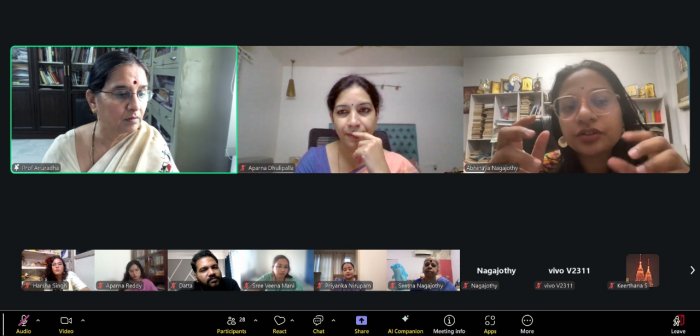 After Guru Seetha Nagajothy's opening remarks, Abhinaya Nagajothy in her presentation, History of Kuchipudi, started with the history of dance. Through the image of graceful dancing girl from Indus valley civilization to the dancing figurines of Amaravati stupa panel remains, she rightly highlighted the continued depiction of dancing postures in the Indian artistic traditions. On the growth of Kuchipudi, its connection with Bhagavata Mela, and support provided during different dynasties of Vijayanagara was discussed. This presentation served as an apt setting for the conference. Aparna Dhulipala through her paper, The role of stakeholders in the evolution of Kuchipudi form and the impact of globalisation in the 21st century, brought how changing times have affected Kuchipudi and what has been dancers' response to it. With a liberalised Indian economy, the expanding Indian diaspora, according to Dhulipalla, supported the dance form by bringing more sponsorships. This helped in increasing the visibility of Kuchipudi on the global stage and also expanded their space for creativity. Sensitization of the audience became much easier with new technologies, languages while the core ideas remained intact. But with changing times, how can a dance tradition stay timeless? What role can innovation and incorporation play in that endeavour? Sree Veena Mani in her presentation, Kuchipudi today: An amalgamation of Timeless Tradition and Borrowed Gems, tried to answer this. Dance performance is getting innovative and amalgamation of different traditional pieces has enhanced the beauty of Kuchipudi. The "borrowing" of Ganesh kautuvam and its popularity among Kuchipudi dancers, Dr. Vempati Chinna Satyam's Chandalika, an inspiration from Rabindranath Tagore's Chandalika with new touch are a few examples as highlighted by Sree Veena. If Ganesh kauthuvam's incorporation has become popular in Kuchipudi, the pravesa daruvu which is very much an identity of the same dance form continues to be an important part of the whole performance. It is this perfect time where dancers become the characters and bring life to the story. In his presentation, Decoding the structure of Pratinayaka Pravesa Daruvus in Kuchipudi, Pasumarthy Datta hailing from a Kuchipudi family elaborately discussed a few essentials. How fine details like costume, entry style and energy, makeup is determined by the nature of the characters and the changing scenes. Krishna with Rukmini can be totally different from a Krishna interacting with Jayadratha. Differences in pravesa daruvu of Krishna can exist but the essence of love Rukmini has for him remains the same. This love expands, covering deeper ideas of union and separation of bodies (deha), jeeva (being) and paramatma (the supreme). Parallels can be drawn amongst the performance traditions embodied by Gita Govinda of Jayadeva and Siddhendra Yogi's Bhamakalapam through their philosophy. By expanding upon this idea Harsha Singh, a young Kuchipudi practitioner presented their paper, Text, Choreography and Emotions: Interactions between Jayadeva's Gita Govinda and Kuchipudi. Harsha underlined the visibility of the philosophical content of dvaita in Ashtapadis and Bhamakalapam. There is separation, union at the heart of bhakti and through texts and performance this relation is humanised. Differences in performative aspects of Gita Govinda and Bhamakalapam, political patronage and impact of interactions between different empires of medieval India were also highlighted. And then the final presentation was by Prof. Priyanka Nirupam. Through her paper titled, Evolution of Kuchipudi in Delhi, she discussed the early foundational years of Kuchipudi in Delhi. How different families of artistes, years of their efforts and growing base of students in Delhi led to a strong foundation of Kuchipudi in the national capital. 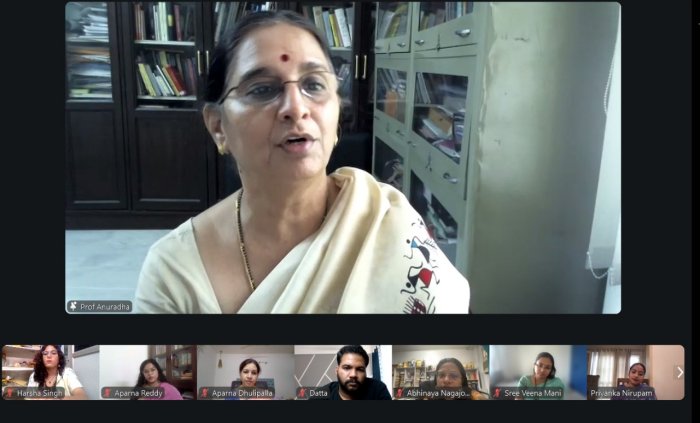 After such fine presentations came Prof. Anuradha with her remarks. Calm yet bold in her tone, she started by saying, "Today Kuchipudi is at crossroads". With appreciation for young scholars and practitioners of this dance form, there were some important cautions and suggestions. One could rightly see the eternal dilemma of tradition vs innovation in it. In her speech there was a gentle emphasis, "tradition must stay intact". Artistes should be motivated to be innovative, make artform accessible but such an exercise shall be firmly based on the strength of the tradition and basics that an artform provides. The audience had their questions to the speakers suggesting the sustained interest in the artform. But one theme that shall continue to guide, trouble and motivate practitioners of the coming generation is responsibility towards the art. The perennial nature of dance forms like Kuchipudi today demands honest connection with traditions, bold approach in innovation that enhances the essence of the form instead of compromising and all this can be possible if an artist is first "satisfied with their art" in the words of Prof. Anuradha. But throughout this conference I wondered, what is the responsibility of an artist? How does an artist navigate through the changing times? When one aspires for a good career in dance, visibility, support from patrons and audience, what is their approach towards art? Can one afford some adjustments in return for a quick progression in career? Surely no! A no is also for hesitation towards innovation and keeping art for limited people in society. The artiste must be truthful to their foundations, must surrender their own identity in front of the art they practice. Every innovation will enhance the purpose of art if it rests on tradition and any tradition that stops upliftment of beings must be reformed. 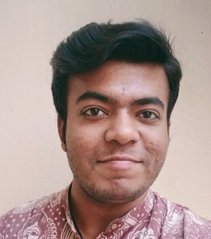 Sameer Kumar Jha is a young artist (painting) with keen interest in Temple Art and Architecture, Bharatanatyam and Mohiniattam. He is a history graduate from University of Delhi. |
