|     |
|
| |

 'Let the Games Begin' and Nrityavasantam- Vijay Shankere-mail: vijaydance@gmail.com October 2, 2025 Samskara Academy of Fine Arts (Mumbai) presented 'Let the Games Begin', a dance presentation in the Bharatanatyam style by accomplished exponent Namita Bodaji and her disciples on 9th September at Godrej Academy Dance Theatre, NCPA, Mumbai. 'Let the Games Begin' was a fun loving dance presentation enjoyed by everyone as the dancers danced playfully while projecting varied games like Chaupar (game of dice), Chaturang (chess), Indian sport Kabaddi, Hop, Skip and Jump and the martial art form of Kerala known as Kalaripayattu. 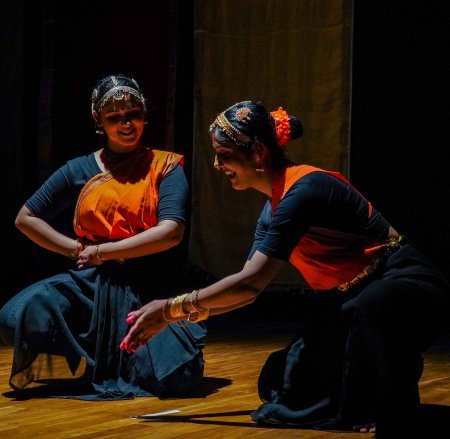 Game of Dice 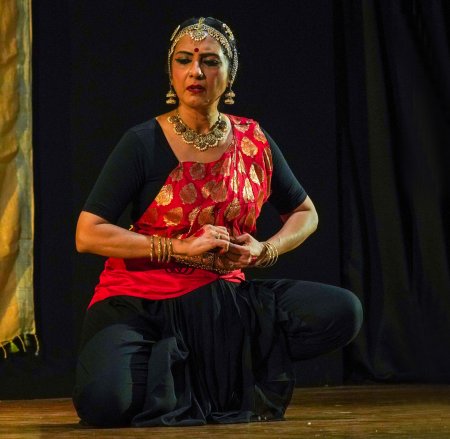 Guru Namita Bodaji Ancient history reveal that various types of games and sports were played by everyone, which was both indoors and outdoors. It was the game of dice that ultimately culminated in the Kurukshetra battle of Mahabharata, as the Kauravas defeated the Pandavas with their deceitful moves. The Pandavas lost their kingdom, property and their wife Draupadi too. The fight was not to gain power or property but the fight was against injustice - adharma - to restore peace and prosperity for everyone. 'Let the Games Begin' propagates a significant message that playing games is healthy and should be played with proper sportsman spirit and not with the vicious intention of cheating or ruining anybody's life or killing anyone, for that matter. The presentation was refreshing, enjoyable and unconventional, catering to the larger section of the audience, combining elements of both entertainment and education. The presentation began with a game of dice by two dancers, followed with the popular Indian sport Kabaddi which is played by two groups on opposite sides. It is quite a tricky situation as you have to attack your opponent without being attacked and if you are attacked before reaching the margin line, you lose a point and if it happens repeatedly you lose the game too. The varied stances of defence and leaps in Kalaripayattu was demonstrated. The game of chess is known as 'Shatranj' in Hindi in which the play is divided into four segments or units of the King, the Horses and Charioteers, the Elephants and the Soldiers. The ancient game of chess was known as 'Chaturang' (four colours or units) which is quite different from the modern day chess. Tamil folk rhymes for Nondi or Pandi Attam (the hopscotch game) and Ammanai Parvai (ball game) was interesting. 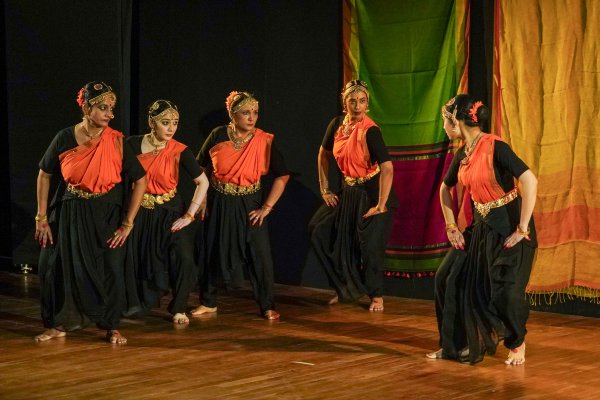 Kabaddi 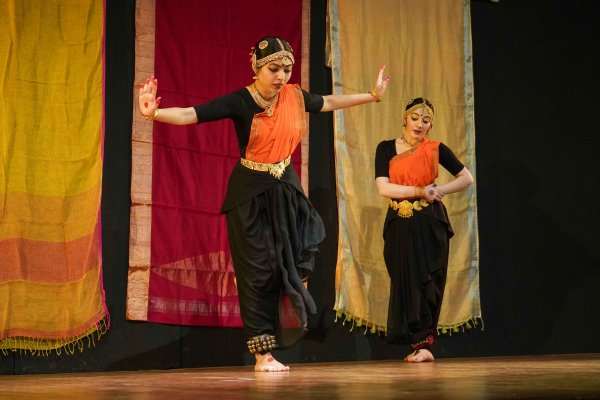 Hop, Skip & Jump The highlight of the presentation was the depiction of an episode from the Shiva Purana in which Parvati plays a game of dice with Shiva and cleverly separates herself from him, in which Shiva starts losing. Firstly, Parvati asks for the Chandrakala on his head, then asks for the cobra, the Trishul, Nandi and ultimately asks for the loin cloth (tiger skin) and Shiva is completely embarrassed and disappears suddenly. Parvati asks for forgiveness and they dance joyfully. Besides the tug of war game with two groups on opposite sides, the performance concluded with a brisk Thillana that was performed with rhythmic accuracy and technical quality. It was an unusual and unique presentation and enjoyable too. Within the short span of one hour, it was a pleasure to watch dancers, dancing with 'joie-de-vivre'. Guru Namita Bodaji performed with her talented disciples, Devashree Vora, Adhya Shetty, Tushita Kotian, Sandhya Bolar, Nidhi Khandelwal, Rusha Naik and Keyuri Mody. Concept and choreography were by Namita Bodaji, music composition and vocals by Sivaprasad NN, veena by Narayan Mani, rhythm and special effects by Ranganathan and flute by Vijay Tambe. On the whole, it was quite an entertaining programme, thereby making classical dance more interesting and absorbing. NRITYAVASANTAM SHOWCASES BRILLIANT DANCERS Bharata Kala Gramam (Bangalore) presented Nrityavasantam, a two day festival of classical dances, featuring six dancers portraying four styles of Bharatanatyam, Kuchipudi, Kerala Natanam and Nangiar Koothu. The festival was held at Nayana auditorium, Bangalore, on 23rd and 24th August. It was an interesting spectacle to witness different performing art forms on the same platform. The festival commenced with an invocation dedicated to Lord Ganesha. The ceremonial lamp was lit by the distinguished guests. In the inaugural address, Dr Vasanth Kiran emphasized the importance of nurturing young dancers and the role of cultural festivals in preserving India's cultural tradition while fostering innovation. Classical dance competition 'Spardha Vasantham' was also organised in which 200 participants from 6 states participated. The competition showcased exemplary performances in Bharatanatyam and Kuchipudi dance styles. The winners were felicitated with prizes and certificates. The dancers featured in the festival were Bhuvana Guruprasad from Bangalore, MT Mrunmayee from Bhilai, Chattisgarh, and C Jayaveerapandiyan from Chennai for Bharatanatyam, Aparna Sharma from Trivandrum for Kerala Natanam. Vempati Lakshmi Kameshwari for Kuchipudi and Margi Vasistha V.S. from Trivandrum for Nangiar Koothu. While most of them performed quite well, some of these dancers were outstanding and enthralling. The festival commenced with the striking Bharatanatyam performance by Bhuvana Guruprasad with Thodaya Mangalam, followed with a Sringara Purandaradasa Kannada composition originally choreographed by Dr Padma Subrahmanyam, "Poguvudu uvhitave Madhava mathurake" in Natakuranji raga. Bhuvana's performance was noteworthy for its vivid expressions and clarity of movements. 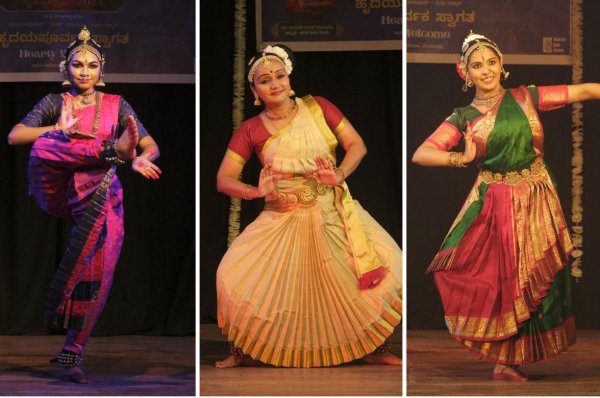 Mrunmayee, Aparna Sharma and Bhuvana Guruprasad Aparna Sharma interpreted Narasimha Avataram in the Kerala Natanam style. Kerala Natanam is a style that integrates Bharatanatyam, Mohiniattam and Kathakali dance styles with the traditional usage of Carnatic and Sopanam music with musical instruments like edakka, chenda and maddalam. It was interesting to watch Aparna combining varied elements of elegance, vibrancy and dramatic expressions to portray the devotion of Prahlada, the arrogance of King Hiranyakashipu and the dramatic appearance of Narasimha Avatara. The final dancer of the first day was MT Mrunmayee, daughter and disciple of Dr Ratheesh Babu, in the Bharatanatyam style. She also presented the Purandaradasa composition "Poguvudu uvhitave Madhava mathurake" in Natakuranji ragam and adi talam. In this, the Gopis are questioning Krishna - is it right for you to leave us behind and go to Mathura - portraying varied shades of love, bhakti, and attachment but ultimately Krishna leaves for Mathura. The original choreography is by Dr Padma Subrahmanyam. Mrunmayee also performed the Nava Durga stuti, noteworthy for the powerful interpretation of the varied facets of the goddess, virile, benevolent and compassionate. Mrunmayee is a vivacious dancer with precise execution of complex movements. The second day of the festival commenced with vibrant Bharatanatyam performance by the only male dancer of the festival from Chennai, C Jayaveerapandiyan, disciple of Prof Vasanth Kiran. It was a rare spectacle to witness the powerful performance, with the inclusion of akasha chaaris and karanas as he performed the cosmic dance of Lord Shiva in "Pradosha samayadi parashiva tandava". Jayaveera concluded with the padam in Bhairavi "Yaro ivar yaro" sung by Vasanth Kiran evocatively along with Jayveera also singing recreating the old age essence to the performance. Vempati Lakshmi Kameshwari impressed the spectators with her commendable Kuchipudi performance with stylized, intricate movements as she danced "Poora mama kamam" Tharangam to rhythmic perfection while performing on the rim of the brass plate choreographed by her grandfather Vempati Chinna Satyam. 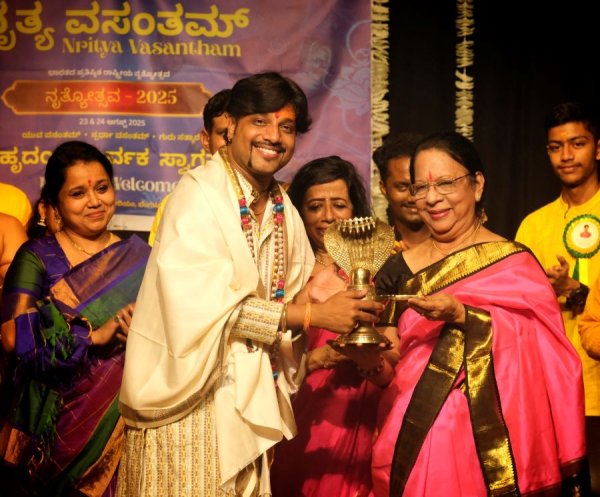 Dr.Vasanth Kiran honors Nandini Ramani The most dramatic performance of the festival was rendered by the Nangiar Koothu artiste, Margi Vasistha V.S. with the accompaniment of the traditional mizhavu by Margi Mahesh in which the percussion maestro beat rhythmically on the head cover of the metallic pot that created an unusual vibration enhancing the spiritual and dramatic quality of the performance. Vasistha was the second performer to interpret the captivating episode of Narasimha Avatara, when Lord Vishnu appears in the incarnation of half lion and half man to destroy the evil and arrogant king Hiranyakashipu and also to protect and bless the young teenaged Prahlada. Vasistha's enactment of the avatara was so commendable that it sent a thrill down the spine and created an everlasting impression on the spectators. Kudos to Prof Vasanth Kiran for organising a festival of such a magnitude and also for honouring senior mentors.  Vijay Shankar is a Kuchipudi and Kathakali exponent, teacher, bilingual journalist, arts critic and actor. |
