|     |
|
| |

 Nrityanjali 2 by Shinjan Nrityalaya- Tapati Chowdhuriee-mail: tapatichow@yahoo.co.in Photos: Sankar Sen September 16, 2025 Shinjan Nrityalaya presented their beautiful production Nrityanjali 2 on the 26th of July at Madhusudan Manch in Kolkata. Since they had already presented a very traditional Odissi performance on the 21st of July, on the evening of the 26th of July the audience was treated to Odisha's very own amazing acrobatic Gotipua performance, which is also very traditional in style and occupies a significant place in the evolution of Odissi as a dance form. The Gotipuas have helped in keeping alive the ancient art of dance in the collective memory of the people, even when the dance of the Maharis earned disrepute. Bandha Nritya is a traditional art form of Odisha, which has been an abiding interest of Aloka Kanungo for many years. Bandha Nritya is performed by the Gotipuas of Odisha. The polished and stylized Odissi dance form came from the dance of the Maharis, the devdasis of Lord Jagannath temple as well as from Bandha Nritya. Boy dancers dressed as female dancers continued the traditional dance form even after the dance of the Devdasis and Maharis were discontinued due to political reasons. The acrobatic style of dance of the Gotipuas is what makes them so special. 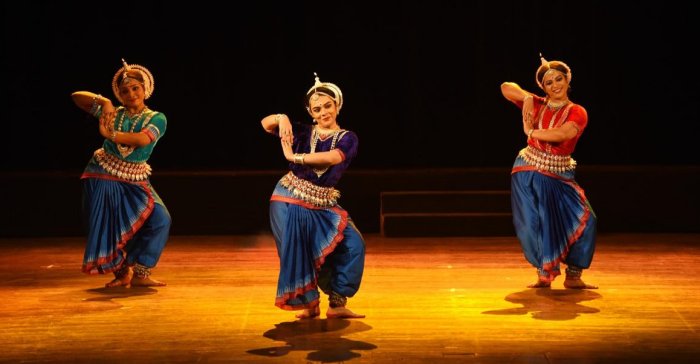 Aloka Kanungo's disciples The recital commenced with dancers paying their obeisance to Ganesha with the invocatory Mangalacharan "Pada bande gana natha" seeking the blessings of Lord Ganesha choreographed by Guru Kelucharan Mohapatra to a composition of Pt. Bhubaneswar Mishra and was performed by Aradhya Goswami, Aaradhyika Sarkar, Agnija Roy, Olipriya Pal, Sobhini Roy Ghosh, Janhavi Biswas, Ishani Pal, Sudharshana Das Bairagi, Sanvika Pal, Debasmita Das, Shalini Sarkar and Meera Bella Mukherjee. "Kshyamanu kampadhara" was yet another invocatory piece taken from the Odia Champu which is popularly known as Kisorachandrananda Champu - a composition of the great 18th century poet Kabisurya Baladev Ratha. Champus narrate the love play between Radha and Krishna. Each Champu song is dedicated to a letter of the Odia alphabet. Aradhya Goswami presented the 'Kshya' Champu' Kshyamanu kampadhara - praising Lord Vishnu choreographed by Guru Aloka Kanungo the music of which was composed by Ramahari Das. 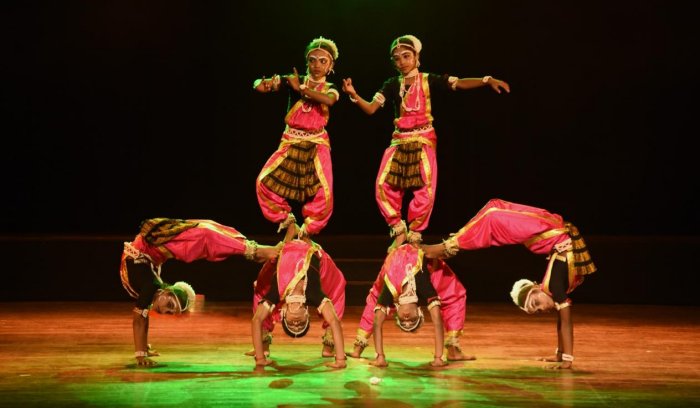 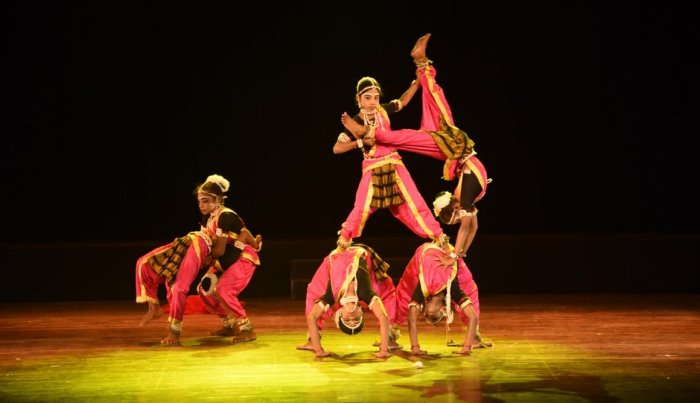 Gotipua dancers Ranga Puja which followed next began with "Sthyapathya satya" based on Kanungo's research work. In this she had amalgamated Odissi dance form with Nritya of the Gotipuas. Ranga Puja is the customary salutation of the ten gods protecting ten sides of our Ranga Mancha or the stage. Inspired by the Patachitra paintings of Odisha - also known as Bandha Chitra - which depict the gopis in acrobatic posture forming horse, elephant, boat, chariot with Lord Krishna seated on them, Aloka Kanungo presented her work 'Manmatha Nauka Bandha' combining the gotipua dancers and her disciples with the music composition of Guru Ramahari Das in a memorable dance choreography of great aesthetic beauty. It was performed by the Odissi dancers Paulami Chakraborty, Nivedita Daw Dutta, Urjjasee Basak, and Swaralipi Roy. Gotipua dancers were Diptiranjan Behera, Monoranjan Bhoi, Om Nama Behera, Om Sai Prasad, Rahul Behera and Somaya Ranjan. The second half of the evening started after Shinjan Nrityalaya's felicitations of their honoured guests which included eminent scholar, orator and social worker Laxminarayan Mallik. Supradipta Datta, Artistic Director of Houston based Odissi Institute, an alumnus of Shinjan Nrityalaya, honoured the two revered gurus, Guru Lingaraj Barik and Late Guru Laxmidhar Swain from the Gotipua Sampradaya with Ratnalok Samman. Rudra Swain, the torch bearer of Laxmidhar Swain's Gotipua troupe received the honour on behalf of his late father. 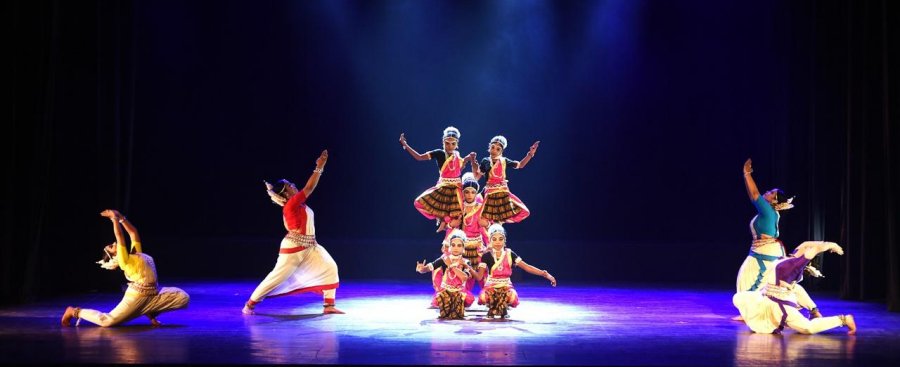 Odissi dancers and Gotipua dancers The performance started with 'Nritya Vilas' which showed the journey of the Odissi dance form from the stone sculptures on the temple walls of Odisha to the dance of the Maharis and the Gotipuas and then to the present day Odissi dancers. The transformation was visualized creatively. Sthapathya Satya or Nritya Vilas has been conceptualized and choreographed by guru Aloka Kanungo to the music of Ramahari Das. The Odissi dancers were Baishali Bhuniya, Sarbani Sen, Paulami Chakraborty, Nivedita Daw Dutta, Swaralipi Roy, Arjama Kundu, Sumon Mondal, Manisha Parua, Saptamita Das Biswas, Srijoni Das, Debjani Ghosh, Shiuli Mohapatra, Shirsa Mukherjee and Samadrita Basu. Gotipua dancers were Diptiranjan Behera, Monoranjan Bhoi, Om Nama Behera, Om Sai Prasad, Rahul Behera and Somaya Ranjan. 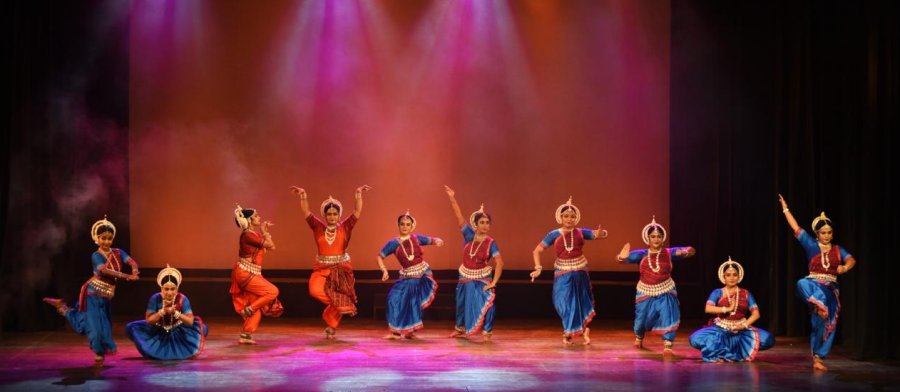 Aloka Kanungo's repertory members The evening concluded with Dasavatar based on Prabandha Geeta written by Gopinath Dhira in Chaanda style portraying the ten avatars of Lord Vishnu. It was choreographed by Guru Aloka Kanungo and the music was composed by Guru Ramahari Das. The amalgamation of Bandha Nritya with Odissi was pedagogic in nature. The origin and source of Odissi dance that we know today were traced in a scholarly way. Aloka Kanungo has delved deep into her subject and has been a true pioneer in helping her disciples not only to study the rudimentary of the form and specialize in it, but has also schooled them to understand the history behind it, thereby helping them to emerge as complete dancers for the generations to come.  Tapati Chowdhurie trained under Guru Gopinath in Madras and was briefly with International Centre for Kathakali in New Delhi. Presently, she is a freelance writer on the performing arts. She is the author of 'Guru Gopinath: The Making of a Legend.' |
