|     |
|
| |

 Spiritual themes at NCPA- Chandra Anande-mail: chandra6267@yahoo.co.in Photos courtesy NCPA September 5, 2025 The NCPA, in its classical section of presentations, presented Mohiniattam and Bharatanatyam performances at the Experimental Theatre on June 26, 2025 and Sattriya Nritya performance at the Godrej Theatre on July 29, 2025. The writer noted that the performances were designed with a philosophical outlook that was explicated through entertainment as the norms of artistic presentations stated in Natyasastra by Bharatamuni. 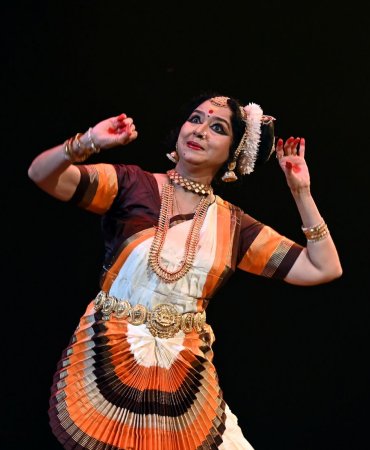 Gopika Varma Gopika Varma presented the life story of Krishna through contemporary lens and then put forward the ultimate truth of life where peace lies in surrender to the Ultimate Being. She presented an evocative piece wherein the coming of idol of Anantashayanam to Srirangam and the auspiciousness of kili mandapam was depicted with the song "Ranga Puravihara". With the verses of Madhurashtakam, vatsalya bhava was delineated through the experiences of Yashoda when Krishna returned to Brindavan for a visit after he moved to Mathura. Feelings of mother Yashoda were recreated to show how the present day mothers wait for their children to come back from abroad to visit their parents. She reminisced the various leelas of Krishna, whether doing mischiefs, or enrapturing all with his flute music or creating awe and wonder through his graces. She is astounded at the appearance of Krishna as the King of Mathura and when he leaves, she blesses him from afar. A contemporary experience of a happy couple but a wife harboring notions of self-importance was portrayed through the story of Krishna and Rukmini. Rukmini didn't want to share Krishna with his 1600 wives. She wanted to be given more priority. Here as an analogy, she was shown as wanting possession of Krishna's lips that should belong only to her. So a game of dice was set to decide on the matter. Finally, the game played and won persuaded the audience to show exceptional care to their spouses. And the cream of the presentation was delineation of verses of Bhaja govindam, composed by Adi Shankara Bhagavatpada, which coaxes one to stay focused on the Ultimate Being which is the real meaning of life, as all other joys and desires one experiences on this earth is temporary and illusions. Thus, all-pervading values from mythology and teachings of our philosophy were reiterated into minds of the people with a contemporaneous note. 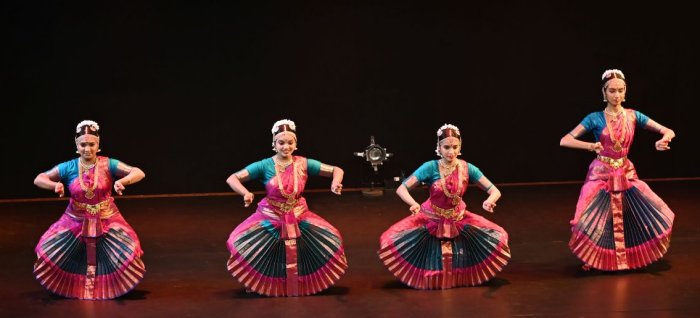 Disciples of Harikrishna Kalyanasundaram Thiruvisainadanam, a presentation of Sri Rajarajeswari Bharatha Natya Kala Mandir in Bharatanatyam format brings forth the age old Tamizh philosophy about the universe in a nutshell. Compositions of Tamizh saints from the Tamizh sacred texts were strung together and set to music by Guru Harikrishna Kalyanasundaram and performed by his students. Through the verse "Paallum thelli thenum", composer Avvaiyar gives a imagery of the flawless brilliance of the radiant elephant faced god and worships him with an offering of a sweet delicacy made of milk, honey, jaggery and lentil and seeks from him the gift of knowledge, the experience of the Tamil language and his divine presence forever. The 'Siva Shakti Kavuthvam' composed and choreographed by Harikrishna celebrated the union of Lord Shiva and Goddess Shakti. It portrayed both the divinity and balance of the cosmic masculine and feminine energies. Dynamic rhythms and expressive movement amplified the inseparable oneness, of creation and destruction, and stillness and energy, embodied in Siva and Shakti. 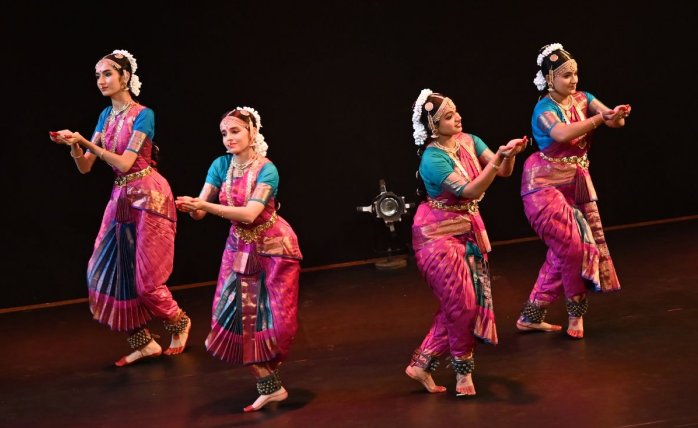 Disciples of Harikrishna Kalyanasundaram From the text Thirumanthiram, the song, "Omkarathu ulle udhitha aimbhoodhangal" expressed that the five elements (earth, water, fire, air, space) which are akin to the basic states of matter and energy, and all emerged from a single vibrational source - Om. The Siddhar doesn't merely speak of matter, he explains the energy, pattern, and resonance of the vibrational field. The composition also described the lingam as per Agamic and Siddha traditions. Thirumoolar's mystic insight resonates with today's scientific vision of the universe with its vibrations, energy, and consciousness, all in dynamic unity, where from one field of energy arise all particles and forces. The composition concluded at the center of it all is Siva, not as a form, but as the formless truth vibrating in everything, thus bringing out and affirming aspect of bhakti and surrender to a divine presence. Thillana (Sindubhairavi, adi) composed by Harikrishna Kalyanasundaram in praise of Lord Shiva featured complex rhythmic cross- patterns. "Muthai tharu" a verse from Thiruppugazh of Saint Arunagirinathar in praise of Lord Muruga was a finale where through various episodes of Lord Murugan and his cosmic battle with Soorapadman, merged poetic grandeur with rhythmic brilliance and bhakti. Thus, the performance enchantingly celebrated the sacred beauty of Tamil hymns through the graceful movements of Bharatanatyam idiom of the Thanjavur bani. Evoking a spiritual journey through divine Tamil verse and rhythm, were the dedicated students Mallika Shah, Shreeya Mudur, Shriya Jain, Harita Elankannan, Mercya Devadas, Nandini Padia and Prarthana Javeri. 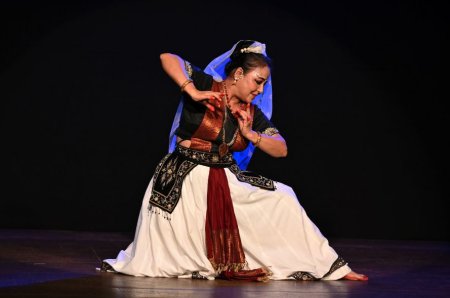 Prateeksha Suresh Prateeksha Suresh performed Sattriya Nritya, which was given classical status in the year 2000. This classical Indian dance form originated in 15th century, is deeply rooted in the philosophy of Vaishnavism and social reform and was designed to make complex religious and philosophical ideas accessible to the common people through engaging performances. Sattriya emphasizes devotion to God (Krishna/Vishnu) through elaborate hand gestures (mudras), footwork, expressions, and movements. Its teachings are reflected in the dance's themes and narratives. A core aspect is the concept of "Dasya Bhava," where the dancer embodies the attitude of a servant or devotee, expressing humility and surrender to the divine. Mahapurusha Sankaradeva is credited with conceiving the basic framework, choreography, and repertoire of Sattriya dance. He wrote the devotional songs (Borgeets), dramatic works (Ankiya Nat), and musical scores that form the core of Sattriya performances. All items were good. The pathos of Brahmini who was unable to meet Krishna and offer food to him and his hungry friends was well bought out. Leelas of Krishna through role-playing of Gopis when they were missing him was quite entertaining and Rukmini Kalyanam which was performed using vachika abhinaya and acting pronounced that the natya tradition was very much part of the Sattriya Nritya performance. It was all very much applauded for the traditional music played by the set of musicians who were dressed in similar outfits. It is to be understood that the Sattriya Nritya and music performed is not to excite but to bring calm and peaceful attitude in the minds of the viewers.  Chandra Anand is a Bharatanatyam artiste and teacher. She has an MA in Bharatanatyam from Tilak Maharashtra Vidyapeeth, and her series on 'Education in spiritual values through Bharatanatyam' is featured in narthaki.com. |
