
|     |
|
| |

 Divine expressions- Satish Surie-mail: satishism@gmail.com August 24, 2025 POORNA HARIHARAN'S COMPELLING MARGAM Senior disciple of Bharatanatyam exponent Praveen Kumar, Poorna Hariharan presented a compelling margam under the aegis of the Indian Council for Cultural Relations at Bharatiya Vidya Bhavan, Bangalore, on July 25 as part of their Every Friday Cultural Program. The performance demonstrated a thoughtful balance between classical rigour and interpretative creativity, showcasing the dancer's command over both nritta and abhinaya. The evening opened with the traditional Allarippu, invoking auspiciousness and preparing the space for a deeper exploration of the Bharatanatyam idiom. This was followed by the central piece of the repertoire, the varnam, "Maathe malayadwaja pandya sanchathe", a composition by Muthiah Bhagavathar. Choreographed with nuanced detailing by Guru Praveen Kumar, the varnam offered a rich tapestry of deity iconography - portraying Lakshmi, Saraswati, and Parvati in their varied manifestations. 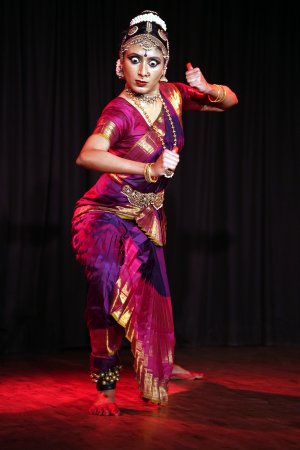 Poorna Hariharan (Photo: Prof K.S.Krishnamurthy) Poorna brought alive the contrasting qualities of the goddesses through meticulously crafted sequences: the gentle serenity of Shankari and Chandrakaladhari stood in striking counterpoint to the awe-inspiring Chamundeshwari, whose power was conveyed through wide eyes and expansive arm movements. The choreography was punctuated with inventive nritta passages and teermanams, enhancing both visual interest and rhythmic vitality. The varnam's lyrical richness - epithets such as ruchira geeta, vividha samarasa, sulabha hridaya, madhura swara, and karuna sagara - was mirrored in Poorna's expressive delivery, painting a portrait of the goddess as the compassionate Jaganmata who bestows blessings upon King Krishna Rajendra, hailed here as Sakalajiva Sarvabhauma. The overall presentation reflected aesthetic finesse and narrative depth, rooted in tradition while infused with personal artistic vision. The next piece, Subbarama Aiyer's padam "Yarukkagilum bhayama?" in Begada raga, explored the realm of pure abhinaya. Here, the dancer embodied a nayika who boldly asserts her lack of fear or shame in loving a man of stature, challenging societal gossip with quiet defiance. Poorna's performance captured the emotional layers of the heroine's dignity and strength - her expressive eyes, subtle gestures, and rhetorical poise made the character's inner resolve palpably real. The absence of nritta allowed the emotional core to resonate more deeply, revealing the communicative power of abhinaya in its purest form. A standout moment in the evening was Poorna's rendition of the javali "Idene sakhi" by Venkata Shama Rayar, set in Behag raga and adi tala. From the tender sway of the pallavi "idene sakhi kantanu munidirpa", Poorna infused the heroine with intimate longing and wistful anticipation. The seamless interplay between evocative abhinaya and lyrical footwork added a layer of sophistication to the performance. The anupallavi, "dari noḍi noḍi besarisidenalle" (tired of watching the path), became a canvas for the dancer's nuanced portrayal of waiting, alternating between hope and disillusionment. The charanam - describing the heroine adorning herself with gandha and kusuma dala - was performed with sensual grace, precise mudras, and restrained elegance. Subtle movements - a tilted head, trembling lips - conveyed viraha with rare poignancy. The orchestral synergy, particularly the dialogue between mridangam and footwork, energised the transitions, while Poorna's ability to balance the playful and the poignant made this javali a highlight of the evening. The performance concluded on a jubilant note with a Thillana in raga Brindavani, composed by Dr. Balamuralikrishna. It served as a vibrant culmination, offering a platform for Poorna's technical dexterity, showcased through complex rhythmic structures and spirited movement. The Brindavani melody added a sense of joy and elevation, sending the audience home with a lingering sense of celebration and fulfilment. The musical ensemble - Praveen Kumar on nattuvangam, Eshwar Iyer on vocals, Vidyashankar on mridangam, and Raghu Simha on flute - formed a cohesive and responsive unit, creating an immersive aural landscape that enriched the performance and reinforced the seamless synergy between movement and music, a hallmark of a memorable margam. ANOUSHKA REHMAN'S ODISSI ARTISTRY Anoushka Rehman's solo Odissi performance, at Medai, Bangalore, on July 31, offered more than technical mastery; it opened a window into a living, breathing tradition shaped by both rigorous discipline and luminous invention. Trained under Surupa Sen and Pavitra Reddy, Anoushka is steeped in the Nrityagram aesthetic, yet her performance was suffused with a deeply personal energy that felt unmistakably her own. The evening opened with 'Sankeertananam' in which Anoushka embodied the ecstatic devotees of the Vaishnava tradition through a powerful, physical vocabulary. Her movements captured the fervour of saints as they sang praises of Lord Krishna, inviting all to join them in celebration. Through expressive abhinaya and kinetic dynamism, she brought to life their rapturous descriptions of Krishna's beauty - his form adorned in yellow robes, marked with fragrant sandal paste. Each gesture evoked the majesty of his divine regalia, highlighting sacred emblems like the conch and discus. As the refrain "Jagannathe Hare" rang out, Anoushka's performance became an act of wholehearted surrender, vividly offering the saints' devotion and inviting the audience to place their hearts at the feet of the Lord. Transitioning seamlessly into 'Srimati,' Anoushka presented a pure dance piece that celebrated divine femininity and the awakening self-awareness of womanhood. The choreography reflected the contemplation: What is the use of beauty unless it can be offered to the divine? Shifting to a softer, more lyrical vocabulary, Anoushka's performance became a meditation on grace, her tribhangi postures curved with sculptural elegance, each gesture unfolding like poetry in motion. Every transition - from poised stillness to flowing movement - revealed an inner calm that felt deeply timeless. Her command over rhythm was impeccable, evident in the crisp execution of complex tala cycles and the effortless fluidity as she moved between sculptural stances and intricate footwork. The contrast between the masculine vigour of the preceding piece and the serene, meditative tranquillity of 'Srimati' was not jarring; instead, it was revelatory, illuminating the full range of her artistry and her ability to inhabit the complementary energies within the Odissi tradition. 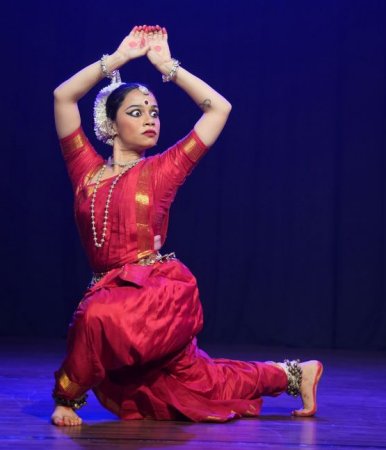 Anoushka Rehman (Photo: Prof K.S.Krishnamurthy) In a delightful bhajan inspired by Surdas, Anoushka lit up the stage with humour and narrative charm, vividly embodying both Krishna's playful mischief and the Gopis' exasperated frustration. Each character sprang to life through sharply defined gestures - the Gopis animatedly complained about Krishna stealing butter, snatching their clothes while they bathed, tying one's hair to her husband's moustache, and escaping after scratching a back with his nails. Krishna's responses were filled with impish innocence, feigning innocence by reminding them that it was they who invited him in, made him milk cows, and churn butter. Meanwhile, Yashoda balanced amused scepticism with gentle chastisement, teasing the Gopis for their flirtations while insisting her son was only five years old. Her motherly affection was evident as she finally took Krishna away, wrapping him in tender care. The scene's lively interplay of characters was brought to life with impeccable abhinaya, making the audience marvel at the playful devotion on display. The evening took a contemplative turn with the ashtapadi, "Sakhi hey Kesi madana mudaram." Steeped in the lyrical richness of divine love, this piece showcased Anoushka's extraordinary ability to embody and communicate intricate emotions. Through her evocative abhinaya, she brought Radha's journey vividly to life, conveying the intense yearning, inner turmoil, and the confessional outpouring to her sakhi about Krishna, the slayer of Kesi. Every nuance in her facial expression and the precision of her gestures captured the delicate interplay of love, longing, vulnerability, and ecstatic devotion that surged through Radha's heart. Anoushka's interpretation drew the audience into the very depths of Radha's emotions: eyes shimmering with the pain of separation, movements quivering with longing. As Radha pleaded with her confidante,"Go and bring my Lord, so that we can unite again," the urgency and tenderness in her appeal became palpable. Each gesture translated the poetic imagery of the ashtapadi with graceful clarity: hesitant glances, tremulous vulnerability, a subtle quiver of the lips and hands. The performance transcended narrative, becoming a meditation on inner transformation as Radha's worldly yearning evolved into selfless, devotional love. When Radha's gaze finally met Krishna's for the first time, at that moment, the boundary between human and divine seemed to dissolve, and sringara yielded seamlessly to bhakti. It was within these understated yet charged moments - a caught breath, a gentle sigh, a single poised stillness - that Anoushka's emotional depth and mastery of abhinaya shone with striking brilliance. "Shivashtakam," an ode to Shiva, served as the evening's powerful crescendo. The choreography honoured Shiva as the yogi of yogis - majestic and ever-peaceful, yet embodying both ascetic severity and compassionate grace. Through vigorous nritta and finely detailed bhava, Anoushka navigated Shiva's paradoxical nature, shifting effortlessly between the terrifying energy of the ascetic and the gentle presence of the consort. Her geometric chakkars evoked the cosmic cycles of creation and destruction, while her grounded chauka postures conjured the immovable steadiness of the Himalayas. As Bhairava, she twisted, coiled, and sparked with elemental fire, each movement charged with intensity - even the smallest mudra became an act of invocation. With the transformation into Parvati, that fiery vigour melted into a silken tranquillity; the hands that mimed destruction now softly shaped the descent of the Ganga. This metamorphosis was seamless, forging a bridge between Shiva's dual aspects - masculine and feminine, ferocity and tenderness - offering a living vision of their essential unity. The final tableau stilled the air. As she prostrated on the stage, the gesture carried the weight of surrender and sanctity, and in that suspended moment of motion and stillness, Anoushka ceased to be merely a performer; the boundaries between artiste, audience, and the divine momentarily dissolved. The lighting by Lynne Fernandes masterfully enhanced the atmosphere of each segment, perfectly complementing the mood and narrative of the performance. Her nuanced use of light and shadow created immersive ambiences that heightened the emotional impact, whether illuminating the primal intensity of Sankeertananam, the lyrical softness of Srimati, or the contemplative depth of the ashtapadi. Throughout the crescendo of Shivashtakam, the lighting underscored the shifting energies - from fierce to serene - drawing the audience deeper into Anoushka's transformative journey. Fernandes's thoughtful design was an essential element, shaping the visual aura and enriching the overall experience. The choreography by Surupa Sen lent a distinctive depth and coherence to the performance, seamlessly guiding each segment's emotional tone and narrative structure. Her creative vision was evident not only in the nuanced physicality and rhythmic intricacies of each piece but also in the way transitions were handled with clarity. Particularly noteworthy was the introduction to each segment, which Anoushka delivered through abhinaya. These expressive preludes invited the audience into the heart of each story, setting the stage both emotionally and thematically. This thoughtful integration of narrative introduction and choreography illuminated the depth of the work, underscoring the synergy between dancer and choreographer and enriching the audience's response. ANURADHA MATHUR: A MARGAM WOVEN WITH BHAKTI AND GRACE Anuradha Mathur, who first trained in Delhi under the guidance of Jamuna Krishnan and after moving to Bengaluru, resumed her dance journey under the tutelage of Guru P. Praveen Kumar, presented a traditional margam at Seva Sadan, Bangalore, on August 4, an evening where nritta precision, abhinaya subtlety, and devotional fervor came together in harmonious balance. She opened with Muthuswami Dikshitar's "Kanjadalayatakshi Kamakshi" in Kamalamanohari raga, evoking the goddess Kamakshi in all her resplendence - lotus-eyed, graceful, and imbued with the radiance of Tripurasundari. The choreography unfolded like a garland of visual poetry: adavus woven seamlessly with melodic curves, gestures breathing life into the lyrics, and glances mirroring the deity's benevolence. The Manmadha Bhasmam episode, depicting the revival of Cupid from ashes, stood out for its emotional layering - at once lyrical, dramatic, and deeply devotional. 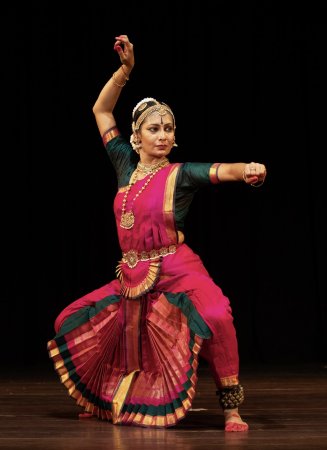 Anuradha Mathur (Photo: Sreeraj) The evening's central axis was "Sree Krishna kamala naatho", a varnam composed by Tirumale Srinivas in the contemplative Reethigowla raga and set to adi tala. It traced Krishna's journey from his miraculous birth as Devaki Nandana to the revelation of his universal form on the Kurukshetra battlefield, offering a sweeping canvas for narrative and rhythm. Anuradha began with the quiet wonder of Krishna's birth, the tender joy of a divine child arriving in the mortal world. In the Poothana episode, she shifted between innocence and latent power, her eyes and hands narrating the slaying of the demoness with understated authority. Guru Praveen Kumar's choreography allowed each epithet - Vasudeva, Nandagopa Priyatmaja - to blossom through sharply defined rhythmic passages and silken transitions. Episodes followed in quicksilver moods: the butter thief's impish charm in Gopala's leelas; the teasing play of Vastra Apaharana; the energetic Shakatasura Bhanjana; and the spiralling tension of Kaliya Mardana, culminating in the serpent's surrender. The lifting of Govardhana Giri was rendered with sculptural dignity, while the climactic Viswaroopa darshana expanded into sweeping, space-defining movements that seemed to dissolve the physical stage into cosmic vastness. Anuradha turned to intimate emotional territory in Subbarama Aiyer's padam "Yarukkagilum bhayama" in Begada. Here, as the self-assured nayika who loves without fear or apology, she revealed her gift for measured stillness and finely modulated expression. Without the support of nritta, the piece relied solely on the eloquence of her eyes, the delicate weighting of each gesture, and the internal pulse of the poetry. The maternal world of Yashoda followed, centred on the poignant paradox of "Jagadodharana", the saviour of the world cradled as an ordinary child. Anuradha's portrayal gently shifted between exasperation at Krishna's mischief, tenderness in care, and a blissful ignorance of his divinity, allowing the rasas of motherhood to glow with quiet luminosity. The recital concluded with Dr. M. Balamuralikrishna's Thillana in Brindavani, a celebratory burst of rhythmic agility and lyrical devotion. Brisk adavus, airy leaps, and flashes of abhinaya captured Krishna's radiance and playfulness, leaving the audience in an uplifted state. The music ensemble - Guru P. Praveen Kumar's authoritative nattuvangam, Omkar Amarnath's resonant vocals, Vidyashankar's vibrant mridangam, and Krishna Bhat's lyrical flute - wove an aural fabric that was at once supportive and inspiring. What emerged was more than a sequence of choreographed pieces - it was a finely calibrated journey through the many facets of bhakti: grandeur, mischief, intimacy, and surrender.  Bangalore based Satish Suri is an avid dance rasika besides being a life member of the Music and Arts Society. |
