
|     |
|
| |

 Tribute to Bhakta Kavi Jayadeva in various forms- Shveta Arorae-mail: arorashveta1806@gmail.com Photos: Anoop Arora August 6, 2025 On 31 May 2025, at the NCUI auditorium in Delhi, IPROCH (Institute for Promotion and Research on Odisha Culture and Heritage) organized a two-day festival on Bhakta Kavi Jayadeva. Jayadeva has had a tremendous influence on many branches of Hinduism and subsequently on all the classical arts. Classical dance and music have been greatly influenced by his writings. Odissi Guru Sharon Lowen curated the dance pieces, which was another factor pulling in the crowds that evening. The auditorium was almost full. The stage was decked up with roses and rajnigandha and the screen behind it displayed projected patterns of peacock feathers and flowers. Lord Jagannath was seated on the stage. In the music section, Surendra Sethi sang ashtapadi. Nazia Alam presented ‘Pashyati dishi dishi’ and ‘Dheera samire’ in her very sweet voice, taking it to very high notes. Her tonality and the control on the pitch was perfect. In the second section, short dance excerpts were presented, which are described below. 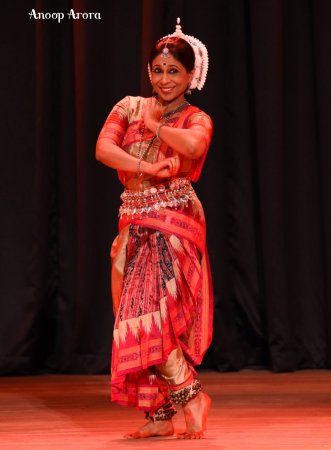 Reeti Rajguru – Odissi Singapore-based dancer and finance professional Reeti Rajguru took the stage to perform ‘Pranasangini’ in Odissi. She presented a bhajan by Vanamali Das. In the bhajan, the shy nayika narrates how Krishna comes to her house disguised as a beautiful maiden on the pretext of applying alta on her feet. When he is caught, he falls to her feet, begging forgiveness. Reeti wore a gold and red costume. The notes of flute played live filled the air. Radha is narrating the episode very shyly. Reeti depicted how Krishna ties his sari, decks himself up and wears the ghunghat. He entices Radha with his loving words. He goes to her chamber and begins to apply alta. He draws himself on the sole of her feet. But he is caught red-handed and Radha gets angry. Reeti depicted how Radha becomes shy and covers her face with her hands when he falls at her feet. The choreography was by Guru Kelucharan Mohapatra. 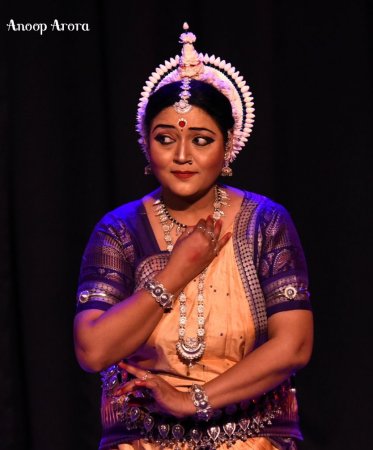 Kavita Dwibedi – Odissi The next performer was well-known Odissi exponent Kavita Dwibedi. She performed to a composition of Sufi poet Amir Khusro. Khusro blends cultures and writes about the meeting of the atma and paramatma. She wore a yellow and purple sari. It was a beautiful piece enacted very expressively. Kavita’s eyes were doing the talking all through the performance. The nayika collects flowers and threads them into a garland. She coyly tells her friend that she has lost herself to the gaze of her beloved. Kavita very shyly enacted the cravings of the nayika, who applies cooling chandan paste but still feels the searing pain of longing. She looks in the river playfully and sees the reflection of her beloved in the water where hers should have been. Kavita ended with a few lines on Jayadeva, her hands raised in surrender. 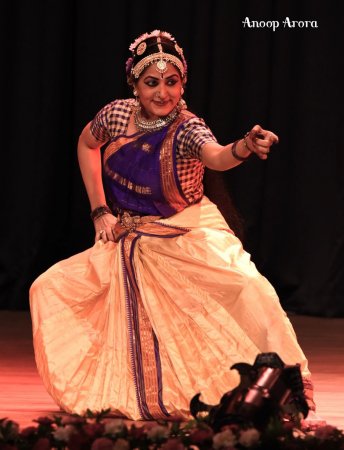 Purvadhanashree – Vilasini Natyam The next performer for the evening was Purvadhanashree in Vilasini Natyam. It was a composition of Jayadeva in which virahani Radha’s pain is described. She is in intense pain and the sakhi describes to Krishna her condition. ‘For her, each breath feels like flames within her. Chandan paste feels like snakes. Kamadev has taken the form of Yama, who inflicts pain on her. The lotus-eyed Radha cries all the time, she does not eat anything, does not sleep. She tries to rub off the chandan that burns her. Instead, she applies the dust of your (Krishna’s) feet on herself and chants your name to alleviate the pain. Her desires rise and she suppresses them.’ The sakhi goes into the nikunj and sees the beauty of the blooms and she tells Krishna she will fetch Radha. Purva was very aptly able to portray a virahani Radha whose expressions are all blank, all besides pain. It is as if in viraha, nothing else exists for her. The anguish was well portrayed. The sakhi tells Radha to wear her neelambar, combs her hair and ties them. The sakhi makes Radha wear her ornaments, her hair is adorned with flowers and she wears her kumkum. But Radha has doubts before entering the nikunj. She hesitates and the sakhi brushes away her doubts to say ‘pravesh’ – please enter. ‘The bowers are dense. Oh lotus-faced one, there are bees on the lotuses. As the vines are wrapped around the trees, wrap your arms around your beloved.’ Purva stood on her toes to show the tall trees standing in the forest. Yamuna was shown with waves in broad plie. Radha walks through the creepers. Krishna pulls her hand to bring her to him and the two engage in an embrace. It was a quiet and powerful presentation by Purva in a form that has abhinaya at its core. The vocals by Sudha Raghuraman and flute by G. Raghuraman were indescribable. 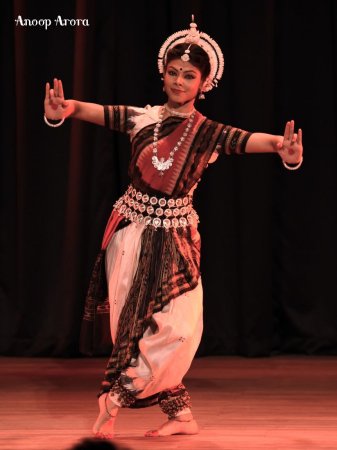 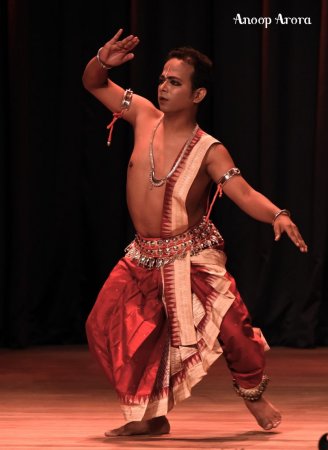 Nitisha Nanda & Vishwanath Mangaraj – Odissi Nitisha Nanda and Vishwanath Mangaraj, disciples of Guru Sharon Lowen, performed a bhajan by Bhakta Salabeg. The bhakta pleads with the lord to remove obstacles in his path. Nitisha swayed as Lord Jagannath on his chariot, Vishwanath swayed as the dhwaja or the flag. In ‘Ahe nila saila’, they danced the episode of gaja and graha: how the lord comes to vanquish the crocodile to rescue the elephant. They depicted the episode of Draupadi cheer haran. The game of dice between the Pandavas and the Kauravas was shown using gestures for loaded dice, Draupadi being dragged to the game arena and Krishna appearing as the sari. The next episode was that of Prahlad telling his father that Lord Vishnu is omniscient. The stance the two dancers took as Lord Narasimha and Hiranyakashyap gave goosebumps. Salabeg was shown to follow his Islamic rituals and yet, he gets the darshan of the lord. It was a very neat presentation and evocative storytelling by the two dancers through stances, gestures and perfect footwork. 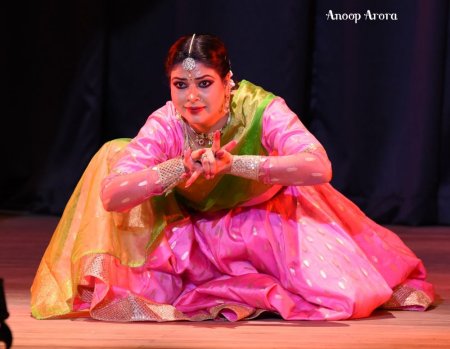 Vidha Lal – Kathak The final performance for the evening was by Vidha Lal in Kathak. Any presentation of Jayadeva’s work is incomplete without talking of his dashavatar composition, ‘Jaya Jagdisha Harey’. Vidha was dressed in a pink lehenga and green odhni. She was accompanied on tabla by Hiren Chate, vocal by Shuheb Hasan, pakhawaj by Ashish Gangani and sarangi by Amir Khan. She started with nritta in footwork and chakkars. The shloka recited and depicted in a recline was ‘Shantakaram, bhujang shayanam...’, with the lotus emerging from the lord’s navel. She depicted the four-armed stance of the lord. The lord as the meena avatar was shown using a back leg lift as a fish gliding through water after collecting all the Vedas. Samudra manthan was depicted with the Sumeru parvat all wobbly. The lord appears as the kachap or the tortoise and lifts the parvat on his back, the varaha avatar balances the earth on his horns. Bhakta Prahlad was saved by Narahari from the clutches of his father. She leapt as the Narasimha when the pillar is broken and Hiranyakashyap is torn apart. Her gait as the Vaman was interesting, walking with bent knees. King Bali agrees to give him 3 feet of land, but he grows so large in size that with one foot he covers the earth, with the second he covers the sky, and puts the third foot on the king’s head. The Rama avatar was shown with all the poise of Rama holding the dhanush. Sadly, since the event was inordinately delayed and it was very late by this point, I had to leave. Vidha, with all her prowess in nritta and nritya, executed the piece in a riveting manner. The curation by Guru Sharon Lowen was excellent, with the dancers weaving the tale of bhakti with the threads of devotional songs by worshippers of different faiths, a fitting tribute to Kavi Jayadeva.  Shveta Arora is a dance-mad writer who chronicles classical dance events in Delhi (and also those online). In 2009, she started the blog Kala Upasana at delhiculturecomment.blogspot.com, where she began posting her own writing along with photographs clicked by Anoop Arora, her husband. She's been dancing all her life as a devotee, but resumed her formal training in Kathak in her 50s and has passed her fifth year Kathak exams. |
