
|     |
|
| |

 Mulam 2025- Ashwini Naike-mail: ashwini.naik.gad@gmail.com Photos: Padmanabh July 23, 2025 The 10th edition of Mulam was held on July 11th and 12th, 2025, at Seva Sadan, Bengaluru, to mark the occasion of Guru Purnima and celebrate the rich tradition of the Guru-Shishya Parampara. Curated by Guru Vyjayanthi Kashi, the event was supported by the Ministry of Culture, Government of India, and the Department of Kannada and Culture, Government of Karnataka. Speaking on the occasion, Guru Vyjayanthi Kashi reflected deeply on the importance of understanding one's roots - Mulam. She recalled her own formative years with her Guru, Tumkur Ramanna, who would come home to teach her with great discipline and dedication. She shared how deeply it moved him when she danced well, and how his joy left a lasting impression on her. "Only when we become teachers," she said, "do we truly understand the gifts they have given us - not just knowledge, but love, patience, and humility." She spoke with reverence of her Kuchipudi teachers, whose profound knowledge, humility, and noble conduct were a legacy. It's important that such a legacy of our gurus must be passed on to the next generation, not through books alone, but through lived experience by those who have been touched by such teachers. Vyjayanthi Kashi emphasized that each Guru's journey is unique, shaped by their personal struggles and unwavering commitment to their students. The teachers of the past, she noted, had a singular goal: to impart knowledge selflessly. Despite facing great hardships and lacking recognition, they remained focused on nurturing their students. She reminded the audience that modern students and teachers may enjoy better opportunities and facilities, but this must not lead to a sense of superiority over their Gurus. True success, she said, is when Gurus find joy in their students' growth, and this humility must be cultivated in every learner. She urged parents to trust Gurus and teach children the value of humility. She concluded by honoring the Gurus of the past, whose tireless efforts preserved the Mulam - the roots of knowledge in Bharata's Natya Shastra - for future generations. This year's Mulam was graced by two distinguished Chief Guests - renowned for their deep spiritual insight and commitment to guiding others - each offering profound reflections on the timeless significance of the Guru. Chief Guest Dr. Ramachandra Guruji, a globally respected spiritual master and pioneer in past life regression therapy and psycho-spiritual healing, shared profound insights on the importance of the Guru. He began by pointing out that in astrology, Guru (Jupiter) is the largest and most powerful planet - symbolizing the immense influence a Guru has in one's life. He emphasized that dance and music, like two sides of a coin, hold deep spiritual significance, and that it's essential never to forget the source of this knowledge - the Guru. According to him, the greatest offering to a Guru is not wealth, but gratitude and reverence. A real guru has the strength to change his student's life and influence him towards a better future. To illustrate the same, he cited the example of Lord Krishna and Guru Sandipani. Krishna, though born into a lineage associated with Kamsa who is known for his tyranny, and often labeled as a thief and liar, was elevated to divinity through the guidance of his Guru. He noted that a real guru has the power to remove stigma, uplift the student, and shape their destiny. On the second day of Mulam, the Chief Guest was G. N. Seshadri, a well-known spiritual speaker, associated with Chinmaya Mission, and who has conducted several workshops across Karnataka integrating spiritual wisdom with practical life skills. In his address, Seshadri spoke about the relevance of the Guru-Shishya tradition, drawing inspiration from Veda Vyasa, the revered sage who authored the Mahabharata, Bhagavad Gita, Upanishads, and Brahma Sutras, systematized the Vedas and in whose honour, Guru Purnima is observed. Quoting the Sanskrit prayer "Om Sahanavavatu", he explained its deeper meaning: a shared aspiration for protection, nourishment, collaborative learning, and peace between teacher and student - an ideal foundation for true education. He emphasized that students should cultivate the Four D's, Discrimination between the real and unreal (Viveka), Dispassion towards worldly pleasures (Vairagya), a group of inner Disciplines like patience and friendliness (Kṣamadi Sakhya Sampattiḥ) and deep Desire for liberation and higher knowledge (Kumukṣitam). He also encouraged students to ask questions with humility and a genuine desire to learn, noting that this open-minded inquiry fosters true growth. A true Guru, he said, not only imparts knowledge but also recognizes and nurtures the unique potential in each student, guiding them in a way that aligns with their natural talents and temperament. As is the tradition of Mulam, the stage came alive with a series of captivating performances by renowned Gurus and their Shishyas, each reflecting the spirit of the Guru-Shishya Parampara at the heart of the festival. 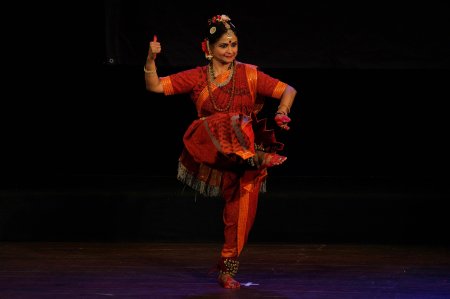 Dr. Padmaja Suresh 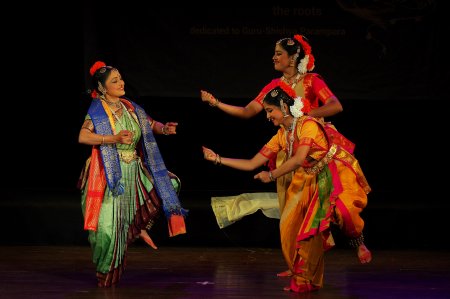 Disciples of Dr. Padmaja Suresh Dr. Padmaja Suresh, Director of Atmalaya Academy, presented a performance rooted in deep reverence for her Gurus, Chakyar Rajan and Guru K. Kalyanasundaram. In keeping with Mulam's theme, she curated a selection of pieces that held special meaning for her Guru, primarily drawing from his choreographies. The presentation opened with the Ganesha Pancharatna in the Tanjavur Baani, a composition by Adi Shankaracharya, followed by the Natesha Kautvam, reflecting her Guru's affection for this form and his encouragement of students to perform Kautvams. In her narration, Dr. Suresh symbolically likened the Guru's role to Shiva removing Ganesha's head, as a metaphor for shedding ego and darkness. This was followed by Sri Chakra Raja Simhasaneshwari, a composition of sage Agastya, and Aparakaruna Murthy, choreographed in honor of Kanchi Mahaswami, who was greatly revered by Guru Kalyanasundaram. The performance concluded with Maitrim Bhajata, reinforcing the need to preserve the bond of friendship and respect between Guru and Shishya for a more harmonious world. Her students, Aparna Dodmalur, Shreya Srinath and Arya Bharadwaj, also offered a piece invoking Ganesha to relieve us of our debts - especially debt to the guru - by remembering the Guru's feet and continuing the legacy through dance. While Dr. Suresh stayed true to the traditional choreographies of her Gurus, she incorporated elements of her tantric understanding into the performance. However, the overall repertoire, though rich and devotional, appeared as a collection of varied pieces, which left some in the audience searching for a more cohesive narrative. 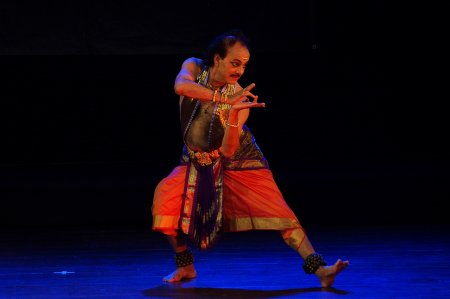 Chandrashekhar Navada 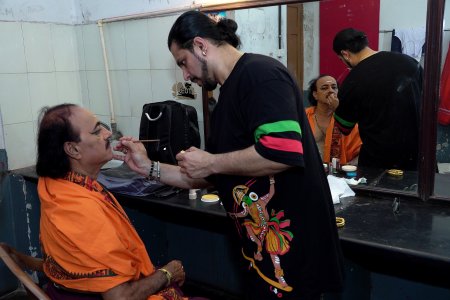 Surya Rao doing makeup for Chandrashekhar Navada Chandrashekhar Navada, trained under distinguished gurus including Martin D'Souza, K. Shivram, Nirmala Manjunath, Padmini Ramachandran, and Ullal Mohan Kumar in the Pandanallur style, offered a graceful performance of his guru's choreography, Daasaanjali. The piece was based on the Purandara Dasa composition Andinda naa ninna nere nambideno Krishna, depicting Krishna's role in the stories of Gajendra Moksha, Prahlada Charitam, and Draupadi Vastrapaharana. Navada displayed impressive angashuddhi - precision of body movements - and his abhinaya was controlled yet evocative. The Draupadi Vastrapaharana segment was especially powerful, as Navada portrayed the shifting emotions of Dushasana - his cruelty, arrogance, and frustration - with convincing intensity. The Prahlada Charitam segment, while sincere, felt less convincing and left the audience wanting more of the character of Narasimha. Overall, his performance was a harmonious blend of technical skill and emotive storytelling, deeply rooted in traditional style of Bharatanatyam. 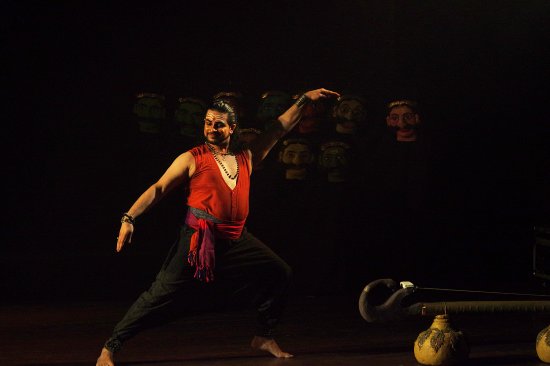 Surya Rao Surya Rao was the next performer. He initially trained in Bharatanatyam under Guru Chandrashekhar Navada and further expanded his repertoire through training in Kuchipudi with Guru Veena Murthy Vijay, Kathak under Guru Dr. Maya Rao, Contemporary dance with Madhu Nataraj, as well as acquiring skills in the Indian martial arts Kalaripayattu and Thang-ta, and the folk art Yakshagana. Surya presented his acclaimed choreography Ravana - The Untold Story of the 11th Head, which explores Ravana's inner turmoil on the eve of his final battle with Rama. The performance traces Ravana's reflections on his past, his awareness of the approaching destiny where he will be slain by Rama to fulfill the sages' curse, and his anticipation of his subsequent rebirth as Shishupala, before ultimately returning as Jaya in Vishnu's abode. The choreography beautifully incorporated elements from the diverse styles - such as the Mandooka Shabdam of Kuchipudi during Ravana's encounter with Mandodari, and Yakshagana influences in portraying Ravana's anger at Shurpanakha's insult. While the abhinaya mostly adhered to the natyadharmi tradition, the overall choreography embraced a more theatrical and dramatic approach. This performance served as a fitting tribute to all his gurus across the various styles he has studied. The use of lighting designed by Keerthi Kumar, a student of Dr.Maya Rao, accentuated the dramatic moments effectively. 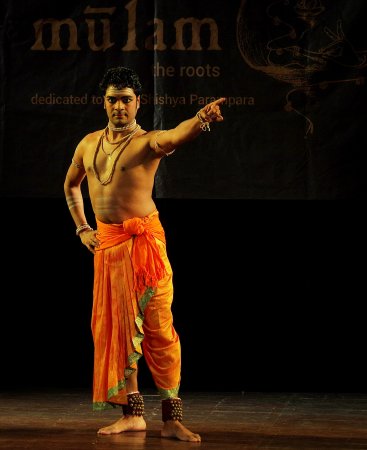 Mithun Shyam Day two saw the mesmerizing performances from young and seasoned gurus and their students. Mithun Shyam who performed first, has undergone over 25 years of dedicated training under the late veteran Guru Padmini Ramachandran. His performance offered a unique interpretation of the evolving Guru-Shishya bond, exploring the emotions Guru Vishwamitra experiences while shaping Shri Rama's character and destiny. Vishwamitra begins the journey by instilling discipline in Rama during the initial days of training. Later, to test Rama's willpower and adherence to discipline, he asks him to kill Tataka, a demoness. Vishwamitra wants to see whether Rama will follow his guru's teachings or rely on the lessons from his father, who forbade killing a woman. Only after being satisfied that Rama will act to protect dharma does Vishwamitra grant him the divine astras. As the journey progresses and Rama rescues Ahalya, Vishwamitra realizes that it is now his student's time to take center stage, and he begins to step back, disassociating his own name from the unfolding events. Upon reaching Mithila, Vishwamitra understands that Rama and his future wife, Sita, are incarnations of the gods. This realization brings a mixture of insecurity - fearing that Rama may prioritize Sita over his guru - but also acceptance, as he recognizes that his student is now advanced and requires guidance rather than direct instruction. Mithun Shyam showcased remarkable depth in abhinaya and body language, maintaining a focused portrayal of Vishwamitra's character and his evolving emotions. The strong concept, further enriched by insightful commentary from Deepa S. Pillai, made the performance highly engaging. However, a slight inclusion of nritta could have added an additional layer of captivation. The performance was accompanied by Harshavardhan K on nattuvangam, Jaidev Menon on vocals, Mithun Manoj on mridangam. 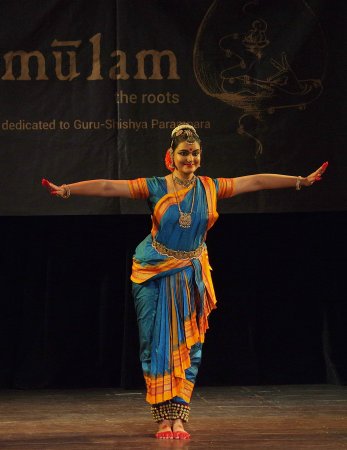 Kavya Kasinathan His student Kavya Kasinathan presented a recital expressing her gratitude to her guru. She beautifully sketched her journey of learning Bharatanatyam under her Guru Mithun Shyam, concluding by thanking him for shaping her life with teachings filled with love, care, warmth, and wisdom. Kavya intricately wove this narrative into the Alarippu, ending with a brief yet expressive snippet of a Padam. Guru Vyjayanthi Kashi followed with a choreography that gave voice to a guru's reflections on his or her journey - from being a student to becoming a teacher to a guru, nurturing learners from beginners to experts, and eventually witnessing them drift away, sometimes without clear reasons. Yet, the guru understands that it is his/her karmayoga to continue the teaching journey, with the sole purpose of spreading knowledge. It is ultimately the student's destiny to remain connected with the guru. The song was penned by Malini Shankar. 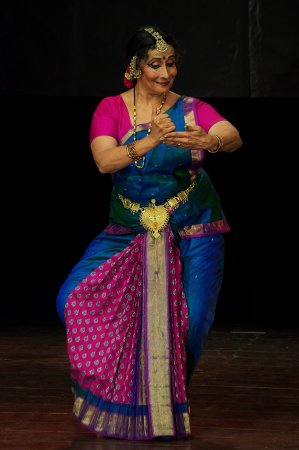 Vyjayanthi Kashi In her second performance, Vyjayanthi Kashi crafted an evocative choreography centered around a single line - "Krishna Krishna Krupasindhu" - from Narayana Teertha's Krishna Leela Tarangini. This solitary phrase served as the spiritual and artistic foundation for the entire piece, unfolding as a heartfelt invocation to Lord Krishna, beseeching him to become her guru and to dance alongside her. Through her interpretation, she conveyed the deep devotion and surrender of a seeker to the divine. Just as the Lord responds to such sincere pleas, the performance reminded us that true learning begins with complete surrender - to the divine, and to the wisdom of the guru. An eminent guru known for her powerful characterizations and emotionally resonant abhinaya, Vyjayanthi Kashi's artistry continues to inspire and move audiences deeply. This was followed by a performance by her students, led by Prateeksha Kashi, as a heartfelt tribute to their esteemed guru who has imparted the profound knowledge of the Natya Shastra. The piece highlighted the dedication with which she cultivates perfection in her students and the deep bhakti they hold for her. It was a pleasant surprise to see Kavya Kasinathan accompanying on nattuvangam for this presentation. Both of Vyjayanthi Kashi's performances, as well as the tribute by her students, were accompanied by vocals from Jaidev Menon and mridangam by Mithun Manoj. It was noteworthy to see these talented young musicians skillfully supporting not only their guru but also the other performers with equal finesse. The relationship between Guru Prabha Aatre and her students exemplifies the true spirit of the Guru-Shishya Parampara. Prabha Aatre's disciples are spread across the globe, with many relocating to Mumbai and Pune to remain close to her. Upon her passing, her students and admirers united to pay their final respects to this legendary figure. Inspired by the deep bhakti of Guru Prabha Aatre's students, Vyjayanthi Kashi's disciples paid tribute to her by performing to her composition Adideva. 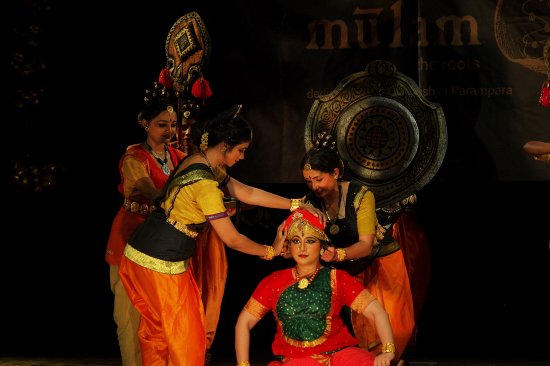 Rani Rudrama The final performance was Rudrama by Vyjayanthi Kashi's students, with Prateeksha as Rudrama. The choreography focuses on Rani Rudrama's journey from a young woman to a powerful, successful queen. Her rise wouldn't have been possible without the knowledge she gained from her gurus in various fields - shastras, music, warfare - which helped her understand all aspects of society and become a strong ruler. Though this piece has been performed many times, it never fails to surprise with the character evolution each time. It holds the audience's attention throughout, and the portrayal always impresses. The choreography was beautifully supported by the students of Shambhavi - Ashwini Bhat, Shivani, Abhigna, Himavyshani, Urvi, Gouthami, Nyja, Kushala, Ananya, Lakshmi, and Aditya - whose rendition added vibrancy to the performance. On both days, the artistes took the stage to answer audience questions about the guru-shishya relationship in today's world. Padmaja Suresh said a guru is like a foster parent - responsible for imparting knowledge as well as preparing students for the practical, transactional world. It's important to inculcate discipline while also caring for the student. The guru-shishya bond develops slowly over many years. Surya Rao was asked how he maintains this bond across multiple dance styles. He explained he has one guru for each style, and finding a good guru is punya from a past life. Chandrashekar Navada added that just as it's punya to find a good guru, it's also punya for the guru to receive a dedicated shishya who can surpass their teacher despite distractions. Parents play a key role in helping children find the right guru. When asked how to abide by the boundaries of shastra while being creative, Vyjayanthi Kashi said creativity must come from strong roots built through years of learning. Once mature, one can incorporate allied arts and innovate without losing tradition. Aparna Dodmalur emphasized the importance of thinking how one's guru might approach new ideas. Exploring shastra boundaries requires learning from many gurus, but the main guru's guidance is crucial to success. On upholding the guru-shishya parampara in today's competitive world: Surya Rao quoted, "Guruvina gulama naguaa tanaka doreyadenna mukuti" - accept the guru's words with humility, question wisely, and understand the true intent. This is how we sustain the tradition. Padmaja Suresh noted that unlike earlier times, when students weren't allowed to write lessons, today children should use modern technology and adapt tradition to the modern world. Chandrashekar Navada highlighted that every student has different strengths - in abhinaya, sahitya, or nritta. Gurus should teach according to these strengths, and students should not feel jealous or sad about what others are taught. Gurus should also be willing to let go if students move on. Aparna Dodmalur stressed the importance of clarity when approaching a guru. As the guru evolves, they bring the shishya along, sustaining the parampara. Mithun Shyam spoke about the guru-shishya bond being like a parent-child relationship. Over time, misunderstandings may arise and strain the bond. The key to preserving it is open communication - both guru and student must share their exact thoughts and resolve issues honestly. On keeping students focused in the social media age, instead of pushing new technology away, it should be embraced. Mithun shared how he created a student-led social media team to channel their interest productively. The talks showed that though there are challenges, the guru-student connection works best when built on respect, care, and willingness to adapt. This helps keep the tradition alive for future generations. 'Mulam' celebrates the special bond between Guru and student - a bond deeply rooted in our Sanatana culture. Through inspiring performances, meaningful talks, and the dedication shown not only on stage but also behind the scenes in organizing and running the event by the students of Guru Vyjayanthi Kashi, the festival demonstrated how this ancient tradition remains vibrant and strong today. By honoring the past and supporting new generations, Mulam reminds us that the roots of our culture continue to grow and thrive.  Ashwini Naik is a corporate leader, dance enthusiast and an amateur writer. Vice President in a Multinational, Ashwini tries to intertwine her vocation and avocation by driving cultural initiatives in the corporate world. Having trained in Bharatanatyam and Kuchipudi, Ashwini shares her learnings of leadership qualities from dance with her corporate friends. |
