
|     |
|
| |

 NCPA presents Shreyasi Gopinath and Manasi Deshpande- Chandra Anande-mail: chandra6267@yahoo.co.in Photos courtesy: NCPA July 22, 2025 NCPA, Mumbai, presented Shreyasi Gopinath (Bharatanatyam) and Manasi Deshpande (Kathak) at Experimental theatre, on 12th June 2025. A talented and confident Shreyasi Gopinath started the evening with her Bharatanatyam presentation. Varnam (Ragamalika, adi) was in Hindi language. It was a change from the often treaded theme of waiting for "union of atma with paramatma". The simple theme described the peaceful and meditative ambience of the temple, wherein picturesque atmosphere of the temple with the majestic gopuram, plants and creepers, temple bells and shrines were described in the order the devotee visits the temple. Through the description of the icons held by the main deity, one realises that it is a temple of Lord Nataraja, the supreme dancer, the master of rhythm and cosmic movement. The dominant mood of bhakti rasa was merged with wonder and admiration of the magnificent temple with its devout essence and sweet, fresh fragrances in the atmosphere. The lyrics penned by Shreyasi was translated into Hindi by Divyanand Jha, set to music by Easwar Ramakrishnan, with rhythmic inputs by Sivaprasad. 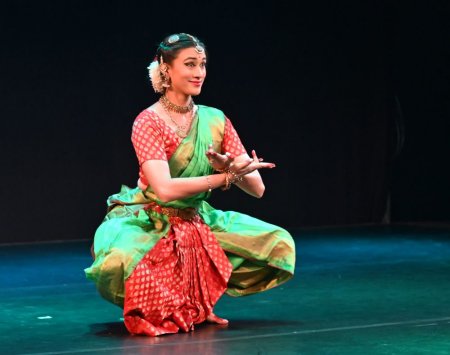 Shreyasi Gopinath The Javali "O my lovely Lalana, Elane pommanti, Ituvanti Step is it fit to take?", often referred to as a "Company Javali", is a unique and historically significant one, dating back to the time of British rule in India when a cultural fusion of the Indian music with the British Band could be seen. What makes this javali particularly special is its blend of Tamil, Telugu, and English that helped to reach out to a wider audience. With its expressive melody and heartfelt lyrics, this Javali captures the delicate tension between love, apology, and longing of the hero who seeks his beloved and asks her to forgive and accept him. Here Shreyasi, made a rare act of entering the auditorium through the aisle, all the while performing to the music and sat on the front edge of the stage for the pallavi section of the song and accessed the stage on the later part of the item presentation. This particular part seemed a vagary and did little to uplift the dramatization of the song. A vibrant tillana (Desh, adi), composed by Lalgudi G. Jayaraman followed. In the lyrics of the charanam, the devotee lovingly calls out to Lord Muruga, requesting him to come forth and bless them, just like he once blessed Valli with his divine love and married her. Here the abhinaya performed brought out the devotional fervour of the song. But the rhythmic brilliance was marred as some movements did not sync with the recorded music. 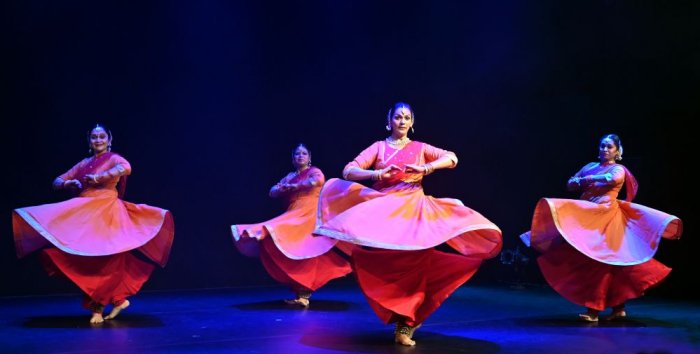 Manasi Deshpande and disciples In the second part of the evening's presentation, Manasi Deshpande, along with her students, presented 'Nritya Sutra'. This theme was an attempt to remain anchored in the soul of tradition and portray a fresh, thoughtful lens that resonated with today's audience. It was an attempt at delicately intertwining the richness of Kathak's traditional repertoire with a contemporary approach to staging and expression. Ganesh Dhrupad composed by Chaitanya Kunte, was presented in a sangfroid manner where a temple like atmosphere was visualised and created by the artistes. The features of dhrupad form known for its immersive meditative quality was well explored through rhythmic movements and abhinaya. Temple activities and various ways of praying to Lord Ganesha was portrayed. The different attributes and graces of the Lord was defined through gestures and postures, transforming the performance as a credible invocation to Lord Ganesha. Kathak elements such as Aamad, Paran, and Tatkar, which showcased the beauty of rhythm, precision, and grace that defined Kathak as a classical art form, was presented by Manasi Deshpande. The audience was taken on an abstract journey of pure traditional Kathak with technical brilliance and aplomb. The canvas of space was explored drawing lines, shapes and intricate patterns through nritta movements applied to the 10 beat rhythmic cycle of Jhaptaal. 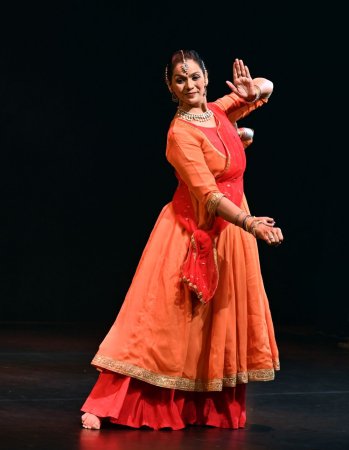 Manasi Deshpande The performance of Meera Bhajan, "Badariya re baraso sawariya ke des", composed by Pt. Jitendra Abhisheki, beautifully portrayed the proshitapatika nayika, the heroine who is separated from her beloved who is away on work, one of the eight classical heroines as described in Natyashastra. In her yearning for the beloved, the heroine (enacted by Manasi) turns to the clouds, pleading with them to carry her message and urge him to return soon. The supporting five dancers gave sancharis for the lines, presenting various ways the heroine spent her days immersed in his memories, how her heart ached with longing, and the beautiful memories she shared with her beloved while he was with her. Bhajan-numa Tarana, a lyrical and melodic composition by Pt. Dinkar Kaikini, blending the devotional essence of a bhajan with the rhythmic vibrancy of a tarana, offered a vivid portrayal of Lord Krishna, capturing both his divine charm and heroic deeds. It was a celebration of Krishna's strength, grace, and divine playfulness. Through brisk movements and expressive abhinaya, the dancers brought to life two dramatic episodes from Krishna's life - the slaying of Kamsa and the subduing of the serpent Kaliya. Gat Bhav followed by an elaborate Shiva Paran presented as a finale, narrated the poignant story of Sati, wherein her deep devotion, sacrifice, was delineated dramatically through the events that led her to give up her life in protest, by students of Manasi. And a Shiva Paran that depicted Lord Shiva's fury and cosmic rage upon learning of Sati's fate was performed by Manasi. The Shiva Paran could have been a little more elaborate to effectively show the intensity of Shiva's emotions. The piece gently came to rest with a Shanti Mantra, invoking peace and closure - a reminder of the eternal balance between creation and dissolution. The presentation while rooted deeply in classical compositions, explored innovative dimensions of modern spatial design, group formations, costume aesthetics, and musical layering. There was usage of the division of stage to uplift the item with a dramatic effect. The use of stage and lights differently for each item suited the quiet strength and grace of those pieces. The calm, composed atmosphere was brought out beautifully with help of subtle lighting, allowing the audience to focus on the stillness around the dynamics of the art form, the follow through of expressions and detailing in the movement. The presentation of 'Nritya Sutra' with update of newly defined aspects, was performed to recorded music and light credits to NCPA technicians. 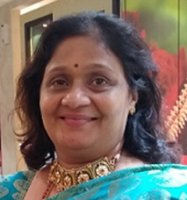 Chandra Anand is a Bharatanatyam artiste and teacher. She has an MA in Bharatanatyam from Tilak Maharashtra Vidyapeeth, and her series on 'Education in spiritual values through Bharatanatyam' is featured in narthaki.com. |
