
|     |
|
| |

 Grace and grandeur: Solo Bharatanatyam recitals- Satish Surie-mail: satishism@yahoo.co.in Photos: Prof.K.S. Krishnamurthy July 18, 2025 ASWATHI MELE MADATHIL: A JOURNEY OF DEVOTION AND DRAMA Aswathi Mele Madathil presented a solo Bharatanatyam performance at Seva Sadan, Bangalore, on June 15th under the meticulous guidance of her guru, Lakshmi Parthasarathy Athreya. The recital opened with Shakti Anjali, a spirited invocation to the divine feminine - Shakti, the primordial cosmic energy that nurtures, protects, and dispels negativity. Composed by Dr Murali Parthasarathy and set to khanda jati triputa tala (a rhythmic cycle of 7 beats), the piece offered a vibrant and charged start to the evening. The tala structure provided both discipline and dynamism, allowing Aswathi to display technical command and expressive abhinaya in equal measure. Her portrayal exuded strength and reverence, reflecting the duality of Shakti as both a nurturing mother and fierce protector. The choreography, rich in traditional idiom, was imbued with devotional intensity, setting the tone for a performance rooted in classical depth and emotional conviction. 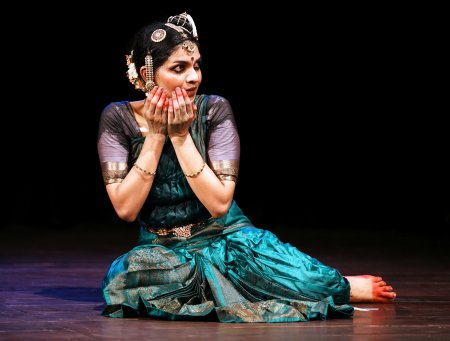 Aswathi Mele Madathil Aswathi's rendition of Papanasam Sivan's varnam "Swami naan undan adimai" in Nattakurinji, set to adi talam, was a captivating performance that wove together devotion and artistry with finesse. Traversing a rich emotional landscape from bhakti to sringara, she embodied the nayika's intense devotion to Lord Shiva with compelling intensity and grace. The choreography by Chitra Visweswaran offered evocative imagery of Nataraja's omniscience, with striking depictions of Gangadhara and Ardhanareeswara, invoking both awe and reverence. Mythological narratives were seamlessly integrated - Kannappa Nayanar's ultimate offering and Markandeya's salvation from death were rendered with powerful abhinaya, underscoring Shiva's compassion and might. Aswathi's command over movement and expression was complemented by the intricate weaving of poetic jatis and precise footwork, which reinforced the varnam's rhythmic structure and emotive arc. Her portrayal brought out the lyrical and devotional depths of the composition, making the performance a resonant and compelling tribute to Shiva's divine grandeur. A dramatic high point of the recital came with the padam "Indendu Vachitivira" in Suratti raga, where Aswathi portrayed the Khandita Nayika confronting a wayward Krishna. Her abhinaya here was especially noteworthy - infused with sarcasm, indignation, and flashes of humour. The nayika's emotional palette - ranging from mockery to wounded pride - was conveyed with finesse, and the piercing tonality of Suratti raga amplified the piece's dramatic charge. Transitioning effortlessly into the lyrical world of Andal, Aswathi presented excerpts from "Varanam Ayiram", drawn from the Naalayira Divya Prabandham. Set to a Ragamalika, the piece captured Andal's divine vision of her wedding to Lord Vishnu, steeped in sringara rasa. The seamless flow of ragas - from the grandeur of Nattai to the lullaby-like tenderness of Neelambari - mirrored the shifting moods of the narrative. Aswathi's portrayal was both ethereal and grounded, capturing Andal's ecstatic anticipation with a refined blend of emotive subtlety and lyrical grace. Bringing the evening to a resplendent close was a Thillana in Kuntalavarali raga, composed by the legendary Dr. Balamuralikrishna. This vibrant finale was a joyous celebration of pure nritta, showcasing Aswathi's rhythmic vitality, agility, and command over intricate patterns. Her crisp footwork, fluid torso movements, and sharply defined lines brought the syncopated brilliance of the composition to life. Interspersed with brief moments of abhinaya, she hinted at the devotional undercurrent traditionally associated with the raga, lending the performance both buoyancy and spiritual resonance. The performance was further enhanced by the live ensemble, where Kalamandalam Suprabha Sangeeth's vocals added emotive depth and clarity to the lyrical content. Lakshmi Parthasarathy Athreya provided steady rhythmic guidance on the nattuvangam, offering precise and sensitive cues. Harsha Samaga's mridangam playing contributed a dynamic and responsive rhythmic foundation, while Sangeeth Mohan's violin accompaniment enriched the melodic texture with nuanced phrasing and warmth. SAKSHI ASHOK: THE SUBTLE FIRE OF DEVOTION Sakshi Ashok, disciple of Mithun Shyam, presented a solo Bharatanatyam recital on 20th June under the aegis of ICCR, at the Bharatiya Vidya Bhavan, Bangalore. The performance unfolded as a deeply immersive experience, where technical finesse met soulful storytelling. Opening with "Pranavakaram Siddhi Vinayakam", a vibrant composition by Oothukadu Venkata Subbaiyer in ragam Arabhi, Sakshi invoked the blessings of Lord Ganesha - the remover of obstacles and embodiment of Om. Her confident nritta, marked by crisp footwork and rhythmic clarity, merged seamlessly with abhinaya that evoked the deity's gentle majesty. It was an auspicious and spiritually resonant beginning. 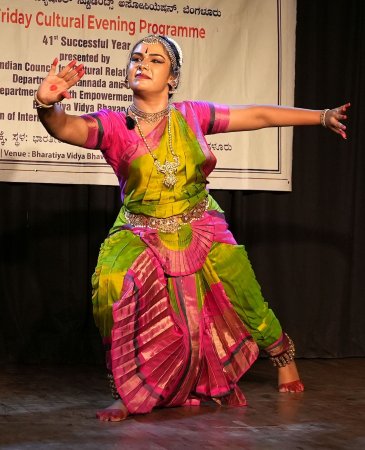 Sakshi Ashok The centrepiece of the evening was the varnam "Velanai vara cholladi" by Dhandayuthapani Pillai, set in ragam Bhairavi. This nuanced composition portrays a nayika's longing for Lord Murugan, which offered Sakshi the perfect canvas to explore both technical and emotive dimensions. She executed the intricate jathis with ease and musicality, while her expressive interpretation conveyed the layered yearning of the heroine, from devotion and desire to inner turmoil. With refined abhinaya and poised transitions, she sustained the dramatic tension and maintained the emotional thread with grace. What followed were moments that shimmered with subtlety and depth. When she portrayed Shiva receiving the sacred Om from his son, the audience could almost witness the transmission of cosmic knowledge through the quiet tremble of her fingertips. In the Markandeya episode, her sudden stillness as Yama approached was haunting, and the burst of energy that followed - symbolising divine rescue - was electrifying. Perhaps most memorable was her understated portrayal of Lord Murugan shedding his disguise as an old man. Without theatrical flourish, a mere straightening of the spine signalled transformation - an exquisite instance of suggestion over display. Following this, Sakshi shifted gears with Purandara Dasa's beloved devarnama "Kadugola tarenna," offering a delightful exploration of vatsalya bhava (divine parental love). With exquisite abhinaya, she brought to life the timeless scene of Yashoda's exasperated yet tender attempts to discipline butter-thieving Krishna. Her portrayal effortlessly alternated between the flustered mother - hands on hips, eyes flashing with mock anger - and the mischievous child god, his butter-smeared cheeks and impish grin visible through her nuanced expressions and playful hastas. The composition's lighter tone showcased a different facet of Sakshi's artistry. Clever rhythmic patterns mirrored Yashoda's chasing footsteps, while fluid nritta passages captured Krishna's evasive antics with grace and humour. Sakshi's rendition of Jayadeva's "Sakhi hey kesi madana mudaram" was a masterful exploration of divine sringara. Set to the poignant strains of raga Shuddha Saranga, her portrayal of Radha's first meeting with Krishna on the moonlit banks of the Yamuna balanced human tenderness with spiritual awe. Through finely etched abhinaya, Sakshi traced Radha's emotional progression - from hesitant curiosity, expressed through fluttering hastas and a downcast gaze, to breathless wonder embodied in a trembling stance and parted lips. Sakshi's rendering stood apart for its emotional authenticity, particularly in the climactic gaze where mortal love yielded to divine recognition, transforming Radha's sringara into bhakti. The performance concluded with the Poornachandra thillana, a vibrant and energetic finale that highlighted Sakshi's command over rhythm and spatial dynamism. Featuring intricate nritta passages woven into lively melodic phrases, the piece was visually arresting and celebratory in spirit. Her precise execution and infectious energy left the audience with a sense of exuberance, rounding off the evening on an uplifting and joyous note. ANANYA SANTHOSH: A JOURNEY THROUGH THE NAVARASAS Mithun Shyam's disciple Ananya Santhosh's Bharatanatyam performance at ICCR's Every Friday Cultural Program, Bangalore, on the 4th of July was a captivating journey through rhythm, expression, and spiritual emotion. Rooted in tradition and enriched with interpretative depth, her recital highlighted the expressive and technical richness of Bharatanatyam, guided throughout by a recorded musical track that provided the backbone for the performance. 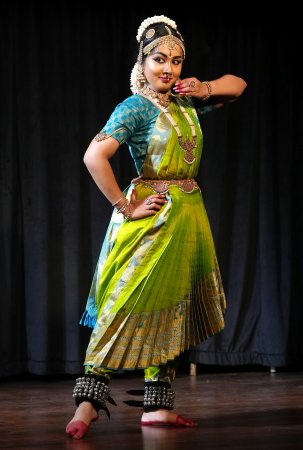 Ananya Santhosh The evening commenced with an invocation to Lord Ganesha, followed by a finely executed Alarippu, where her crisp movements and rhythmic clarity laid a strong foundation for the more elaborate compositions to follow. Her rendition of Dwaraki Krishnaswamy's Swarajathi in Nalinakanthi raga was marked by precision and energy. Ananya's control over intricate rhythmic patterns and vibrant movement vocabulary brought out the composition's internal pulse, underscoring her command over nritta. The centrepiece of the evening was the varnam "Angayakarakanni" by Lalgudi Jayaraman - a compelling canvas for exploring the Navarasas through the mythological narrative of Goddess Meenakshi (Angayarkanni) and Parvati. Ananya brought to life the goddess in her many forms - from a fearless warrior to a serene, compassionate mother. Her portrayal began with Veeram (valour), embodying the goddess's fierce warrior spirit in the lines "Disaiyengum vendru vetri vaagai choodinale..." - her sharp footwork and commanding expressions brought alive the imagery of victory on the battlefield. The transition to Sringaram (love) was seamless as she depicted Parvati's longing for Shiva in "Nangai Kailai naathan...", her delicate gestures and fluid movements conveying deep devotion and romance. The Adbhutam (wonder) rasa emerged when she expressed Parvati's astonishment at Shiva's power, destroying Manmatha and the Tripuras, while Hasyam (laughter) followed playfully in "Kaikotti siritthal, vaipotthi nagaithal", where Shiva, disguised as a labourer, evoked mirth. The most striking shift came with Roudram (fury), where Ananya transformed into the terrifying Mahakali, annihilating the demon Bhandasuran - her fierce expressions and dynamic choreography in "Mahakali Kapalini Trishoolini..." enthralled the audience. The varnam concluded with Shantam (peace), as she gracefully transitioned into a serene surrender with "Shantaswaroopini sharanam Amma," leaving the spectators in a meditative calm. Ananya's performance reached its sublime conclusion with select verses from Jayadeva's Ashtapadi, drawing from the Gita Govinda. These timeless verses, exploring the divine love between Radha and Krishna, were rendered with heartfelt sensitivity. She began with "Dheera sameere Yamuna theere", evoking the tranquil beauty of the Yamuna's banks where Krishna awaits Radha. Ananya's languid movements and delicate glances reflected Radha's inner restlessness and longing. With "Avaso vipanayate", she shifted into portraying Krishna's playful charm, her expressions capturing both mischief and divinity. In "Mamiyam chalita" and "Yahi Madhava, Yahi Keshava", Ananya gave voice to Radha's anguish and wounded pride. Her trembling hands, imploring eyes, and emotionally charged stillness conveyed the ache of separation and the deep yearning for union. The mood lightened with "Priye charusheele", as Radha responds to Krishna's praise and affection. Joy, shyness, and romantic fulfilment unfolded in her expressions, revealing a charming interplay of devotion and desire. Her gestures grew lighter and more fluid, culminating in the ecstatic chant of "Radhe Krishna, Radhe Krishna", where devotion and surrender merged in quiet transcendence. 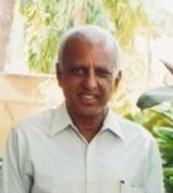 Bangalore based Satish Suri is an avid dance rasika besides being a life member of the Music and Arts Society. |
