|     |
|
| |

 Nadasutra's Antardhwani Festival: A celebration of creative potential - Manjari Sinha e-mail: manjari@sinha.com Photos: Rahul Naag April 24, 2025 Nadasutra, a Delhi-based cultural and performing arts centre that aims at preserving and transmitting ancient Indian art forms through the enduring values of Guru-Shishya Parampara, offers an immersive and transformational mode of learning. Founded in 2017 by Akash Mallick and Swarnali Kundu, Nadasutra strives to groom Bharatanatyam and Marga Natya aspirants with dedication. Swarnali Kundu, a graded artist of Prasar Bharati, has done her Masters in Bharatanatyam from Rabindra Bharati University, Kolkata and Akash Mallick is an exponent of Marga Natya and Kathakali, engaged in research and scholarly pursuits focused on the reconstruction of Bharata's theatrical system and intricate exploration of art pedagogy delving in its traditional and contemporary applications. Antardwani Festival is the annual showcase of dance presentations by the students of Nadasutra, where a senior guest artiste of another classical dance form is also invited to perform, celebrating the creative exuberance. Swarnali and Akash, the founders of Nadasutra, explain, "Antardwani captures the deep desire reverberating within us to find meaning through creative expressions. It is this creativity that Nadasutra celebrates through the medium of classical dance. Our institution preserves India's rich artistic heritage in its most authentic form, making it accessible and engaging for a contemporary audience. On this occasion, we also confer the Nadasutra Samman upon a 'Kala Tattvaadarsh' stalwart for their contribution to the field of art and scholarship and the 'Nritya Samarpita' award to a senior disciple, in recognition of their dedication and enduring commitment to the ethos of Nadasutra." 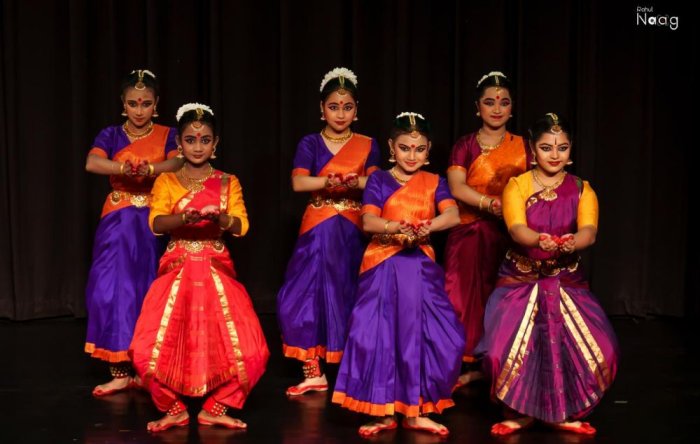 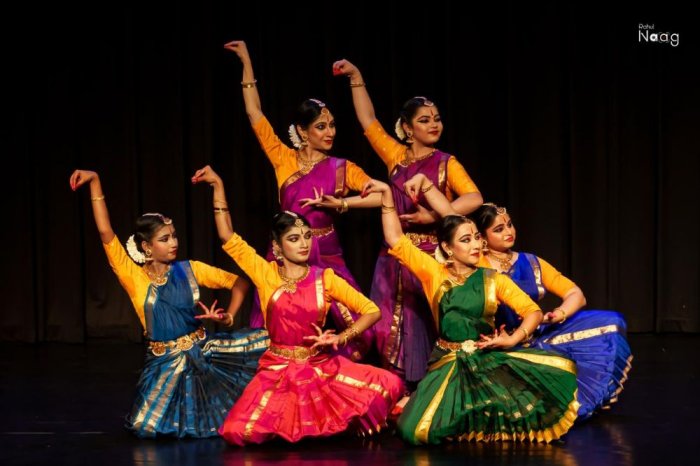 The Vivekananda Hall of Kathak Kendra, Delhi, was filled with rasikas, parents, and personalities from the arts fraternity. The thoughtfully conceptualised event unfolded as an earnest tribute to the timeless tradition of Bharatanatyam and Marga Natya. It commenced with a devotional offering "Shyamale Meenakshi", composed in ragam Sankarabharanam and talam adi, performed gracefully by the youngest stars of Nadasutra. This invocatory composition by Harikesanallur Muthiah Bhagavatar prefaced the auspicious lamp lighting ceremony. The dance showcase proceeded from the youngest group of dancers to the older age groups in ascending order. The next group presented the Ganesh Vandana "Pranavakaram Siddhi Vinayakam", a composition of Muthuswami Dikshitar in ragam Arabhi set to adi talam, portraying Ganesha's profound spiritual significance. The guest artiste, Kuchipudi dancer T. Reddi Lakshmi took the stage thereafter, adding sparkle to the evening. Her mentor Guru Jayarama Rao, was also present as the guest of honour. Opening her presentation with Maharaja Swathi Thirunal's Hindi composition "Aaj aaye Shyam Mohana", T. Reddi Lakshmi enchanted the audience with the divine Raas Leela of Radha-Krishna. Composed in ragam Shuddha Sarang and adi talam, the beautiful choreography had the sanchari of Dyuta Kreeda (the game of dice) episode from the Mahabharata, exploring the harrowing humiliation of Draupadi at the hands of Dushasana in the Kaurava Sabha. Dishonored in the court, she surrendered herself completely to the mercy of Krishna, who protects her from being disrobed with an unending stream of garments, reaffirming his boundless compassion for his devotees. 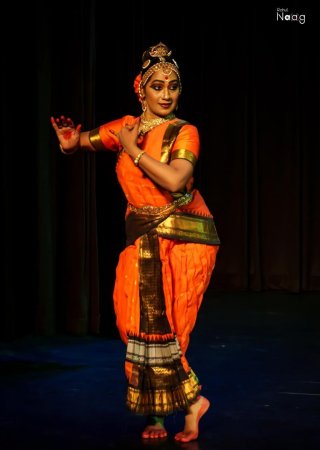 T Reddi Lakshmi Juxtaposed with nritta and abhinaya alternately, this piece was brought to life through the masterful choreography of Guru Jayarama Rao, blending devotion, emotion, and storytelling into a captivating ekaharya abhinaya dance presentation. "Shiva Shiva Bhava Bhava", a composition by the saint-poet Shri Yathi Narayana Thirtha, came next, extolling the glory of Shiva. In this deeply devotional piece, the seeker surrenders completely, seeking refuge in the divine. The choreography reached the climax as the dancer performed Tarangam, executing intricate rhythmic patterns dancing on the edge of a brass plate. It symbolised the union between Atma and Paramatma—the soul merging with the Supreme. This presentation in Ragamalika and Talamalika was choreographed by Guru Jayarama Rao and Vanashree Rao and was remarkably enhanced by the brilliant musical support with nattuvangam by Guru Jayarama Rao, vocals by Satish Venkatesh, mridangam by Tanjavur R. Kesavan, flute by Rajat Prasanna and violin by Raghavendra Prasad. The Nadasutra dance presentations continued with "Angikam Bhuvanam Yasya / Vaachikam Sarva Vangmayam", the invocatory verse that described Shiva as the ultimate cosmic performer in raga Revati and set to adi talam. 'Natesha Kautuvam' came next in praise of Shiva as Nataraja. Kautuvams are unique in their blend of sollukattus (rhythmic syllables) and lyrical poetry, often used at the beginning of Bharatanatyam performances to energise the stage and evoke the deity. In this particular Kautuvam, Nataraja is portrayed through dynamic poses, playing his damaru (drum) while performing the cosmic dance that captivates sages and demons alike. The Dandayudhapani Pillai composition in ragam Nattai and adi talam praised his grace, rhythm, and divine presence. 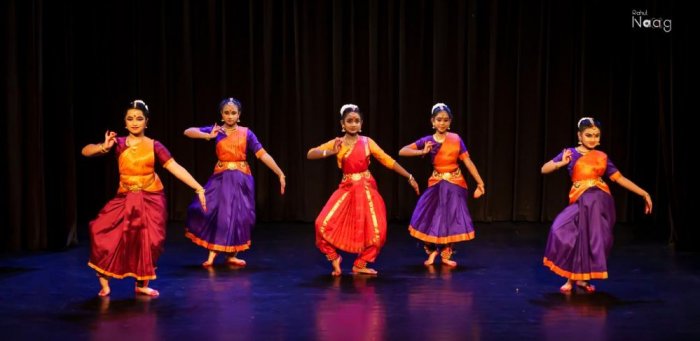 Jayadeva's Ashtapadi from Geeta Govindam "Hari riha..." was an abhinaya piece in ragam Kamavardhini, evoking deep yearning and devotion. 'Ranjini', a melodious Kriti composed by Dr. M. Balamuralikrishna, was dedicated to Goddess Lakshmi, the embodiment of beauty, compassion, and abundance. She was described as lotus-eyed, graceful, and full of divine radiance, in this piece. The Ragamalika format, weaving different ragas, highlighted unique emotional and melodic elements symbolising the varied facets of Lakshmi. Set to adi talam, the composition carried both lyrical richness and musical brilliance, making it a delightful blend of devotion and aesthetics. The evening concluded with "Bho Shambho", an evocative poem by Swami Dayananda Saraswati in ragam Revati and talam adi. It was a powerful hymn in praise of Lord Shiva, the cosmic dancer and supreme consciousness. The lyrics celebrated Shiva as Swayambhu - the self-existent Nataraja - the Lord of rhythm, and the compassionate protector of all beings. 'Antardhwani' was a joyous celebration of disciplined training and youthful creativity. The students who performed comprised Nivanshi Kar, Samaira Kumar, Dheera Nagar, Chaavya Rohar, Aavya Saini, Archita Shivanjali Kashyap, Advaita Nowar, Deepika Pradhan, Yati Gupta, Ipshita Das, Satakshi Mitra, Jyotishmita Mondal, Adrija Sen, Taesha, Adwitya Basu, Sayeesha Shreya Saroj, Aadya Desai, Aisha Siwach, Srijani Jana, Aastha Sarkar, Kritika Pal, Disha Basak, Shilpa Pal, Antarleena and Urmi Gupta. Each performer, adorned in traditional attire, embodied the dignity of classical Indian dance. Their dedication stood as a testimony to Nadasutra's vision and the tireless efforts of their mentors. As Antardhwani concluded amidst thunderous applause, the message was clear: classical art forms are not just surviving, they are thriving in the hands of passionate educators, dedicated disciples, and a nurturing community.  Manjari Sinha is a musicologist and an acclaimed classical music and dance critic. She has an MA in Sanskrit from Allahabad University, MA in Music from Vikram University, Ujjain; Sangeet Prabhakar in Hindustani Vocal, Tabla, Sitar and Kathak dance from Prayag Sangeet Samiti, Allahabad; and further training in Sitar under Guru Pt. Arvind Parikh in the lineage of Ustad Vilayat Khan. She has authored a book on Ustad Bade Ghulam Ali Khan, commissioned & published by Roli Books. She has contributed the chapter on Kathak for 'Indian Dance: the Ultimate Metaphor'. Her articles in English and Hindi on Music, Dance, Art & Culture are regularly showcased in a variety of leading journals and periodicals. |
