
|     |
|
| |

 The Sacred and the Sublime: Celebrating women through dance - Satish Suri e-mail: satishism@yahoo.co.in April 16, 2025 SOLO KATHAK BY SAMPADA PILLAI Sampada Pillai's solo Kathak performance under the aegis of the I.C.C.R (Every Friday Program) on the 7th of March at the Bharatiya Vidya Bhavan was a tribute to her guru, Late Rohini Bhate. 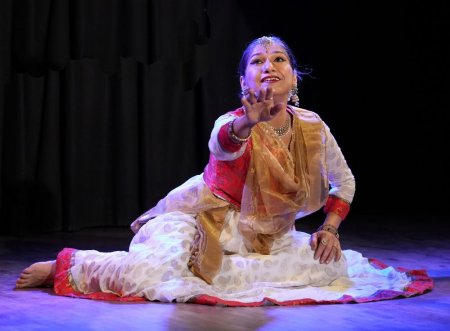 Sampada Pillai (Photo: Prof. K.S. Krishnamurthy) Sampada's rendition masterfully wove together rhythm, emotion, and storytelling, creating a captivating evening. The event began with the Tri-devata Stuti, a devotional invocation conceptualized by Guru Mohanrao Kallianpurkar, paying homage to Lord Shiva, Goddess Durga, and Lord Krishna. Set to raga Hamsadhwani, the piece featured shlokas, paran, and kavittas, accompanied by the vocals of Late Shripad Bhave and the rhythmic recitation of Prajakta Raj. This opening segment set a spiritual tone for the evening. Sampada then explored the intricacies of nritta with a mesmerising Teental in a 16-beat cycle, choreographed by Guru Rohini Bhate. The performance followed the traditional Kathak sequence of Uthaan, Thaat, Aamad, and Paran, culminating in a breathtaking display of rapid turns and footwork. The rhythmic brilliance of Nikhil Phatak on the tabla and the padhant by Prajakta Raj elevated this segment. The abhinaya segment featured the bhajan "Bansi batta Jamuna tatta, Nira ta Banawari", composed by Pt. Bindadin Maharaj. This piece vividly depicts Lord Krishna's playful dance on the Yamuna's banks, blending divine charm with human emotion. Set to raga Mishra Bilawal and taal Dadra, it was enriched by the choreography of Guru Rohini Bhate, the vocals of Madhuri Joshi, and tabla accompaniment by Nikhil Phatak. The performance transitioned into a Triveni in raga Marwa, featuring a Tarana, Thumri, and Sargam. Originally choreographed by Guru Rohini Bhate for her dance-drama Kathputli, this segment showcased the interplay of melody and rhythm, accompanied by the evocative vocals of Shripad Bhave. The penultimate piece drew inspiration from Sarojini Naidu's poem "The Village Song", exploring the tension between societal expectations and personal desires. Through expressive choreography, Sampada brought the poem to life, highlighting themes of independence and resilience and paying tribute to Naidu's advocacy for women's empowerment. The evening concluded with a traditional Kajari, a semi-classical form associated with the monsoon season. The piece, choreographed by Guru Rohini Bhate depicted the emotions of a Virahini Nayika, capturing the bittersweet interplay of joy and sorrow. The performance left the audience immersed in its emotional depth. Sampada's Kathak performance celebrated the timeless beauty of the art form while honouring the strength and spirit of women. It stood as a testament to the artistry of the performers and the enduring legacy of the gurus who shaped this classical dance tradition. KAISHIKI Photos: Rajkumar Doss 'Kaishiki,' an evening of classical dance performances held at Bangalore's Medai on March 8th to celebrate International Women's Day, showcased the artistry and grace of four exceptional dancers. The event featured a diverse lineup of Indian classical dance forms, each performed by a distinguished artiste, making it a memorable celebration of womanhood and cultural heritage. 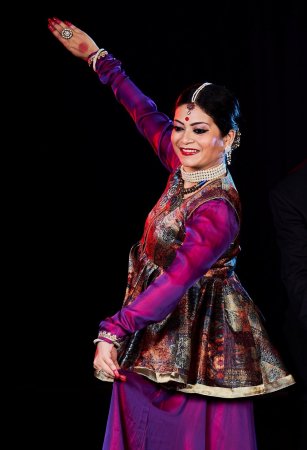 Jayeeta Dutta "River Flows in You" is a captivating solo Kathak production that seamlessly blends the rich heritage of Indian classical dance with the timeless beauty of Western classical music. Choreographed and performed by Jayeeta Dutta, the production weaves together tradition and innovation, offering a visually stunning and emotionally profound experience. The journey began with a graceful interpretation of Pachelbel's Canon in D, where the fluid movements of Kathak mirrored the mesmerizing patterns of starlings in flight - a metaphor for unity, freedom, and creative expression. This opening piece, Murmuration, celebrated the harmony of collective movement while honouring individuality, particularly resonating with themes of women's empowerment. Next, the haunting strains of Massenet's Meditation from the opera Thaïs set the stage for Cursed into a Stone, a poignant retelling of the story of Ahalya. Through Kathak's storytelling tradition, the piece delved into betrayal, punishment, and redemption, challenging societal double standards and reframing Ahalya's silence as an introspective journey toward self-liberation. Bach's Arioso then guided the audience through Finding Light, a contemplative exploration of a woman's life - its joys, sacrifices, and inevitable solitude. As the dancer transitioned from youthful exuberance to the quietude of ageing, the piece culminated in a moment of transcendence, where light emerged from the darkness, offering solace and renewal. The production closed with Yiruma's River Flows in You, a lyrical fusion of Kathak and Thumri. Here, the dancer embodied Radha's eternal longing for Krishna, her movements flowing like water - sometimes turbulent, sometimes serene - capturing the essence of love, devotion, and spiritual awakening. The recurring motifs in the music mirrored the cyclical nature of life, leaving the audience with a sense of peace and hope. Through its innovative choreography and emotive storytelling, River Flows in You bridged cultures and eras, inviting viewers to reflect on timeless themes of freedom, resilience, and the enduring power of art. 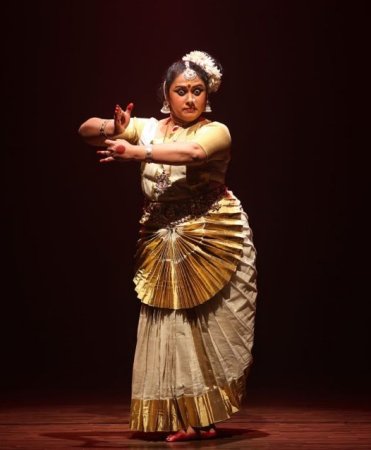 Vinaya Narayanan Vinaya Narayanan, a disciple of Mohiniattam guru Bharati Shivaji, brought to life the divine duality enshrined in the goddess of Kollur Mookambika. The temple's deity, a synthesis of Shakti, Saraswati, and Lakshmi, embodies both the fierce and the serene - an interplay that found expression in the dynamic vocabulary of Mohiniattam. With subtle abhinaya and precise footwork, she evoked the formidable energy of Durga - the warrior goddess who destroys ignorance - while seamlessly transitioning into the tranquil grace of Saraswati, the bestower of wisdom, and the gentle abundance of Lakshmi. The lasya elements of the dance mirrored the goddess's benevolence, while occasional bursts of rhythmic intensity hinted at her untamed power. Through her artistry, Vinaya Narayanan not only honoured the sacred triad of Mookambika but also reinforced Mohiniattam's capacity to convey profound spiritual themes. Her performance remained rooted in tradition yet alive with personal devotion, reflecting the legacy of her guru Bharati Shivaji, who has tirelessly worked to elevate the dance form as a medium of divine storytelling. Vinaya Narayanan concluded her performance with a soulful lullaby composed by Irayimman Thampi and choreographed by Bharati Shivaji. The piece tenderly wove together the natural world's beauty and a mother's boundless love as she compares her child to the radiant full moon, the delicate lotus, the graceful peacock, and every other exquisite wonder of creation. Yet, in the end, the mother affirmed that her little one surpassed them all in beauty - a blessing for which she offered heartfelt gratitude to Lord Padmanabhaswamy, the presiding deity of Thiruvananthapuram. Through gentle swaying movements, soft gestures, and expressive abhinaya, Vinaya captured the lullaby's essence - the quiet intimacy of maternal love, the sanctity of divine grace, and the harmony between human tenderness and celestial beauty. The choreography, true to Bharati Shivaji's signature style, blended lyrical fluidity with subtle emotional depth, leaving the audience with a sense of serenity and devotion. The piece served as a fitting finale, merging the earthly and the divine in a celebration of life's most cherished gift - a beloved child. 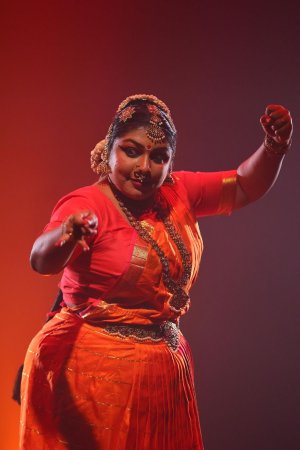 Raksha Kartik Raksha Kartik's Bharatanatyam performance wove together the divine feminine energies of Saraswati, Lakshmi, and Mahakali through a carefully curated selection of compositions. She began with Saraswati, rendered through Mysore Vasudevacharya's composition, set to a raga that echoed the goddess's serene wisdom, fitting for Vasant Panchami. The lyrical depth and melodic intricacy mirrored Saraswati's association with knowledge and the arts. Transitioning to Lakshmi, she chose Sri raga, a natural homage to the goddess of abundance. The composition "Sri Lakshmi" unfolded with sancharis that painted vivid imagery - Lakshmi's benevolence toward a devout elderly woman and echoes of Kanakadasa's devotional verses, highlighting her generosity. The raga's inherent grace and the lyrical storytelling brought out Lakshmi's nurturing yet majestic presence. Raksha Kartik's exploration of the divine feminine culminated with Madurai Krishnan's composition, a stirring tribute to Durga in her nine forms and the fierce power of Mahakali. The piece vividly depicted the slaying of Raktabīja, the demon whose every drop of blood spawned new clones - a battle only Kali, with her insatiable rage, could end. The lyrics painted the scene of her triumph, her tongue lolling in fury as she drank his blood before it could touch the earth, embodying the unstoppable force of divine justice. But beyond the mythology, the composition carried a deeper, empowering message. It closed with a rousing call to women - an exhortation to recognize their inner strength, embrace their identity, and walk through life unshaken, with heads held high. The music mirrored this sentiment, shifting from the thunderous energy of Kali's destruction to a soaring, uplifting finale - a reminder that the goddess's fierceness exists within every woman, waiting to be claimed. The performance, through its artistry and intent, became more than a devotional offering; it was a celebration of Shakti as liberation, both in myth and in the modern world. 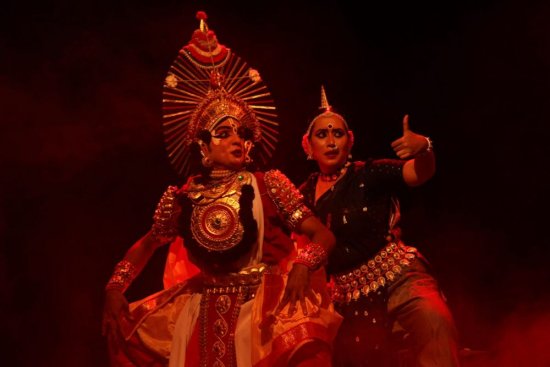 T Holla and Vandana Supriya Kasaravalli Vandana's latest production, Shurpanakhi, reimagined the infamous demoness from the Ramayana with a rare sensitivity, shifting focus from her vilified role to her emotional turmoil. The narrative unfolded through her eyes - her unrequited love for Rama, the cruel mockery that followed when he directed her to Lakshmana and the brutal mutilation she endured when her nose and ears were severed. But instead of reducing her to a mere antagonist, the performance peeled back the layers of her character, revealing a woman scorned, humiliated, and ultimately capable of unexpected empathy. The production stood out for its experimental blend of Odissi and Yakshagana, with Vandana's fluid, expressive movements contrasting beautifully against T. Holla's vigorous Yakshagana stylings. While she embodied Shurpanakha's anguish and longing, T. Holla played her confidant, a narrative device that transformed the performance into an intimate dialogue. The interplay of these two classical forms added depth - Odissi brought grace and melancholy, while Yakshagana infused raw theatricality, making the storytelling dynamic and engaging. One of the most striking moments came in the final act, where Shurpanakha, despite her suffering, intervened when her brother Ravana threatened to kill Sita. Her defiant command, "Do not harm her; she is a woman like me", reframed her character in a startling new light. No longer just a vengeful figure, she became someone who recognized the shared vulnerability of women, even those considered enemies. This moment of solidarity, rare in traditional tellings of the epic, underscored the production's deeper exploration of agency, dignity, and the often overlooked humanity of mythological villains. Scripted by Apurva Kasaravalli in Kannada, the dialogue wove in cultural nuances, grounding the ancient story in a familiar linguistic cadence. The result was a thought-provoking piece that challenged rigid moral binaries, inviting the audience to reconsider who gets to be a victim, who gets to be a hero, and why. SMRITI PRAVAH -2025 THE ENDURING LEGACY OF RUKMINI DEVI The Kalakshetra alumni came together on 9th March at the Bangalore International Centre in a heartfelt tribute to mark the 121st birth anniversary of the iconic Rukmini Devi Arundale, whose visionary spirit continues to guide the institution's artistic legacy. Dancers Archita Mehta, Tripti Bhupen, Vasundhara Thomas, Dr. Priyashri Rao, Gayathri Krishnaveni Lakshmanan, Lasyapriya Ravishankar, and Nritika Natesh offered a soulful prayer through traditional verses, their voices blending reverence with emotion. Nostalgia filled the air as they revisited the sacred chants and movements that embody the Kalakshetra bani - each gesture a testament to Rukmini Devi's enduring influence. As the verses resonated, one could almost sense her presence - a quiet reminder that her legacy lives on in every student who carries forward the Kalakshetra spirit. The evening unfolded as a graceful homage to Rukmini Devi Arundale's artistic vision, with Kalakshetra's senior teachers presenting choreographies that blended tradition with subtle innovation. The program opened with Tripti Bhupen and Archita Mehta performing a characteristic Misra Alarippu, its intricate rhythms and poised geometry setting a contemplative tone for the evening. Lasyapriya Ravishankar and Nritika Natesh then illustrated Mysore Vasudevacharya's composition, "Ra Ra Raajeva Lochana", a lyrical ode to Lord Rama's virtues. Choreographed by N.S. Jayalakshmi, the rendition wove together devotion and technical brilliance, particularly in the chittaswara, where the nritta unfolded at two contrasting speeds - a dynamic interplay of languid grace and spirited precision. Vasundhara Thomas, a senior disciple, brought profound depth to the Devaranama "Jaganmohana Ne Krishna", her performance meticulously crafted by Krishnaveni Lakshmanan. With subtle abhinaya and fluid movement, she unfolded the divine play of Lord Vishnu's avatars - Vamana, the diminutive Brahmin, and Kurma, the cosmic tortoise. Her portrayal of Vamana's clever expansion into Trivikrama, spanning the heavens and earth in three strides, contrasted beautifully with Kurma's majestic steadiness, supporting the ocean's churning. The choreography wove together lyrical grace and sculptural poses, embodying Kalakshetra's hallmark blend of purity and expressiveness. 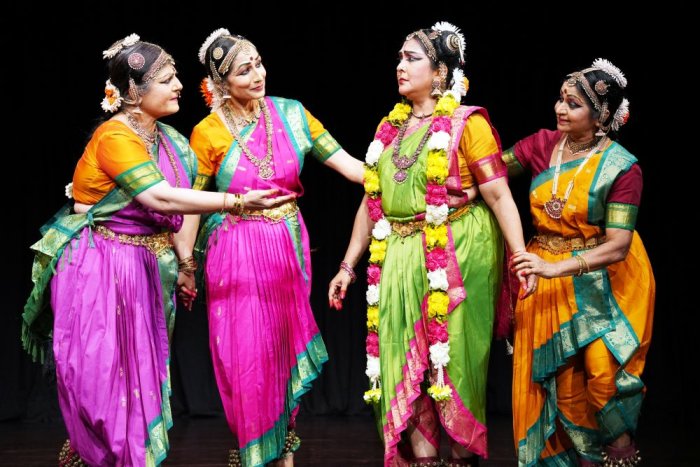 Kalakshetra ensemble (Photo: Prof K.S. Krishnamurthy) Archita Mehta, Trupti Bhupen, and Gayathri Krishnaveni Lakshmanan breathed life into the poignant Swarajati "Kaana aavalaanen", a classic composition by Ponniah Pillai, intricately choreographed by Sharada Hoffman for Rukmini Devi's 81st birthday celebration. The piece carried a rare historical significance, featuring lyrical jathis composed by Kamala Rani, the first woman nattuvanar of Kalakshetra, adding a layer of timeless artistry to its rendition. The trio embodied the anguish of a Nayika consumed by divine longing for Lord Shiva, her sorrow unravelling in layers of abhinaya and rhythmic complexity. They conveyed her desperate plea to her sakhi - how her existence feels barren without her beloved, how Madana torments her, and how her soul writhes in unbearable pain. The choreography masterfully balanced the swarajati's melodic depth with crisp jathis, blending yearning with technical precision. As the dancers transitioned between sorrow, frustration, and devotion, their performance echoed Rukmini Devi's emphasis on bhava as the soul of dance. The piece stood as a testament to Kalakshetra's legacy - where tradition is preserved yet made alive through each artiste's interpretation, ensuring that even decades later, the emotions sculpted into the composition remain as vivid as ever. Priyashri Rao, anchoring the evening, detailed the musical architects of Kalakshetra - Tiger Varadachariar, Mysore Vasudevacharya, and Papanasam Sivan - whose compositions under Rukmini Devi's guidance became the bedrock of the institution's aesthetic. In an excerpt from Rukmini Devi's "Vidai Meethil" (Krishnamaari Kuravanji), Lasyapriya and Nrithika brought vibrant energy to Kattiyakaran's vivid description of Shiva's grand procession. Their crisp theermanams and dynamic portrayal remained faithful to Rukmini Devi's original choreography, blending rhythmic precision with devotional fervour. The program then transitioned to the hauntingly beautiful excerpt "Kim Panotra" from Ananda Ramayana, a Mysore Vasudevacharya composition in Nata Bhairavi raga, describing Sita's lament. Gayathri Krishnaveni Lakshmanan, Lasyapriya and Nrithika delivered a moving interpretation of Sita's inner turmoil - her poignant questioning of fate, symbolised by the dual imagery of her father's cursed bow and her beloved Rama. Their sensitive abhinaya captured every nuance of the composition, from despair to tender remembrance. The evening continued with a poignant excerpt from "Andal Charitram", performed with exquisite grace by Gayathri Krishnaveni Lakshmanan, who has become synonymous with the role of Andal after Sharada Hoffman and, later, her mother, Krishnaveni Lakshmanan. Her portrayal traced Andal's journey from an innocent child at play to the divine lover lost in ecstatic devotion for Krishna. The evening drew to a resplendent close with "Nata Bhairavi", a signature thillana composed by Veena Krishnamacharya as a devoted offering to Rukmini Devi. This vibrant finale, performed with radiant energy, encapsulated the essence of Kalakshetra's aesthetic - where rhythmic brilliance and melodic grace converge in celebration. The dancers' precise jathis and flowing movements paid homage to Rukmini Devi's vision of dance as "dynamic sculpture." The evening's musical foundation was rendered with profound artistry by an exceptional ensemble. Medha Manjunath's soul-stirring vocals carried the emotional essence of each piece, while Gayathri Mahadevan and Priyashri Rao's nattuvangam provided rhythmic guidance with impeccable clarity. T. Shashishankar's mridangam artistry offered both structural support and creative flourishes, his intricate patterns elevating the dance's dynamic energy. Vivek Krishna's flute sang with lyrical grace, its melodic phrases enhancing the narrative quality of each composition, while Vibhudendra Simha's violin added rich tonal textures. As the final notes resonated, the performance became more than a tribute; it was a living testament to how Rukmini Devi's legacy continues to inspire - each step a prayer, each rhythm a remembrance, ensuring her spirit forever dances on in the Kalakshetra bani.  Bangalore based Satish Suri is an avid dance rasika besides being a life member of the Music and Arts Society. |
