|     |
|
| |

 Ode to the Divine - Satish Suri e-mail: satishism@yahoo.co.in March 29, 2025 CHATURTHAM Photo: Madhusoodhan SN 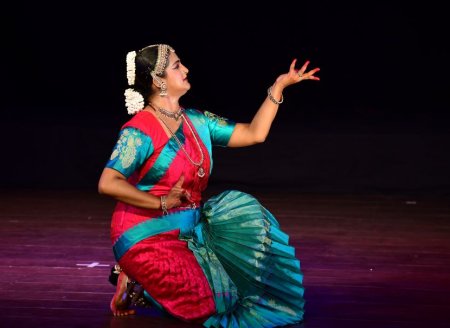 Deepa S Manohar Deepa S. Manohar's 'Chaturtham' performance at Seva Sadan, Bangalore, on Shivarathri day was a captivating blend of music, dance, and storytelling, celebrating the divine qualities of Lord Muruga, Shiva and Shakti. The recital opened with a Tiruppugazh in Shanmukhapriya raga, praising Lord Muruga's six faces and his role as a remover of obstacles and spiritual guide, blessed by Shiva. Choreographed by Dr. Soundarya Srivatsa, the dancer vividly portrayed Muruga's attributes, including his spear (Vel) and his playful marriage to Valli. The performance transitioned into a Nava Ragamalika, exploring the nine emotions (Navarasa) through a shloka from Soundarya Lahari. This segment depicted Lord Shiva's multifaceted emotions - love for Parvati, anger at Ganga, fear of snakes, and compassion - brought to life with intricate choreography and expressive abhinaya. The highlight was the varnam "Devadi Deva Nataraja," visualizing Lord Nataraja's cosmic Tandava in Chidambaram's golden hall. Deepa, as a Mugdha Nayika, expressed a devotee's longing for Nataraja's grace, referencing his protection of Markandeya. The charanam of the varnam "girijaramane va va" beautifully wove together the divine energies of Shiva and Shakti, creating a harmonious blend that evoked the essence of 'Chaturtham' - the fourth dimension of spiritual consciousness, where the union of the masculine and feminine principles symbolizes the ultimate balance and unity of the cosmos. This duality was further explored through the depiction of their divine union, symbolizing the merging of individual consciousness with universal consciousness - a central theme of 'Chaturtham'.The choreography by Dr. Soundarya Srivatsa added depth and nuance to this portrayal. The rhythmic patterns and intricate footwork mirrored the cosmic dance of Shiva and Shakti, while the expressive gestures and facial expressions conveyed the emotional and spiritual dimensions of their relationship. The use of space and movement created a visual representation of the cosmic balance, with Shiva and Shakti as the axis around which the universe revolves. The charanam also highlighted the devotee's longing to witness and experience this divine union. The Nayika (devotee) pleads for the grace of Shiva and Shakti, seeking to transcend the limitations of the material world and attain the state of 'Chaturtham' - where the mind is stilled, and the soul merges with the divine. This longing was expressed through poignant abhinaya, with Deepa S. Manohar capturing the essence of the devotee's yearning with sensitivity and depth. The Padam "Theruvil Varano" in raga Khamas portrayed the Nayika's anxious wait for Shiva's glance during a procession, with choreography by Bragha Bessell enhancing her emotional depth. The recital concluded with the Marathi Abhang "Mage Ubha Mangesh," depicting Lord Mangesh (Shiva) as an omnipresent protector, adorned with matted locks, the crescent moon, and sacred ash, alongside Parvati. Supported by a talented ensemble - D. Srivatsa (vocals), Dr. Soundarya Srivatsa (nattuvangam), Mahesha Swamy (flute), and Srihari Rangaswamy (mridangam) - the performance offered a profound exploration of devotion, mythology, and divine harmony. EKAM Photo: Rajkumar Doss 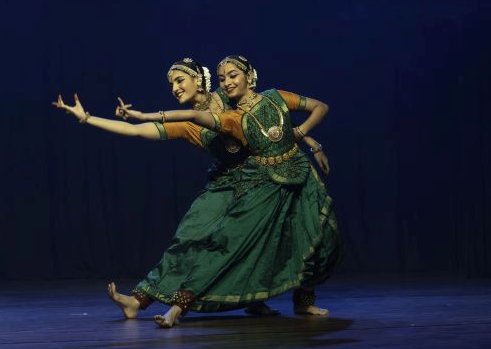 Aditi Saralaya and Ritika Srikanth 'Ekam: The Cosmic Balance' performed by Aditi Saralaya and Ritika Srikanth on March 2nd at Medai, Bangalore, was a Bharatanatyam exploration of duality and unity, centered on the Ardhanarishwara principle - the fusion of Shiva and Shakti. The performance opened with an energetic Alarippu, followed by pieces depicting Shiva's attributes and the Panchabhuta (five elements), symbolizing cosmic interconnectedness. The Varnam, "Maathe Malayadhwaja," stood out as a centrepiece, with its intricate jathis and nuanced abhinaya that brought to life the divine qualities of Lakshmi, Saraswati, and Parvati. The evocative imagery of Shankari and Chandrakaladhari was rendered with grace and restraint, capturing the goddess's gentle and serene qualities. The choreography emphasized fluid arm movements, delicate expressions, and a tranquil demeanour, effectively embodying the divine maternal presence. In stark contrast, the portrayal of Chamundeshwari exuded a commanding presence, with wide-open eyes, forceful hasta gestures, and extended arms, evoking the awe-inspiring and protective nature of the goddess. The transition between these contrasting manifestations was executed seamlessly, demonstrating the performers' command over abhinaya and their understanding of the goddess's dual nature - benevolent yet formidable. The epithets Ruchir geet, Vividha samarasa, Sulabh hridaya, Madhur swara, and Karuna sagar resonated throughout the composition, reinforcing the goddess's boundless compassion and divine grace. The poetic richness of the lyrics, coupled with the expressive choreography, bestowed blessings upon King Krishna Rajendra, Sakalajiva sarvabhaume, the sovereign ruler of the universe, with the goddess envisioned as Jaganmata within the celestial sphere of Shashimandal. The juxtaposition of serenity and fierceness in their portrayals underscored the multifaceted nature of the divine feminine, a recurring theme in the performance. Aditi's solo, "Eppo varuvano," was a poignant exploration of devotion as she embodied the yearning of a devotee for the cosmic dancer, Nataraja. Her fluid movements and emotive expressions conveyed a deep sense of longing and surrender, drawing the audience into the spiritual journey of the piece. Ritika's rendition of "Enthane vallimpune Sakhi" was a celebration of divine love, capturing the playful and profound dynamics between Parvati and Shiva. Her graceful movements and expressive storytelling highlighted the tenderness and strength of their union, symbolizing the harmony of opposites. The finale, "Ardhanareeswaram," was a powerful culmination of the evening's theme. Through the tale of Bhringi, the dancers illustrated the inseparability of Shiva and Shakti, emphasizing the concept of Ekam - the ultimate oneness that transcends duality. The choreography, set to Muthuswami Dikshitar's composition, was both intricate and evocative, leaving the audience with a sense of awe and contemplation. Overall, 'Ekam: The Cosmic Balance' was a masterful blend of artistry, spirituality, and philosophy. Aditi Saralaya and Ritika Srikanth, under the guidance of their guru Minal Prabhu, delivered a performance that was not only visually stunning but also meaningful, reminding the audience of the eternal dance of creation, destruction, and unity that pervades the cosmos. KAPARDHINI NATIONAL DANCE FESTIVAL Photos: Prof K.S. Krishnamurthy The Kapardhini National Dance Festival curated by Darshan Shankar, showcased a captivating evening of Bharatanatyam on March 5th at Seva Sadan, featuring three solo performances that celebrated the divine essence of Lord Vishnu in his various forms. Each dancer brought their unique artistry and devotion to the stage, creating a spiritually enriching experience for the audience. Pallandu 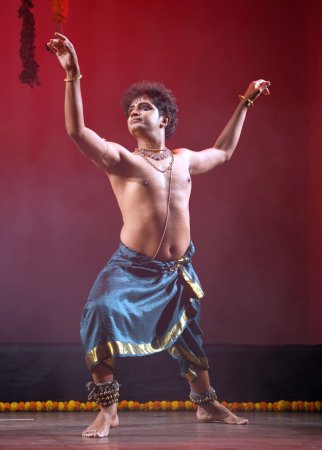 Darshan Shankar In the thematic presentation 'Pallandu' by Darshan Shankar, the rendition was brought to life as a celebration of Lord Vishnu, specifically in his form as Lord Ranganatha, the presiding deity of the grand Srirangam temple. The rendition weaved together devotion, mythology, and history, glorifying Vishnu's divine attributes while spotlighting key figures and rituals associated with the temple. Lord Ranganatha, depicted reclining on the serpent Adishesha, is extolled as the compassionate protector of devotees, embodying grace and serenity. His ardent devotee, Garuda, the majestic eagle and divine vehicle, is celebrated for his unwavering loyalty and strength, symbolizing the ideal of service to the Lord. The presentation highlighted the grandeur of the Srirangam Ranganathaswamy Temple, with its towering gopurams, intricate carvings, and seven concentric prakarams representing the cosmic order. The rituals of the temple, steeped in tradition, were a focal point of the rendition. Among them, the Araiyar Sevai stood out - a unique performative art form where the Naalayira Divya Prabhandam (the 4,000 hymns of the Alvars) is recited and enacted through song, dance, and commentary by the Araiyars, hereditary performers of this sacred service. This practice, deeply rooted in Srirangam, brings the divine poetry to life, connecting devotees to Vishnu's glory. A poignant tribute was paid to Vellai, the courageous devadasi dancer, whose bravery is legendary. During the invasion by Malik Kafur, a general of the Delhi Sultanate in the early 14th century, the temple faced plunder. Vellai is said to have protected the Utsava Murthy (the processional deity, Namperumal) by luring the invaders to the Vellai Gopuram, a towering structure, and sacrificing herself to safeguard the idol. Her act of devotion ensured the deity's survival, and the white tower now bears her name as a testament to her sacrifice. The presentation also honours Andal, the only female Alvar, whose devotion to Lord Ranganatha is immortalized in her works like the Thiruppavai. Her spiritual journey culminated in her mystic union with Ranganatha at Srirangam, and her legacy as a poetess and devotee adds a tender, feminine dimension to the hymn's narrative. Through this thematic rendition, Darshan Shankar intertwined the divine qualities of Lord Vishnu as Ranganatha with the temple's rich tapestry of devotion, heroism, and ritual, creating a vibrant homage to the enduring spiritual heritage of Srirangam. 'Pallandu' was elevated by a talented music ensemble that brought depth and vibrancy to the performance. Sangeeth M.T. provided the soulful vocals: Meghana Chandramouli commanded the nattuvangam, and Vidya Shankar on the mridangam added a dynamic percussive layer. Shrutikanth's violin wove melodic threads through the performance. This ensemble brought to life the music composition of Markandeya Chari, whose work blended raga and tala to craft a tapestry that mirrored the spiritual and historical depth of the 'Pallandu' narrative. Together, these artistes created an immersive experience where music and devotion intertwined to honor Lord Vishnu and the timeless legacy of Srirangam. Mannargudi Rajagopala 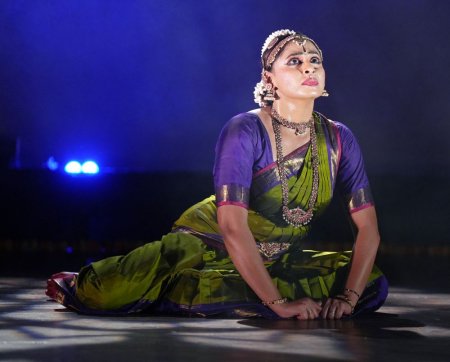 Bhanupriya Bhanupriya's Bharatanatyam performance, centred on the Tanjore Quartet varnam "Mohalagiri konden," was a remarkable demonstration of her artistic and technical prowess. The varnam, a pinnacle of the Bharatanatyam repertoire, demands a delicate balance between intricate nritta and profound abhinaya. Bhanupriya's rendition stood out as a masterful synthesis of these elements, showcasing her maturity as a dancer and her deep connection to the art form. At the heart of her performance was the sthayi bhava - the enduring emotional state of the lovelorn nayika. Bhanupriya's portrayal of the nayika's longing, despair, and hope was both nuanced and compelling. Through subtle facial expressions, evocative gestures, and controlled body language, she brought the character's inner turmoil to life. This ability to convey complex emotions with authenticity is a hallmark of exceptional abhinaya, and it allows the audience to connect deeply with the narrative. Her performance transcended mere physical movement, embodying the essence of the nayika's emotional journey. The nritta aspect of the varnam, with its intricate adavus and rhythmic patterns, was executed with precision and vitality. Bhanupriya's movements were sharp yet fluid, reflecting her rigorous training and technical mastery. Her ability to synchronize her steps with the complex tala and raga of "Mohalagiri konden" demonstrated not only her physical agility but also her musical understanding. This synchronization created a seamless harmony between dance and music, elevating the performance to a higher aesthetic level. The charanam section, which shifted to the depiction of Madana (the god of love) and his arrows, provided Bhanupriya with an opportunity to explore a broader range of emotions and imagery. Her storytelling in this segment was vivid and evocative, capturing the divine intervention of Madana and its impact on the nayika. She painted a rich tapestry of emotions - from the initial pangs of love to the heightened anticipation of union. This dynamic storytelling added layers of depth to the performance, keeping the audience captivated and emotionally invested. Bhanupriya's performance was not just a celebration of Mannargudi Rajagopala's legacy but also a shining example of the enduring power of this classical art form. The live music ensemble created a holistic soundscape that supported and elevated Bhanupriya's dance. Harshita's soulful vocals gave voice to the nayika's heart, Ramya's nattuvangam provided the rhythmic backbone, Nagaraj's mridangam infused vitality and Nitish's flute added melodic finesse. Their collaboration ensured that the melodic structure and rhythmic framework were not just a backdrop but active participants in the storytelling. This synergy heightened the overall presentation, making it a cohesive celebration of Mannargudi Rajagopala's glory through the Tanjore Quartet's timeless art. Varadaraja Upasmahe 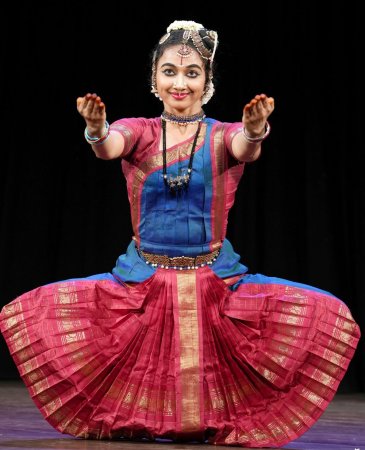 Harinie Jeevitha Harinie Jeevitha concluded the evening with a performance dedicated to Varadaraja of Kanchipuram, one of the most revered forms of Vishnu. Harinie's production, inspired by the 10-day Brahmotsavam at the Lord Varadaraja temple in Kanchipuram, was a vivid and immersive portrayal of the temple's grand festivities and rituals. Her performance was a labour of love, meticulously researched and executed, showcasing not only her dedication but also the high standards of her team. The presentation was a rich tapestry of music, dance, and spirituality, featuring compositions by revered composers like Tyagaraja and Dikshithar, as well as Sanskrit shlokas, Telugu songs, and Tamil pasurams. The show began with a visual introduction to the Brahmotsavam, detailing the various utsavams and their associated vahanas (mounts). As Harinie took the stage, she skillfully transported the audience to the sacred streets of Kanchipuram, capturing every nuance of the festival. Her attention to detail was remarkable, making the spectators feel as though they were part of the procession, with the resonant chanting of the Vedas adding to the ambience. The performance particularly highlighted the third day's utsavam, the Garuda Vahanam, which Harinie depicted through a varnam, "Aadhiyugaththayan kandida nindra arul varadan." Her portrayal of Garuda, the divine eagle mount of Vishnu, was both spectacular and evocative. She also brought to life the poignant episode of Gajendra Moksham, where Lord Vishnu, riding Garuda, rescues the elephant king Gajendra from a crocodile's grip. Harinie's expressive abhinaya and graceful movements vividly conveyed Gajendra's pain, fear, and eventual liberation, leaving the audience deeply moved. The finale, a Thillana set in raga Saranga by Dikshitar, showcased the vibrancy of the vahana processions, with rapid movements mirroring the festival's celebratory climax. The performance concluded with the shloka from the Bhagavad Gita, "Sarva dharmaan parityaja," which carries the profound message of surrendering to the divine and letting go of fear. The words "Maa shucha" (Don't fear), inscribed on the right hand of Kanchi Varadaraja, served as a powerful reminder of the ultimate refuge in the divine. This closing note tied the production to a message of divine reassurance and surrender, enhancing its spiritual weight. The recorded music was of high quality, featuring Sheela Unnikrishnan on nattuvangam, Srikanth Gopalakrishnan's emotion-laden singing, Guru Bharadwaj on mridangam, with additional support from Nandini Saigiridhar (violin), B. Muthukumar (flute), Anjani Srinivasan (veena), and Sankara Sastrigal (Veda chanting). 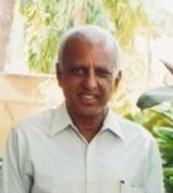 Bangalore based Satish Suri is an avid dance rasika besides being a life member of the Music and Arts Society. |
