
|     |
|
| |

 Adhyantara - N.C. Srinivasa Raghavan Photos: RN Sudhi January 24, 2025 Weaving together the pieces of a typical maargam into a thematic presentation is quite a complex task. However, Rakshita Raghunathan and Ragini Iyer did this quite convincingly in their recent Bharatanatyam duet titled 'Adhyantara - The Journey of a Goddess.' Pieces that were centred around Meenakshi (and Devi as an extension) were taken up in their short recital. 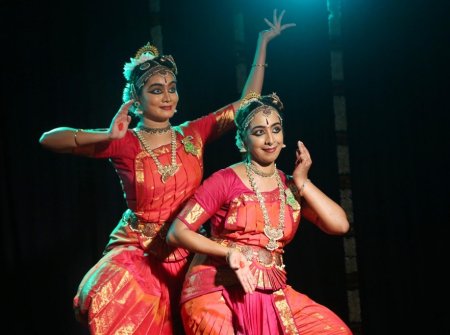 Starting off with an Alarippu that incorporated several gestures associated with Devi like her eyes that are shaped like fish and the crescent moon that lies above her head, the dancers who are trained in the Vazhuvoor Bani effectively used up the stage. Right after this, they launched into Lalgudi Jayaraman's varnam on Meenakshi - Angayarkanni. This varnam was quite apt for the theme and provided the dancers a fertile ground to display their creativity. The orchestra comprised Kaniyal Hariprasad, B P Haribabu, Eashwar Ramakrishnan and Adyar Muthu on the vocal, mridangam, violin and flute respectively. Guru Ramya Ramnarayan did the nattuvangam. The musical presentation of the varnam stood out for its relaxed pace where every word was clearly heard. The Angayarkanni varnam is a masterpiece that explores several events in Devi's life and manages to cover the Navarasas or Nine Rasas, giving each rasa a specific situation and mood through appropriate lyrics and ragas. The Pallavi of the varnam talks about Devi's conquests. Her victory is represented in the form of her army that has chariots, elephants, horses, and other military units. The phrase used is "AniveerargaL ratha gaja turagamudan" and this was depicted aesthetically by the dancers setting off a wonderful start to the varnam. The war sequence was shown by using some trademark Vazhuvoor jathis. As the varnam progressed, a shloka that connected the theme 'Adhyantara' was fitted in through a sanchari which was inserted at an appropriate place to make the audience understand the link. This was a good idea as it provided a nexus between the vision of the composer in the varnam and the concept behind the theme 'Adhyantara' which is supposed to be about the primal power from which the universe emanated or the source of all creation. Some of the other rasas like shringara where the dancers depicted a shy Meenakshi's reaction on beholding her beloved Shiva were represented tastefully. Bhayanakam was shown through the Halahala poison episode which the dancers explored meaningfully, taking into the account the musicality behind words like "kaiyaal asaittidave". Of course, the varnam offered ample scope for both the dancers to meaningfully divide it between themselves. At times, both Rakshita and Ragini danced similarly and at times they split up - this switch was done suitably keeping the audience engaged. There was good coordination among the dancers which resulted in an effective presentation. 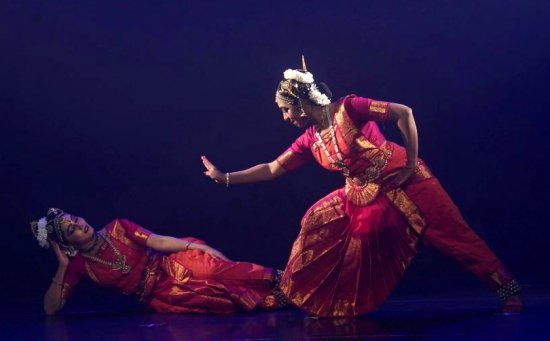 After the varnam, Sridavittala Dasar's "Maatade Gouri Maatade" was taken up. This delightful devarnama which was re-tuned by Hariprasad implores the goddess to speak. It talks about the sorrow of the devotee who wonders what sins she committed to not receive Devi's attention. Using a real idol of Gouri and pleading before the image was a good way to present the piece. Even here, the role of both the dancers was rationed well. The recital ended with a classic Lalgudi thillana in raga Maand in praise of Kamakshi. Thematic presentations that blend the best of familiarity and novelty are ultimately successful and linger in the minds of rasikas. Some of the contributing factors to Adhyantara's success was choosing a Tamil varnam that the audience is quite familiar with. It helped the viewers ease into the content of the theme. The Vazhuvoor Bani is known for certain characteristic jathis, adavus and nadais - these were distributed well across the varnam and thillana. Even if one felt if the stamp of Vazhuvoor was mild in the varnam, the thillana made up for it with some beautiful stylistic elements. The dancers utilized the space effectively and coordinated well with the musicians onstage which added a lot of value to the presentation. The nattuvangam was top-notch and the members of the orchestra enhanced the performance with their musical interludes. The devarnama which may not be known to many was simple to understand and provided a contrast to the other pieces in terms of mood and melody. Overall, 'Adhyantara' was entertaining and traditional. The dancers Rakshita and Ragini must explore other themes together and make sure they stick to their formula of hard work and thoughtful planning. The program was held at Chennai's Narada Gana Sabha Mini hall for Kartik Fine Arts on Jan 5, 2025. N.C. Srinivasa Raghavan is a Carnatic musician and Art critic. |
