 |
    |
|
|


PRISMRang at RangmanchThe role of colour in Kathak choreography- Ashima Sharmae-mail: dancedramasharma@gmail.com October 27, 2026 (A research article submitted in Performing Arts (Kathak) by Ashima Sharma under the supervision of Dr. Bhawna Grover Dua, Professor and Head Performing Arts Department, Department of Performing Arts, Nandlal Bose Subharti College of Fine Arts and Fashion Design, Swami Vivekanand Subharti University, Subhartipuram, NH-58, MEERUT 250005, Year-2025) Abstract Colour is an important aesthetic and symbolic element communicating emotional and structural expression in Kathak choreography. It gives narrative communication and visual coherence beyond its decorative function. Colour drives as a semiotic tool that shapes mood, descriptive clarity, character portrayal and spatial design. Embedded in Indian aesthetic traditions and evolved through performance practices, colour influences how the audience perceives dance movements, interprets a character, and experiences a particular rasa. This research article examines the heterogeneous role of colour in Kathak, focusing on costumes, lightings, stage compositions and principles of each Gharana. It also includes works by Kumudini Lakhia and Aditi Mangaldas drawing from classical texts, modern scholarship, and contemporary choreographic case studies. It advocates that the function of colour is not merely as an ornamentation but as a choreographic and semiotic tool that shapes the wholesomeness of a Kathak performance. Through exploration of existing theory of rasa and colour symbolism, cross-cultural examples of choreographies and Gharana-specific costume practices, this study argues that function of colour is as a powerful emotional and narrative structural element in Kathak dance performances. Introduction Colour is a vital element in Kathak choreography, serving both aesthetic and symbolic purposes. It goes beyond mere decoration and plays a crucial role in conveying emotions and shaping the structure of the dance. Colour serves as a powerful tool in Kathak, influencing various aspects of the performance: Kathak, one of India's leading classical dance forms, encompasses elements of storytelling (natya), pure dance movements (nritta), and expressive gestures (abhinaya). Although nritta and laya (rhythm) are prominent features, it is essential to recognize the significance of colour as well. Colour serves as a visual element in Kathak performances, enhancing various aspects such as bhava (emotional expression), characterization, style, and spatial perception. Through thoughtful integration of costumes, lighting, and stage design, choreographers utilize colour to convey expressions, develop characters, establish styles, and shape spatial perceptions during the performance. Despite academic research acknowledging the importance of colour in dance, its role in choreography planning requires further exploration. This paper aims to examine the aesthetic significance of colour within Kathak dance performances. By studying how colours are employed to express emotions or portray characters through movement sequences or musical interpretations respectively; this research seeks to uncover new insights into how choreographers can effectively utilize this powerful visual element for creating impactful experiences on stage. Literature Review Colour, as a choreographic and semiotic element, has received considerable attention in the field of performance studies. While the literature on Kathak largely focuses on motion, rhythm, and narrative, there has been increasing acknowledgement of the important role that colour plays in this form of dance. This literature review will critically synthesize some of the important literature on the role of colour in Indian dance and the implications for Kathak choreography. The Foundations of Classical Aesthetic Theoretical foundations for the study of colours in Indian performance arts are found in the Nāṭyaśāstra, an ancient text written in Sanskrit, which develops the relationships between rasa (aesthetic flavour), bhava (emotion), and other visual aspects like costume and stage design (Vatsyayan, 1968). In this textual tradition, colours symbolize more than decoration, becoming instead a semiotic system embedded in the production of rasa, where particular colors are aligned to particular emotions that encode audience reception (Vatsyayan, 1968). Vatsyayan's other publication extends this idea, showing the integration of colours, gestures, and sound in the overall sensory production, again expressing the theoretical position that the visual and the movement are coterminous in Indian classical dance (Vatsyayan, 1977). In the context of Kathak, colour's symbolic significance is deeply rooted in classical aesthetics. According to Kothari (1997), Kathak's narrative-rich repertoire draws from mythological and courtly sources where visual symbolism, including colour-coded costuming, serves as an emotional and narrative signifier. This aligns with Bharata's theorization of rasa, where colour choices help articulate moods such as shringara (romantic love) or raudra (intense anger). Modern Practice of Choreography Colour in modern Kathak choreography, however, has become an even more sophisticated ingredient. Choreographer Kumudini Lakhia, for instance, with her use of monochromatic or earth-toned colours in ensemble performances, creates compositions that centre on the structural element of geometry, whereas Mangaldas focuses on bold contrast colours that attempt to bring more emotional content into the performance (Servos, 2008; Franko, 2012). The examples given here of modern choreography not only bring out the role of colours in a symbolic context but also a paradigm issue-related context. Contemporary dance scholars, such as Foster (2010) and Banes (1987), also emphasize the increased prominence of the visual aspect in post-modern choreography. Even though the above works do not relate specifically to Indian classical dances, they do signify the more universal move towards the incorporation of color and lighting as a meaningful part of choreographic expressions in performing movements of all kinds. This opens up the understanding of the current visual practices in the choreography of the Kathak style of Indian classical dances. Gaps in Current Repositories Despite these contributions, there is scant work written in regard to colour in Kathak dances. The existing literature primarily discusses costumes as an afterthought in regard to these two categories. Furthermore, empirical studies of audience responses to colour in Kathak dances are non-existent in regard to audience response as well as analyses of colour in Kathak performances. The addition of these perspectives could support arguments in regard to colour's effect on audience reception. In fact, although comparative studies provide useful frameworks, other, more targeted research is required to express how colour uniquely operates in the hybrid aesthetic of Kathak, poised between narrative, rhythmic abstraction, and contemporary reinterpretations. The impact of colours on perception in Kathak is still an arena for further research. Methodology This conceptual study employs qualitative analysis grounded in: 1. Classical aesthetic theory, including textual interpretation of the Nāṭyaśāstra and related commentaries. 2. Scholarly literature on Kathak, particularly work addressing performance aesthetics and choreographic design. 3. Comparative examination of Gharana-specific costuming, with attention to historical and cultural influences. 4. Interpretive performance analysis, referencing documented productions by leading choreographers. 5. Synthesis of practitioner insights, drawn from interviews, program notes, and published analyses. 6. Textual analysis of choreographic scholarship, aesthetic theory, and documented rehearsal methods. 7. Comparative analysis between Indian classical dance traditions and contemporary Western choreographic practices. 8. Theoretical grounding in rasa theory, semiotics, and visual design principles. The methodology prioritizes conceptual synthesis and thematic pattern identification across diverse choreographic contexts. The approach illuminates how colour contributes to emotional expression, narrative clarity, movement vocabulary, and spatial organization in Kathak choreography. Findings 1. COLOUR AND RASA: THE EMOTIONAL CONTOURS OF KATHAK Colour in Kathak can never be separated from the theory of rasa, which basically determines and governs emotional expression in Indian aesthetics. Choreographers and costume designers use colours as symbols to evoke and support emotional states - bhava: Red/Saffron: passion, devotion, valor, shringara or Raudra rasas Blue/Green: serenity, compassion, nature, divinity - especially Krishna White: peace, spiritual purity, abstraction in nritta Yellow/Gold: festivity, auspiciousness, knowledge These associations guide both in the selection of costumes and in lighting that a choreographer is able to fall into step with the emotional tone to correspond to the intention of the narrative. According to Vatsyayan (1968), colour, like gesture and music, is indispensable in creating rasa. 2. COLOUR IN NATYA: STORYTELLING AND CHARACTER IDENTIFICATION In narrative Kathak items, colour supports dramatic clarity by easily helping audiences identify characters and thematic contexts. Even though Kathak does not have the strict make-up codes like Kathakali, colour symbolism is important. Vibrant or bright colours may be used for royal or divine figures. Pastel shades or muted tones can denote sadness, humility, or introspection. Certain colours, like Krishna's blue, are culturally ingrained identifiers. Thematic scenes (e.g., monsoon, river) often depend on consistent coloration, such as blues, silvers, and white; red and black for battle or war scenes. The fluid costumes of Kathak (Anarkalis, lehengas, dupattas) extend these palettes via motion, augmenting the visual storytelling. 3. COLOUR AND TECHNICAL BRILLIANCE (NRITTA) Even in the most abstract, non-narrative Kathak choreography, color is essential. Choreographers use color to: Such uses of color provide clarity to the rhythmic nuance and physical articulation. 4. GHARANA AESTHETICS: COLOUR AS CULTURAL IDENTITY Costume traditions vary sharply between Kathak's two major Gharanas, being a part of their different cultural histories. A. Jaipur Gharana B. Lucknow Gharana 5. COLOUR IN SPATIAL AND GROUP DESIGN Colour helps Kathak choreographers clarify structures, particularly in group work: Unified colours indicate cohesion for an ensemble. Different dupattas or skirts designate rhythmic divergence or thematic distinction. Complementary colour combinations help viewers discern spatial trajectories and geometric patterns. 6. COLOUR AS A COLLECTIVE CHOREOGRAPHIC TOOL Kathak choreographers collaborate with costume designers, light designers, and on occasion musicians to establish a colour palette that supports thematic and emotional intention. Colours of costumes frequently reflect the spiritual or narrative context of the work. Colours of light further support shifts in rasa, rhythmic phrasing or dramatic transition. Designers often look to classical iconography and temple sculpture traditions for colour inspiration (Lopez y Royo, 1996). Colour thus becomes an integrated language shared by all collaborators. 7. THE COLOUR, COSTUME AND LIGHT VISUAL ANALYSIS IN KATHAK GROUP CHOREOGRAPHIES Modern Kathak, particularly in performance groups, demonstrates dynamic evolution in visual design. Costumes, light, and colour palettes have turned to be choreographic tools that shape emotional tonality and spatial clarity. This section examines the visual strategies used by leading contemporary Kathak choreographers, Kumudini Lakhia, Aditi Mangaldas, and other prominent gurus, with the support of specific productions. 7.1 Kumudini Lakhia: Minimalist Palette and Architectural Visuality Kumudini Lakhia's seminal works such as Dhabkar (1980s) and Atah Kim (1990s) reflect her pioneering approach to Kathak ensemble choreography. Her visual aesthetic is defined by the monochromatic or near-monochromatic costumes in ivory, beige, rust, and muted earth tones and minimum ornamentation so that the viewer's attention goes to the architecture of the movement. The uniform colour palette creates cohesion in order to allow formation to dominate the visual field. Lakhia favours soft amber, low-intensity white, and diffused blue lighting. The shadows are deployed strategically to allow dancers to meld into an architectural whole. The visual impact in Dhabkar, the restricted palette serves to enable viewers to perceive rhythmic layering with striking clarity. For Atah Kim, the subdued costuming reinforces the reflective, all but meditative tone of the choreography. 7.2 Aditi Mangaldas: High-Contrast Modernity and Dynamic Light Play Aditi Mangaldas' productions, such as Within (2013) and Inter_rupted (2016), constitute a radically contemporary vision in Kathak's visual design. Costume design is bold, high contrast colours including deep indigo, charcoal, crimson, and metallic accents while hybrid silhouettes merge angarkhas with modern cuts. Lighting is scenographic and emotionally charged: Sharp spotlights isolate individuals within the group. Saturated reds, cobalt blues, and violets mark shifts in emotional and rhythmic intensity. Counter-lighting creates bold shadows, enhancing percussive energy. In Inter_rupted, contrasting palettes create powerful emotional ruptures aligned with the production's themes. 7.3 Other Notable Gurus: Diverse Aesthetic Approaches In Birju Maharaj choreographies (Group Works), classical emerald, ruby, and pure gold costume colors are observed with intricate zardozi detailing from courtly traditions. The lighting is predominantly used to highlight grace, rather than for the purposes of dramatic tension. In Shama Bhate style, pastel hues in costumes like mint, peach, and lavender with ambient light that suits lyrical choreography is observed. In Prerana Shrimali projects, earth tones evoke philosophical depth with occasional symbolic color accents, as in red for Shakti. 7.4 Comparative Visual Analysis A comparative examination reveals three dominant strategies: Discussion The findings show that colour in Kathak is a multi-dimensional tool, central to emotional expression, narrative structure, technical clarity, spatial organization, and Gharana-specific identity. Unlike many contemporary dance forms where colour may serve as an external design layer, in Kathak it is deeply embedded in the choreographic process and cultural worldview. Colour is informed by mythological symbolism, traditional aesthetic theory, regional history, and the spiritual underpinnings of the form. This integration demonstrates the holistic nature of Indian classical dance, where visual, emotional, musical, and kinetic elements function interdependently. Conclusion Colour emerges as a foundational element in Kathak choreography, shaping emotional expression, narrative meaning, technical articulation, and stylistic identity. As this study has demonstrated, the use of colour in Kathak operates across multiple layers of the performance system, from classical aesthetic symbolism to Gharana-specific traditions and contemporary visual experimentation. Whether in the minimalist palettes characteristic of Kumudini Lakhia's works or the high-contrast, multimedia aesthetics employed by Aditi Mangaldas, colour functions as a dynamic tool through which choreographers construct immersive and nuanced performance worlds. Its capacity to modulate mood, signal meaning, and enhance visual clarity underscores its enduring relevance to Kathak's past, present, and future. Moreover, colour is not merely an embellishment but an essential component of choreographic planning that shapes emotional resonance, narrative clarity, and spatial organization. Comparative analysis across Kathak, other Indian classical dance forms, and notable contemporary productions highlights the centrality of colour to the choreographer's creative process. Used to evoke rasa, articulate character, structure ensemble geometry, or build psychological landscapes, colour contributes to a holistic, multisensory experience of dance in which visual design and movement vocabulary operate in concert. While this study synthesizes aesthetic theory, choreographic practice, and case-study analysis, further research could deepen the field's understanding of chromatic perception in dance. Empirical methods such as audience-response studies, cognitive testing, or interviews with choreographers and designers, would offer valuable insight into how colour shapes spectators' emotional and interpretive experiences. Such approaches could also help map cultural, generational, or training-based differences in how colour is read within Indian classical performance. Expanding the methodological scope in this way would not only strengthen theoretical accounts of colour in Kathak but also support choreographers in making more intentional, informed design choices. Ultimately, colour remains one of the most versatile and potent instruments available to Kathak choreographers, enabling them to craft performances that are aesthetically resonant, emotionally precise, and narratively compelling. Its continued exploration promises to broaden the expressive possibilities of the art form and to enrich the sensory dialogue between dancer, stage, and audience. References Banes, S. (1987). Terpsichore in sneakers: Post-modern dance. University Press of New England. Bharata Muni. (c. 200 BCE–200 CE). Nāṭyaśāstra (Trans. & commentaries referenced). (Original classical text; cited via secondary sources such as Vatsyayan) Foster, Susan Leigh. (2010). Choreographing Empathy: Kinesthesia in Performance. Routledge. Franko, M. (2012). Martha Graham in love and war: The life in the work. Oxford University Press. Kothari, S. (1997). Bharatanatyam. Marg Publications. Lakhia, K. (1985). Dhabkar [Kathak dance production]. Lakhia, K. (1994). Atah Kim [Kathak dance production]. Mangaldas, A. (2013). Within [Kathak dance production]. Mangaldas, A. (2016). Inter_rupted [Kathak dance production]. Servos, N. (2008). Pina Bausch: Dance theatre. Kieser Verlag. Vatsyayan, K. (1968). Classical Indian dance in literature and the arts. Sangeet Natak Akademi. Vatsyayan, K. (1977). Traditional Indian theatre: Multiple streams. National Book Trust. 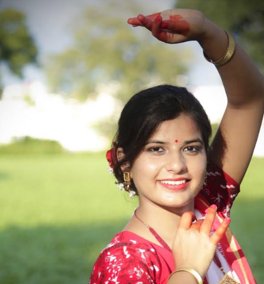 Ashima Sharma is a Kathak dancer, teacher, choreographer, researcher, and the Founder and Director of ADAA Academy with over 25 years of experience in the field of dance. She holds two postgraduate degrees and has qualified UGC-NET with JRF. She is currently pursuing her PhD in Performing Arts, with her research focusing on the Elements of Design in Kathak Group Choreographies. Her work seeks to bridge traditional Kathak pedagogy with contemporary approaches to choreography and presentation. Post your comments Pl provide your name along with your comment. All appropriate comments posted with name in the blog will be featured in the site. |
