 |
    |
|
|


PRISMMohiniyattam: Identity and Aesthetics- V. Kaladharane-mail: vkdamaru.eda@gmail.com Photos courtesy: Internet August 23, 2026 Kerala, the south-west tip of the Indian sub-continent, can boast of giving birth to several highly evolved traditional performing arts viz. Kutiyattam, Krishnanattam, Kathakali, Mohiniyattam and Thullal, a semi-stylized solo dance-theatre narrative. Except Kutiyattam the first stage performance of which is deemed to have taken place between the 10th and the 11th century AD, the rest of the artforms came into being in the 17th century AD. Thullal dates back to the 18th century. While there are convincing evidences to establish the period of origin of Krishnanattam, Kathakali and Thullal, the history and development of Mohiniyattam prior to the establishment of Kerala Kalamandalam in the early 20th century is still shrouded in mystery not withstanding multiple references from various sources made by genuine and pretentious scholars over a period of time. Even the so called Mohiniyattam which poet laureate, Vallathol Narayan Menon, resurrected at Kerala Kalamandalam way back in the 1930's, was the remnant of its glorious past. Fragile roots 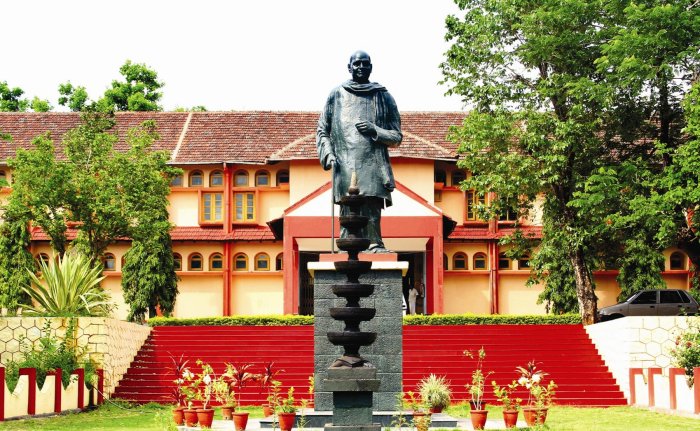 Kerala Kalamandalam (courtesy: Kerala Kalamandalam) Next to Kathakali, Vallathol had a genuine passion for Mohiniyattam which he had inherited from his father who maintained a Mohiniyattam troupe. Braving severe criticisms from the English educated elites including renowned literary figures like Sanjayan, Vallathol went in search of the remaining few Mohiniyattam exponents in the outskirts of the present Palakkad District and fortunately came across one or two. Owing to the stigma attached to the performance of Mohiniyattam that had fallen to a state of disrepute, those remaining few had stopped practicing and performing it. Vallathol had a hard time convincing them of the need for restoring to life this lasya-laden dance form. While he succeeded in his effort to ensure their services at Kalamandalam, the dancers could recollect only a tiny portion of the items they had studied and performed long back. In fact, there was a profound disconnect between them and the items they had learnt. The ways and means by which the then Gurus stitched the lean text with the limited movement vocabulary and expressions are little known facts even today. It was Betty True Jones, an American Ballet dancer and researcher who wrote an authentic monograph on the historical evolution of Mohiniyattam in the early 1970's. Even she couldn't shed light on the kind of items that were in vogue during the establishment of Kerala Kalamandalam. 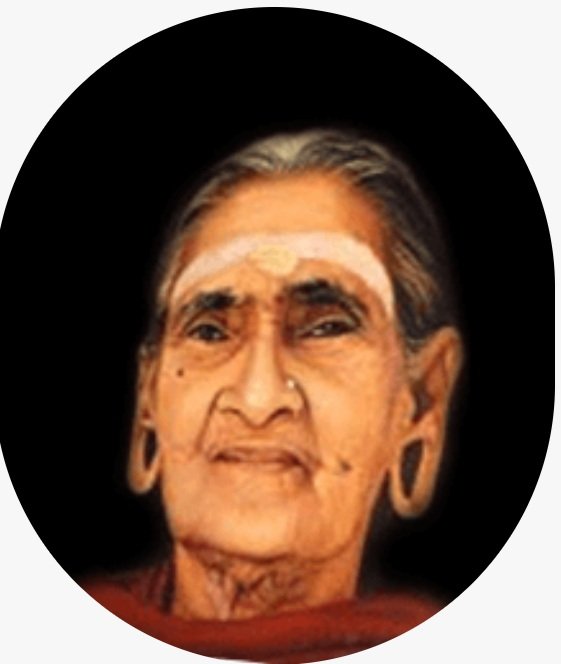 Thottassery Chinnammu Amma (courtesy: Kerala Kalamandalam) In the early 1950's, Thottassery Chinnammu Amma, one of the disciples of Korattikara Krishna Panickar who had served Kalamandalam in its early days, was appointed teacher of Mohiniyattam. She taught to her disciples at Kalamandalam what she had learnt from her Guru. Not more than a couple of incomplete items. Interestingly, the lyric of one of the traditional items in Mohiniyattam happened to be in Telugu. Even the traditional Cholkkettu echoes the lyrical structure of the Telugu language. By the close of that decade, Kalamandalam Sathyabhama and her colleagues, N.K. Vasudeva Panickar, the vocalist cum violinist and Ramakrishnan, the mridangam player, refurbished the repertoire of this dance form although a full-fledged recital in the Margam format remained a far cry. Lonely crusader 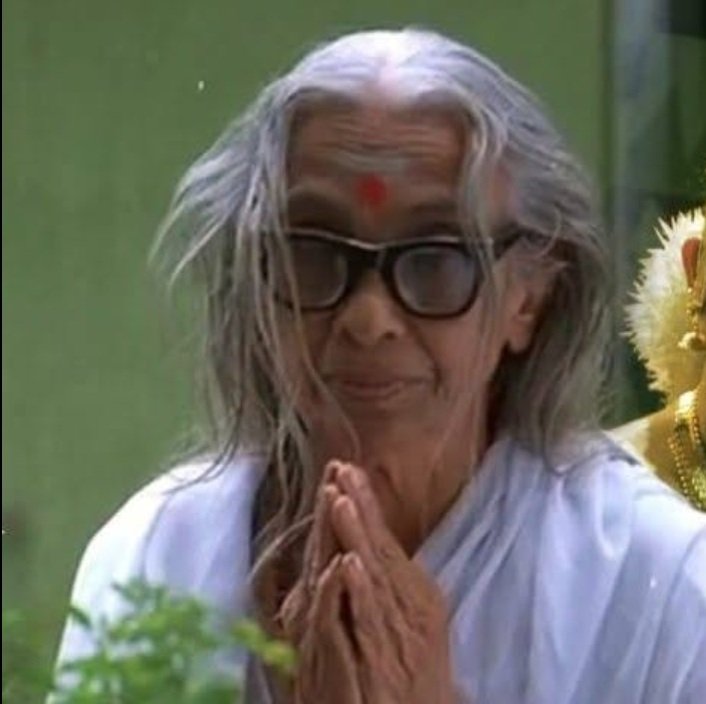 Kalamandalam Kalyanikutty Amma Of the first batch of students who completed training in Mohiniyattam at Kerala Kalamandalam, Kalyanikutty Amma stood out for her perspicacity, poetic bend of mind, technical finesse and a fierce commitment to her artistry. She came out of her alma mater and established herself as a Mohiniyattam dancer and in course of time set up an institution at Thripunithura, Ernakulam Dist., for the preservation and promotion of Mohiniyattam. Simultaneously, her quest for knowledge and creativity prompted her to delve into the history and growth of Mohiniyattam as part of which she systematized the fundamental steps and movements. The classifications and categorizations Kalyanikutty Amma effected solidified the syllabi of Mohiniyattam. She expanded the traditional repertoire of this dance form by incorporating two more items, Saptham and Shlokam thereby bringing to the fore a full Margam concert of Mohiniyattam. Kalamandalam School of Mohiniyattam headed by Sathyabhama differed from that of Kalyanikutty Amma in many respects right from the basic stances. One of the insoluble differences both maintained zeroed in on to the ornamentation related to the hair. While the Kalamandalam School introduced in 1968 the tying up of the hair of the dancer on stage on the right-side of the head like a bun (the coiffure technically called Kondakettu) adorned by jasmine flowers, Kalyanikutty Amma insisted on the braided hair similar to that of Bharatanatyam. Dozens of young dancers who came out of Kerala Kalamandalam year after year stuck to the Kondakettu so that it grew into prominence relegating the style of hair ornamentation dictated by Kalyanikutty Amma to the background. Yet, the intransigent Acharya never relented. She was argumentative throughout her life. Hers is the first authoritative and rather comprehensive book on Mohiniyattam. In it, she quotes from various sources to convince the readers that this dance form's ancestry dates back to the Devadasi tradition. Justine Lemos from the University of California, Riverside, who made an extensive study of the ethnographic history of Mohiniyattam has clearly pointed out the similarities and differences between the Devadasis and the Mohiniyattam dancers. "Like many Devadasi, Mohiniyattam dancers were not confined to marriage with a single husband. And like many Devadasi lineages, Nayar women followed the matrilineal descent. Yet, the Nayar 19th century Mohiniyattam dancers were not employed or dedicated to service in temples: they did not receive temple annulments or pay. They also did not identify as "devadasi" or "kudikarikal" (Malayalam for devadasi). Their status as Nayar women of a Tharavad did not change via a ritual adoption and/or marriage into a devadasi lineage". Text & performance When Mohiniyattam was added to the curriculum of Kerala Kalamandalam, the prime objective of the poet was to rescue it from total extinction. In course of time, the inevitability of systematizing and enriching the dance form fell on the shoulders of those who were intimately associated with it. Killimangalam Vasudevan Namboodiripad, a scholar and aesthete, who was the Art Superintendent of Kalamandalam intervened effectively to prescribe the Padavarnams, Padams and Thillanas of Maharaja Swathy Thirunal as the literary text of Mohiniyattam thus underlining the fact that the central concern of this dance form is lasya involving feminine movements and expressions. The correlation between the undulating torso movements and the soft and subtle articulations of the Sringara rasa complementing the Varnams and the Padams of Swathy Thirunal and vice versa thus became the core aesthetics of Mohiniyattam. The vocal and instrumental music toed the lines of the classical Karnatic music. Right from Kalamandalam Kalyanikutty Amma and Sathyabhama to their distinguished disciples including Kshemavathy, Sugandhi, Sreedevi Rajan, Kala Vijayan, Deepthi Omchery, Leelamma and Hymavathi, the mainstream Mohiniyattam broadly adhered to the above. Despite a few noticeable contradictions in the styles followed by the Kalamandalam and Kalyanikutty Amma Schools of Mohiniyattam, there has always been irrefutable bonds between the two in terms of the movement vocabulary, in the interpretation of Sringara rasa and in music. External Interventions 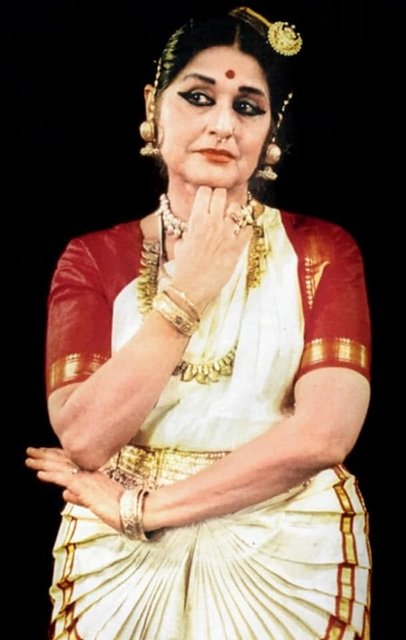 Dr Kanak Rele Dr. Kanak Rele, a native of Gujarat, had a taste of Kathakali under Guru Panchali Karunakara Panickar, before she ventured into the realm of Mohiniyattam. Her maiden visit to Kerala was in 1971-72 backed by a grant from the Sangeet Natak Akademi and Ford Foundation. She documented the contributions of Kunjikutty Amma, Chinnammu Amma and Kalyanikutty Amma, analyzed the contents of each one of them and in her own words was highly impressed by the artistry of Kunjikutty Amma. Kanak Rele explored the nuances of Mohiniyattam by placing the practical knowledge of these Acharyas, vis a vis the Natyasastra, Hasthalakshanadeepika and Balarama Bharata of the late Karthika Thirunal Maharaja. Her monumental book, "Mohiniyattam: The Lyrical Dance", was the first attempt of its kind to provide an academic rigor to the art of Mohiniyattam. Although I beg to differ with some of her viewpoints in the book, its framing of a curriculum for Mohiniyattam based on scientific methods and principles as well as its formulation of an aesthetic theory focusing on the dance form concerned cannot be set at naught. When it comes to her onstage performance, I could see in Kanak Rele an irresistible influence of the Vachika and Satwikabhinayas in Kathakali. Vachika in the sense that both the vocal and instrumental music did have an inexorable indigenous flavor such as the Sopana sangeetam and percussions viz. Maddalam and Edakka. Of her disciples at the Nalanda Dance Research Centre in Mumbai, Sunanda Nair carries forward her Guru's legacy with absolute devotion and commitment. Quest for Indigenization 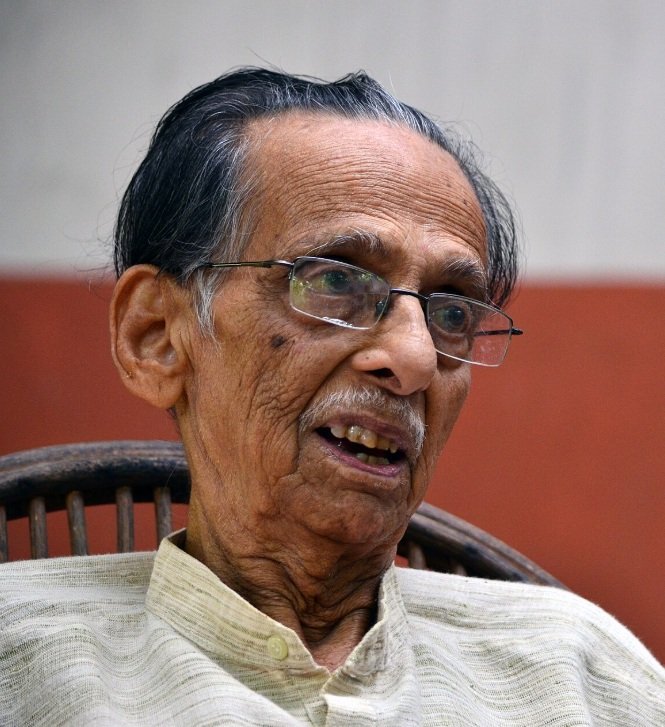 Kavalam Narayana Panikkar Poet, lyricist, theatre director and a diehard advocate of the Sopana System of Music in Kerala, Kavalam Narayana Panikkar was the first cultural icon to come down heavily on the functional music of Kathakali and Mohiniyattam which underwent radical transformations in the early 20th century. In Krishnanattam too, the same happened but only in the latter half of the last century. In the training system, selection and treatment of ragas and in the use of the gamakas, Kathakali and Mohiniyattam vocalists broadly adhered to the canons followed by the classical Karnatic music. While Kathakali retained chenda and maddalam for its percussion-music, Mohiniyattam replaced the thoppi maddalam with mridangam, violin and flute. K.N. Panikkar could hardly digest the uncontainable influence of Karnatic music in the classical artforms of Kerala. I remember he even went to the extent of blaming the devastating impact of the Swathy Thirunal period in marginalizing the indigenous musical culture of Kerala. Panikkar's penchant for the Sopana sangeetham (the singing of Thyanis/Keerthanas beside the sanctum sanctorum of a Hindu temple) didn't have any takers in Kathakali and Mohiniyattam for many years. Kerala Kalamandalam, the premiere institution for imparting, preserving and promoting Kathakali and Mohiniyattam paid little attention to the criticisms raised by Panikkar occasionally. Ever since Kanak Rele and Bharati Shivaji stepped into the terrain of Mohiniyattam in the 1970's and in the 1980's respectively, K.N. Panikkar's concerns began to be addressed. Both the dancers realized that music forms one of the major components that can reinforce their idioms on the performance space. They approached Panikkar for his creative interventions in the sphere of Mohiniyattam music. Panikkar convinced them of the role and significance of Sopana sangeetham in the traditional temple arts of Kerala. He could effectively articulate the appropriate applications of gamakas pertinent to the sahitya of Mohiniyattam. Similarly, he introduced them to the vaytharis (rhythmic vocal syllables) of chenda, maddalam and edakka that can be comfortably employed for the pure dance pieces in Mohiniyattam. With these indigenous tools and a fairly reasonable knowledge about the angika and satwikabhinayas of the traditional Mohiniyattam, Kanak Rele and Bharati Shivaji rechoreographed various compositions including those of K.N.Panikkar, and with the background support of the Kathakali vocalists and instrumentalists, presented recitals in front of select audiences in the metropolitan cities all over India. For the urban elites, these recitals were a pleasant departure from the "mainstream Mohiniyattam" the music of which sounded similar to that of Bharatanatyam and Kuchipudi. Charismatic appeal 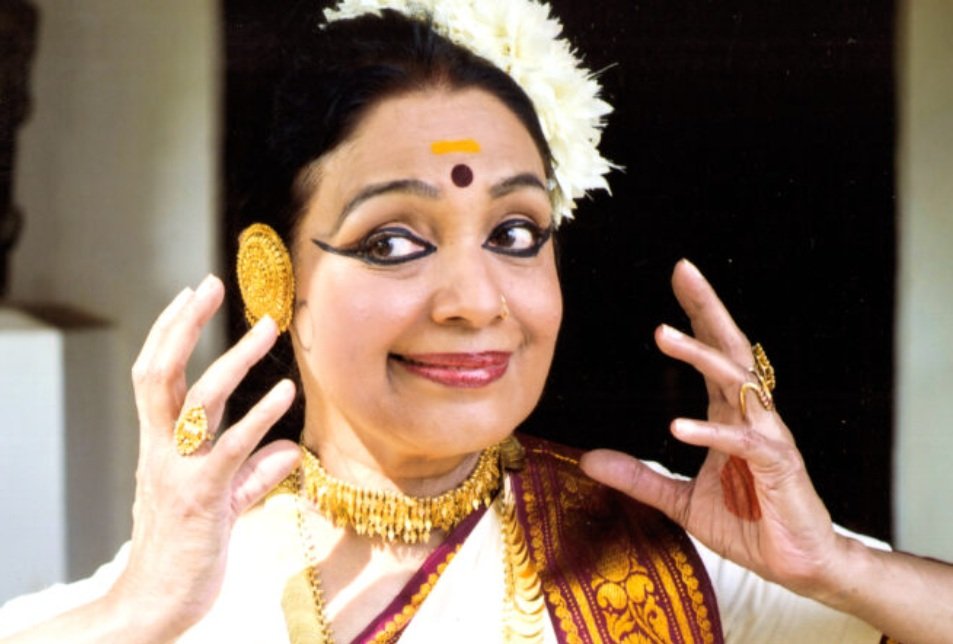 Bharati Shivaji The emergence of Bharati Shivaji, a native of Kumbakonam, as a charismatic Mohiniyattam dancer in the 1980's was by no means an accident. It was her conscious decision to carve out a style of her own in the field of Mohiniyattam synthesizing traditional rigor and individual creativity. Having had an intense exposure to Odissi, Bharati knew the subtle implications of lasya before she learnt the basics of Mohiniyattam from Radha Marar. Encouraged by Kamaladevi Chatopadhyay, Bharati traveled to Kerala and reached her destination, K.N. Panikkar. From him, she learnt the fundamentals of Kerala's cultural and artistic identity before receiving lessons under the maestros, Kalamandalam Kalyanikutty Amma and Sathyabhama. In her subsequent visits to Kerala, Bharati looked into the movement dynamics of Krishnanattam and Kaikottikkali besides the rhythmic structure of Thayambaka, a solo recital on the chenda. Based on her empirical experience and acquired knowledge, Bharati choreographed a whole set of items including invocational pieces, thauryathrikam, padams, Ashtapadi and Jeeva that came to be very much in vogue as a parallel repertoire. Almost all her initial choreographies invariably respected the essential features of the traditional Mohiniyattam while carving out an inimitable style brimming with obvious and subtle shades of lasya. Her presentation of the Swathy Padams - Poonthennermozhi, Enthumama Sadanathil, Ramyanayoru Poorushan and the lullaby of Irayimman Thampi, Omanathingal kitaavo - so far remains unchallenged in terms of her aesthetic involvement and the stylishness of the chaturvidhabhinaya viz. angika, aharya, vachika and satwika. Vathilthurappattu is yet another item in her repertoire which does have a Keralite flavor through and through. Bharati Shivaji's strength and weakness can be deduced from the fact hers is a highly personalized style that goes beyond the rules and behavioral patterns of a "standard Mohiniyattam recital". Bharati has a host of disciples including her daughter, Vijayalakshmi and the noted dancer, Jayaprabha Menon, to safeguard and promote the uniqueness of the baani for which she has been hailed by art lovers within India and overseas. Unprecedented transitions Though Kerala Kalamandalam has been known to the world outside as the citadel of Mohiniyattam, its dance troupe did not dare to perform a full-fledged Mohiniyattam in the Margam format till the mid 1990's. It was left to the task of Kalamandalam Leelamma, one of the distinguished disciples of Kalamandalam Sathyabhama, to enrich and enliven the repertoire of Mohiniyattam for a full-fledged recital. While Kalamandalam Kalyanikutty Amma had successfully attempted a two-hour long Mohiniyattam concert in the Margam format long back, it was confined to her disciples and the immediate vicinity. In the 1990's, apart from Leelamma, her seniors Kalamandalam Kshemavathy and Sugandhi began refurbishing the craft and content of Mohiniyattam prompted by its expanding popularity at the national level. 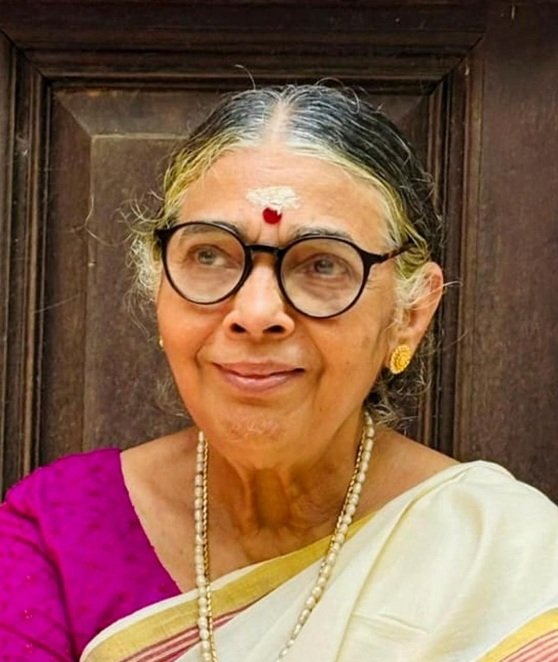 Nirmala Panickar Of the disciples of Kalyanikutty Amma, Nirmala Panickar was guided by a research oriented vision towards the historicity and ethnography of Mohiniyattam. She closed in on to the primeval history of the dance form concerned based on an intimate reading of the ancient temple arts tradition of Kerala such as Nangiarkuttu. Nirmala Panickar, subsequently, assimilated her ideas and aesthetic perceptions, integrated them in her Kalari and created a version titled, Deshi Mohiniyattam. It has all the ingredients K.N. Panikkar stood for all his life. Yet it carries a distinct tone and identity which are very much visible in the performances of Nirmala's talented disciples. Poli, Kurathi, Esal, Mukkuthi and Chandanam were relatively inconsequential items that existed in Mohiniyattam prior to its reformation in the 20th century. Broadly speaking, these items do have a folk flavor, one or two of which had sexual connotations too. Therefore, these items were deleted from the curriculum following the institutionalization of Mohiniyattam. Nirmala Panickar reintroduced these items in her Deshi Mohiniyattam attributing spiritual symbolism wherever possible. Gopika Varma, another prominent dancer belonging to the Kalyanikutty Amma School, carved out a style of her own in the craft and content of Mohiniyattam but is essentially motivated by the key components of K.N. Panikkar's vision and interpretation of music and movements in Mohiniyattam. In the evening of his life, K.N. Panikkar was delighted to learn that his vision of Mohiniyattam and its music were gradually gathering momentum even amongst the new generation dancers. Of the few renowned young dancers of his time, Dr. Neena Prasad almost always kept a safe distance from the indigenized artistic perceptions of Panikkar. She flowed along the mainstream Margam of Mohiniyattam which relied on highly codified angika and satwikabhinayas embellished by the rigors of Karnatic classical music, vocal and instrumental. 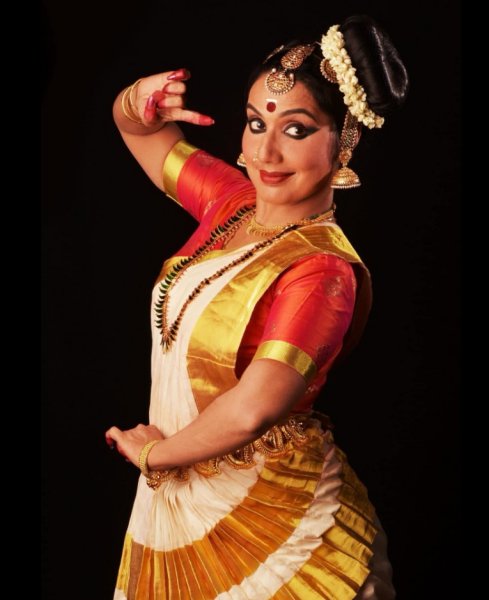 Dr Neena Prasad 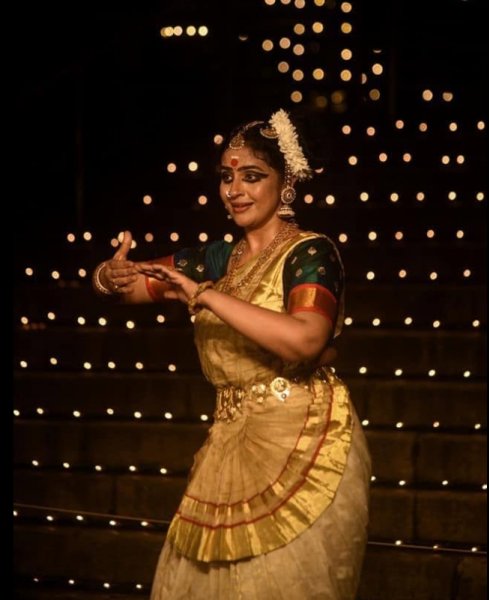 Dr Methil Devika (Photo: Vipin Chandran) Methil Devika, on the other hand, placed complete trust in Panikkar's approach to the interventions in Mohiniyattam. Besides or as a substitute for maddalam, she has gone to the extent of bringing mizhavu as the background music of Mohiniyattam. Had Panikkar been alive, he would have been stunned by her insatiable urge for experimentation. Even the well-established dancers, Kshemavathy and Sugandhi, incorporated one item of Panikkar beginning with the syllable, thathaari, in their recitals. Vineetha Nedungadi, a disciple of Kshemavathy, was also drawn to Panikkar's "lust for provincial artistic traits" and choreographed his famous lyrics, "Karukare karmukil" in raga Samantha Malahari, into a captivating item in her version of Mohiniyattam. She seems to be hell bent on re-envisioning Mohiniyattam in terms of poetry which is evident from her presentation of Edasseri Govindan Nair's illustrious poem, Poothappattu, on stage. Mohiniyattam Collective When the two non-native dancers began creating ripples in the stream of Mohiniyattam in the early 1980's, the Kalamandalam School of Mohiniyattam sensed a potential threat to its near monopoly in the field. The think-tanks behind it suddenly felt the need for a meaningful negotiation with the Kalyanikutty Amma School based in Thripunithura, Kochi. A Collective was convened at the Kuttambalam (temple-theatre) of Kalamandalam with the underlying objective of ironing out the differences, arriving at a consensus and safeguarding the territories of the traditional Mohiniyattam by acting as a unified force against their "common enemies". Although signs of progress were visible initially, the atmosphere turned cloudy as the exponents of both Schools stubbornly stood by their arguments and assertions. Predictably, the Collective ended in a pandemonium. A couple of other Collectives took place in various venues within Kerala and outside which were, unfortunately, inconsequential for the most part. A quarter century later, Sangeet Natak Akademi, New Delhi, organized a comprehensive Mohiniyattam Collective initiated by Dr. Deepthi Omchery in which almost all the leading Mohiniyattam dancers and Acharyas of the day participated. As an observer in the two-day conclave held in Delhi, I gathered the impression that the dancers have become, on the whole, less aggressive and much more sensible. Time, I felt, has mollified most of them in the sense that they seemed to be less insular and more inclusive in their approach to and understanding of the different sub-styles that have emerged within the mainstream Mohiniyattam and at the periphery. This, in fact, points towards an internal advancement in the artistic domain of this dance heritage. Quite recently, Kalamandalam Akshara Bijeesh conducted a two-day symposium at Thrissur on Mohiniyattam under the title, Saparya. Hers was a stupendous effort to bring together most of the noted dancers and researchers in the field cutting across generations. With a series of lecture-demonstrations and paper presentations followed by recitals in the evening, the event attended by many a dancer and serious art lovers was vibrant through and through. The youngsters in the field, I have noticed, do have a crystal clear knowledge about the form, content and aesthetics of Mohiniyattam besides lots of ideas about reinventing the dance form to keep abreast of time. Whether their ideas are pragmatic or whether they can fulfil their dreams are questions none of us can answer forthwith. Yet their sense of optimism and courage to take up challenges deserve appreciation. As one who delivered the prefatory speech, I closed in on to the inevitability of adhering to the Margam if Mohiniyattam has to substantiate its stature as a classical dance. If someone tends to mix its traditional framework with indigenous forms of music, both vocal and instrumental, the classicism of Mohiniyattam is bound to suffer. Similarly, if certain dancers want to make socio-political statements, employing Mohiniyattam as a medium, on social justice, grey areas, gender-based atrocities et al through some concocted lyrics, its fundamental movement-dynamics will be disrupted. Mohiniyattam, to go with its tradition, is circumscribed by the rathibhava of the Nayika in all its ramifications. The rest of the sentiments are relevant in the dance form only as Vyabhicharibhavas (transitory expressions). The undulating torso-movements, the delicate footsteps, the Chuzhippus (circular motion) and the Ulachils (gentle swaying of the body to both sides) executed in the slow and medium tempos of Adi/Misrachappu/Rupaka talas are the defining characteristics of the resuscitated Mohiniyattam which are inextricably linked to the multiple shades of the rasa, Sringara, attributed to women in the Padavarnams and the Padams of King Swathy Thirunal who ruled Travancore in the early 19th century. In the post-Independence period, lyrics of several other lyricists/poets have been choreographed and performed in Mohiniyattam by dancers belonging to different generations. While several of them have turned to the Kritis/Keerthanas of the Trinity in Karnatic music or to the compositions of subsequent Vaggeyakaras like Harikesanalloor Muthayya Bhagavathar, a few have tried to transform the central pieces in Mohiniyattam into gross theatrical discourses. I have often felt that most of the dancers of the day are still grappling with the task of establishing or reestablishing the identity of Mohiniyattam by interpreting / misinterpreting / reinterpreting its core aesthetic concerns. In this context, my humble reading is that most of the major practitioners of Mohiniyattam are still ruled by an inferiority complex partly on account of the incertitude associated with its historicity and identity and partly due to the intimidating presence of Bharatanatyam dancers from within and without. One cannot however deny the fact that there is still a reasonably good space for Mohiniyattam in Kerala and outside plus a genuine constituency of Prekshakas wherever the dancers perform. The talented youngsters in the field, I sincerely hope, are smart enough to preserve the same and to further their outreach in the days to come. References 1.Namboodiripad Leela. "The History of Kerala Kalamandalam" (Malayalam) - Published by Kerala Kalamandalam - 1990 2. Namboodiri M.P.S. Kalamandalam (Editor). "Abhijnanam" (Malayalam). Published by Killimangalam Grameena Vayanasala - July 2024 3. Amma Kalyanikutty. "Mohiniyattam - "History & Dancing Manual" (Malayalam). Published by D.C. Books, Kottayam - 1992. 4. Dr. Rele Kanak. "Mohiniyattam - The Lyrical Dance". Published by Nalanda Dance Research Centre, Mumbai - September 1992. 5. Lemos Justine. "Tradition and Transformation in Mohiniyattam Dance (An Ethnographic History). Published by Lexington Books. Lanham Boulder New York London. 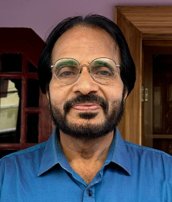 Former Deputy Registrar of Kerala Kalamandalam, V Kaladharan is also an art critic. He has published several articles at the academic level. 'From Meditative Learning to Impersonal Pedagogy' was published in an anthology 'Qui Parley' initiated and released by scholars and writers from the University of California, Berkeley. His articles on Indian performing arts and literature regularly appear in magazines and journals, and in the Friday Page of The Hindu. Post your comments Pl provide your name along with your comment. All appropriate comments posted with name in the blog will be featured in the site. |
