
|
    |
|
|
|

 Ashwini Kalsekar: Kathak beyond borders- Vijay Shankare-mail: vijaydance@gmail.com January 11, 2026 London based Ashwini Kalsekar, the Artistic Director of KKMUKCIC, is a professional Kathak exponent, teacher and choreographer for over two decades. She learnt under her mother, Guru Rekha Nadgauda, for 17 years that instilled foundational knowledge and a profound love for the art. She continued further training with Guru Shama Bhate in Pune for her MA. Ashwini Kalsekar shares her thoughts with Narthaki.com. 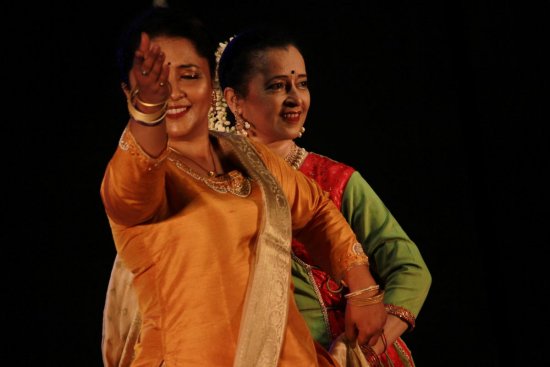 Ashwini Kalsekar with her mother Guru Rekha Nadgauda You have been teaching Kathak in London for over two decades. Have you noticed any changes in students and parents over the years? I have always felt extremely fortunate to be surrounded by students and parents who are supportive and trusting. They have believed in my approach to teaching, my understanding of the form, and in me as an individual. While times have certainly evolved, Kathak continues to attract those who value authenticity and purity. My association has largely been with people who seek depth and sincerity, and that has remained a constant throughout my journey. Do you follow a specific training module, especially for non-Indian students who may find it difficult to relate to Indian culture and philosophy? For me, Kathak is a way of living life rather than simply a subject to be taught. I see it as a holistic educational journey. While Indian classical art naturally connects one to culture, that is not its sole purpose. Kathak offers storytelling, discipline, dedication, trust, and emotional awareness - values that are universal. Through this process, I feel I am nurturing a strong community that remains connected to its roots, regardless of geographical or cultural background. Do you teach male students, and do you conduct separate classes for them? Yes, I have taught male students, including those from non-Indian backgrounds. I have never felt the need to teach them separately. A shishya is someone who dedicates their soul to the guru. Gender has never influenced my teaching; commitment and sincerity are what truly matter. 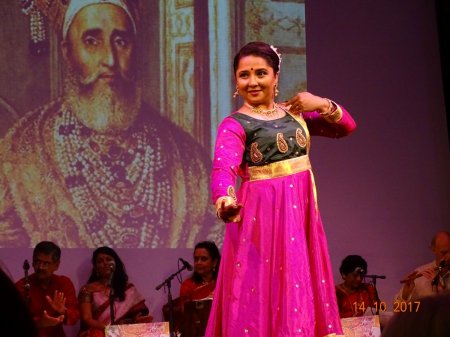 Ashwini Kalsekar Kathak is often considered less visible in the UK compared to Bharatanatyam. What challenges did you face in popularising the form? The Indian classical dance diaspora in the UK is, in fact, very strong and well established. When one lives away from one's homeland, artists tend to come together rather than focus on differences. There is a shared responsibility toward preserving our heritage. The inclusion of Indian classical dance within the ISTD South Asian Dance syllabus has been a significant step forward. While Kathak and Bharatanatyam have a wider presence due to their popularity in India, it is encouraging to see forms such as Odissi, Kuchipudi and Manipuri also flourishing and developing dedicated audiences. Does the UK government encourage Indian classical dancers? Yes, support is available through Arts Council England, a government-funded body that promotes artistic practice across the country. It offers grants for research, development, and creative projects, and I have personally received an R&D grant from them. Additionally, institutions such as Bhavan, the Nehru Centre, Akademi, and several cultural organisations actively contribute to strengthening Indian classical dance in the UK. As a professional dancer and teacher, is this field financially viable? Financial viability is subjective and varies from individual to individual. A career in the performing arts inevitably comes with obstacles, financial ones included which is something that became especially evident during the COVID. However, when one chooses this profession, it is usually driven by passion rather than purely financial motivation. While stability is important, it should not be the sole deciding factor. When I first came to the UK, I knew I would have to invest time and patience in establishing myself. Over the years, that investment has paid off. With sincerity, ambition, resilience, and consistent hard work, it is possible to sustain oneself with dignity. Indian classical dance may not always be assessed in commercial terms, but its true rewards lie in the respect one earns, the students one shapes, and the cultural legacy one contributes to. How would you define your role as a cultural ambassador? I see myself as a bridge between tradition and contemporary society. My role is to represent Kathak with honesty, depth, and integrity - ensuring that its philosophy, discipline, and aesthetic sensibilities are communicated with clarity while remaining relevant to today's audiences. A significant part of my work has involved challenging preconceived stereotypes about Indian identity and fostering cultural understanding within local communities. Through structured pedagogy and respectful transmission of knowledge, I aim to uphold high standards of classical dance education while encouraging cross-cultural dialogue and inclusivity. Creating meaningful performance opportunities for my students is also central to this role. Over the years, they have presented their work across the UK in annual showcases such as Anahad, Samarpan, and Hemantika. These platforms allow young dancers to experience the discipline, responsibility, and pride that come with representing a classical art form on stage. Alongside teaching and choreography, I actively collaborate with fellow artists, develop new creative ideas, and use digital platforms to widen access to Kathak, encouraging broader audiences to engage with the depth and relevance of the form beyond geographical and cultural boundaries. 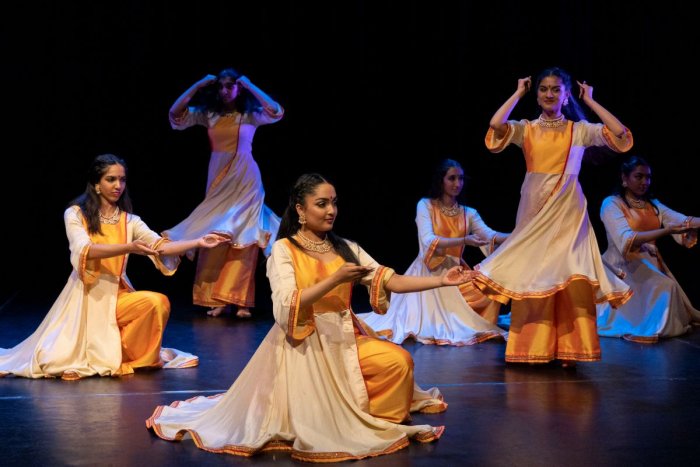 Ashwini Kalsekar ‘s students What can a classical dancer contribute to society? A classical dancer contributes discipline, emotional intelligence, cultural sensitivity, and continuity. Through teaching and performance, we help build grounded individuals and cohesive communities. Representation plays a vital role. My British Indian daughter has shared how learning Kathak has helped her connect more deeply with her Indian roots through storytelling. Similarly, a student attending a predominantly white school expressed how classical dance helped her feel more confident and comfortable in her own skin. Kathak also develops transferable skills. Like mathematics or science, it follows a rigorous structure with defined techniques and principles. I strive for precision and constructive feedback in my teaching, which has helped my students develop strong listening skills, adaptability, and resilience - qualities they carry into other areas of life. Dance also supports mental well-being. Many students describe it as a stress-reliever or a source of renewal during challenging periods. If classical dance can enhance mental health and bring joy in a meaningful, recreational way, then its contribution to society is invaluable. Could you speak about your dance productions in relation to contemporary society? My productions are rooted in traditional Kathak vocabulary while engaging with themes relevant to contemporary society. Kathak's storytelling tradition allows me to explore issues that resonate today without compromising classical integrity. Works such as Devi, which addresses women's rights and consent; Metronome, responding to climate change and the Mumbai floods; and Zero, exploring mental health and bullying among teenagers, reflect this balance. While these productions engage with modern narratives, my primary focus remains on preserving the purity and grammar of Kathak. I believe that when addressing contemporary themes, it is essential to foreground tradition. This is what keeps the art form alive and meaningful. 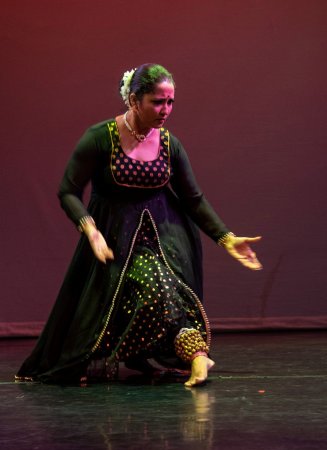 Ashwini Kalsekar (Photo: Vipul Sangoi) Which role do you consider most important - daughter, wife, mother, teacher, choreographer, or dancer? I do not view these roles in isolation. As a woman, I believe my foremost responsibility is to empower other girls and women to take charge of their lives. I am a daughter, wife, mother, friend, teacher, and artist simultaneously, each role strengthening the other. My husband has been my greatest source of support in the UK, standing beside me at every stage of my journey. Are you happy as a classical dancer? Any regrets? I am deeply content. The Indian classical dance community in the UK is united and committed to preserving the integrity of the form. While social media trends sometimes overshadow rigorous training elsewhere, the focus here remains on discipline and authenticity. I have no regrets - only hope that society continues to recognise and value culture and tradition in their truest sense. What are your future aspirations? My aspiration is to continue doing complete justice to my art and to create a lasting space for future generations one where the purity, depth, and integrity of Kathak are preserved and carried forward with sincerity and respect.  Vijay Shankar is a Kuchipudi and Kathakali exponent, teacher, bilingual journalist, arts critic and actor. Post your comments Please provide your name when you use the Anonymous / blog profiles to post a comment. All appropriate comments posted with name in the blog will be featured in the site. |
