
|
    |
|
|
|

 Yamini Kalluri: Choreography is second nature to me- G.V. Anna Raoe-mail: gvannarao@gmail.com October 5, 2025 Yamini Kalluri is a young Kuchipudi student of Dr.Sobha Naidu pursuing her career in the U.S. Your Guru Sobha Naidu was an iconic figure. Can you share some memories of her, her style of Kuchipudi and influence of her own guru, legend Chinna Satyam and your own takeaway from being her student. Being her student of dancing, what truly influenced me was her mindset and presence. More than the style, those learning from such a charismatic and original diva become copycats, but I had the rare blessing of living and breathing her aura closely - as her rehearsal director, main assistant teacher, music production assistant, and even as a singer accompanying her performances. What I absorbed was not just her artistry, but her values and the sheer obsession and devotion to dance that made her the queen of Kuchipudi. She recognized my voice as beautiful and pushed me to nurture it, reminding me that she herself would have chosen to be a musician if given another life. She pushed me to teach at the age of twelve, entrusting me with powerful roles and responsibilities in her school, which taught me to carry myself like a queen. She made me aware that the arts world can be brutal and that one must fight to survive, and she herself embodied that by always choreographing her own works - even as a disciple of the legendary Vempati Chinna Satyam. She honored her guru, but she forged her own path and created her own space rather than joining a cult of imitation. From her, I learned the importance of creating my own niche, of being a strong woman, and of embracing the full scope of my potential as a full-time artiste. My years with her were nothing short of an internship for the life I lead today - running a large arts organization that nurtures both Carnatic music and Kuchipudi. She often told me, since my name is Yamini, that I should aim to be as great as Yamini Krishnamurti. I carry that blessing with me as I aspire to be a true torchbearer of Kuchipudi on a global stage. 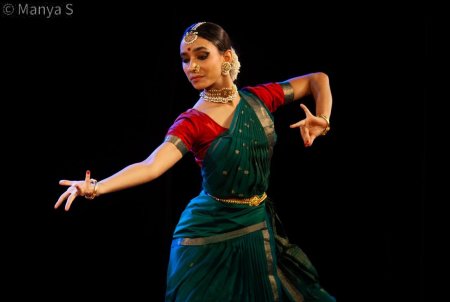 What prompted your choice to take up classical dance as a full time career and how is the experience of pursuing the same in the US vs India? When I danced, I always felt invincible - like a superhero. It came so naturally to me, and I loved practicing for hours. As a child, I would rehearse past midnight, then wake at six, walk four kilometers to the dance school, practice again, and walk back home. For me, dance was never separate from music - it was my way of expressing my love for music. I couldn't imagine myself doing anything else, and no matter what obstacles came in the way, my love for the art always gave me the strength to continue. People often saw my mother and me as naive for choosing dance as a full-time career, but nothing has been more fulfilling than living immersed in creation and practice. My own guru, Sobha Naidu, at one point felt I wasn't "pretty enough" to be a dancer, and she rarely gave me lead roles in productions. In fact, I never had an arangetram - something considered essential for Indian classical dancers - because she thought I needed to put on more weight before I could be presented on stage. By the time I was 18, I was already touring internationally, so the idea of a traditional arangetram didn't make sense to me anymore. To be honest, it is very difficult to survive as a performer in India today. Outside of teaching, there are hardly any sustainable ways to earn as a full-time artist. Often, you lose money while performing, since you must pay musicians, cover travel, and production costs. Too often, the only way to "make it" is to marry into wealth or political power. For me, that felt like a dead end. That is what drew me to the US. Here, I found freedom - to create, to produce my own art and events, and to be respected as an artiste on my own terms. My background in ballet and modern dance helped me connect with Western audiences and the larger dance industry because I could "speak their language" while staying rooted in Indian classical traditions. I don't like being insulated within only the Indian diaspora. I thrive in making connections across cultural backgrounds, collaborating, and learning from others. It has reinforced for me that at our core, we are all the same - and that art is one of the most powerful ways to dismantle hate and celebrate universality and beauty. Your thoughts on the dance form to make it more suitable for today's generation and its influence in the diaspora. Because of my ballet and modern dance training at the Martha Graham School in New York, I had the opportunity to deeply study anatomy, injury prevention, and strengthening practices. This training taught me how to sustain the body with full force and range of motion over a long career, and I now incorporate those principles into my Kuchipudi practice - without disrespecting or disturbing the form's tradition. My style has also naturally absorbed influences from many sources - Odissi, Bharatanatyam, Kathak, Mohiniattam, even Chinese classical dance. Whenever I see movement that resonates with me, I like to explore how it can be translated through Kuchipudi vocabulary. I'm also very drawn to Hindustani music, and working with that sound world organically shifts the aesthetic and energy of my movement. Equally important are the themes I choose to explore. Many of my choreographies reflect progressive ideas - female sexuality, female friendships, nature - which today's generation can immediately relate to. And in the diaspora, I find that this is especially meaningful. When I am invited to universities, ballet schools, and companies to teach, I can bridge the two worlds because I understand ballet and modern dance language. That allows me to transcribe Indian classical movement in a way that is relatable to Western dancers, while still holding on to the essence of Kuchipudi. 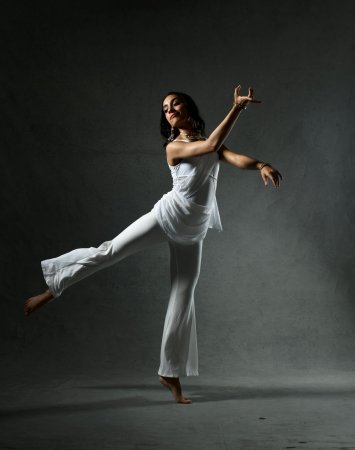 How do you navigate between the styles of western contemporary and ballet which also you are pursuing and some info about your journey in them? Honestly, if I did only Kuchipudi all day, every day, I would burn out. Exploring Western styles like ballet and contemporary actually recharges me - it gives me new ideas and inspiration that I bring back into Kuchipudi with even more force. When I first stepped into a ballet class at 19, it was humbling. My alignment was completely off - I had no core or inner thigh strength, my lower back was arched, had bow legs, and I was very inflexible. I remember thinking, maybe I'm not even a dancer anymore, because I felt like I had no legitimate training. But that challenge lit a fire in me. I started taking two free yoga classes a day, up to five ballet classes daily (sometimes private ones), even when my bank balance went to zero. To support it, I taught Kuchipudi and reinvested everything into training. Eventually, I was accepted into the Martha Graham School, where I threw myself into a regimented system - 8 am to 4 pm of Graham classes, then the gym, then teaching until 10 pm at night. Slowly, my body transformed. I gained strength, alignment, flexibility, and confidence, progressing quickly into higher levels. After graduating, I began blending these worlds. Having grown up listening to Western classical music, it was natural for me to start creating work that brought together Kuchipudi and Western traditions. A seed was planted long before - in fact, when I was 8 or 9, I saw the Bolshoi Ballet perform in Hyderabad, and it completely changed my life. That childhood dream finally came true at 19, and now it has become part of my artistic identity. Your own choreographies in these styles, pros and cons of being in this field and collaborations with western music, experiences and intentions in conducting a Kuchipudi festival. Choreography has never been something I had to "learn" - it's been second nature since I was ten, choreographing at home to recordings of M. S. Subbulakshmi, M. L. Vasanthakumari, Chittibabu, Mandolin Srinivas. Later I sharpened that instinct into a craft. I believe once you've put in enough hours, the art starts to live inside you. At that point, rules don't bind you - you become the rulebook. The job is to be the dam that decides which way the flood flows, and at what intensity. The reality of this field is brutal. In India, there's prestige and pomp but no money. In the West, classical musicians and ballet dancers at least have salaries and stability. Here, too often, dancers are made to survive on crumbs, while pretending it's glamorous. And yes, cult behavior and diva egos thrive where resources don't. I don't have patience for it. For me, either you create real opportunities and systems, or you get out of the way. That's why my collaborations with Western classical musicians have been game-changers. They pay fairly, the venues are stunning, and the partnerships have opened doors I never imagined I'd walk through as a lower middle-class girl. Suddenly I'm performing for institutions like the Kiran Nadar Museum and NMACC, moving in circles that were never built for me. But I never forget: true power isn't elite access - it's building a loyal community that has your back and can't imagine letting you go. That's wealth no one can take away. The New York Kuchipudi Festival was born from that mindset. Kuchipudi dancers - especially the young ones - need platforms. I don't sit around waiting for institutions or governments that clearly don't care. When I see a gap, I treat it like my personal problem and solve it. That's why I curate, that's why I build. Some might call it being a control freak. I call it taking responsibility. The more we give, the more addicted people become to excellence - and that's how you build a mafia of art, not a charity case. Plans and hopes for the future? Looking ahead, my greatest focus is on building the Kritya Foundation into a world-class institution. I want to expand our education programs, develop the dance ensemble with new productions, curate festivals, and continue producing high-quality music through the Kritya Music Ensemble. At the same time, I am working on standardizing the Kritya technique so that future generations have a clear methodology to grow from. One of my biggest dreams is to establish the Kritya Conservatory in the woods of the Pacific Northwest - a place where dance, music, theatre, and literature can come together in an immersive, holistic environment. I envision it becoming one of the premiere global institutions for Indian arts, something like the "haj" for artists, where people from all over the world can come, learn, and connect. Institutions like Jacob's Pillow, Nrityagram, Kalakshetra, and Orsoline inspire me greatly, and I want to build something of that caliber for our time. Until then, I will continue to enjoy performing as a soloist, while also creating opportunities for other full-time Indian artistes to have sustainable careers. I also hope to collaborate with major ballet and contemporary companies to create new works that bridge traditions. Ultimately, I want to build not just an institution, but a global Kuchipudi community - because wherever I travel to teach or perform, I see how hungry the world is for this art. 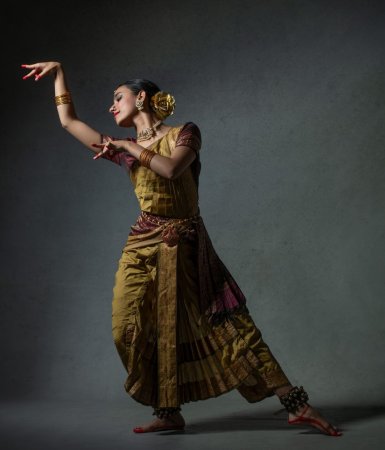 Importance of understanding anatomy and having a fitness routine in dance. There are far too many dancers who end up injured or unaware of how their own bodies work. Dance is not just about learning choreography - it requires an understanding of alignment, anatomy, physics, nutrition, and mobility training. My own brother, who is a tennis player, marathon runner, and in the army, has been a big inspiration for me in this regard. His discipline showed me that to be a serious dancer, you must also be an athlete. For me, fitness is non-negotiable. I go to the gym every day, take ballet classes, and then practice my Kuchipudi. This kind of cross-training gives me strength, stamina, and mobility while keeping me injury free. Western dancers have already embraced this approach, while Indian classical dancers are only now beginning to catch up. Too often, the focus in Indian dance has been on the shape of the body, rather than on actual power, strength, and endurance. When you take care of your body, it becomes the best instrument you have. And when your body is at its best, your dance automatically transforms into its most powerful and expressive version. The pros and cons of having a quasi permanent orchestra ensemble? The truth is simple: the more I insist on bringing my ensemble everywhere, the more presenters start seeing us as one body. And once that perception shifts, the opportunities, the fees, the creative freedom - they all expand. Even when people initially invite just me, I push back. Because my ensemble isn't "accompaniment." They're my body parts. When one of the original musicians can't be there, it feels like I'm missing a limb. Of course, it's "quasi" permanent because funding isn't there yet. I want to give my musicians real salaries, not just piecemeal gigs. Until then, they still prioritize my projects because I create an environment where collaboration is alive and fun. And when new musicians step in, it's never a loss - it's an expansion of family. Almost everyone who works with us wants to return, not just for the art but because the process itself is electric. But I've also hardened through experience. Having multiple fallouts with my guru Sobha Naidu as a teenager taught me the hardest truth: nothing is permanent. People leave, things collapse, life moves. You can cry through it - I did - but you keep building. You don't abandon your vision because someone walked away. Death, separation, loss - none of us escape it. So I lead without illusion. I don't live in utopia. I hope my ensemble stays forever, but I also know they won't. My job is to give them everything I can while they're here, to be ruthless about the vision, but selfless about their wellbeing. That balance - fierce and maternal at the same time - is what keeps the ensemble alive. 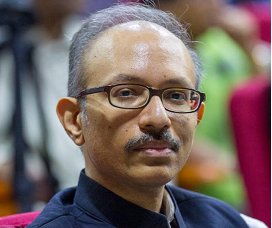 GV Anna Rao has been arranging classical dance programs and festivals for more than a decade in Hyderabad. He has also been reviewing dance performances for the Hans India Newspaper for many years. Having a keen interest in photography, many of the pictures taken by him have appeared in the Hindu's Friday Review occasionally. He is also a member of INTACH. Post your comments Please provide your name and email id when you use the Anonymous / blog profiles to post a comment. All appropriate comments posted with name and email id in the blog will be featured in the site. |
