|     |
|
| |

 Bharatanatyam and Neuroscience for Creative Aging- Sloka Iyengare-mail: slokaiyengar1@gmail.com August 13, 2026 My Introduction to Creative Aging I came to creative aging a few years ago through neuroscience and a series of losses in my family. Growing up in Ahmedabad, I learned Bharatanatyam at the Darpana Academy of Performing Arts. My doctoral and postdoctoral work has been in neuroscience, more specifically in epilepsy; my clinical experience was with children who have refractory epilepsies. After my postdoctoral appointment, I lost my mother, mother-in-law, and a close older friend. Seeing formerly vibrant women being treated with pity and condescension when they were sick and frail, I was moved to think of ways to use my scientific and dance training to alleviate suffering, especially in older adults. I wanted to see if I could use Bharatanatyam as a vessel to provide a space where older adults can exercise their full human potential. 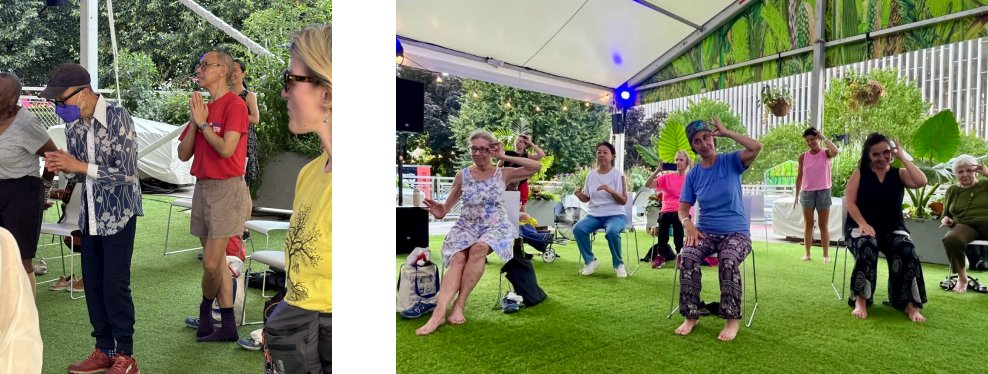 Inclusive dance session at Lincoln Center PC: Dance for PD® Creative aging is the idea where older adults are encouraged to engage in artistic and creative modalities such as painting, drawing, poetry, and writing. The benefits of such activities include skill building, a decrease in isolation, and improved socialization. Specifically, dance based movement has been shown to be associated with several benefits in people with dementia, Parkinson's Disease, and benefits include a decrease in falls, improved cognition, flexibility, balance, and agility. In the aftermath of the COVID-19 pandemic, when older adults were facing significant levels of social isolation and loneliness, and decreased opportunities to engage in movement in safe ways, movement-based creative aging efforts came to the forefront. I researched available avenues for creative aging and concluded that Bharatanatyam, with its depth and modularity, can be adapted to those with varying physical abilities. Finding that the work of adapting Bharatanatyam specifically for older adults had not been done led me to create the foundation to use Bharatanatyam for creative aging. Bharatanatyam for Creative Aging - the "Where" and "How" Over the last five years, I have worked with over 1,000 older adults, some as part of a one-off session and others on an ongoing basis, at various locations in and around New York City (NYC). A complete list of the organizations I have partnered with can be found here. To name a few, I have received funding from the Lower Manhattan Cultural Council (LMCC); I conduct weekly sessions at the Memory Tree for those with early and mild dementia and am a faculty member for Arts for the Aging. I have also worked at various New York Public Library (NYPL) branches, where I bring together poetry, literature, and adaptive Bharatanatyam. 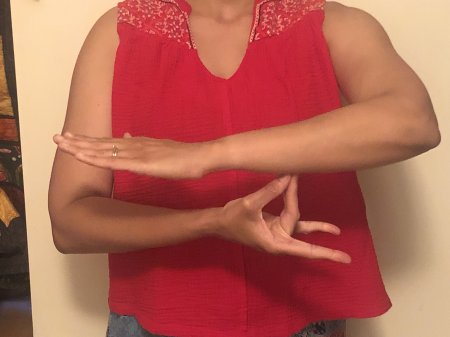 Hasta for a bat PC: Michael Tanksley The ways to adapt Bharatanatyam for those with varying abilities are plentiful! One that is the most intuitive is the language of gestures or hastas (a publication on using hastas for creative aging can be found here). Participants learn the physical action of creating hastas with their hands, and then the prescribed meaning and nuance are layered. Once they build confidence and gain familiarity with the gesture, drishti and facial expressions are incorporated. Depending on the story being told, vinayogas may be included as well. Learners are encouraged to create gestures of their own; a few that we have created together are for a bat, several fish, the Brooklyn Bridge, and a selfie stick! By incorporating meaning, symbolism, and music, hastas offer a relatively easy entry point for older adults into Bharatanatyam, as they can be done seated, in wheelchairs, or with walkers, and they serve as an introduction to the expressive qualities of Bharatanatyam. For all sessions, participants are offered the option of observing or using their gaze and faces if the gesture is uncomfortable or painful due to vertigo or chronic pain. 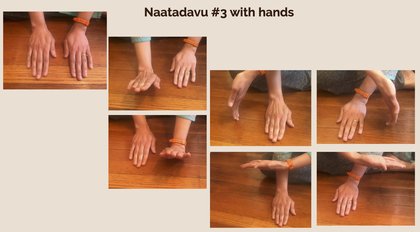 PC: Michael Tanksley Adavus and jatis that are traditionally taught are not the most inclusive, in that they are meant mostly for able-bodied individuals. But there are many ways to retain the rhythm and beauty of a jati yet make it accessible to those with limited mobility or chronic pain. These include the use of hands instead of feet, the use of eyes, showing participants how to count talam, and chanting the sollu. Singing and counting are excellent additional ways to engage with the dance, as they provide an additional avenue for participation and let individuals literally use their voices. The codified language of rasas is another way in which Bharatanatyam can be made accessible and universal. 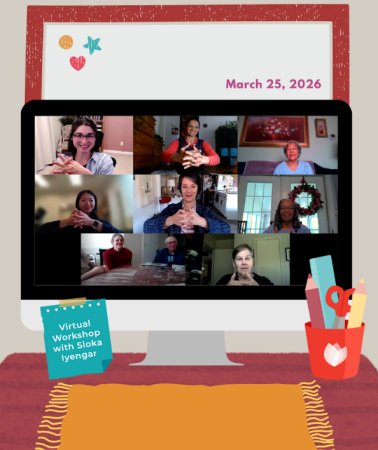 Virtual workshop with participants at Arts for the Aging PC: Kayla Lemen-Conklin Additional avenues heighten immersion into Bharatanatyam. For example, visual art in the form of museum visits for sculptures can be incorporated; learners can read and discuss mythology, philosophy, and the symbolism of the pieces or songs. For learners who are not of Indian origin, incorporating these additional artistic avenues gives an additional way to interact with the dance form. Languages of the participants in the form of words and poetry can also be brought into my sessions, and NYC is an excellent way to bring Russian, Hebrew, Spanish, Persian, Creole, Portuguese, etc. into sessions. Poetry and literature form an integral part of the sessions in other ways as well. In a series of workshops with The Creative Center called Rasas in the Now, the expression of embodied emotions was combined with writing prompts [e.g. "What evokes (or has evoked) the rasa of hasya for you?"], pastels, and watercolors. In a series of workshops entitled "The Body Poetic: Exploration through Indian Dance and Poetry" with Arts for the Aging, certified poetry therapist Lauren Mazow Boyle helped find the joy of poetry written by authors of Southeast Asian origin by bringing in expression, movement, music, and storytelling. At several NYPL branches, librarians have helped by bringing books and literature rooted in Southeast Asia to inform movement. These kinds of avenues can make Bharatanatyam contemporary, help transcend and bridge cultural differences, and give participants additional, tangible ways to interact with the dance form. 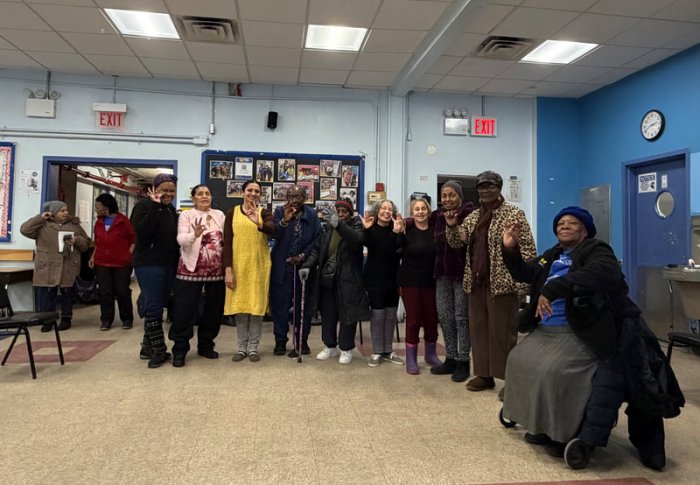 Guest Artist Masterclass Series, Queensbridge-Riis Senior Center in Long Island City with Dances for a Variable Population PC: Sylvia Luna These creative aging sessions also help me combine my love for the natural world and science with Bharatanatyam. In addition to creating gestures for fish and bats, we talk about the science behind animal movement as we embody the movement of the sinuous movement of the snake, the flickering of a firefly, and the gait of an elephant with our bodies and eyes. While sharing the Mooshika Vahana slokam, learners share the stability, grace, and playfulness of elephants, and that they are highly intelligent and social animals who grieve, have long memories, and take deep care of their young ones. The action of showing elephant ears or the trunk for Lord Ganesha then becomes so much richer because of these conversations. Over the years, participants have performed at several venues, e.g., at a center called India Home; participants presented a Bharatanatyam piece for Mother's Day celebrations. Other learners took part in a lecture/demonstration for medical students at the Humanistic Medicine Program at NYU. In an upcoming performance in September 2026, learners will present their work to the community in an event they are calling "Timeless Sparks" ("Chispas Eternas"). Advantages of Bharatanatyam for Older Adults The practice of Bharatanatyam can be beneficial to all, but there are numerous specific benefits for older adults. The modularity of the approach, where we can start with one aspect and then intentionally layer skills, helps build confidence and agency. Participants build focus, employ powers of observation and attention, and through repetition and gentle addition of new steps or aspects, they find, as one learner calls it, an "achievable challenge". Anecdotally, participants have shared feeling relief from arthritis pain because of regular work with hastas; relief from dry eyes by practicing drishti bheda; and stability and confidence because they are encouraged to lift and place the feet in kuluku. 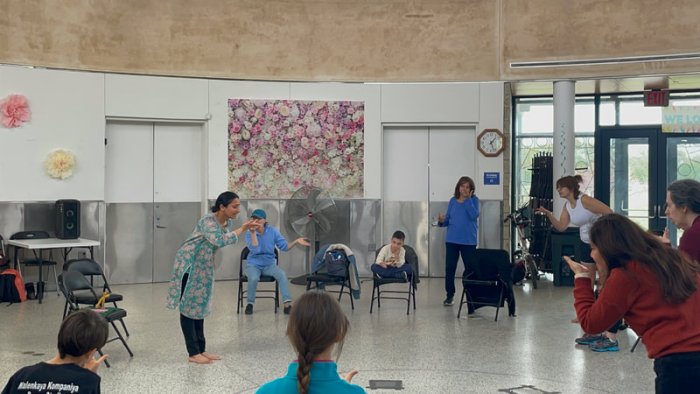 Dancing Into Spring: South Asian Dance Workshop at Marine Park Alliance PC: Brian Moreno, Canarsie Courier Students also talk about engaging the mind; by concentrating on a single hasta, participants reawaken the habit of systematic learning. They recapture the experience of experimenting and refining, a path that is expected of the young, but often denied to older adults. Participants find themselves in tune with their bodies and minds and find a profound connection with something bigger than themselves. This publication describes how adaptive Bharatanatyam in older adults can alleviate isolation and loneliness by creating connections with oneself, to peers in the class, to world events, and to nature. Future Directions What started as a desire rooted in personal loss to see if this graceful and eternal dance form could bring beauty and grace to the lives of older adults has transformed into lifelong friendships, the creation of a project, Bharatanatyam for All, and documentation of this work in the form of publications and writings. Older adults in my sessions continue to be a source of inspiration, as they motivate me to be a better student. They have taught me how to find beauty in the non-uniform and what some may call non-traditional. This work has made me think of neuroscience and embodied knowledge in a new way, and has deepened my connections with my gurus, Maheswari Nagarajan and Vanitha Jayan, as they guide me for specific issues and for the direction of this work. I look forward to continuing this work in a nuanced, humanistic, and person-centered way. For a series of sessions in spring 2027, I will share Bharatanatyam for those who are visually impaired and those without reliable internet connectivity. I have been taking inspiration from the field of describing ballet for visually impaired individuals at Dark Room Ballet in NYC and learning from radio baseball hosts on audio descriptions. It truly is an honor to bring this powerful art form and make it accessible and adaptive, and welcoming individuals that have historically been left out. 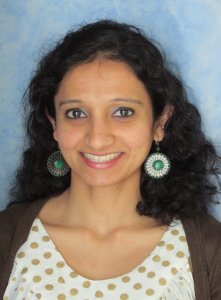 Sloka Iyengar, PhD, is a neuroscientist and Bharatanatyam practitioner, passionate about relieving suffering through artistic expression and scientific inquiry. She is from Ahmedabad and now lives in New York City. As a non-profit science consultant, she works with epilepsy, misophonia, and palliative care organizations, and shares her love for science at The American Museum of Natural History. Here, she teaches courses on Neuroscience, Evolution, Marine Biology, and The Diversity of Fishes to educators. She also continues her Bharatanatyam training with her gurus, and has created the foundation to use Bharatanatyam for creative aging. You can find out more about her work on her website. Responses * The exercises I practice from the sacred dance teachings of Dr. Sloka Iyengar, have helped me enormously in Body - mind Integration and awareness, overall serenity. Gratitude. - Maria Gracia (Aug 21, 2026) * I have had the pleasure of seeing Sloka in action in senior settings and participating in some of her classes, and I’ve seen firsthand the remarkable positive impact she has, both mentally and physically, on those around her. She is a talented and compassionate artist, and I deeply admire the way she shares her gift to bring movement, creativity, connection, and joy into the lives of older adults. Truly beautiful and inspiring work! - Padma (Aug 16, 2026) Post your comments Provide your name and email id along with your comment. All appropriate comments posted with name and email id in the blog will also be featured in the site. |
