
|     |
|
| |

 e-mail: khokar1960@gmail.com BJP zindabad!Photos: Navneet MudgalMay 30, 2026 Bharatiya Jnana Parampara - BJP: A 3 day with over 30 delegates symposium took place on May 21-23 at Simla, capital of Himachal Pradesh at India's most prestigious think tank institution IIAS (Indian Institute of Advanced Study), currently headed by dynamic director Dr.Himanshu Chaturvedi. Dr Shashikumar Prabha is the chair. It was the first-ever dance parampara goshthi, on the scale and substance held here, or actually anywhere in India at a pan global level, not local, regional or even Indian. Put together and pulled off by Ahmedabad's senior academic - dance guru Dr. Uma Anantani, this could easily be termed benchmark. Nothing ever on this scale outside of dance-specific institutions like the national SNA, or regional Music Academies and sabhas and schools has been done with such depth and dignity. 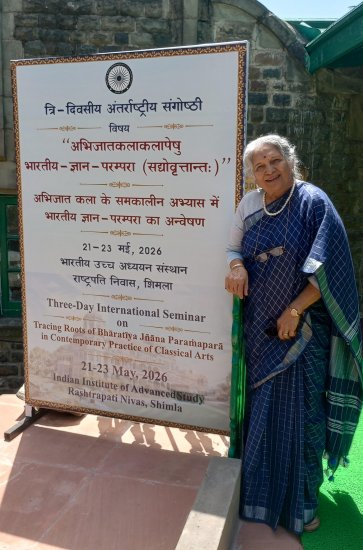 Dr. Uma Anantani Day 1 Dr Uma Anantani had so planned as to include all qualified and willing Fellows and scholars in campus, so as also to take them along and get their valuable inputs. So, the welcome was by Dr. Uma Vaidya, a senior Fellow of the IIAS. She was a benign, Saraswati-looking lady full of substance. She set the tone for the proceedings on Day One. Director Dr. Himanshu Chaturvedi, a historian of note, is a dynamic institutional head who in a short nine months of taking charge, has made the moribund institution come alive. There's evident sign of revival and resurgence. The chief guest Dr. Sachchidanand Joshi, head of IGNCA, with an additional charge of National Heritage Institute as its VC, was to the point in sharing how traditions have evolved and continue through the guru shishya parampara, especially in the field of performing arts in India. He touched on old treatise of Bharatmuni , the Natyashastra - which too IGNCA under him and his deputy Dr. Ramesh Gaur - and Head Kalanidhi, had dossiered to be passed through by UNESCO for its Worlds Memory Programme and won for it international status. On the occasion, IGNCA publication on the father figure of Indian dance Prof.Mohan Khokar was gifted to the director of IIAS. 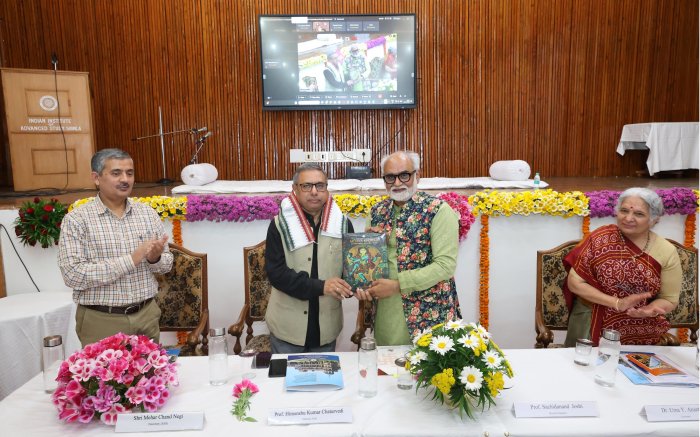 Dr Negi, Dr Chaturvedi, Dr Joshi and Dr. Anantani Prof. Mahesh Champaklal Shah, Professor Emeritus, former head of MSU-Baroda dance music department shared his knowledge on the development of theatre in India. He elaborated that it took place in three phases: 3 phases starting with first production by Kirloskar on 31st October 1880. The play Abhigyan Shakuntalam. In the photo he shared on the TV screen, Maharashtrian costumes could be seen. Prof. Champaklal shared that Bharatamuni maintained regional identity. He added, "Today's netas do that too! When they dress up differently in different states they visit" so proving once again that Natyashastra and Bharatamuni are relevant even in politics today? He also shared that environment should be reflected on stage. It was interesting to learn that the Natyashastra was not studied in 1880s as in those times and clime, theatre was western oriented. The second stage started with theatre of Rajeev Bhatlekar and the device of patra pravesh or half curtain view. On the half raised curtain, there could be a pattern of a cobra, to depict an evil character like Duryodhana and then lower the curtain, when he was to be seen, also to create suspense. It was however doyen of theatre Goverdhan Panchal who with his Dootvaakyam understood the need for Natya Mandap and helped create it. Prof. Champaklal is a forceful speaker and dramatic so the audience sat riveted. He took to the issue of how the Greeks, the Romans have maintained their brand by saving and using old theatrical spaces. India has not one prescribed by Bharatamuni. Today it will be very costly to build one but it ought to be done. 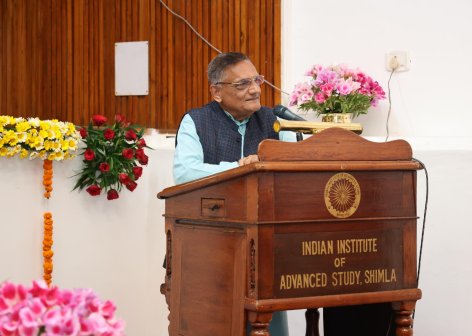 Prof. Emeritus Dr. Champaklal Shah Bharatamuni in the 5th chapter of the Natyashastra focuses on Poorva ranga.19 elements like Jharjhar puja, to ward off Asura Shaktis (evil forces). In 1976, the doyenne of Marathi theatre in Mumbai, Shanta Gandhi used and elaborated first time this aspect. He then focused on the second revivalist doyenne of theatre - Vijaya Mehta - who introduced concept of gate and set pillars. Darpana's Mrinalini Sarabhai created the first Natyamandal, gifted to Ujjain Kalidas Utsav. Dr Champaklal Shah had many such interesting historically valid information. Bharatamuni in the 4th chapter elaborated on how to worship and propitiate Brahma mandal. Different elements described various attributes like waves for Varundev to signify waves in audience's heart! Another device were the two doors: one representing death to reappear as new character and go back to self, "That's your Niyati," thundered Prof. Champaklal, "else one is not a performer." Bharatamuni also assigned different rasa colours like yellow for bravery; red for anger. This included colours for costumes too. Kavalam Narayana Panicker was the third major force according to Prof Champaklal and the only one to bring in sopanam music. No vachikam; only singing. Bhasa's work is the most ancient natakam of all. He created the devise to delay Bharat entering Ayodhya and the way the three big events and news to be conveyed to him , namely (the most positive first) that he had been crowned the king, second, vanvas to brother Ram and third the death of Dashrath. But how to convey this? Dr.Shatavadhani Ganesh, the newly minted Padma Bhushan from Karnataka, focused on From Rasa to Rasika. His knowledge comes through - nay shines - but being online it was a one way traffic, with no eye or face contact energy level possible. He started by saying, "Beholden to chair Ranganathan sir, whose father Ramaswamy ji taught me Engineering". Here is a prince like talent of Karnataka who is a one-man chat show! As he couldn't travel, his session was online, there was no interaction, just one long monologue on Sanskrit theatre. "Rasa is an experience; impersonal bhava rasananda, was the crux. The hallmark of Satva is that it's self illuminating. A lamp needs no other lamp! Bhava is opaque; Rasa has colour." Dr. Ranganathan, the chair, said, "Hungry stomach doesn't appreciate art" so he was brief. Experience, expertise and exposure were important. He enacted Dushyant and the bee in two voices, as if from 40 years ago! He shared that without Kalidasa and Bhasa one cannot talk of theatre. Prof. Champaklal Shah stood congratulated. Shivangee Vikram undertook a most alluring and original Alarippu, called Chakra Alarippu! It was slow and intense; reflecting how the seven chakras rise and kundalini awakens. Amazing work by mother Uma Anantani and daughter Shivangee team. Praveen Kumar of Bangalore was online on Sharira (body) and shaarira (voice/ words) by sharing how in performance arts, body had taken lots of importance in dance. But shaarira has got marginalised. Vaani, goddess of speech and language passed on from generation to generation. Praveen extolled Saraswati not just as goddess of arts, but language. Alphabets came out of her body "aa aa ii ee oo uu..." translating into body ... head sprang aa and the second aaa from ears like that. Ka kha ga gha were her two feet, he said he chose Kannada to show flow in dance. "If this instrument is kept intact then body speaks through dance...our hands, our shoulders speak..." he pontificated. Somehow his discourse looked forced. Also, while his dance video was good there was sync problem. Yogini Veena Londhe and Malati Agneswaran are a rub ne bana di jodi. Their handbook written some 30 years ago and published by Nalanda, their alma mater, is still a standard reference book for dance enthusiasts. Dr. Veena Londhe's presentation on parampara was via Patanjali 's Yogadarshana written in sutra style. There are Four paths: Abhyas, Kriya, Ishwar and Ashtangas (8 in number). Like - Yam, Niyam, Santosh, Tapas, Swadhyaya etc.. She extolled that social and emotional wellness are important. Also, sound and air regulation. Pranayama is very important. Pratyahara, control of sense organ, was crucial for dhyana dharna samadhi. For a yogi and artiste, interior discipline was important for audience's elevated aesthetic participation. Dr. Malati Agneswaran next was a winner speaker again, enhancing her discourse with a smile. The three forms elaborated, and description of her own form - Bharatanatyam - was well etched. She described what Veena Londhe had said earlier on the five aspects connecting it to Alarippu as breathing, varnam, Javali, emotion and so on ending with not just Tillana but Vritum, Mangalam. Odissi and Kathak were similarly described, quoting Kapila Vatsyayan often. Someone still remembers her today! Malathi 's sister Saraswati worked with Kapila Vatsyayan at IGNCA 30 years ago, so the sister's linkages was natural. The day concluded with a splendid sense of camaraderie and commitment to parampara. 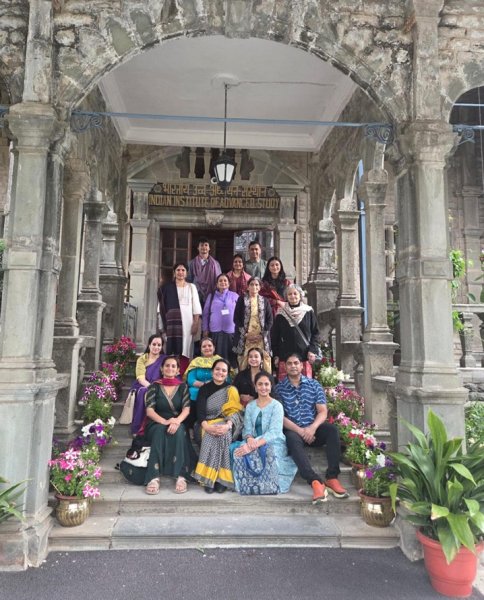 The camaraderie came through Day 2 Neha Kumar 's crisp and controlled discourse on Jayadeva's Geeta Govinda - the philosophy and spirituality - came through with "skillful proficiency," a term she used often in her discourse. Actually, what all she spoke on Radha in Yahi Madhava Yahi Keshava almost created an environment for women's empowerment and gender equality. Dr. Choodamani Nandagopal next had clarity of thought with well prepared presentation where she had an Albert Einstein quote: We dance when in joy, We dance when in tears... INTER disciplinary was her moola mantra, architecture, sculpture, painting. "First depiction was Indus bronze to Perini..." She showcased many examples succinctly and was a winner. Sonal Nimbkar next was a philosophical quest: What's DANCE? There are so many forms and classification, etc. Why can't there be one umbrella DANCE? She also shared with diagrams the computer compatibility of tattadavu adavu. Jay Thumar's was the most lackluster presentation in the entire three days. What was this session about, even I as Chair of the session, with full focus, failed to understand. What was also the point of reading very ordinary draft of his novel / work-in-progress, to all when the time was tight and structured? How does it dovetail with parampara? 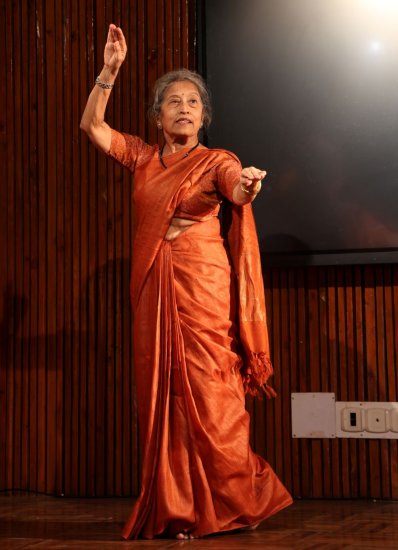 Guru Shama Bhate Guru Shama Bhate next was an epitome of good grace and shared "Any art form can remain relevant if it grows, integrated. Kathak is very flexible. She took up the opening salutation "vandana " as a case study. How it has changed over the years. Her principal disciple Ameera Patankar depicted in detail, even with ganda bandha portrayal. Guru Shama Bhate shared that the second change is more Bhava. There's evolution, stylisation and structure. Music too has become less noisy. But guru Shama Bhate is Pune based where classical Hindustani music is of high grade. What can one do in Bangalore where the is no tabla player even or in Chennai? She with Ameera focussed on stylisation. With just six syllables - ta thai thai tat aa thai... three movements could lead to a variety of beautiful depictions. Kathak is an audio visual form she felt, the audio leads to video… or visual interpretation. She shared how the doyenne Lachchu Maharaj (best known for Pakeezah film, as he was based in Mumbai he did many film choreographies) focused on shringar, while Birju Maharaj on layakari and group productions. He also brought out shades of colour. Subtlety was the hallmark. She ended with her ace product Ameera doing a solo on Ahalya, because "women stories need to be retold." Music by Pt. Kedar was excellent. 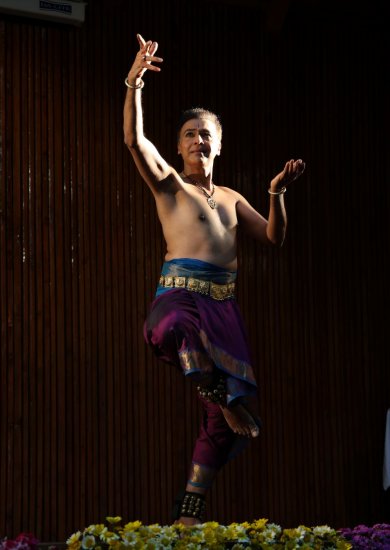 Vaibhav Arekar Vaibhav Arekar next is a very contained dancer. No drama, nothing extra, just focused work. He started his presentation with a question that arose in him: "What's parampara that's beyond the form? Say, I've learnt and trained in Bharatanatyam. How do I go beyond without breaking the form? How do I reach the state and concept and place of sukshama? How to find? What's beyond structure? Systems of knowledge that inform me as a dancer I am aware of my practiced form. A form that can be traced to the Natyashastra". He went on to share: Take the Alarippu. Who created it? What it means today? What's this geometry about? A system of thought that came about. So, he hailing from Maharashtra, created an Abhangalarippu, where the song on Vithala is added while Alarippu is undertaken. While purists in South might question but why not? After all, Serfojis ruled Tanjore long ago. Alalriti Abhanga worked though the beauty of a tight and taut Alarippu as a pure opening item in the Bharatanatyam repertoire got diluted or mixed. Culture symbols, even food, are specific: dosa is dosa and salty and puran poli is sweet! Dhokla is not Vada. While fusion music and food works, in dance the visual structure and appeal is rather set. Vaibhav is a thinking dancer so for him it is about cosmic body that is energy. Shri yantra, mantra, tantra. He continued: "Which is what? What is Brahman. Upanishdic thought is a circle. Bhakti Marg for me is Vithala. But then what's bhakti? The form has to live NOW. I become Anand Roopam.” And to share, he danced Krishna ni begane baaro in a fetching manner, his sancharis never exaggerated and his cameos never overdone. That he is today India's best male soloist in Bharatanatyam came through convincingly. All through the hour long dancing his lips were sealed, his mouth didn't open or huff puff, as ordinary dancers without stamina or structure or substance, do. Next Sushant Jadhav's session on lights for stage and dance was blah because the facilities at IIAS swimming pool-turned-hall of sorts did not lend itself to any serious discourse. Even in the films he showcased one could see the brilliance of his work. The ashtapadi by Vaibhav truly proved the law of diminishing returns! Less is more! Always leave your audience wanting more, Uday Shankar said. Dancer Kadam's Kathak was passable, more of the same. He stated: "Parampara ka virodh nahi karta " (I'm not anti tradition) and went on to share Krishna in three facets... vriha, vyakul etc. Written by Ishira and choreographed by Maulik in Taal Dhamar, 14 beat was next offering. Very ordinary. His contemporary work was more about "my space my time; I possessed my space, And my space possessed me; I lived my time, As my time lived me." 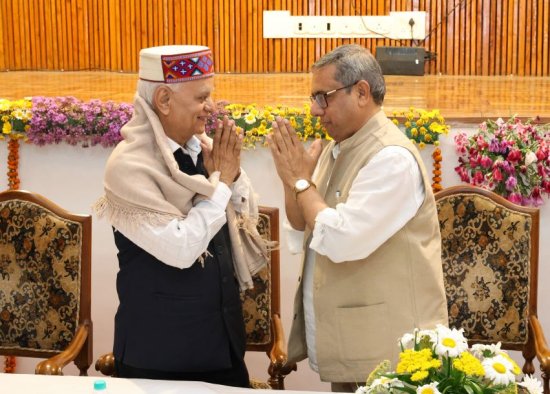 Guru Bhagesh Jha Evolved, sage and savant, Dr. Bhagesh Jha looks small but OMG! WHAT a giant mind. Here's one of Gujarat's best cultural gem, hidden for years due to IAS service rules perhaps and besides holding many top posts, he comes as across as a very grounded man. Down to earth. His mantra is: ASK - Attitude, Skill, Knowledge. His gyan on Gita is deep and his bhakti of Krishna is practical. He shared many gems and his discourse needed more time as there's so much to learn. He dovetailed to include concept of gyan, bhakti, karma. Gyan was easy to acquire but bhakti is most difficult. And add to karma: Ache karma result in no durgati (mishap / bad luck) by DD (divine design) that was my best take home. Rasadhwani presented its seminal group work Gandhi Gita with three dancers Mansi Karani, Dharana Thakkar and Shail C. The tricolour in the end made it patriotic. Day 3 Prof. Champaklal in Chair makes for a strong voice. He looks and looms large and thanks to his theatre and teaching background, he makes for an effective chair. The session started with Dr.Meenakshi Iyer of Nalanda Mumbai, whose focus was on Education: Earlier there were old value system of staying at home and learning and concomitant humility and spirituality. Teaching and listening; in addition to reading rather than writing. Holistic development of an individual was important. Multi disciplinary approach. Now the New Education Policy (NEP 2020) focusses where arts are integrated and artistes in residence programme more. To promote Indian languages and Sanskrit and the three language formula. Hers was a well planned presentation. Clear voice and thought. But the second half became more a portal for what Course where! Dr. Arya Deshpande from UK was online with an excellent presentation on AI as a learning TOOL that COMPLEMENTS. Aesthetics was important. Dr. Uma Anantani next shared the seminal contribution of father-figure of Indian dance late Prof. Mohan Khokar. She shared his pioneering work and massive dance archives and collection now at IGNCA Janpath, New Delhi. Yours truly next shared a montage film featuring a century of Indian dance with proof. Chair remarks extolled the work of father and son. He was celebratory in tone and content. The three standing ovations were for film, discourse and book. 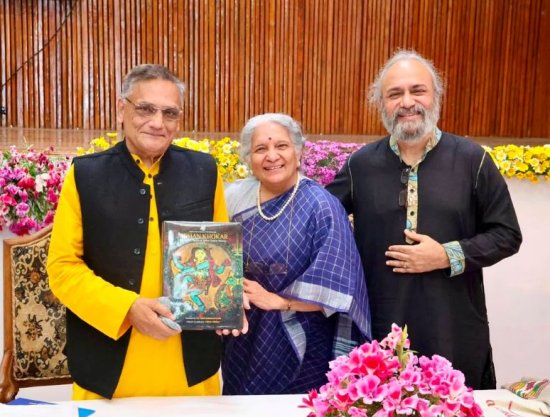 Prof. Champaklal, Dr Uma Anantani with the book on Prof. Mohan Khokar Post lunch, Anupama Kylash read from her cell on Bhakti poets and the imagery they created with variety of Krishna in pastoral or royal contexts. She undertook Sriram bhaja mana... And, how many ways and variety lotus is spoken of...or say, water, as a profound mystic motif. She also shared how Ninda Stuti became popular in bhakti movement. She said it's an oxymoron actually but that's the beauty of Hindu spiritual quest: One can say anything to ones ishta dev or God even. As a friend or bhakta. Every session was introduced by a Sanchalika, all girls, but this one session was sweet but the shrillest voice too. On the first day Dr.Uma S Vaidya set the tone in her soothing voice. Dr.Mahak Uppal got multiple sessions to introduce as sanchalika. Dr. Aadya Dixit looked like a school girl but turned out to be most high grade Hindi language Sanchalika. Dr. Shikha Samaiya was sabhya. Dr. Tahsin Mazhar conducted ably as did Suhasini. Dr. Mili Singh was an additive. Dr. Swarnamalya Ganesh's focus for long in dance has been on lost voices - the Devadasis. Her quest has been on historical inquiry. She is a Fulbright, actor, lawyer, activist, dancer and more. Javali focus at hand, her session was the most engaging. She questioned why these love songs of joyful, jovial nature were over simplified? These are not just a literary love song but Kavya darshana. Traditions hold kavya as literature. She emphasised that devadasi was not even a word before the British came. The various ways of addressing were like Manickam, Apsara! (In north, not Nautch girls, again a British word). She remembered her gurus Sarasa Amma and Kasturi and all. She talked on "Body as archive... Oral performing genre became part of eco systems. "Javali was born and brought up in COLONIAL Madras. (She meant Presidency). In the 18th and the 19th century by middle range vagyakaras. These were hyphenated: Clerk - poet; Singer - postman! By day one profession, to earn, and by night another to have fun in life! Courtesan and shringara were synonyms. Javali was just SHE. Swarnamalya spoke how the high end of this phase was represented by Veena Dhanammal family in George Town, Triplicane area. Musicality was their bedrock. Then started the Karrur Shivramaiah type in Kanahapriya ragam which she delineated. Hers is a winsome stage personality. A born actress, she knows how to win audience and keep them engaged. Telugu English poetry was the vogue too and she showcased: "O my lovely lady...Eeitu vandti step is it fit to take..." All in manodharma. That's the beauty of these songs and dance depictions, in which the layering is nuanced and Nayaka heroism showcases as vessels holding all the characters. Second example she illustrated was on and by and for the Parsis! One such Parsi poet called Javali Narayanan had 400 javalis then in circulation! Next, Dr. Uma Anantani gave a summary in end. How this 75 year old , well turned out, unflappable lady of a dry and dusty Ahmedabad city is so full of rasa for arts is a case study in itself. To have put together this assembly of egos and driven people drawn from all over India must have been a herculean task but she did SUPREMELY well, with poise and perfection and logistical help from IIAS, daughter Shivangee Vikram and husband Dr. Yashesh Anantani. In her summary she shared the total free hand IIAS director Dr. Himanshu Chaturvedi gave her, the support of Dr. Sachchidanand Joshi of IGNCA; blessings of Chairman of IIAS Shashikumar Prabha. She put on record that SNA chair Sandhya Purecha was missed and thanked Prof. Champaklal and yours truly for guidance when she needed. She also thanked all staff and seniors like Prof. Ranganathan and Prof. Vaidya. Rashmita Jha, senior revenue service commissioner, graced the valedictory address and started by saying she saw on the Internet some articles including on the subject of CULTURE BEING A PROCESS NOT A PRODUCT. So, while the product say, Sari is in the market, the process of growing cotton, rearing silk, cutting, cultivating, dyeing, rolling, weaving no one focuses on, often. Best seller term becomes a PRODUCT, she extolled. For example take a book. The script, paper, design, words, binding, date of purchase all get short changed when it is gifted. As a student of music, she then took up the case and context of a gramaphone record. Millennials may not have seen one, so she brought one carried by her pati parmeshwar eminent historian Akhilesh Jha, IAS now but desh sevak at large with his work in Wardha, especially in centre-staging the Vande Mataram. Even his DP is unique (in circular lipi, symbolising a record RPM) with the poet Bankimda (Bankim Chandra Chatterjee) in the centre. Gramophone was brought in like Bharat carried the paadukkas of his elder brother Sri Ram! A 78 RPM (rounds per minute, that's what it denotes); there was a 33 one too in circulation when we were growing up in the 1960s and 16 RPM.. All these are still there in MKDC @IGNCA. Ustad Bade Ghulam Ali Khan sahib of Patiala gharana was played and then Rashmita Jha said: This is a PRODUCT. We have taken this to show how on a skillet (tawa) voice was captured. 1857 first recorded. 1898 cylinder record and pressed in Hannover, Germany. In India, these RPMs came in 1902. SOUND had become TRANSPORTABLE. This product made of resin/ later vinyl were10 inches in diameter. Film songs thus became limited to 3 + minutes! Because one side of the RPM could take 3/4 songs and the other side too the same. By definition then films had 7/8/9 songs. 4 each side. My name is Gauhar Jaan and many others became more famous! Those who didn't want to become a product got less market share hence less revenue. Rashmita Jha concluded charmingly, "Let's think if we want to be the process or become a product?!" Gita guru Bhagesh Jha in his concluding remarks said seeing Washim Raja's dance was "cognitive suspension ". Adbhuta! The efficacy of GSP (guru shishya parampara) can be seen in our performing arts. It's Bharat Renaissance. Goldman says, in India epics still active, he shared. IIAS director Dr Himanshu Chaturvedi in his presidential address said. it's a chunauti - a challenge, how to maintain parampara while adhering to its tenets and taking young generation forward. Art is sadhana, not practice. This was not a seminar but a journey on the marg of kala.... Need more be said? 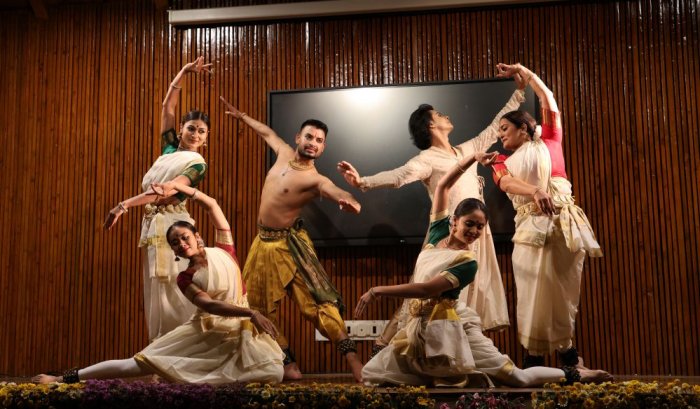 Dance ensemble 7 dancers like saptarishis matched and merged all forms - Bharatanatyam, Kathak and Kuchipudi - to show no stage is too small or bad for a good dancer! 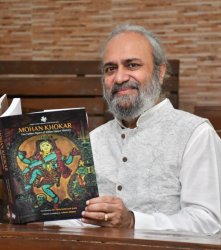 Critic, connoisseur, historian, author, artivist, archivist, administrator and more - editor, columnist and mentor Ashish Khokar remains true to his muse. More on attendance-india.com Responses * What a nice coverage...Ashish ji's pen beautifully captures not only the academic rigor of the symposium but also its spirit of camaraderie, cultural dialogue, and flawless execution. While reading, I felt as though I were personally attending the event in person. Kudos to Dr. Uma Anantani for organizing this historic gathering, which celebrated India's rich multilayered intellectual traditions, indeed... all imbued with a profound sense of transcendence. - Shila Mehta (June 7, 2026) * To this senior Generalist and, Rasika of performing arts, the 3-day seminar by the Indian Institute of Advanced Study (IIAS), Shimla was, and will always remain, an extraordinarily bold, almost a visionary first-of-its-kind venture. And I had the privilege to be in the audience. The challenge for the organisers was: how to convey ‘what and how’ of ‘dance’ and its inter-connectivity with other subjects, even with life itself? This objective was achieved successfully and satisfactorily by the team IIAS, considering the huge task to be accomplished. I found some sessions a bit of a drag. Overall however, the content of the seminar was well designed, perfect in subject area’s evolutionary chronology – from simplicity to complexity -, and supported well by lecture-demonstrations - all in a manner that a person having just a little acquaintance with the word ‘Dance’, could still relate to. Remembering a few sessions to the best of my abilities, Professor Dr. Mahesh Champaklal is not only a master of his subject ‘Natyashastra’, but knows how to involve the audience. He had a booming delivery, immaculate in clarity of diction and spoke with conviction. Others whom I remember as being impactful were Dr. Veena Londhe and Dr. Malti Agneswaran, Ms. Neha Kumar, Guru Shama Bhate along with her disciple who interpreted Shamaji’s Kathak theory beautifully. Shatavdhani R. Ganesh and Dr Choodamani Nandgopal, both discussed their topics on line; with their known expertise, they would have made a lasting impression on the audience had they been present. Prof. Ms. Gangopadhyay discussed her subject with clarity, explaining the GoI’s process as of integrating arts as a subject as part of NEP 2020. Dr. Anupama Kylash and Dr. Swarnamalya Ganesh, both regaled the audience with their academic discourses supported by effervescent and energetic demonstrations. How dearly I wish that Dr. Bhagyesh Jha (retd. IAS), a Sanskrit scholar AND an authority on Bhagvad Gita, had been given much more time. With his wit and sense of humour, he evoked laughter for the first time from the audience during the otherwise grim proceedings. Lastly but not in the least, no stakeholder in performing arts can ever, ever forget Ashish Mohan Khokar’s selfless and dedicated contribution to conservation of Indian classical dance and related paraphernalia; the effort includes his tough critiques if only to improvise the caliber of artists, and thereby, that of the entire gamut of arts. The impact of the seminar would have been muted without the support of the invited senior and recognized performing artists. They were brilliant in their respective individual art, ranging from Bharatanatyam and Kathak to Kuchipudi. Vaibhav Arekar was par-excellence in his contemporary item. The rest of the dancers captivated the audience throughout the duration of semiar. The surprise, a 7-minute finale on the evening of the third day, and after the Valedictory function, was absolutely scintillating, having appropriately fast paced choreography; and it innovatively synchronized all three styles and their respective artists – Bharatanatyam, Kathak and Kuchipudi! That finale brought the audience on their feet applauding generously, and the curtain, down on this magnum opus of a seminar. Thank you. - Dr. Yashesh Anantani (June 2, 2026)
* In a 3-day conference, to sit and make notes session by session; to evaluate with fairness to all and still offer a critical assessment is a Herculean task. The last man standing, (Ashish Mohan Khokar) in Indian dance writing history and documentation, shaping not only the dance itself but its broader cultural contexts. He has written about everyone showcased, during the three-day dance quest. What a remarkable achievement the Himalayan Dance quest is. As I read Ashish Khokar ji’s article, a sincere and true labour of love. I was struck by how 30 people came together on stage in just three days—a feat that is humungous. Kudos to Uma ji as well. In this spirit, Ashish Khokar ji and Uma Anantani ji are seen as essential collaborators within a vibrant, interdisciplinary ecosystem. Even though I am 4,200 kilometers away in Thailand, it felt like I was there witnessing the entire event. - Murali Mohan Kalvakalva (May 31, 2026) * An absolutely engrossing read transcending seamlessly from one genre to another on what transpired in the three days of BJP - apt acronym - with such vivid, engaging, and compelling depiction. It is truly remarkable. None would dare to dissect the happenings with such clarity, nuance, and expertise like Ashish ji. As a reader I could clearly visualise how the three day event panned out in Simla courtesy of a lucid description. It left me wondering and amazed how truly blessed we are as a nation endowed with such a rich heritage and legacy in diverse divine art forms. Thankfully, a thoroughbred art connoisseur like Ashish ji is amid us to spread the same far and wide through superbly dissected narration. Let the flow be unhinged - MV Krishna (May 31, 2026) Post your comments Please provide your name along with your post. All appropriate comments posted with name in the blog will also be featured in the site. |
