|     |
|
| |

BOOK REVIEWKathak and Sanskritisation?- Leela Venkataramane-mail: leelakaverivenkat@gmail.com August 10, 2026 At the IIC, it was an evening with a scholarly gathering to mark the release of the book by Shubhi Publications on Speaking Sculptures - Karanas in Kathak, authored by Kathak specialist Shovana Narayan. The Natya Sastra Karanas (Hasta-pada samayogah karanamiti samjnitam), we know, are not stances, but units of movement in a coordinated conjunction of hands and feet operating in a prescribed fashion. Shovana (as other scholars), understandably looks at sculpture as the best indicator of dance movement in history. One must remember however, that the Karana is a whole unit of movement - which has been arrested at any one point of a whole movement cycle, to be captured on temple walls by the sculptor's chisel. In other words, sculptural representations comprise frozen moments of whole units of movement prescribed as a Karana. And what is caught on stone arrested at any point -and what is seen in sculpture may not necessarily show the start or the culmination. How many dance forms follow the prescription for each Karana, exactly as mentioned in the Natya Sastra? As far as I know, the only dance form which captures the Natya Sastra Karanas, as defined in the Natya Sastra text, is Padma Subrahmanyam's Bharata Nrityam, painstakingly and with years of scholarship put together by her. With music as part of the family inheritance, and with brother Balakrishnan a fine veena player, the command over both music and the dance (along with a base of strong Sanskrit scholarship) has started a Parampara. Today it is represented in its ideal and most graceful form by Padma's niece Mahati Kannan. Along with her is a line of students trained in Bharata Nrityam. The only other instance, as far as I know of dance based totally on an ancient text, is Guru Parvati Kumar's work on the Abhinaya Darpana, wherein static classical verses (324 in all!) were turned into performative grammar. I have seen, years back, his top students like Dr. Sandhya Purecha perform the text from start to finish. Other than these examples, even while dance traditions of the South like Bharatanatyam have been deeply influenced by the theories prescribed in the Natya Sastra, there is no translation of the Karanas as units of movement - exactly as mentioned and prescribed in the text - even in the general Margam presentations of the dance. 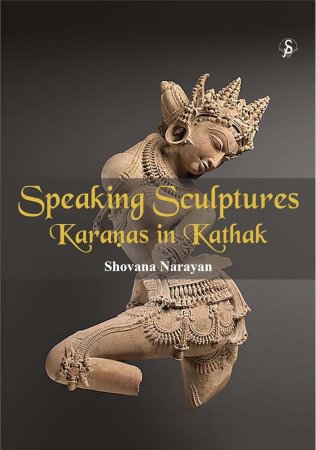 Dance forms in the country may and do reflect commonality of stances and certain states-of-being (anger or peaceful) or acts of daily life shown in sculptures (like woman decorating herself looking into the mirror). When one speaks of a civilizational continuum, aspects of commonality amidst peoples, of a shared cultural ethos, will get reflected, in the art forms emanating from the soil of the Indian sub-continent. Another shared quality is that our performing art forms are largely based on narratives from the epics. We have been a nation of story tellers - and here, I refer to writer Shovana's reference to the word Kathak in the Mahabharata, as proof of the Sanskrit influence on Kathak! All our Katha vachaks are story tellers. Was not Teejan Bai with her powerful narrative of song and dramatized spoken word, a storyteller supreme? Every dance form tells stories. Amidst commonalities, our people have been constant travelers to and from India, with art forms influencing and being influenced. Speaker Dr. Sandhya Purecha, while mentioning civilizational commonalities spoke of the Karana as a unit of movement, some others on the panel of speakers digressed to make a few diversionary references - including claims by people outside the country, about which part of India Bharata Muni came from! The Natya Sastra itself, ascribed to a period between 200 B.C and 200 C E., was not fully deciphered till one accessed the work of commentator Abhinava Gupta's Dhvanyaloka. This genius, scholars believe, lived somewhere in Kashmir between 950-1016 C.E! Speaking of dance and its representation in sculpture, Dr.Sachidanand Joshi, Member-Secretary IGNCA, in his Prologue for the book, while mentioning the Natya Sastra of Bharat Muni as one of the most profound articulations of movement within the civilizational archive of India, quotes Bharata's assurance of the larger purpose of natya in the sloka dukhartanam sramartanam sokartanam tapasvinam/visrantijananam kale natyametad bhavisyati. While affirming that the book fills a critical void in its research on Bharata's Natya Sastra Karanas existing in Kathak, he sums up of this work as putting Kathak on par with other dance forms. I would humbly put forward my view that Kathak exists in its own right as a highly evolved style. For years during the sixties and seventies, there was a fashionable trend for dancers to stand in various postures, in their performances, and claim to be dancing Karanas. It was Padma's discovery after her research that brought about a real understanding of the Karanas as units of movement, and not frozen postures. In the midst of a shared cultural ethos amongst art forms emanating from the soil of the Indian sub-continent, one has to be aware of the constant travels of people to and from India, with art forms influencing and being influenced. Talking of dance and its representation in sculpture, stances in sculpture, attitudes reflected in the sculpted Nayikas would be found in varying degrees in all Indian dance forms as a civilizational continuum. And what one sees in our ancient sculpture may well be found in stances of many forms. But the Karana, with hand symbols, feet postures and full movement, as defined in the Natya Sastra and claimed by Shovana to be found in Kathak, one would have difficulties in agreeing with. Dance forms have their individuality and special qualities, which may or may not flow from the Natya Sastra. The Natya Sastra demi-plie or ardhamandali posture (strongly reflected in the carved dance figures on temples in the South of India) which is incidentally the main stance in South Indian dance forms, looks at the human body in a three dimensional perspective - while Kathak with its straight stance and erect body, spinning chakkars, reflects a different perspective - which has been strongly influenced by other cultures like Persian, the association reflected in its poetry, its music like Dhrupad, and many of its influences which have shaped the style - just as the Sattra culture has shaped Sattriya dance from Assam. While accepting the greatness of the Natya Sastra, why not also respect differences as your strength and right to exist? Publisher: Shubhi Publications Publication date: 11 May 2026 Format: Hardcover Language: English Print length: 228 pages ISBN-10: 8182906954 ISBN-13: 978-8182906952 Price: Rs.3500 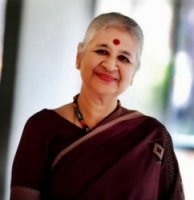 Writing on the dance scene for the last forty years, Leela Venkataraman's incisive comments on performances of all dance forms, participation in dance discussions both in India and abroad, and as a regular contributor to Hindu Friday Review, journals like Sruti and Nartanam, makes her voice respected for its balanced critiquing. She is the author of several books like Indian Classical dance: Tradition in Transition, Classical Dance in India and Indian Classical dance: The Renaissance and Beyond. Post your comment Please provide your name / email id when you use the Anonymous / blog profile to post a comment. All appropriate comments posted in the blog will also be featured in the site. |
