|     |
|
| |

ANITA SAYS..... September 1, 2026 Your visions will become clear only when you can look into your own heart Who looks outside, dreams Who looks inside, awakes - Carl Jung, psychiatrist and psychotherapist 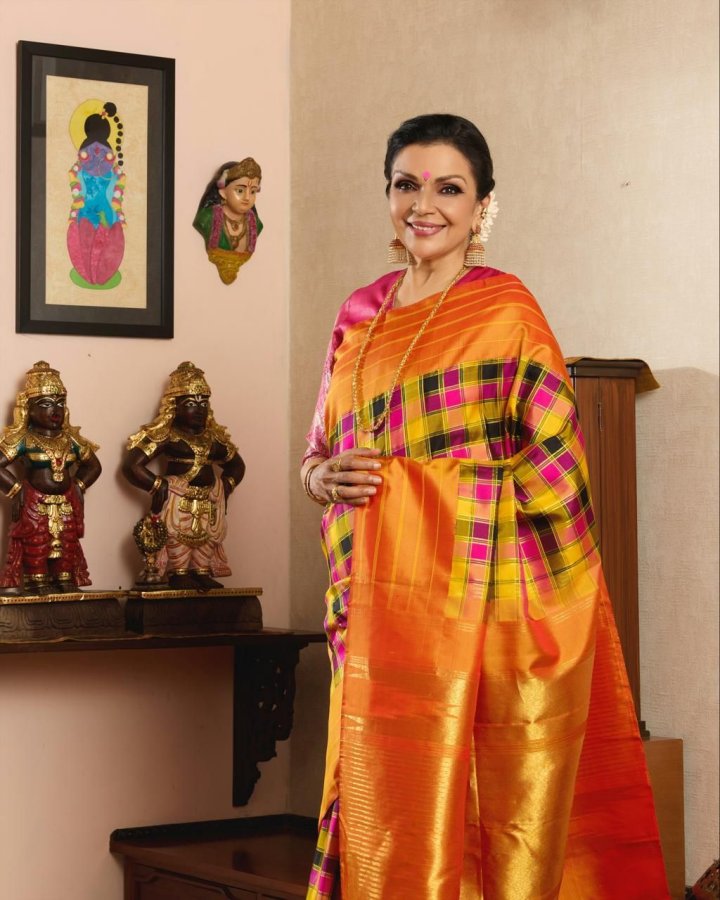 Aaaand... hello again! Another month goes by. Another capture through my personal lens. Another set of thoughts shared. As Time marches on and tastes shift and change, it is a challenge to find that common ground that you, the reader who can be - dancer, choreographer, guru, teacher, musician, composer, costume designer, lighting director, Arts manager or anyone who is interested or working in the performing arts sector can connect to. Being a senior in the field, I realise that many of my views are shaped by the long decades of learning, performing, producing, curating, mentoring, speaking and writing about dance and society. I write and speak as I see it. 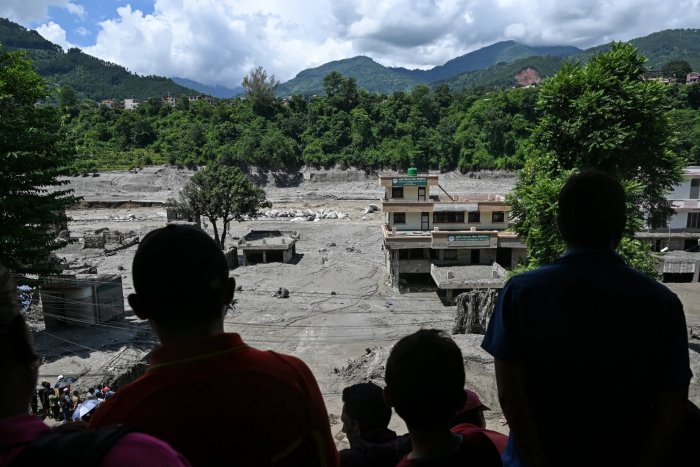 Flash floods at Trishuli in Nepal's Nuwakot district Arun Sankar/Getty Images Against the backdrop of the devastating tragedy enveloping Nepal, I wish to pause and reflect on the rage of the elements. Fires, floods, typhoons and cyclones are no strangers to our planet and it becomes even more urgent to pay attention to these cataclysmic events, especially when they become fodder for dance themes. This month, I will write about the three performances I watched at the annual Chennai NATYARANGAM dance festival and the issues that emerged from this event. For 28 years, the dance wing of the Narada Gana Sabha has been curating and producing an annual event based on a particular theme. 27 years ago, I was part of a Faith based festival called DHARMA BHARATAM in which I was given the subject of Islam. Yes, you read that correctly. My presentation was titled TARKAASH - the quiver. With music by OS Arun (fabulous!) and lights by the late Mithran Devanesan (gorgeous) and costumes from my personal wardrobe, the evening was made especially meaningful with the presence of 100 young women from SIET college, seated quietly, all robed in Burqas! Today, with changing times and shrill identity soaked voices, it is inconceivable for a reprise of that moment. PANCHA BHOOTA BHARATAM This year, NATYARANGAM's theme was the Five Elements. PANCHA BHOOTA BHARATAM. 5 solo dance artistes were paired with well known Carnatic singers to create an evening length performance of 90 minutes. I was able to watch only three dancers and so my comments will be limited to those artistes. Shweta Prachande (Water), Navia Natarajan (Fire) and Harinie Jeevitha (Akasha) are all excellent dancers. Clean technique, great stamina and certainly considered as torchbearers of their chosen form of Bharatanatyam. Each performer was paired with a concert level Carnatic soloist to compose the music and perform on stage alongside the dancer. All three performances were preceded by an introduction by scholar Sudha Seshayyan, an Indic scholar and a longtime collaborator and resource person for many dancers. After each performance, I came away with more questions than emotions. Shweta, Navia and Harinie were earnest, well intentioned, beautifully rehearsed and flawlessly executed in their respective themes. Their dedication to their art and rigour of practice was clearly evident. What did not emerge was the flip side of each of the elements. Singing praise and worshipping Water, Fire and Space are one thing. All ancient cultures honour the presence and power of the five elements. What about the potential of destruction and devastation? Nobel Laureate Rabindranath Tagore writes in his evocative poem AVANI-earth: "O benign Mother You beguile and bewitch us You are cast in the image of a loving parent But, you also carry the rage and horror of destruction The enormity of sorrow that you unleash is unimaginable" 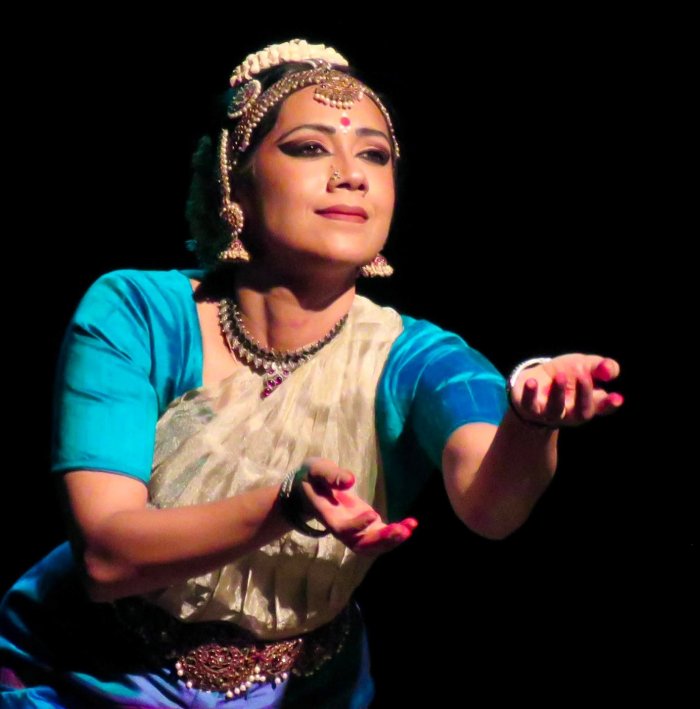 Shweta Prachande In Shweta Prachande's energetic offering, I watched musician Rithvik Raja unfold his vocal and compositional energy as a parallel performer. Oh, how I longed for the moment when he could stand up and be illuminated in a single spotlight with Shweta also held in a similar way! For voice and dance to resonate with one another and no other intrusion of instruments! Of all the collaborating musicians for PANCHA BHOOTA BHARATAM, this duo was the most ideally suited for such a moment! With the theme of Water, I missed the visual and aural feeling of FLOW. The costume was too rigid and stitched, the sound design too filled for moments of respite and the programming too jerky for any one narrative to be embedded. Adding jathis to Muthuswami Dikshitar's already perfect Kritis is superfluous but dancers approaching thematic solo works are fixated on the idea of the varnam-ish central piece. The Margam template is so embedded into the training that all three dancers could not break out of its boundaries. Although, they did try and perhaps, partially succeeded. 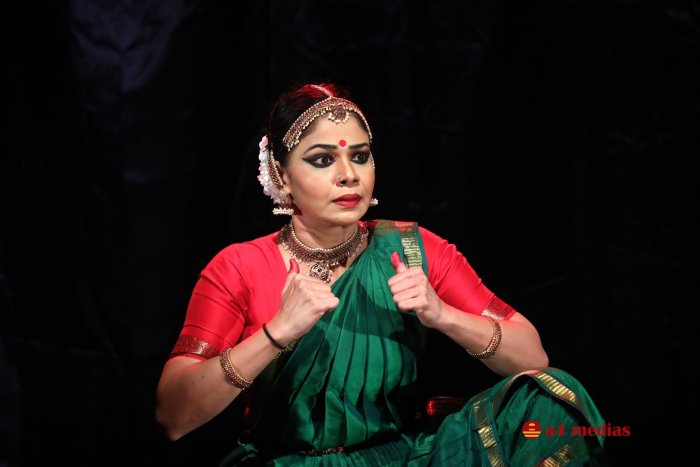 Navia Natarajan Navia Natarajan approached Fire with more ease and quiet. The moments when she was seated on the side of the stage, face lit by the glow of the oil lamp were beautiful. There were some ideas that were interesting but never explored fully. The "fire" of courage that should burn within every woman whose dreams are trampled upon could have been explored and pushed further. The fire walk fueled by faith and conviction needed more articulation. In all, too many ideas without a clear thread to hold them together. 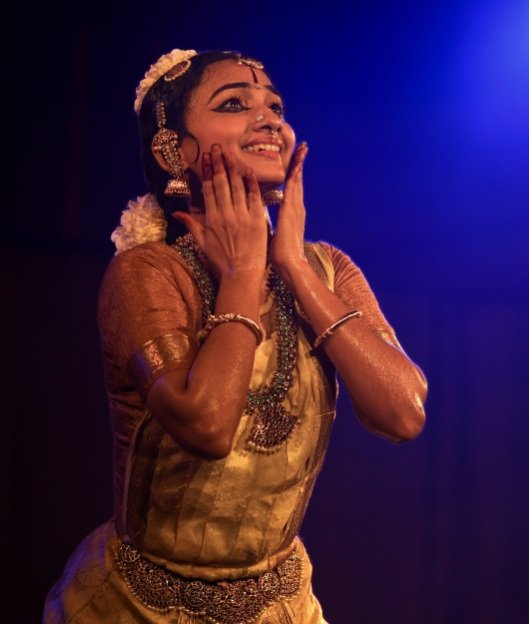 Harinie Jeevitha Harinie Jeevitha was the most convincing of the three presentations that I watched. Her dancing was excellent and the focus intense. I felt the full power and potential of Bharatanatyam in her performance. Gayatri Girish, her collaborating musician, was not at her usual best, but singing for dance is not a piece of cake as many musicians will attest to. Dancing the elements in a solo format, without the help of audio visual projections and an expansive visual canvas is always intimidating. All three women displayed a high level of skill but the theme demanded much more than a stringing of items that either contained or reflected the philosophy of that particular element. All three dancers sorely needed a director/third eye/dramaturg. To be the principal performer, choreographer and director rolled into one is a tall task. If NATYARANGAM does not see the dire need of adding such an individual to their mix of dancer, composer and scholar, then they need to look into this matter. Times have changed and it is not enough to have a lighting director (Keerthi Kumar's designs for Shweta and Navia were ineffective). There is barely enough time for a full tech run through, even though Narada Gana Sabha is the main presenter of this annual event. Dancers also cannot rely on their gurus' approval, blanket admiration from partners and family and think that all is well. For us, sitting in the audience, we are looking for much more today than when I was in my twenties, thirties and forties. Every entry and exit, every pause and shift of mood and note is being watched. Make us lean forward to engage, not glance at our watches and phones to pass time. Some thoughts emerged after watching the three evenings of high quality solo Bharatanatyam. Why are dancers the only breed that have to thank the organisers, the presenters and everybody else before the performance when musicians do not do that? The curtain rises, the musician acknowledges the audience with a Namaste and begins the concert. Why are the dancers announcing their items when that task can be assigned to someone else? Having a voice from backstage, sometimes breathless, against a blank stage is an outdated practice. Why should elaborate bio data be read out where we are told that someone is a trekker, poet, painter, sports person etc.. We have come to watch dance, not listen to an endless litany of accomplishments BEFORE the first step is even taken. Why is the NATYARANGAM festival, which is a successful IP property after 28 years, not charging tickets? The response over the years has always been excellent for this annual event and a mere 300 rupees should now be the modest entry fee for watching these popular artistes. Duration for any dance show today should not exceed 75 minutes including all announcements and explanations. Attention spans have shrunk and should be taken cognisance of. 90 minutes for each of these solos seemed overstretched, especially when the theme became repetitive. I missed watching the two male performers, Christopher Gurusamy (Air) and K Sarveshan (Earth) and heard that apart from tremendous energy, both dancers attempted more contemporary themes. Somebody told me that after Christopher's performance, they felt breathless and felt that they had been actually swept up in the speed and agility of his dancing! TOXIC PUSHBACK 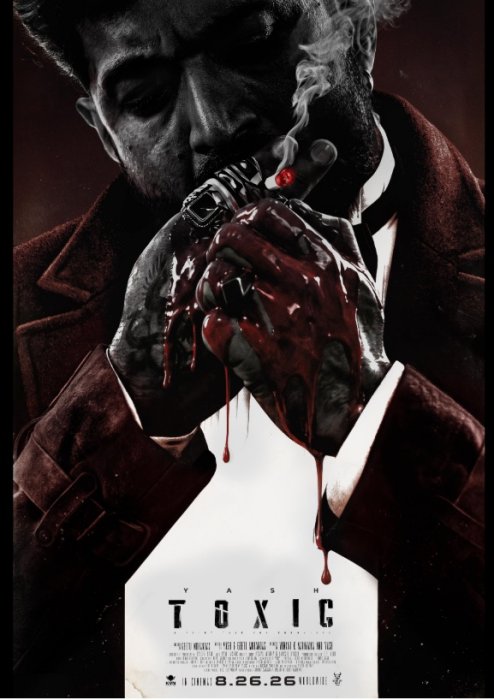 As I write my own critique of this festival, that has since received encomiums for each dancer in the legacy media and, of course, on social media from their network of friends and fans, I am reflecting on the recent pushback on the negative film review of the Bollywood film TOXIC. Films are huge businesses and the PR/marketing departments tweak the pre-release hype of every film. When a mega star like YASH from Karnataka received mostly negative reviews for TOXIC from audiences on the BOOK MY SHOW APP, the backlash was immediate. A YouTuber was legally ordered to take down the review and the booking app closed all comments from audiences. What was happening, in the words of film critic Pradim D Gupta, was "artificially sanitised reality". In the dances I watched and have written about, my friend, seated next to me had the opposite reaction. Art exists in that glorious, messy space where we can each have a different experience. Today, I see only echo chambers in the dance world. There are almost no vigorous discussions about dance in the way theatre, contemporary art and cinema are discussed in India. And we are the poorer for it. WHY NOT? 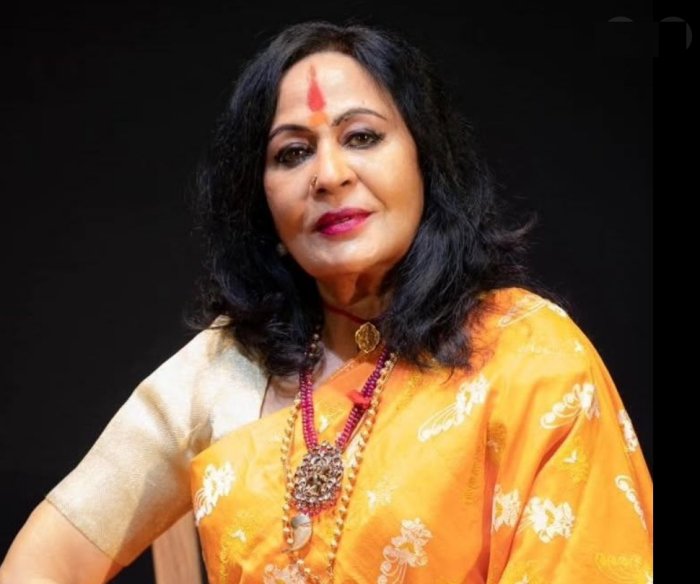 Sonal Mansingh Dancer and politician Sonal Mansingh brought up the question as to why dancers were not among those honoured with India's highest honour, the BHARAT RATNA. A Padma Vibhushan herself, Dr Mansingh was highlighting the continuing disparity of opinion and positioning between dance and music in India. So many of us are waiting patiently (what other choice do we have?) for our musicians to return from their annual 3 month jaunt of the USA. Playing for multiple Arangetrams, usually for a single guru or dance school, this is the annual lottery for vocalists and accompanists. There is literally no musician left in India every summer and it is only around September 15 that serious rehearsals can be planned as the artistes return. The worry is that, after being paid large sums of money overseas, their fees upon return may change. MADRAS DAY 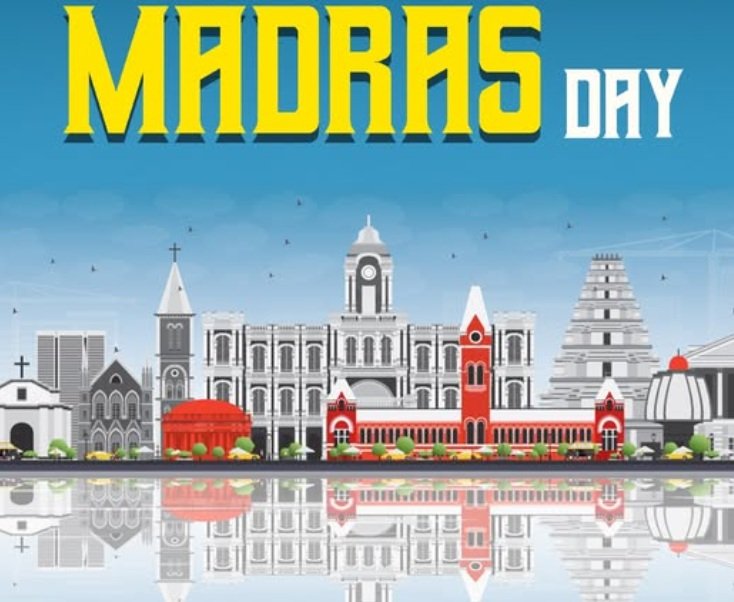 August 22 was MADRAS DAY, a day marked as the founding of the metropolis in 1639. Events leading up to that day are always a great mix of high art, walks, newer neighbourhoods, food adventures and traditional tours. This time, popular Tamil folk, film and classical music was heard on city buses as music groups travelled all day on several routes entertaining riders and sharing interesting anecdotes about the compositions and the singers. ADIEU 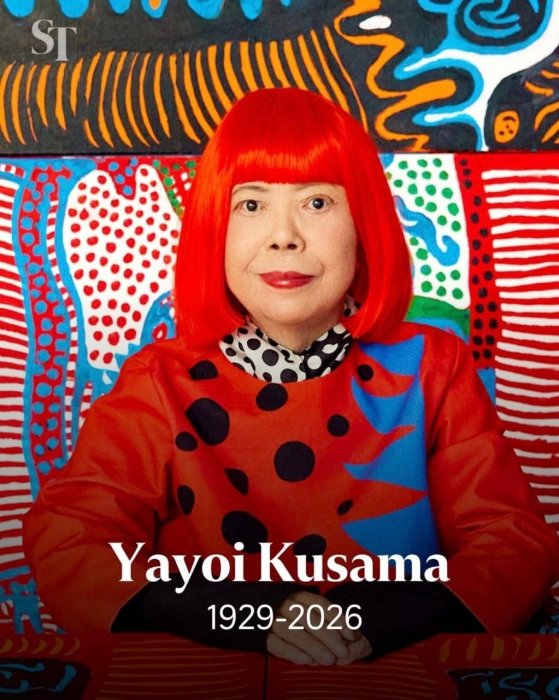 We lost two towering women in the creative world in August. Yayoi Kusama who lived in a psychiatric clinic for decades in Japan just so that she could be treated for her condition and concentrate on making art as she walked out every morning towards her studio to paint. Polka dots were her medium of expression and Kusama became the acclaimed grand matriarch of modern Japanese art. 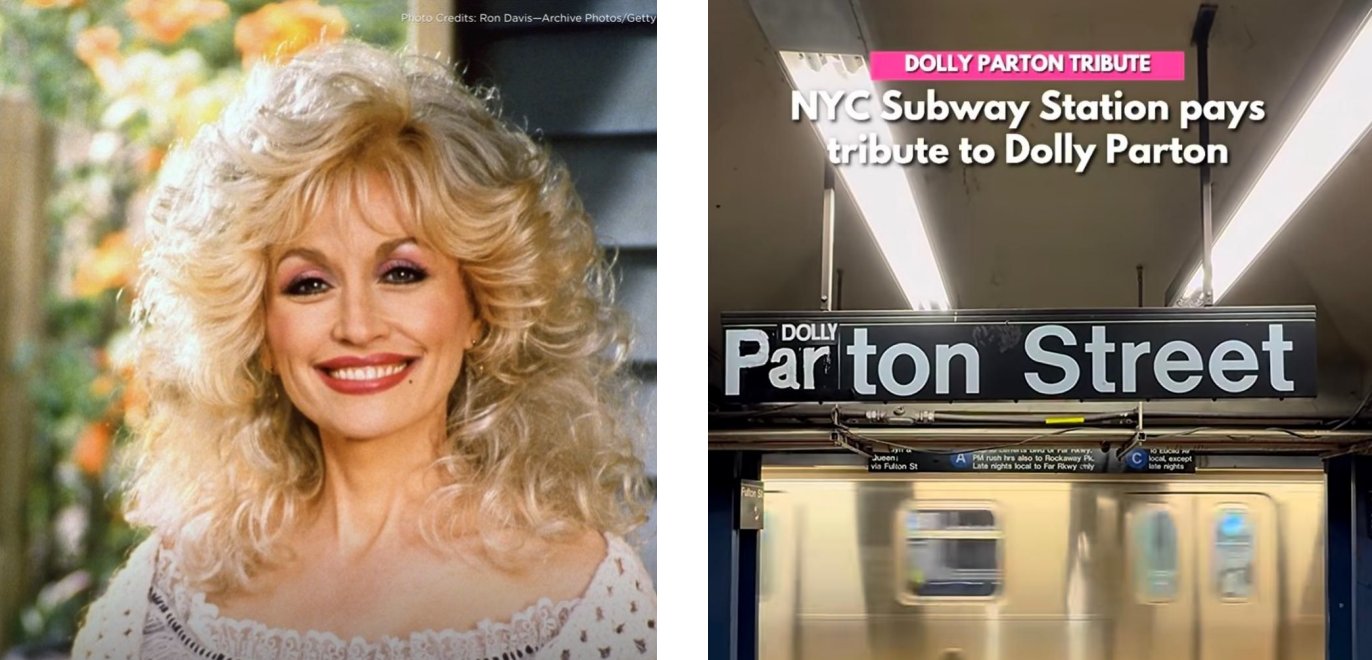 Dolly Parton American country music singer Dolly Parton who did not waste any time to change the opinions others had of her. She made great music and took charge of her own narrative. Days after her passing, every single social media comment about her was filled with praise. Her astonishing philanthropy, her rise from abject poverty to billionaire status brought kings and tycoons to sing her praises. A subway station in NYC has been named after her and the Buckingham Palace orchestra played a tribute. 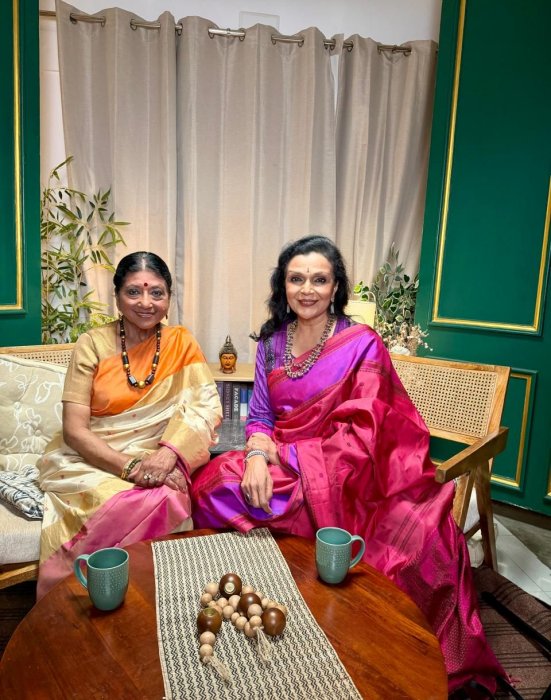 With Hema Rajagopalan How do we want to be remembered apart from our art? Many memories of great dancers are unfortunately tinged with controversy, infamy and notoriety. In an intimate conversation for THE NARTHAKI PODCAST with veteran Bharatanatyam dancer and guru Hema Rajagopalan, we spoke about the need to expand our canvas beyond the stage. I was delighted to realise that Hema has been the recipient of the highest number of NEA awards for a solo artiste in the USA. She is also the first and only Indian woman to have a subway station in Chicago's L line named after her! Among the 141 remarkable women chosen are Oprah Winfrey and Michelle Obama! During the conversation, Hema shared how she was a total ingenue when it came to exploring how to set up her dance academy in Chicago as a non-profit according to US laws. She was approached by an organisation who helped her understand the benefits of such a structure and walked her through the ropes of how to become a small cultural and business entity. Today NATYA DANCE THEATRE has celebrated 50 years in Chicago and has been recognised as a Cultural Jewel of the Midwest. And it all started when a 20-year-old bride vowed to stop dancing and become a nutritionist in the USA! Watch out for this podcast episode! SOCIAL MEDIA FACES THE HEAT AND MORE  META has made news with its mammoth 18 billion dollar settlement against 48 states in the US who accused the tech giant of manipulating their algorithm and creating addictions among teens and children with strong pornographic and unacceptable content. With the entire world seemingly hooked onto eternal scrolling, this is a landmark payout and a strong alert to parents and elders about how easily young minds get locked and fixated on their devices. If social media addiction seems to be getting out of control, a new trend is taking root with many young people. It is called SOFT HERMITTING. It's a new phrase that has emerged from urban youth about enjoying solitude, getting off social media and being in the company of oneself. It is short hand for saying NO to any social event or occasion. It is a trend that is catching on in Europe and USA. I would have thought that my generation of Boomers would fit perfectly in that state of mind. Not my children's group, many of them who actually prefer to experience JOMO - the joy of missing out! And then there is LAXMI MAXXING. Yes, you read that right. Another social media trend that has been repackaged using the Hindu deity Mahalakshmi - the persona of abundance, wealth and prosperity - into a lifestyle mode that focuses on personal well-being, luxury pampering and practicing daily generosity and gratitude. Basically, this says that we should move away from the scarcity and grunge mindset. Not to embrace the solitude or silence of Soft Hermitting but launch into the lush landscape of exuberance and pleasure. As expected, the appropriation of the Goddess Lakshmi for a trend has angered many Indians around the world. How can a sacred symbol be appropriated for yet another American trend of intimacy and personal pleasure? Indian dancers have the perfect response to this influencer trend. Just look at the gorgeous appearance of classical dancers - costume, jewellery, accoutrements. And the romance soaked poetry, revelling in sensual pleasures. And laughter. And fun. And mischief. The very epitome of LAXMI MAXXING - on stage! Everything around us seems MAXXED. Not HERMITTING. Theatre, music, food, fashion, art shows, festivals, mixed media gatherings, book releases - there are events everywhere. Dance festivals are multiplying. Dancers are starting podcasts, YouTube channels and specially curated films and events to diversify their own talents and energies. The mind is exhilarated with so much cultural buzz in India and elsewhere. Folk festivals are enjoying their time in the spotlight with many international curators zooming into the raucous and energy filled forms that India abounds in. 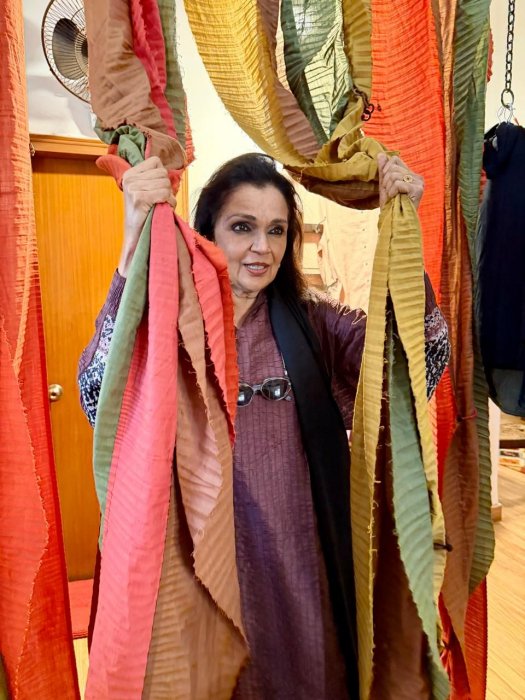 New sets for A Million Sitas As for me, new costumes and set updates for my two beloved productions are underway. NAACHIYAR NEXT is getting a makeover with new dancers in the ensemble work. A MILLION SITAS is being staged against the backdrop of new fabric inspired sets. All ideation and execution is by my long time collaborator Sandhya Raman. Revisiting an older work is always challenging with new dancers. It keeps me on my toes and forces me to teach with clarity and speed. The festival season is upon us. Celebrate and appreciate the energy and joy of each event. Keep a prayer for those affected by nature and life's vicissitudes. Hold a prayer in your hearts for the world that desperately needs healing. Trust the generation that is emerging to come up with bright and newer ideas for our planet. Janmashtami, Ganesh Chaturthi... and so many more important days are coming fast. And so is Teacher's Day. Another moment to honour and remember those who taught us. We are the eternal students, learning from our children and even our grandchildren! Until next time, Anita R Ratnam anitaratnam.com Connect with us on Instagram and Facebook     Post your comments |
