
|     |
|
| |

ANITA SAYS..... November 1, 2026 Even with all the greed, the stupidity, The terrible things that we are facing and reading in the news Or experiencing… I want to be alive I want to breathe I want to do my work - Patti Smith, American singer-song writer and poet  October moved like a single restless current between three cities. In Kolkata, the pandals rose in astonishing variety, each one a temporary palace of craft where bamboo, cane, cloth, metal and light were shaped into everything from intimate street shrines to towering architectural fantasies - the makers' skill turning devotion into pure spectacle. In Madrid, the staccato of flamenco jostled against the late night pulse of churros and hot chocolate - heat and music spilling from plazas as if the city refused to go indoors. Finally, the Venice Biennale that offered rooms with a quieter intensity, where contemporary art sat in careful conversation with the lagoon's shifting light. One month, three kinds of looking, and the shared pleasure of watching human hands, minds, bodies and imagination at work. CONVERSATION AND CONSTRUCTION 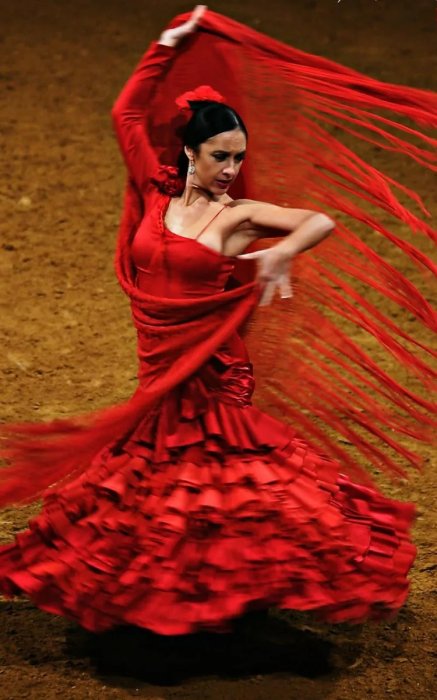 Flamenco dancer Credit: Stauromel / Flickr 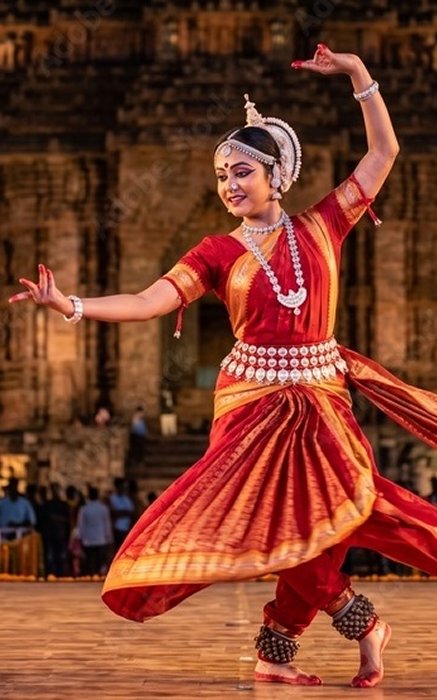 Odissi dancer "You cannot see bad Flamenco in Spain today". That was the comment by Bharatanatyam trained and currently a Flamenco performer / teacher Clara Chinoy in Madrid. We were watching a popular tourist show featuring flamenco artists who were each brilliant in their solos. Night after night, this art form that defines Spanish culture to the world, can be enjoyed in over 100 clubs, pubs and special theatres in Spain's capital city. Both Flamenco and Indian classical dances burn with a similar rhythmic fire, yet their flames rise from different grounds. Flamenco feels raw, the body shifting with lunges and shifting of weight, the voice and guitar cutting through with a raw intimacy, emotion arriving to seize the dancer rather than being summoned. Clara's comment is not the case with Indian classical dance today. There are more and more excellent dancers but the vast ocean of mediocrity being passed off as excellence in Indian classical dance is even greater. I attended a beginner's Flamenco class and watched the enthusiastic teacher who had a guitarist and singer to help the dancers through the basic Adavus of the form. "Can Flamenco be performed to recorded music?", I asked Clara. The answer came swiftly. "No, because the guitar, vocals and clapping are the driving force and cannot be frozen in a recording. Flamenco dancers are in constant and active conversation with the musicians." Indian dance, by contrast, shapes emotion through exacting geometry, precision, a codified language and a measured expansion and contraction of abhinaya - so that even the most intense rasa is held within a luminous structure. This has, over time, become so predictable that this carefully composed world is locked in recordings with fewer and fewer musicians seen on stage with the dancer. While Flamenco thrives on the edge of rupture, Indian classical dance finds its beauty in a form that is held intact. STUMBLING AND STANDING TALL  Can we deliver a perfect performance without a single mistake? It can happen, but oftentimes, something slips and we forget. A choreography, the count, what comes next. Anything can happen in a performance. The trick is, if we forget a routine or suddenly blank out, what do we do and how can we recover? I watched a very talented dancer in a Margam style performance in Chennai and watched her forget some choreography in the Jatiswaram. She smiled, held her stance with hands at chest level in the Katakamukha hasta and continued. The singer was looking at his Ipad and the mridangist was lost in his own world. The next phrase was delivered without a hitch but what came next made me sit up. 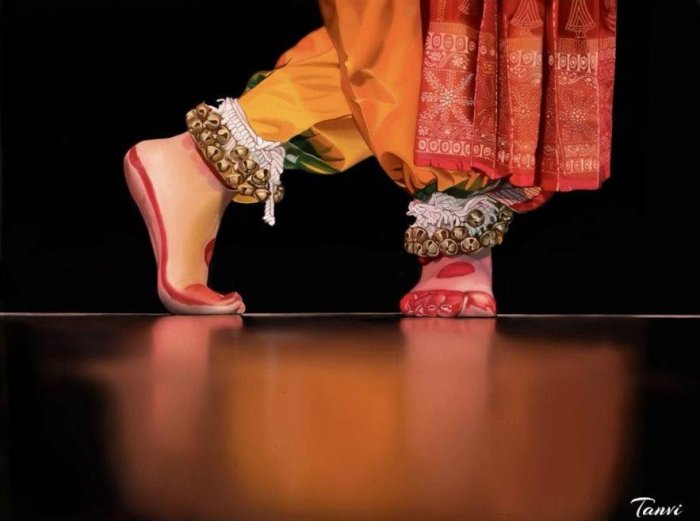 Credit: Tanvi The Sabdam was electrifying. It was as if the dancer used the short break to clear her head, refocus and attack the piece with a renewed energy. Sometimes that is all that is needed. A shock, a jolt - unexpected - but it fires up the neuro circuits to recharge afresh. I have had several such moments. What saved me was not just experience, but to KNOW the music and the rhythms so well that I could improvise even at that moment. If memory is only used for the choreography and not for the entire composition, then these slips can become glaring. Full marks to the guru who while conducting the performance, encouraged the dancer by reciting the Jathi syllables over the music. We are human after all, and it is how we recover after a stumble that shows our training and our character! SWITCHING ON AND OFF 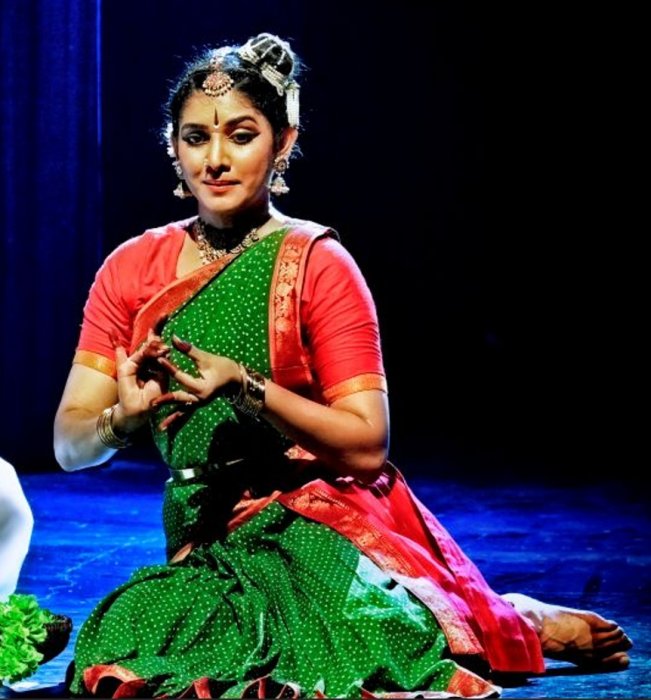 Nandhini Subbalakshmi Getting into the skin of the character is demanded for movie roles. Academy award winner Adrien Brody took months to prepare for his role as Wladyslaw Szpilman in THE PIANIST. After the final day of shooting, he confessed that it took him a full six months to recover from the dark mood of the Polish musician that he portrayed. What happens on stage when a dramatic character in a mythological or historical production finds it difficult to switch off after the lights go dark and the applause fades? Switching off is as important as turning off from what has just been delivered on stage. For two hours, the face and body have adapted and emoted as the character should. As the choreographer / director has envisioned it. If that same production is repeated over a sustained period of time, does it get harder and harder for the dancer/actor to snap out of it? I watched Nandhini Subbalakshmi who played the pivotal role of GODA/ANDAL in my latest ensemble production NAACHIYAR NEXT. She has played the role 15 times in the 25-show run of the acclaimed work. During the recent show at Kalakshetra, all the dancers had completed putting away the props but Nandhini continued to wear the long Andal garland around her neck while meeting her friends and admirers. I noticed this and asked her about it several days after the show. She confessed that she found it hard to "return" to her normal state after the last show. The role of Andal is demanding. A young girl, obsessed with her love for Krishna, has demanded a great deal from Nandhini. I watched her read, improvise, add, augment and "become" the devotee who ascends to become a Goddess. If your breath has been held and released according to the music and the character, the weight cannot sit on your shoulders as you walk away and wipe off the makeup. One has to release the grief and intensity of the character arc as soon as possible. If not, the energy drains slowly and the intensity will fizzle out. Take a short walk, play with your pet, share a joke with friends. Switching off is as important. ANOTHER VERSION. ANOTHER UPROAR 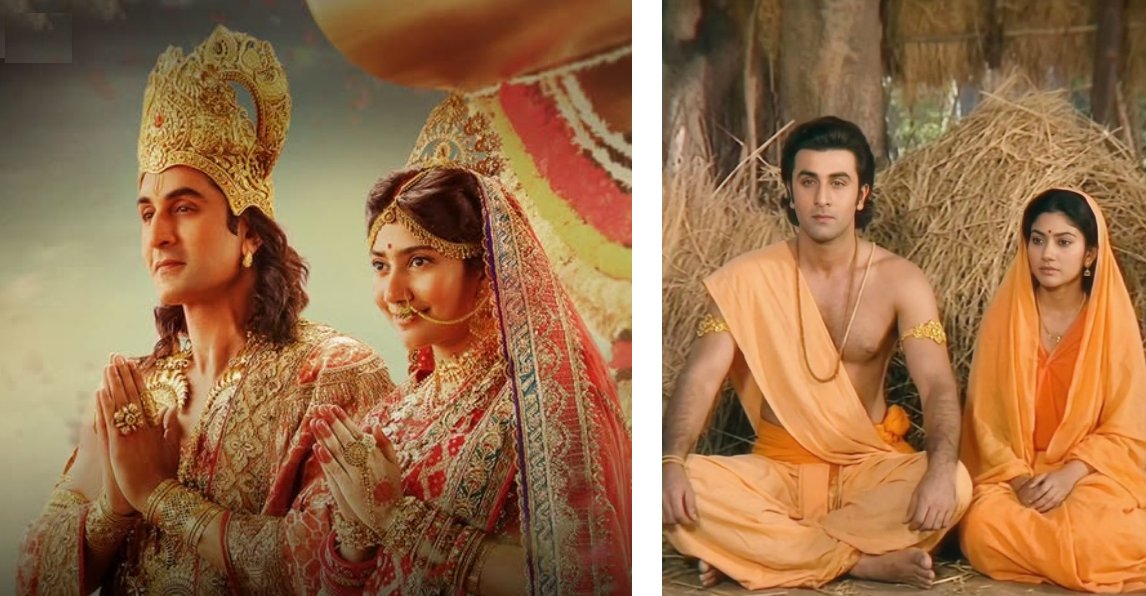 Ranbir Kapoor and Sai Pallavi in ‘Ramayana' And here we go again! The ADI KAVYA - the story of Prince Rama and Sita has yet another version. And even more opinions and push back. Sacred characters from cultural memory are strongly embedded in our psyche. We all have our version of how Prince Rama looked, how beautiful and vulnerable - yet strong - Princess Sita appeared. Retelling after retelling has shifted the narrative. SITA as a warrior. SITA as Kali. SITA as the flame of Dharma. A GOLDEN LANDMARK 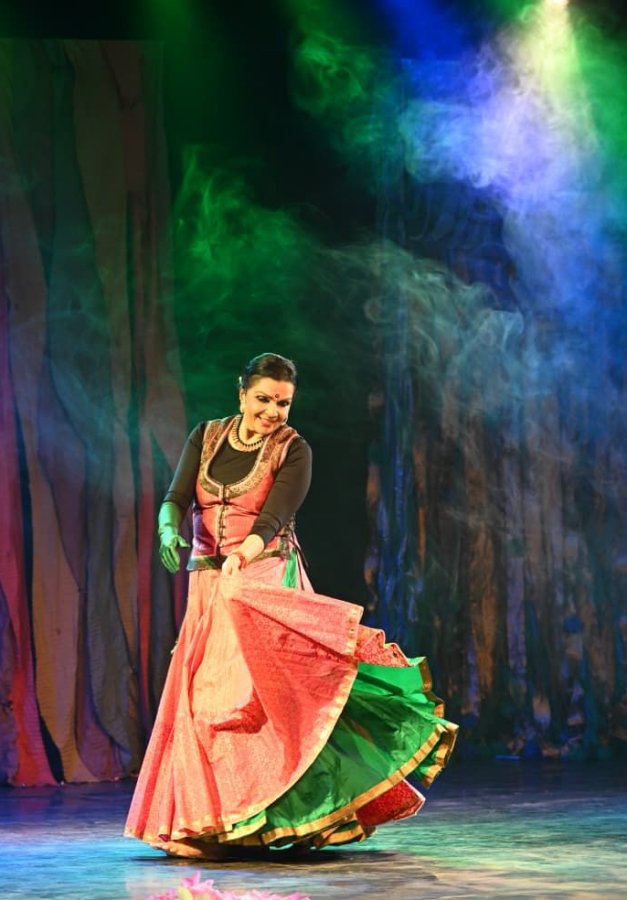 A Million Sitas As I prepare to share the 50th performance of my solo theatre with A MILLION SITAS in the coming months, I ponder on how this one tale has spawned so many archetypes, numerous analogies, phrases that resonate today- AGNI PAREEKSHA and LAKSHMAN REKHA - and still continues to be appropriated by all to either praise, belittle, insult, adore, worship and curse. Each time I perform that last monologue of SITA on the battlefield as she grapples with Prince Rama's shocking comment on her fidelity, I feel the audience lean forward intrigued. The RAMAYANA endures because it is less a single story than a mirror. Every age sees its own face in it. Every character is replete with nuance and shades of grey. That ambiguity is the undue. It lets filmmakers turn into spectacle, dancers into emotion, painters into stillness and each retelling argues with the last one. And because the questions it raises - loyalty versus justice, power versus righteousness, the cost of doing what's right - never stop being current, the text never stops being rewritten. INDIA SHINING IN VENICE 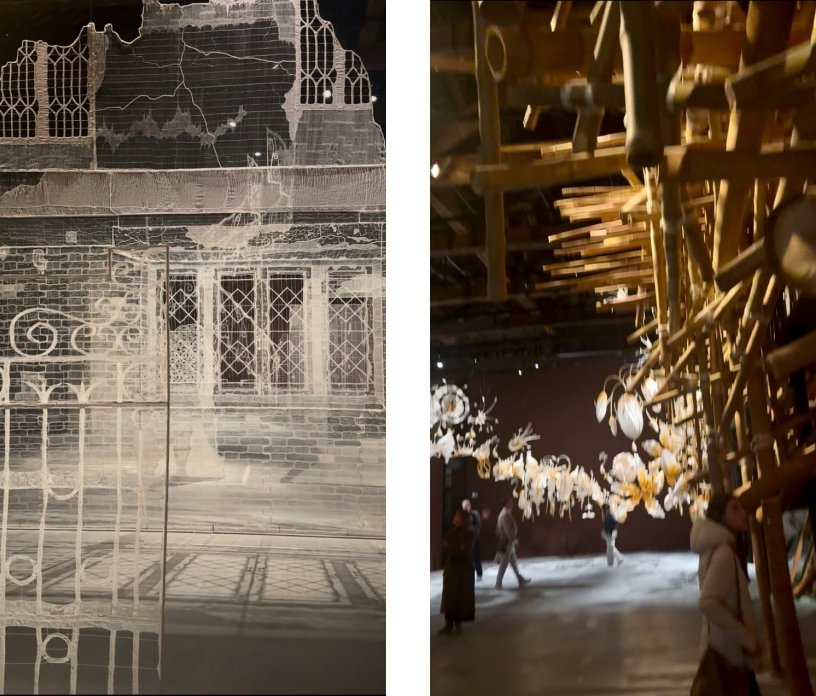 By far the most outstanding pavilion in the Art Biennale is of INDIA. I stepped into the cavernous space, I was immediately awestruck. The beauty and brilliance of bamboo and lace, stone and floral flourish did not shout India. The installation allowed India to arrive through earth, thread and recollection. Curator Amin Jafer said that every memory should evoke home. Starting with clay that cracked naturally as it dried in its long journey from Tamilnadu to Venice, a delicate home created with lace and thread was a personal memoir of a women's collective that refused to let history and rupture erase the idea of family. None of the artists were making India for Italy. They made India for the India that lives somewhere else - in a body, in a memory, in a material that refuses to forget where it came from. 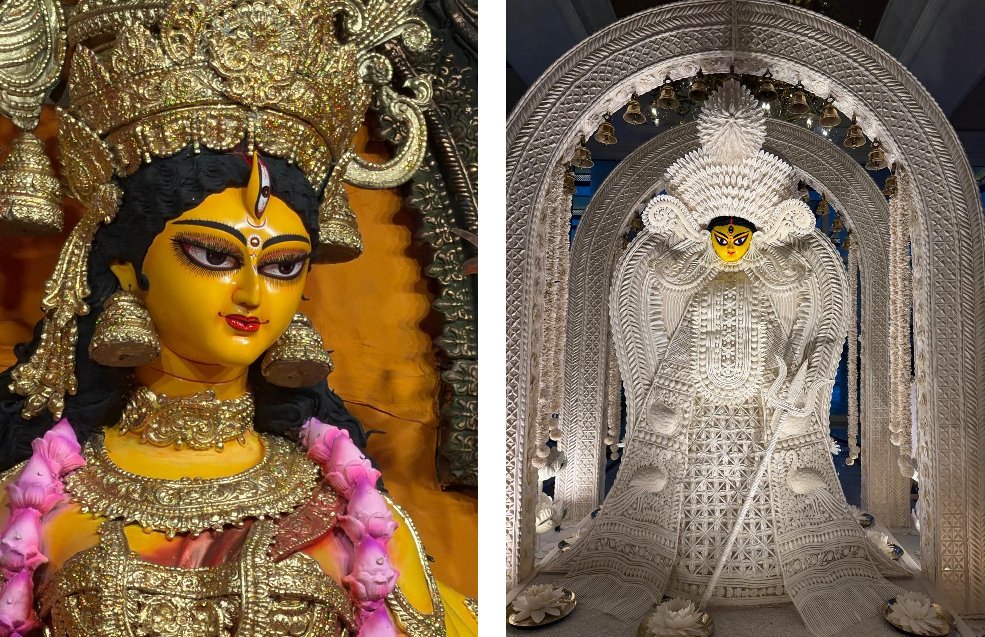 A month of so much sensory inspirations. From the majestic and brilliantly diverse Pandals of Bengal for Goddess Durga to the soaring scaffolding of wood and earth in Venice, it was a homecoming in two cities - two continents for this daughter of India. A moment, actually, several moments that reminded me that, amidst so much of unrest and uncertainty, Art and imagination continue to evoke beauty, resilience and great power. Deepavali arrives and a host of other celebrations for communities across the globe. Family, bonding and gratitude will dominate emotions and conversations. Until next time Anita R Ratnam anitaratnam.com Connect with us on Instagram and Facebook     Post your comments |
