
|     |
|
| |

ANITA SAYS..... May 1, 2026 I dance because it feels like sunrise hitting my cheek Like floating on a river… Like I am in discussion with the universe - Broadway dancer AFRA HINES 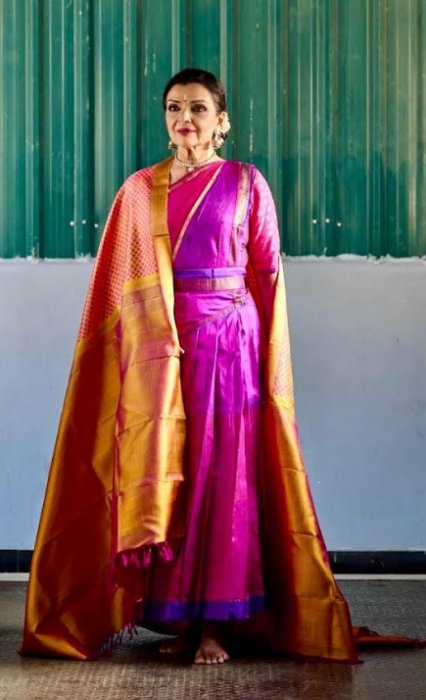 April has always been a packed month for the performing arts community. As Spring blooms in full splendour in some parts of the globe, temperatures soar in South Asia and hundreds of dancers and musicians from India are taking to the skies towards further shores. To teach, tour, perform and continue their creative journeys. Even while visa restrictions increase and travel costs soar, performers, especially dancers, remain resilient and hopeful. ATMA SHANTI WITH GRATITUDE 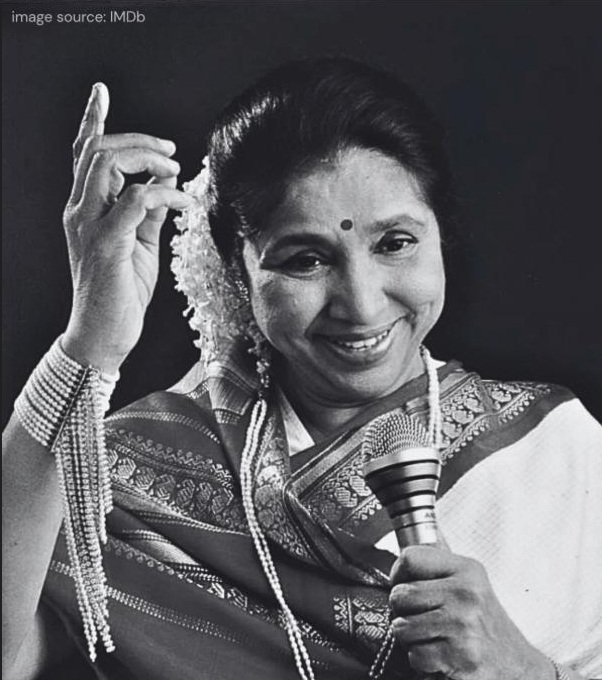 Asha Bhosle 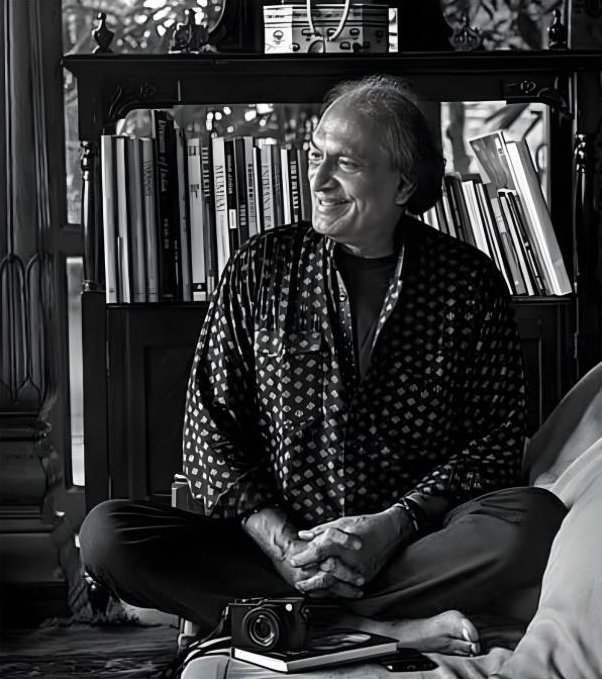 Raghu Rai Throughout April, I was fortunate to watch and attend a variety of work - puppetry, dance, physical theatre, conference presentations, a book release- which left me grateful and full of enthusiasm with what is possible in India if we put our minds to raise the bar of curation and presentation. NATYA VRIKSHA WORLD DANCE DAY EDITION #19 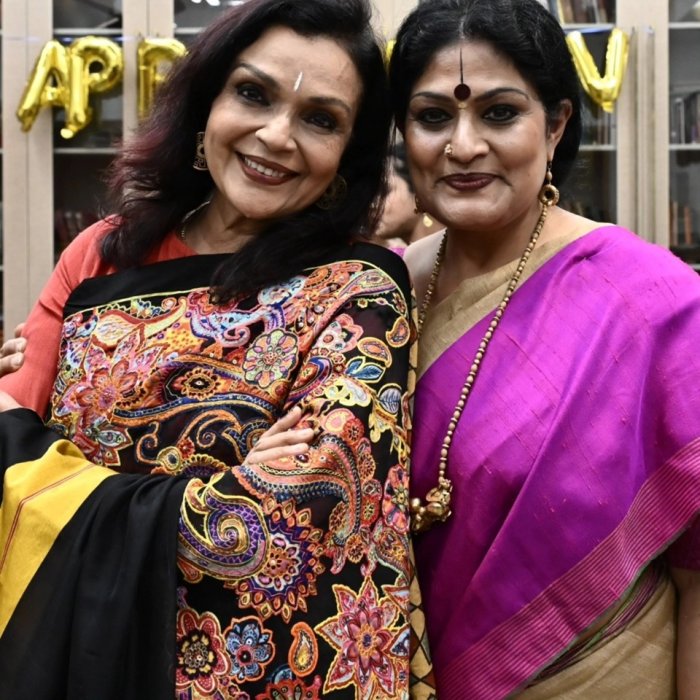 With Geeta Chandran Kudos to curator and convenor Geeta Chandran for staying the course and creating an invaluable property that draws the New Delhi dancers and rasikas every year to this much awaited event. I remember the inaugural edition of WORLD DANCE DAY weekend with the late dance critic Shanta Serbjeet Singh. Over the nearly two decades, the WDD events, at the India International Centre, have featured so many of the greats in conversations and sharings. Meticulously curated and aesthetically presented, Geeta, along with husband and co-traveller Rajiv Chandran, have cultivated a warm and enthusiastic audience for this annual event. To bring more than 75 young dancers across disciplines for the morning workshops and a packed - sitting in the aisles - audience for the evening sessions is no small feat! I have watched the cross section of people who now consider this World Dance Day event as a 'must attend' weekend to gather, connect, watch, savour and respond to artistes, both on stage and off. The afternoon tea session is among the warmest and most jovial of moments. We gather around a crowded lawn at the IIC and share jokes (some unmentionable!) while gorging on the softest chocolate eclairs and kachoris (curated by foodie Rajiv Chandran). These are the moments that I "savour" in every sense. Being part of a community that deserves attention, recognition and praise for having the tenacity to confront the forces that are determined to devalue and dismiss the value of our presence. OF MOVEMENT AND IDEAS 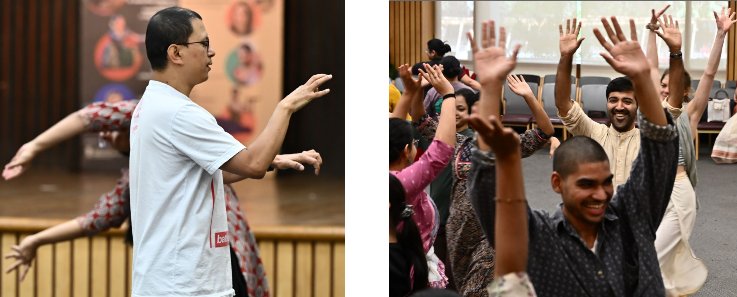 Surjit Nongmeikapam's workshop Photos: Sarabjit Singh Dhillon This year, the morning movement workshop YANGSHAK by contemporary dancer Surjit Nongmeikapam from Manipur, was flowing and insightful. Bringing his awareness of the spine and the body politic as informed by his native Manipur, Surjit coaxed the mostly classically trained dancers into allowing a controlled flow and awareness of the torso. From solo movements to group awareness was a transition that was achieved seamlessly. Even I tried out some of the ideas while sitting in my observer's chair. It felt liberating! 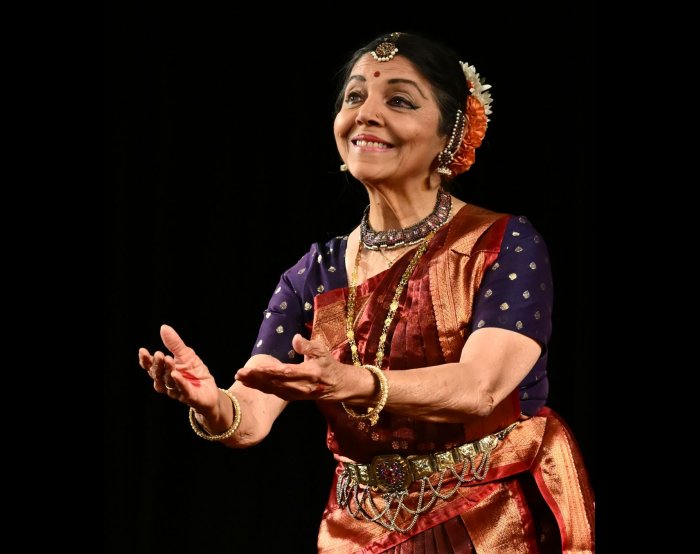 Sucheta Chapekar 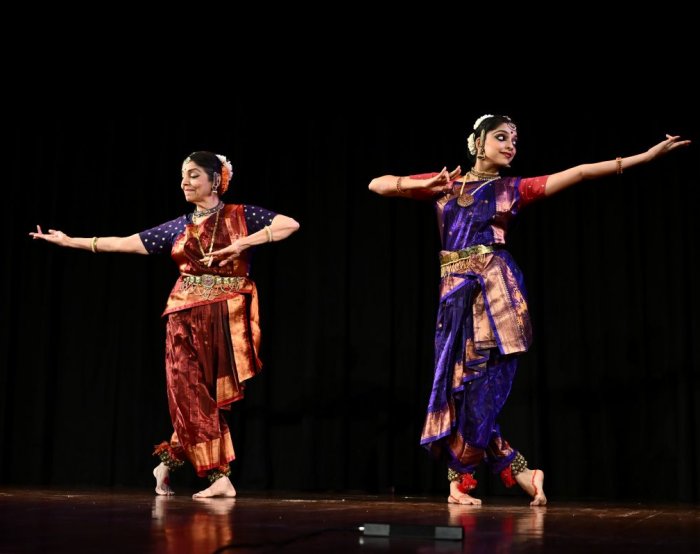 Sucheta Chapekar & Sagarika The first afternoon featured Bharatanatyam senior Sucheta Chapekar and her granddaughter Sagarika in rare glimpses of her Marathi roots. Titled PRAVAAHITA, the dance pieces reminded us that Sucheta was the first artist of her generation, trained by hereditary guru Kittappa Pillai, to research and create an entire repertoire based on the 17th century writings of Tanjavur's Maratha ruler King Shahaji Raje Bhosle. To watch Sucheta-ji's gentle and evocative dancing brought back so many memories of her presence in Chennai decades earlier at the Sri Krishna Gana Sabha. 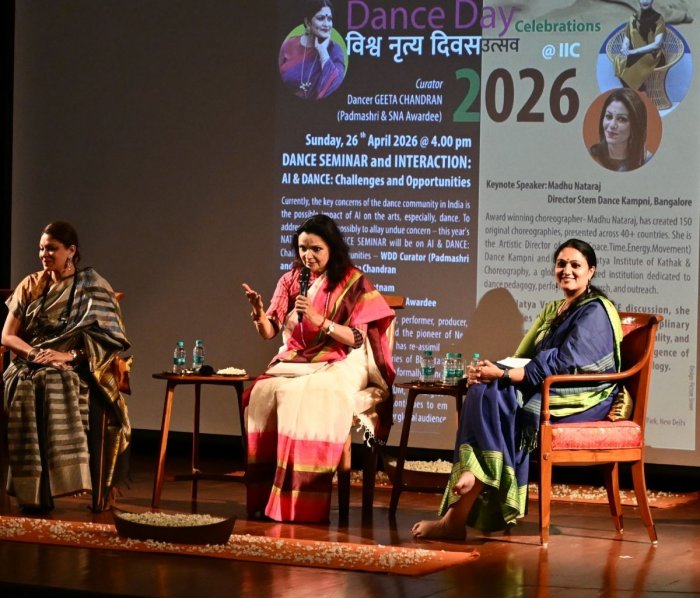 AI panel with Madhu Nataraj & Sharanya Chandran Photo: Sarabjit Singh Dhillon The second day's discussion was focused on the future - ARTIFICIAL INTELLIGENCE and the challenges presented to Indian dance. With economist Sharanya Chandran and Tech dancer/ choreographer Madhu Nataraj on my panel, it was a lively triangulated conversation with visual excerpts of dance, Virtual reality, Augmented reality, AI and other emerging knowledge systems. The future is clear. AI has arrived and is not just an agent of chaos. It represents change at an unprecedented pace. There were some senior gurus who expressed concerns about AI's ethical issues. However, as Sharanya and Madhu stated, "AI presents an opportunity for Indian dance to seize and not shy away from." The session was an eye opener for many senior dancers and gurus and stimulated lively discussions afterwards. With women dominating the dance world, it is interesting to note that AI is being used by only 25% of women. AI presents opportunities to ease administrative bottlenecks while streamlining daily classes. Millennials and other independent dance artistes have already started using AI as dramaturg, choreographer, music generator, grant writer among other creative uses. As the moderator of the session, I quoted the 12th century Kannada Bhakti poet Basavanna O Lord of the meeting rivers (Siva) Those that will stand will fall That which is ever moving shall stay If the Indian dance world remains fixed and rigid, AI will overwhelm it completely. If we continue to remain curious and open, this is the biggest opportunity for this fragile and resource-starved eco system to thrive and grow. As Geeta Chandran said in a cautious tone, "If AI can responsibly take over the tedious beginner dance classes of TEI YA TEI, I will be convinced." MEMORABLE PERFORMANCE 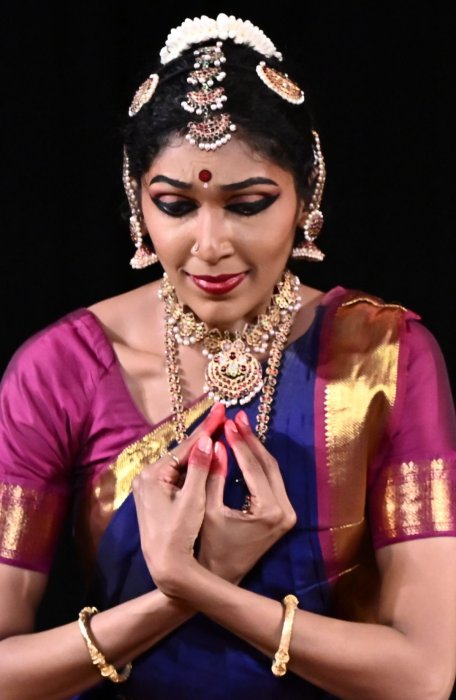 Karuna Sagari (Photo: Sarabjit Singh Dhillon) There are moments that will remain with you long after the performance ends. Of long arms and extended limbs that create a universe larger than the stage and our imagination. Karuna Sagari's Bharatanatyam performance was one such offering that opened the World Dance Day performance showcase. Karuna's deep engagement with Tamizh literature was practically oozing out of her every pore during the Sangam poem where a young woman from the fishing community stands up proudly against the inappropriate overtures made to her friend by a wealthy city man. It was such a treat to watch a woman claiming agency and using this power of choice. Karuna started her showcase with the Telugu varnam "Entani ne delupuduraa" in Khamas ragam. This Subbarama Dikshitar composition invited Karuna's imaginative rendering of Lord Siva as Somaskanda and a musical interpretation of the Ajapa Natanam where a reclining Lord Vishnu is breathing in yogic slumber within Lord Siva's chest, thus making the processional deity in Tiruvarur sway in an unusual way. I recall the choreography of this very same composition by my guru Adyar K Lakshman in 1972 with stunning jathis composed by mridangist Trichur P Ramanathan. It became one of the two signature pieces in my repertoire. Soon after, Lakshman Sir travelled to New Delhi to take over the Nattuvangam responsibilities of his Kalakshetra classmate - the great Yamini Krishnamurthy. The varnam became nationally visible with Yamini's vigorous interpretation. Performing it as a teenager in the 1970's and watching this fresh interpretation 50 years later by Karuna was deeply satisfying. Her performance braided rhythm, technique, emotion with a strong orchestral support from a stellar team. S Vijay Kumar (nattuvangam), Subhiksha Rangarajan (voice), KP Nandini (violin) and Sarvesh Karthick (mridangam) responded as co-performers to Karuna's stillness and power. Through her hour long showcase, Karuna paid tribute to the continuing power and possibility of Bharatanatyam. The choice of a Tarana quilted with the famous Kabir composition UD JAYEGA was an anticlimax for me personally, although the audience seemed to love it and the prolonged standing ovation at the end was proof that Karuna Sagari had won over the Delhi audience. 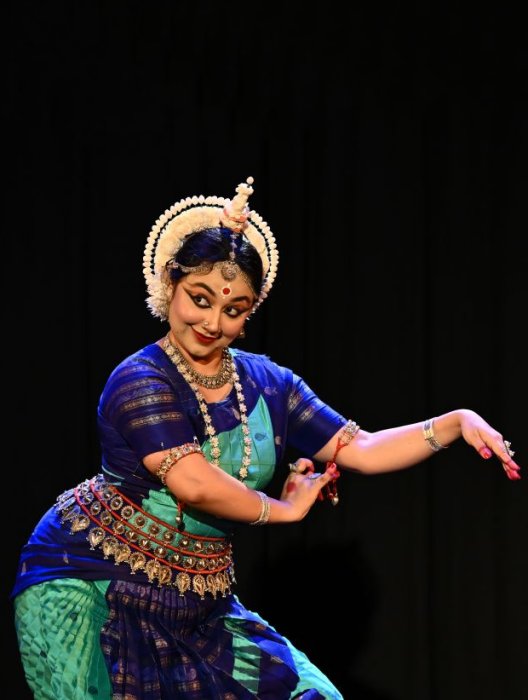 Vrinda Chadha 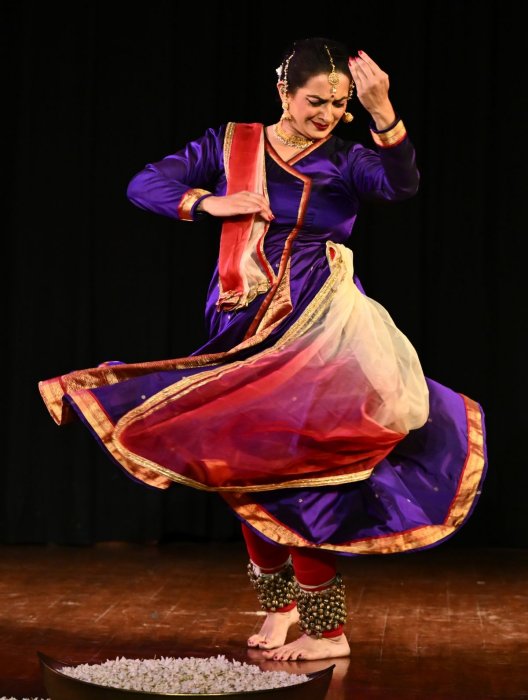 Ameera Patankar 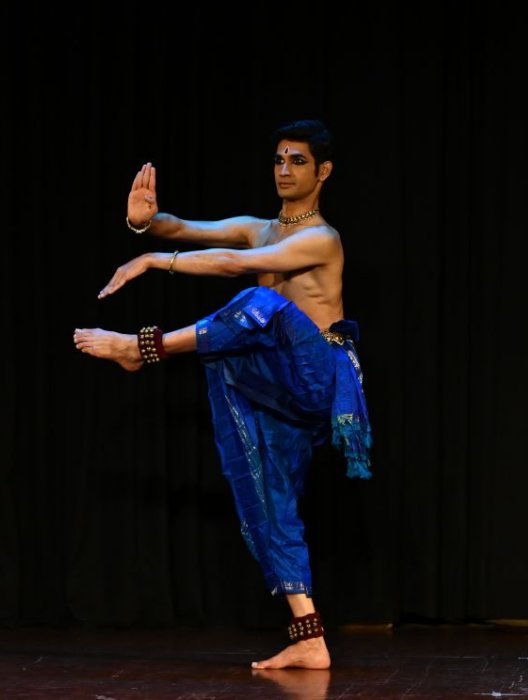 Avijit Das The other 3 performers in the festival were full of hope and promise. Vrinda Chadha (Odissi), Ameera Patankar (Kathak) and Avijit Das (Kuchipudi). All three showed confidence and are on the journey to realise their full potential. However, the receptive audiences on both days were proof of how successfully this annual NATYA VRIKSHA WORLD DANCE DAY event has evolved to become an important weekend for Indian dance in the national capital. DANCER AS PUPPETEER 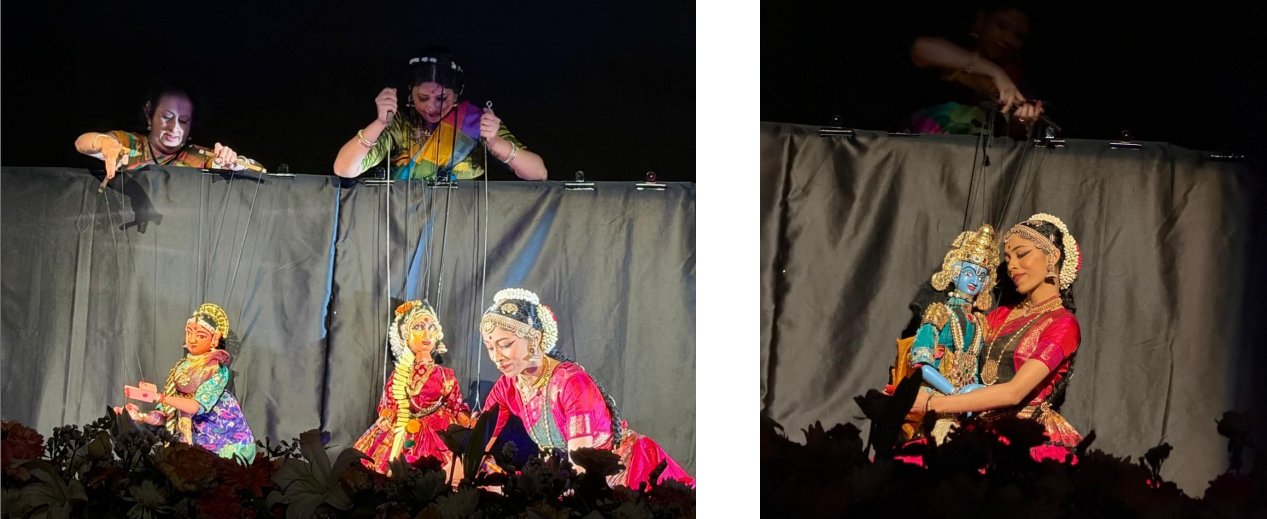 To watch Divya Hoskere perform with and then manipulate puppets was a surprise. As part of the INDRAPRASTHA CULTURE FESTIVAL at New Delhi's Habitat Centre, a story from the MAHABHARATA became the focal point. Entirely told by award winning puppeteer Anupama Hoskere's zeal and imagination, the brilliant Rajasuya Yagam involving the Kauravas and Pandavas was so riveting that I totally forgot that we were watching dolls as characters and storytellers! 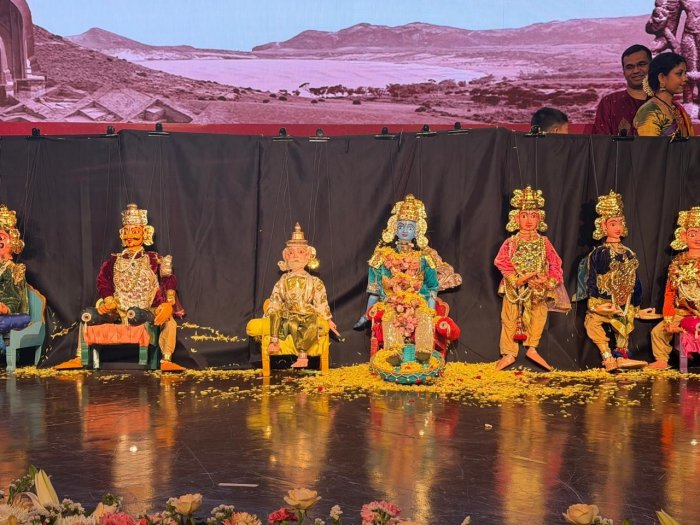 Puppets Visitors to Anupama's home in Bengaluru describe an entire floor dedicated to these glorious puppets that took decades of research and relentless study. To see the entire family - 3 generations - on stage and in full participation was a true delight! UNFOLDING THE ETERNAL 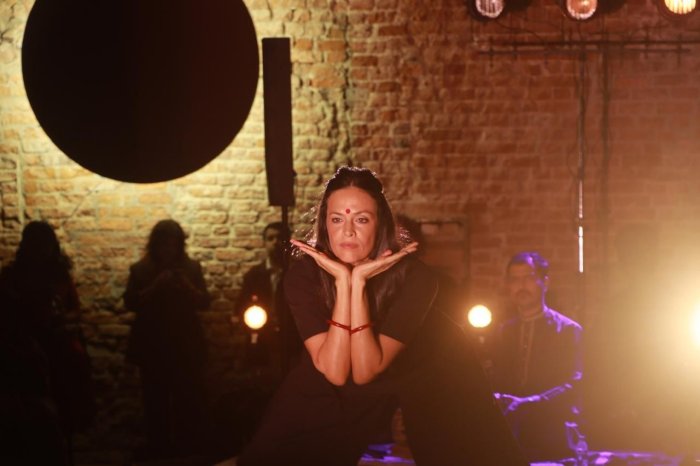 Tishani Doshi (Photo: IFBE) Legacy is delicate. Memory is fragile and anyone who wants to honour a true rebel walks a tightrope. The homage, mounted to honour choreographer Chandralekha, was impressive. Set amidst the gorgeous exposed walls of the IFBE Ice Factory space in Ballard Estates, South Mumbai, the rooms were partitioned to first introduce the invitees to a space that tastefully showcased the main sponsor ZOYA JEWELLERY. The haunting voice of Chandana Bala invited us to surrender to Chandralekha's signature motifs of stillness and silence. The partitions opened to a small stage area where we saw a motionless figure of poet/performer Tishani Doshi. 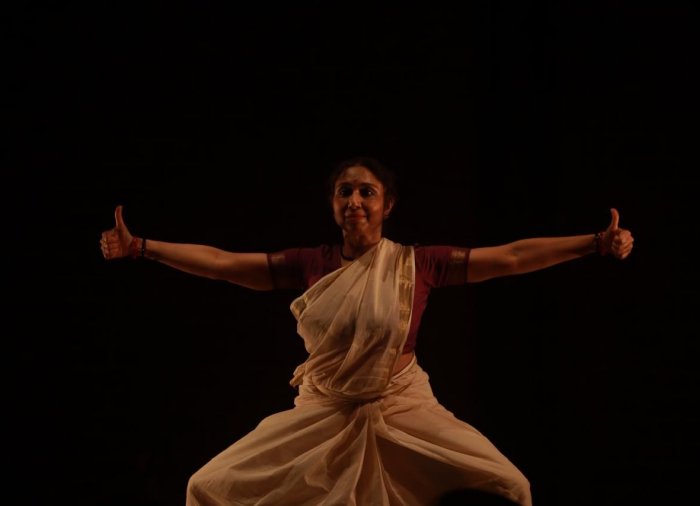 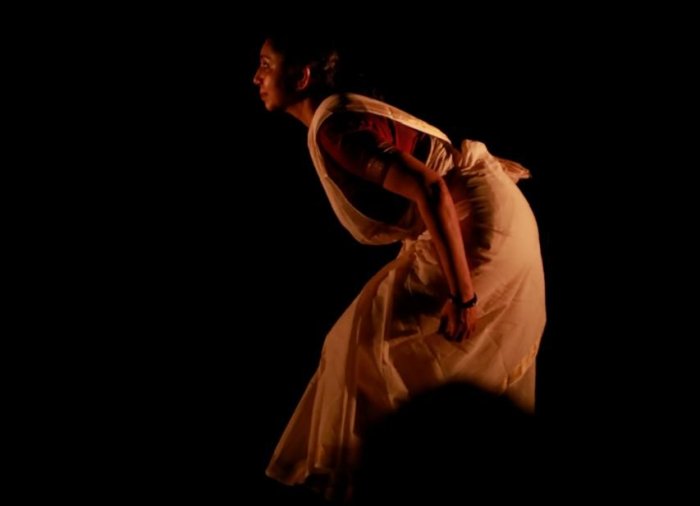 Geeta Sridhar (Photos: IFBE) SHARIRA was Chandralekha's last choreography that I first watched in Chicago in 2001, at Hema Rajagopalan's Bharatanatyam conference, just days before the 9/11 attack. The first cast featured Padmini Chettur with Kalari performer Shaji. It was electric - the dynamic between the two, with the live singing of the Gundecha brothers. Years later, after Chandralekha's demise in 2006, I watched SHARIRA in Toronto where Tishani performed with Shaji. It was still fascinating. Now, watching a lone Tishani, creating her own choreography inspired by SHARIRA was very revealing. Bereft of any facial expression, Tishani managed to convey slivers of Chandra's power but I missed Shaji's martial energy that complemented Chandralekha's choreographic vision. 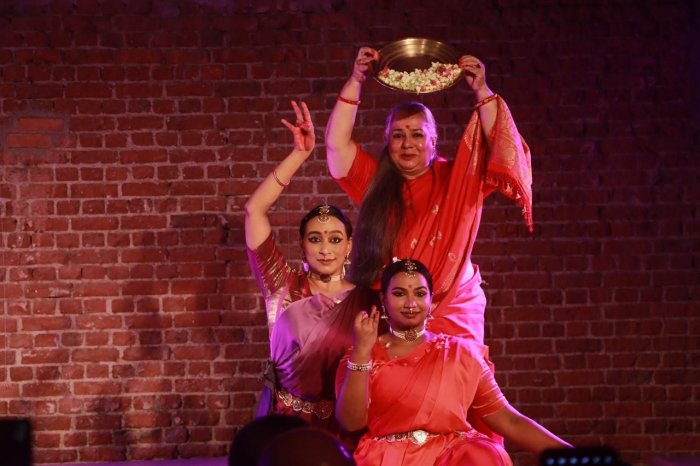 Gayathri Subramaniam (Photo: IFBE) The evening continued with Bharatanatyam guru Gayathri Subramaniam being forced out of her comfort zone to create a short duet on Radha and Krishna with her students based on the prompts of slowness and power. What followed was a throwback to 1991 and the creation of SRI. A truly pathbreaking ensemble work on women and feminism, lead dancer Geeta Sridhar, who helmed that choreography, attempted to distill the dynamics of 8 dancers into a solo. Taking the final imagery of the multi armed Goddess as she advances to smash patriarchy was one of the defining moments of SRI. The opening image that Geeta entered with was the crouched back in silhouette. Framed by Deepa Dharmadhikari's dramatic lighting design, the silence was potent. 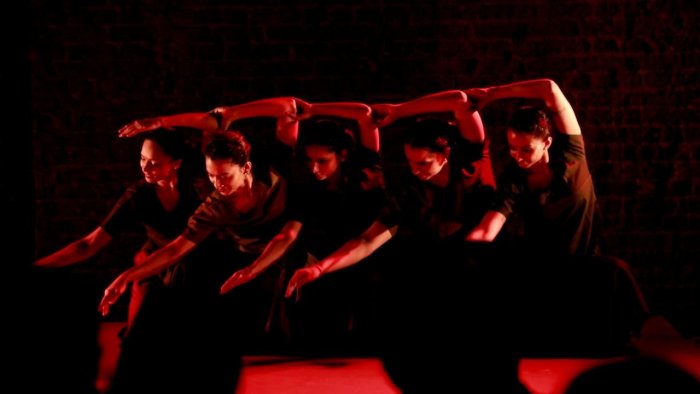 (Photo: IFBE) The finale was a refreshing ensemble work choreographed by Taarini Tripathi and Neeraj Lugano titled BEEJ. Bringing youthful energy to the idea of the Earth and ecology, the Ramayana segment of Sita's abduction by Ravana was especially powerful. The repeated phrase "Bhiksham Dehi" was haunting and relentless as several dancers with swirling scarves advanced menacingly towards the Lakshman Rekha boundary that separated the Princess from the disguised King of Lanka. The performance evoked shades of Kathak's dynamic possibilities - sharp edged and quick angular movements cutting through the small space. The enduring legacy of Chandralekha concluded with her voice stating "Where does the body end?" This rebellious choreographer has left us 22 years ago but her impact continues to tinge many dance makers even today. Kudos to curator Gauri Sharma Tripathi for this bold vision and a memorable evening executed with aplomb and class. MEHEK- THE FRAGRANCE LINGERS! 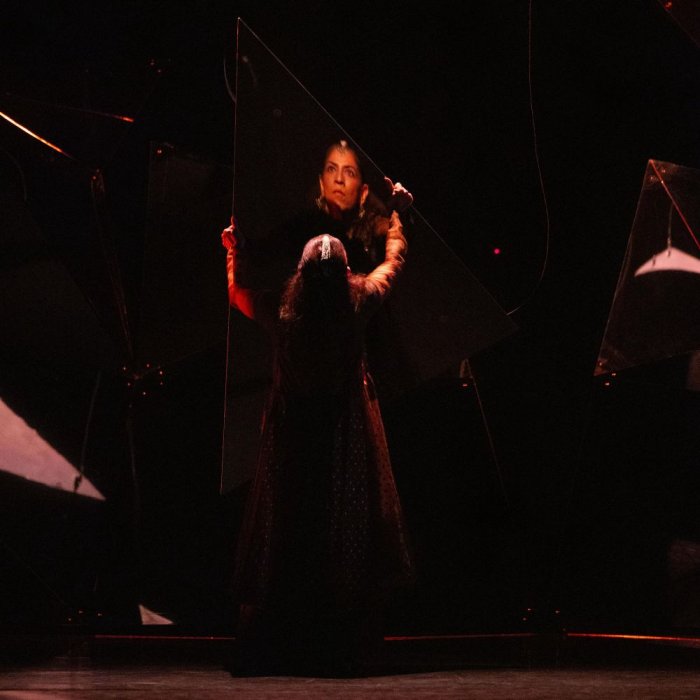 Mehek (Photo: Vipul Sangoi) Ufff! My heart is still resonating with the haunting duet performance of Aditi Mangaldas and Akash Odedra in MEHEK. The evocative set of moving glass shards reflecting the dancers' emotions and movements was a physical manifestation of Time's relentless march. The brilliant music tonalities of singer and composer Nicki Wells left the audience humming long after the show was over! The three male percussionists from Aditi's ensemble were unflinching in their artistry and appeared as representations of patriarchy trying to chastise the "forbidden" desire between an older woman and a younger partner. Lighting, designed by long time collaborator Fabiana Piccioli, mirrored the light and shade of a love that is forced to be sometimes furtive and at other times, bold and celebratory. The Grand Theatre of the Nita Mukesh Ambani Cultural Centre was almost house full with many dancers and celebrities, many of whom had flown in from other cities. The brilliant chemistry between Aditi and Akash was in full display on stage throughout the 75 minute performance. Love, longing, desire, loss, lament, doubt, passion - every shifting mood drenched the stage. I have never seen Aditi give of herself with such abandon and vulnerability as in MEHEK. Her normal stage demeanour of brilliant technique and total control was softened by Akash's liquid languor that shadowed Aditi like an obsessive lover. Akash's generosity and kinetic brilliance were on full display and conveyed the hypnotic ardour of the younger man who refused to back down even when the other was plagued with doubt. 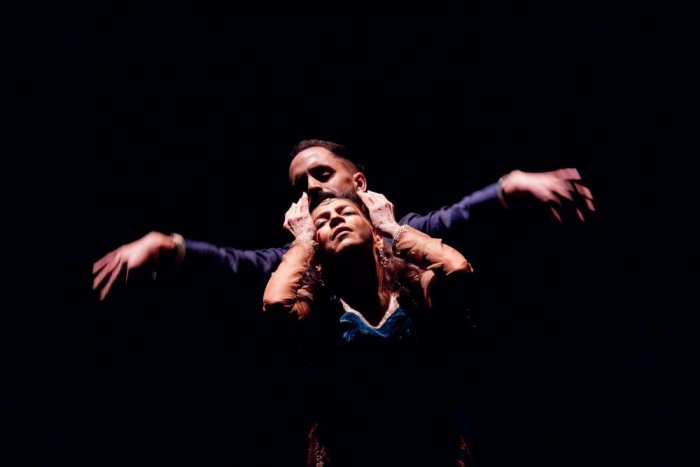 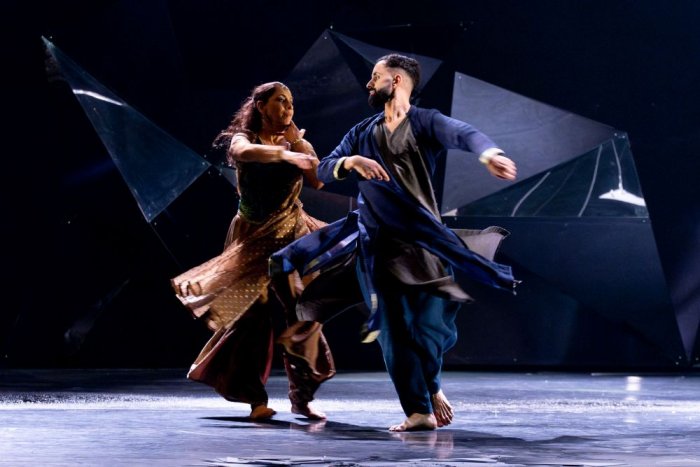 Mehek (Photos: John Valente) The versatility of Kathak was evoked in its classical and contemporary glory. Movements from within and outside the idiom flowed with ease. Floor rolls, bodies flailing in doubt, the spine arching in ecstasy, flawless spins, precise footwork, if anyone wanted to watch the full spectrum of Kathak's possibilities within the prism of modern staging, MEHEK was a glorious example. I was left wondering if Bharatanatyam could achieve such physical fluidity. The form's triangular contours and basic stance is so different from Kathak's erect outline. If there were any points to comment upon, it would be that the lighting was a shade too dark and dim for my taste. I would have loved to see more of the stage and the performers. The moments of intimacy seemed a bit awkward and could have been abstracted even more with Aditi, as the older woman, seizing the moment and taking the lead. However, these are but minor observations in an otherwise TERRIFIC work. Two days before the performance, I was in conversation with the two performers in a newly created series called IN CONVERSATION. Aditi and Akash spoke candidly about their rejection of traditional mythological themes like Radha and Krishna and other tired tropes that most Indian dancers automatically reach for. Vulnerability became a key topic of discussion when Akash shared rehearsal moments of the dramaturg Karthika Nair urging Aditi to be "more vulnerable" and Akash revealing that it was something she really struggled with. The two had worked together years before in a solo that Aditi has choreographed for Akash called ECHOES. When the "ghungroos" were dragged on stage, Aditi's initial reaction was "tauba tauba", an emotion that attached sanctity to the bells around the dancer's feet. The rejection of the first iteration of the set and her own costume were bold and expensive decisions that Akash's company accepted. When Aditi wanted colour coordinated costumes, Akash reminded her that they were NOT siblings but lovers! In all, it was an honest and revealing conversation about how many individuals are involved in the making of an international collaboration. AT LAAAAST- A RETREAT MOST WANTED! 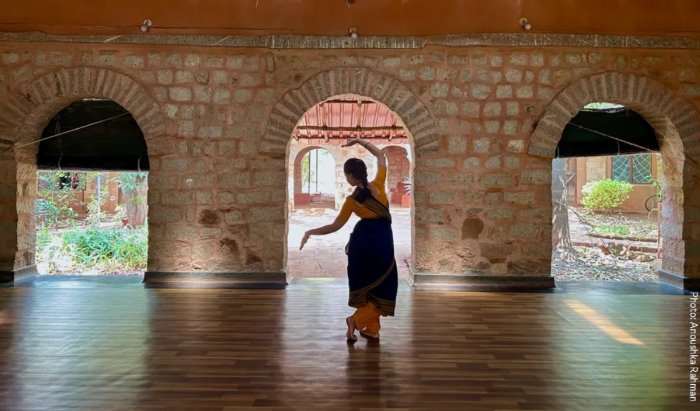 Nrityagram (Photo: Anoushka Rahman) As I wind down, I wish to highlight a MOST UNUSUAL RETREAT OFFER FROM NRITYAGRAM. In dreaming and development since the pandemic, VIHARA, is a rare opportunity for dancers to rest, dream and reboot without thinking of projects and deadlines. There is nothing promised in this initiative except total surrender to the environment. That every invited applicant find time and space to breathe and recoup with nothing to be anxious about. And it is totally paid for! Free! As Lynne Fernandez, Manager and Lead Administrator of NRITYAGRAM describes it, "VIHARA is a residency for practice, pause and possibility, in its own rhythm." Sounds too good to be true! Well, here is the link for more details. And finally! NARTHAKI 26 years and counting!  THANK YOU for the continued appreciation for this portal. April 15th marked the beginning of year #27 for the online avatar and 34 years since the first Phone directory was launched. The NARTHAKI brand continues to connect and inform the global Indian dance community without gatekeeping. As we expand across many platforms, we especially say a huge THANK YOU for the love and support shown for the monthly NARTHAKI PODCAST. Our endeavour is to develop fresh new voices and faces for the brand and remain committed to have deeper and sometimes difficult conversations about dance and the world around us. Summer is exploding with various workshops for all ages! Take advantage of them and keep moving! The hottest summer in India is upon us. So what? When mangoes, mangosteens, lychees and Nungu (ice apples) are available, how bad can it really be???? Until next time, Anita R Ratnam anitaratnam.com Connect with us on Instagram and Facebook     Post your comments |
