
|     |
|
| |

ANITA SAYS..... Feb 1, 2026 The body is where knowledge accumulates Not just the mind The only thing I know for sure is that Instagram is not Art - World's foremost performance artist MARIA ABRAMOVIC 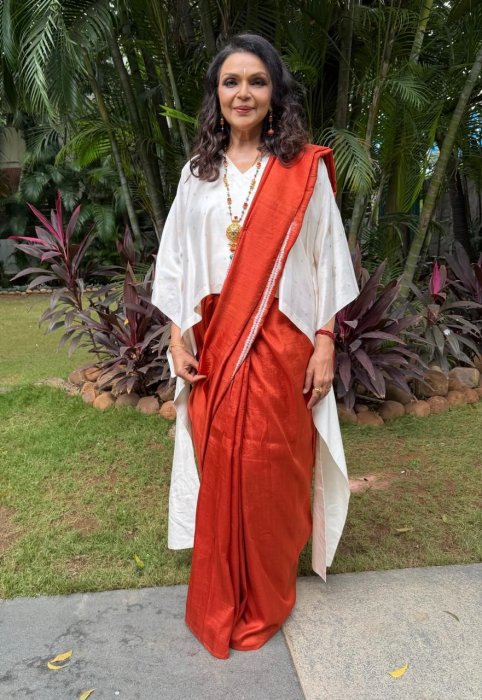 We are living in surreal times. It feels like the world is at the brink. That powers beyond our control are manipulating us like puppets - moving our limbs, controlling our thoughts in a sinister manner. That the vortex of chaos is any city far away from us, but very close - almost around us. The new world architecture of power and positioning may not be what we in the dance and music world necessarily pay attention to. But it is happening. It is no more about performing at venues outside our geography. It is the weight of our reputations in the domestic market that will determine our brand value in the times ahead. Several cultural organisations have put out messages that signal a pause. My eagerly awaited monthly mythology newsletter from the Joseph Campbell Institute came with the opening lines, "We are pausing our regular communications out of respect for the intensity of the moment we are collectively living through. At times of heightened emotion and uncertainty, we believe it is important to create space for reflection." This came from the USA, but the enormity of the geo political moment is not lost on anyone. As borders close, visas tighten and racism against Indians increase, it is a very challenging time ahead for dancers and musicians. This past Margazhi season is a perfect example of how things have changed and yet, on the surface, has remained the same. Many who missed visiting asked me, "How was the 2025 season?" I did respond with, "You did not miss anything. Just more of the same". However, that would not be entirely true or fair for many rasikas and artistes who travelled to Chennai and elsewhere to watch, perform, learn and return to their homes enriched and inspired. For those who did not travel due to visa issues, the online viewing increased exponentially. I have recognised that the sameness of content and the lack of a daring curatorial spirit plagues Chennai organisers and presenters. As I watched performances in January and spoke to so many young artistes and visitors to Chennai for the Margazhi season, it became more and more clear that the audience is getting tired of NRI dancers and those influenced by the "WOKE" virus manipulating traditional compositions. I mean, how long can you watch a DEVI shloka become a metaphor for a vegetable market? Or a 26 year old Bharatanatyam dancer displaying angst and cosplaying as an activist when addressing a traditional Varnam? WHERE IS THE DANCE? Be modern. Question tradition. Ask bold questions. Break out of the box. Discard those accoutrements, the "aharya", the head ornaments, the jewellery and all. But the ankle bells? They are not ornaments. They are the voice and soul of your art. The SALANGAI or GHUNGROO are the channel through which you "speak" your dance. They are to be cherished and not thrown across the stage like a discarded fruit pit. The level of pandering to a white gaze by some NRI dancers over the years is certainly disturbing. While large crowds attended many of these concerts, the resulting discussions and comments later seem centred around the effect of geography upon a dancer's creative arc. Does dance today need to be provocative AND entertaining? Are these ideas mutually exclusive? 50 years ago, one of India's ultimate provocateurs Chandralekha rejected all adornment and made Rukmini Devi's dance practice saree design world famous by dressing all her dancers in them. She had lived her politics which she translated onto the stage. What was a powerful statement on feminism then seems tired and worn out today. However, the Western gaze in media and the stage adores the impoverished and caste/class afflicted version of India. And some of our emerging dance stars are feeding into this optic. MUSIC ACADEMY 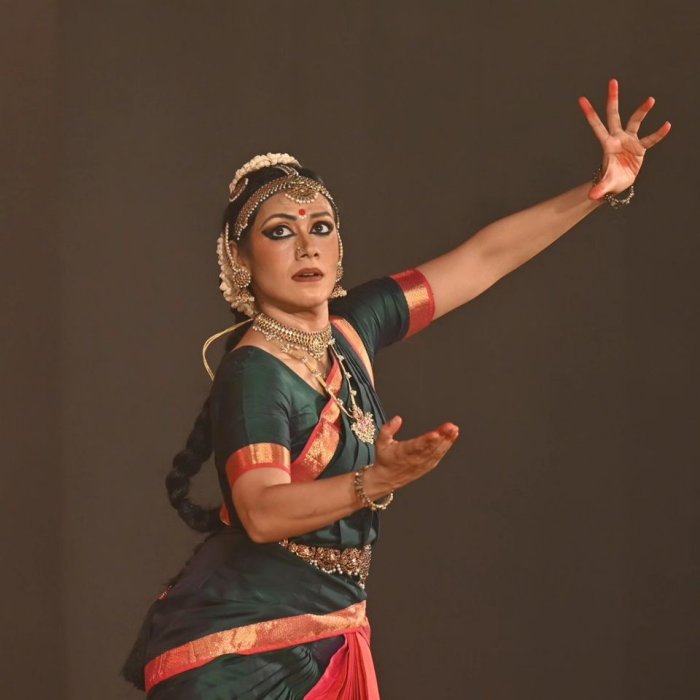 Shweta Prachande (Photo courtesy: Madras Music Academy) I attended some of the evening concerts at the Madras Music Academy and caught a glimpse of Priyadarsini Govind, G Narendra and Sharmila Biswas OVM ensemble. The morning series came in for high praise from many. Several compliments were showered upon Mahati Kannan who was described as "refreshing", "original" and "true to her tradition." Shweta Prachande's agile appearance was commented upon, returning after 2 years of motherhood. Overall, the morning series attracts excellent crowds. Being free of charge, it has become the venue to watch emerging, mid-level and senior dancers from 10am to 4pm over 7 days. The morning lecture and scholarly series, curated by Madras historian V Sriram, focused on the 250th anniversary of Carnatic musician/composer and polymath Muthuswami Dikshitar. It was widely praised and very well attended. Natya Kalanidhi Urmila Sathyanarayanan performed a rare Dikshitar varnam to much acclaim. 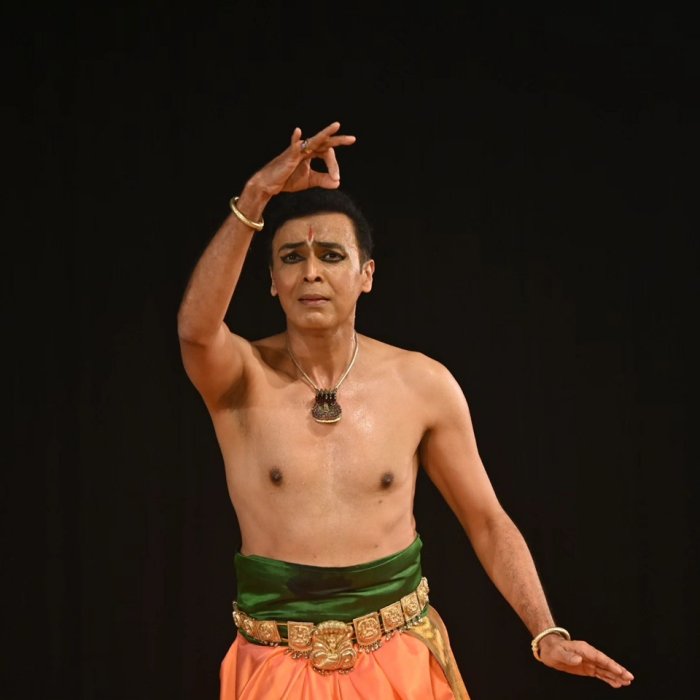 Vaibhav Arekar (Photo courtesy: Madras Music Academy) Vaibhav Arekar has become the flavour of more than one season for the Chennai culturati. His performance at the Academy had many strong moments, especially when he chose silence and stillness. His take on the travails and pressures of Lord Siva as the householder had everyone in the audience smiling. Vaibhav's approach may not be for everyone but here is a dance artiste who is deeply immersed in his Bharatanatyam tradition with a self reflexive gaze on his own merits and weaknesses. NRITYAGRAM RE-EMERGING 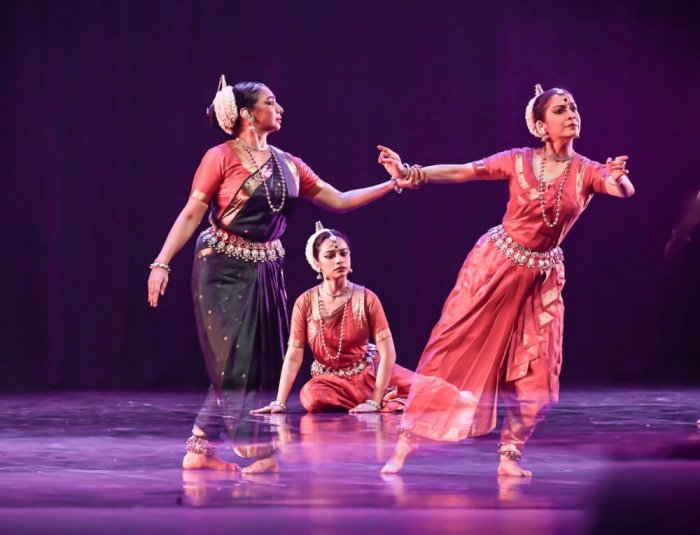 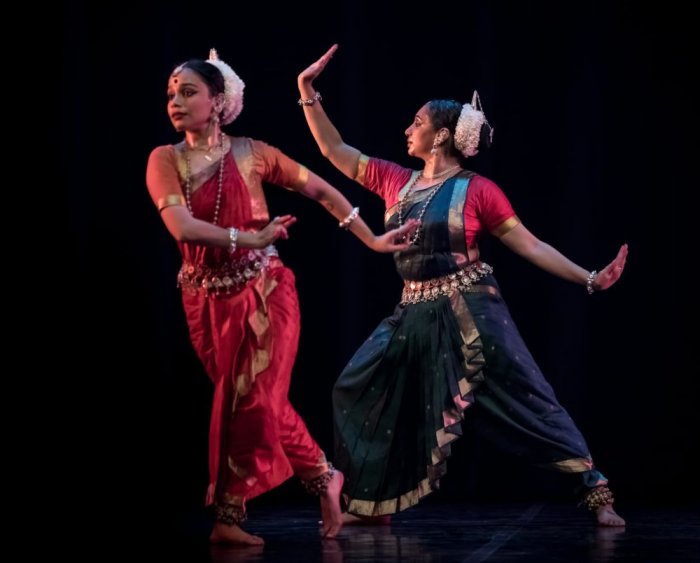 Nrityagram ensemble The one concert that left me exhilarated was NRITYAGRAM. Traditionally programmed on the final day of the Academy dance series - January 9 - I came away last year feeling that they had not yet found their new voice beyond the Gita Govinda and Radha-Krishna. This year, choreographer Surupa Sen returned to the stage looking beautifully fit in a cotton saree draped to show every curve along with her beautifully trained dancers. In her husky voice, Surupa welcomed the audience with the statement, "We are all storytellers." The evening of 5 dances avoided the expected Odissi repertoire and recast the familiar Dasa Avataram "PRALAYA PAYODHI JALE" as an exciting rhythmic and pneumonic sound and dance tableau. With Surupa standing at the microphone and reciting, speaking and voicing the sounds, the dancers received continuous applause for their dynamic entries, exits and choreographic arrangements. The piece about the peacock called MAYURA SRINGARA with two dancers was also surprisingly captivating with minute movements that almost brought the birds before our eyes! 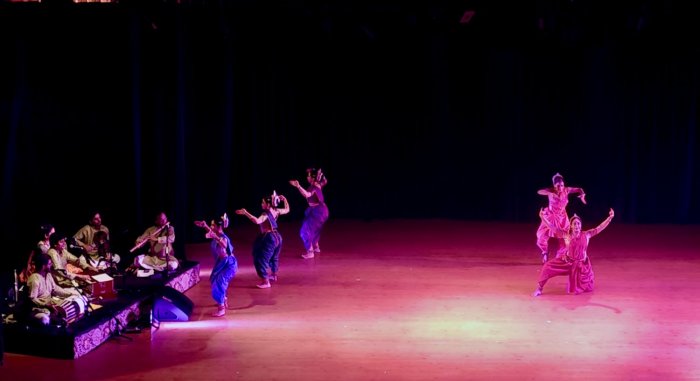 Kama Hasti (Photo: RV Ramani) KAMA HASTI centred upon the elephant was a revelation for yours truly. The slow, ambling walk, the possessed stare during mating season, the curve of the trunk, I actually FELT the size and weight of the mammal. Every aspect was illuminated with astonishing conviction and courage. It is clear that Surupa, who spends her days and months in the seclusion of Nrityagram amidst nature, is a keen observer of the bird and animal life around her. Here was a dance company that did not seek to titillate with talk about "breasts' and "unbound hair" or "bruised lips". This was an ensemble, soaked in Odissi, seeking to reframe their beloved style into an international statement. Did their loyal audience accept their offering? Not completely. The Chennai crowd was left confused but nevertheless admiring of the professionalism and superbly lithe and supple bodies of the entire ensemble. As I have always said - experiment boldly. Do not be timid in your approach. Have the confidence to fail or fly. I did miss the dense and wonderful soundscape of Odissi music and hope that it will make a return soon. 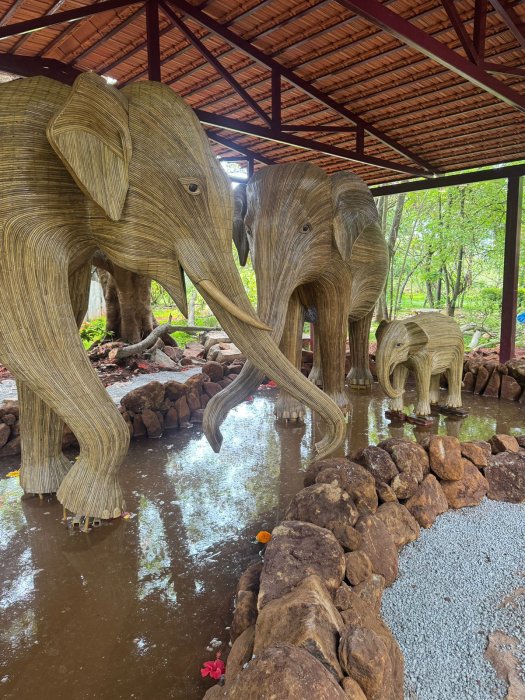 Returning to the subject of elephants. Besides it being Surupa's favourite animal, a sculpture installation of 3 full size elephants - a tusker, a mother and her calf elephant - crafted by the Real Elephant Collective and made entirely from Lantana wood, is on permanent display at NRITYAGRAM. A symbol of ecological fragility has been transformed into an image of resilience. FLOWERS FOR AN ICON 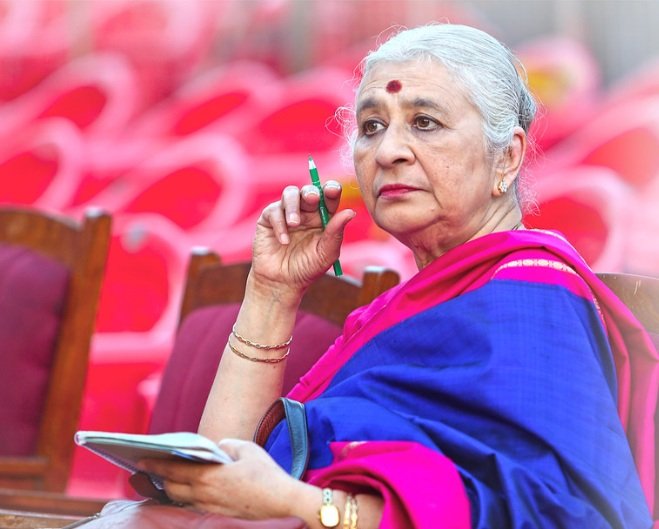 Leela Venkataraman January 11 was the date for our veteran dance critic to turn a landmark 90 years. Leela Venkataraman is the last icon standing. Her colleagues have all passed on and she is the only "eye" left with a visual dance vocabulary of 60 years. How much she must have seen and savoured! How many cities and towns she must have visited to absorb dance in all its forms! And the changes she has seen before her eyes! What a grand life of art she has been a part of! We at NARTHAKI are honoured to have her byline on our site for so many years and are in constant admiration as she sits erect through several dance concerts while taking copious notes in her notebook. Her capture of the mammoth Music Academy dance festival needs a closer read by our members and followers. She has noticed the lack of Odissi music in both Sharmila Biswas and the NRITYAGRAM ensembles and hopes that the lush and lyrical aspect of Odissi is not permanently forgotten! WELCOME TO THE DIGITAL DANCE SPACE 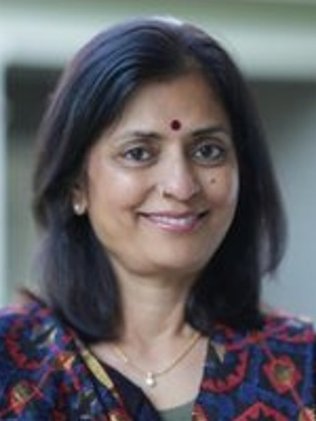 Anita Vallabh 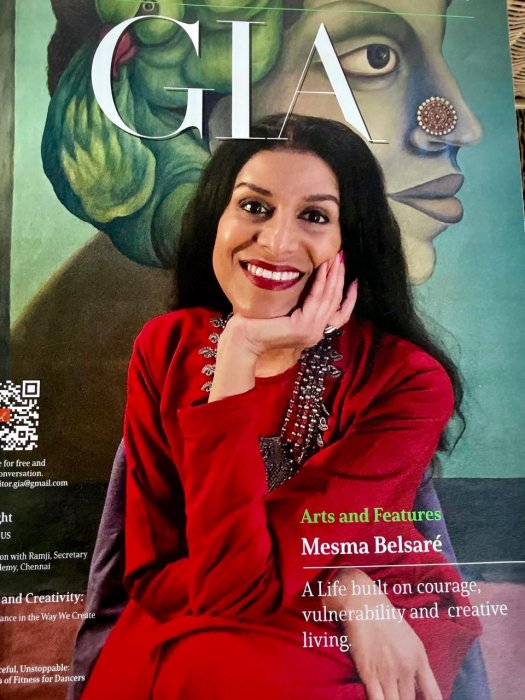 This platform also welcomes and congratulates the new dance publication GLOBAL INDIAN ARTIST and its founder-publisher Anita Vallabh from Boston, USA for her bold entry into dance writing. She enters at a time when words and ideas about dance are dwindling and every single publication about the performing arts is in the digital space only. How does a critical eye serve the art and is any writing or review valuable today? Unlike the world of cinema where fake reviews, positive or negative, are generated to influence the viewer, nobody really cares about dance reviews except the performer who is being featured. With this portal being the last bastion of dance reviews, I was asked by many visiting Rasikas about why certain artistes received a positive review on NARTHAKI when their own viewing experience of the performance was very different? I have listened to these contrasting views with interest and have always encouraged these very same Rasikas to either comment on the published review or to share their own experience of a particular performance with us. Nothing happens beyond WhatsApp private messages. DANCE AS DISSENT In January, India came alive with numerous Literature Festivals which are the most interesting sites to gather. Writers, ideas, provocative thoughts and large crowds make for stimulating days and evenings. One famous writer asked a question in her column, "Where is the dissent and disagreements? What has happened to civilized non-conformity between writers?" I should have told her to look at the world of classical dance where ankle bells are flung across the stage and time honoured shlokas are reduced to a vegetable market in the name of being "radical", "rebellious" and "modern!" We continue to watch the cringe worthy videos of classical dancers (it's always substandard Bharatanatyam, Kuchipudi or Odissi!) on the airport tarmac greeting world leaders as they disembark. Dismal quality dancing that makes me both angry and sad. Who in the corridors of power makes these decisions? Do our government officials equate classical dance with India's soft power? Why do we need dancers to welcome state guests? Is our Prime Minister watching classical ballet or folk dancers when he makes international visits? It is almost always a formal occasion as world leaders alight from their aircraft. It is military precision and a presence that shows discipline and strength. Are we signalling our "humanity" through these mediocre dance displays? CULTURE ON THE STREETS 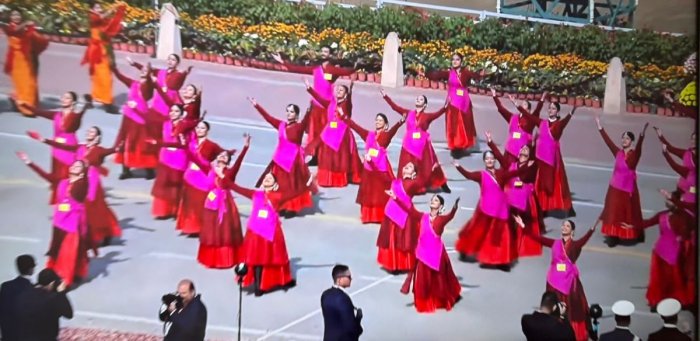 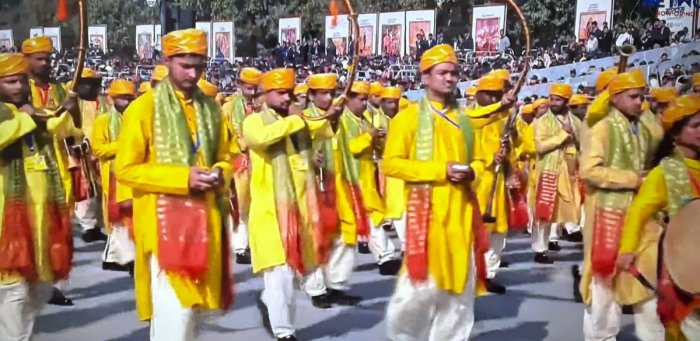 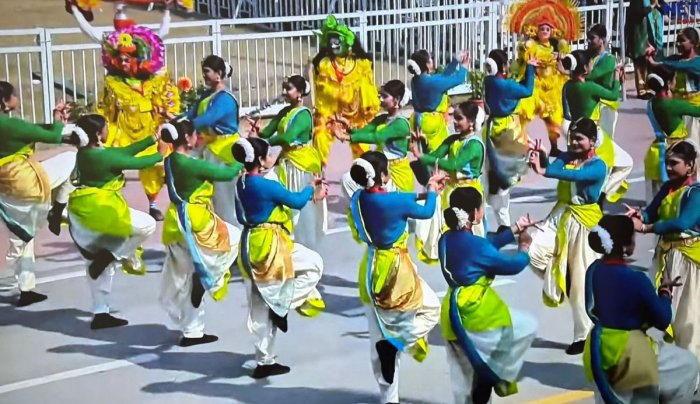 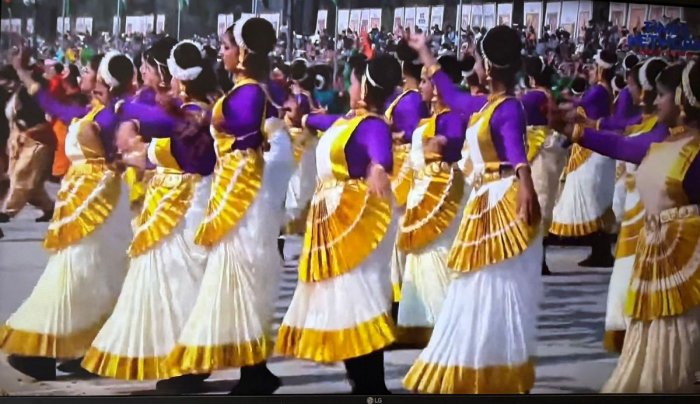 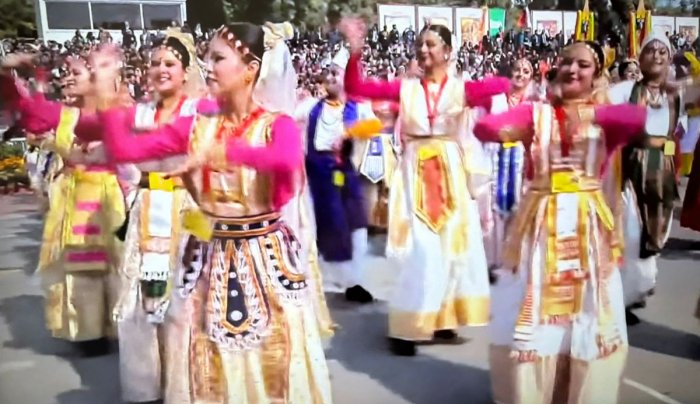 Sandhya Raman's costumes for the Republic Day parade The cultural show in Republic Day saw hundreds and hundreds of dancers literally running down Kartavya Path. The enormous stretch of the road forces only this kind of action. Dance the routine for 30 seconds to 1 minute. Run to the next point. Dance. Run. Repeat. Costume designer Sandhya Raman who created 10,000 pieces of colour coordinated costumes and accessories for the classical, folk and tribal contingent (complete with inner thermals, socks and footwear to combat the biting New Delhi cold) spoke of the intense pressure she worked under given a very short time frame to execute this mammoth project. Having worked as one of the choreographer/directors almost 20 years ago for the Republic Day cultural event, I am in total admiration of how hundreds of artistes from every corner of India would huddle in the zero degree winter cold and rehearse from 4am. It was an experience of extreme endurance and determination. On a different note, I felt a huge tug of pride when I watched our women in uniform AND the Indian dog breeds CHIPPIPARAI looking smart and alert, with sunglasses to avoid the dust! THE PADMA / LOTUS BLOOMS – AGAIN Congratulations to the Padma awardees in the field of ARTS. As the number of awarded dancers and musicians dwindle to single digits over the years, we cannot but appreciate the large swathe of silent workers in several areas of agriculture, science, industry, Indic history, education and literature who have been chosen for these national honours. VISAS & PERMISSIONS I have always wanted to ask one question of all the visiting artistes who hold foreign passports. Do they come to India on tourist visas to perform? In any other country, a professional visa is expected without which the dancer or musician cannot step onto the stage. Even a lighting designer cannot touch the console without proper papers. As far as I know, only NMACC and NCPA in Mumbai demand the proper visas from visiting performers. Most of the other presenters are nonchalant on this very important aspect of international cultural exchange. It will also be very interesting to see if there will be a dramatic decrease in the annual exodus of performers from India to the USA this year and the next. Already B1/B2 visas, P3 applications and H1B are experiencing nerve wracking delays. With so many dancers attached to their employed spouse visas in the USA, it is a continuing issue of stress. And for those reading this feel that the talk of economic Trade and Tariffs is not for them, think again. Dance tailors and other vendors connected with Indian dance and music who would easily courier costumes and accessories from India to the USA without duty are facing heavy customs fees. Now every piece of clothing and other requirements are being hand carried by parents, friends and students themselves. BANNING REELS A welcome decision by the organisers of the ritual performance of THEYYAM in north Kerala. Mobile phones shooting content for Instagram reels have been banned. The sanctity of the ritual was being tarnished with the increased interruptions of hands holding up cell phones during the performances. Like ARAYER SEVAI, the rare Vaishnavite performance ritual in Tamilnadu temples, it is high time that some moments are kept for in-person viewing and not for everything to be shot, edited and posted in the tsunami of social media scrolling. And immediately forgotten. I think it is only in India that even large festival venues are unable to ban illegal and unethical recording of dance and music performances in spite of the artistes making a request not to film. The same culprits would not dare lift those devices anywhere else outside India. They would be shooed and booed by the person sitting right next to them! WHO WANTS TO DANCE PROFESSIONALLY? 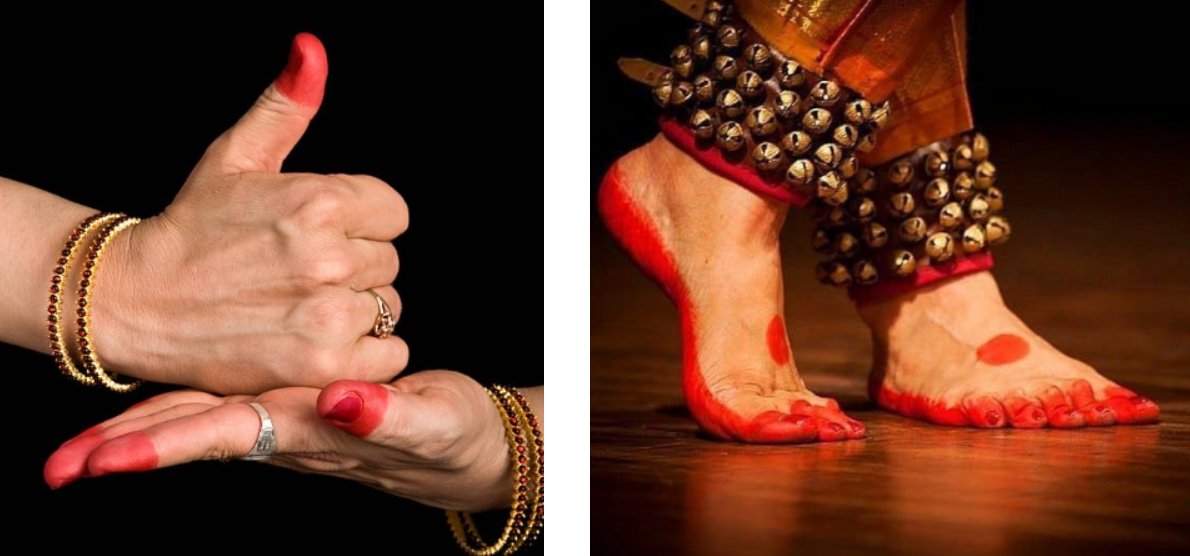 The open call for auditions for the next edition of NAACHIYAR NEXT created a flutter in Bharatanatyam circles. We received a flood of applications and more than 50% came from Bengaluru! So, I made a day trip to watch and talk to the dancers who had applied and came away with the sober realisation that today's young women (and some men!) in their twenties were all career focused. Most of them were Chartered Accountants and almost everyone had received excellent foundational training from their gurus. Watching a long day of auditions left me with the certainty that the standard of Bharatanatyam in Bengaluru is far superior to what exists in today's Chennai. The dancers are well spoken, eager to learn, quick to absorb new ideas and more articulate in their communication. However, very few were trained in music, something Chennai dancers had an advantage in. CHOREOGRAPHING CONTINUUM Photos: Kahali 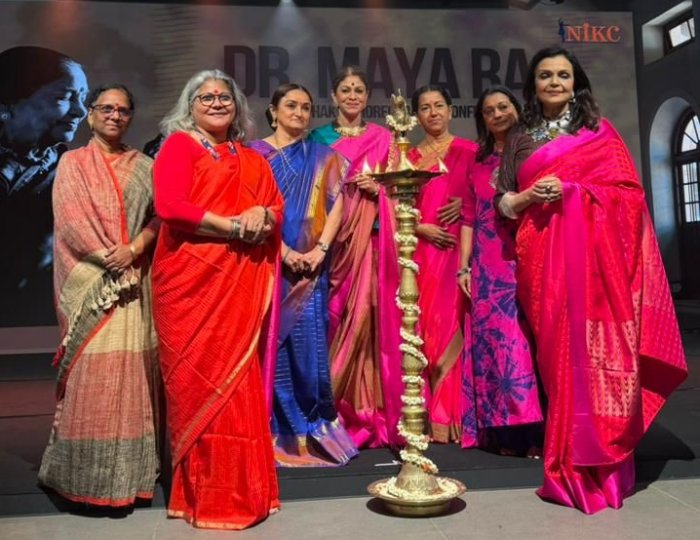 Inauguration 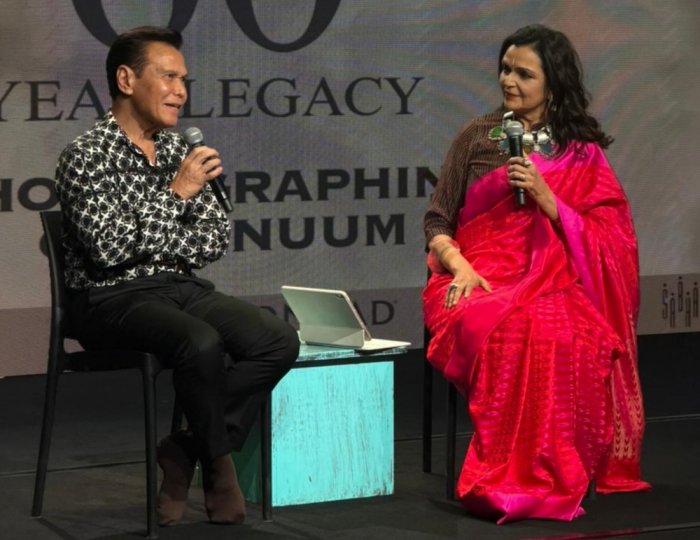 In conversation with Ramli Ibrahim 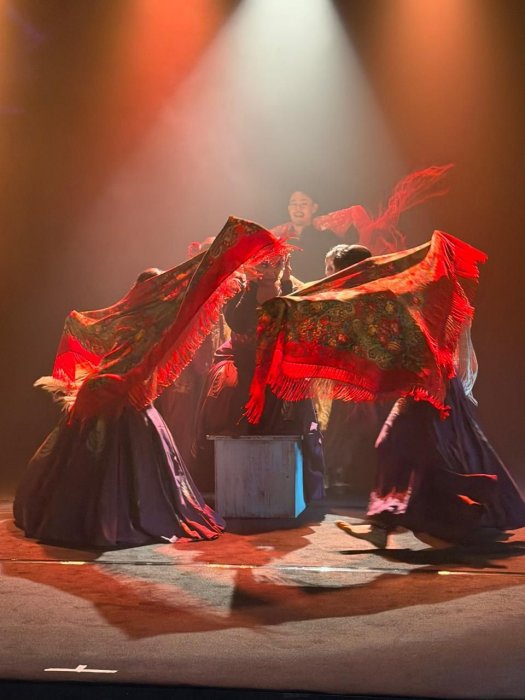 Esperanza Asha - Flamenco meets Kathak 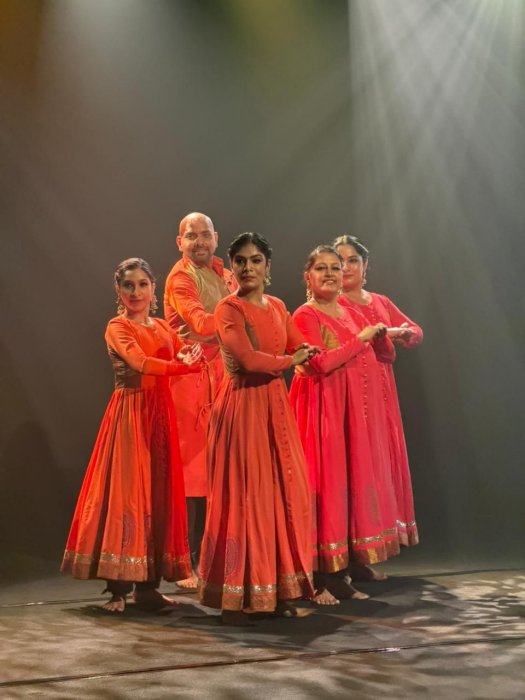 Natya ensemble 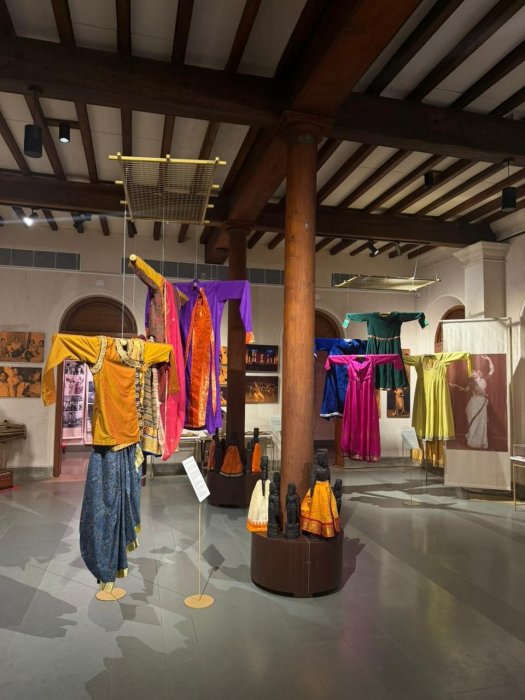 Exhibition On the final day of January, I was in Bengaluru for a meticulously curated day long dance conference. Presented by the Natya Institute of Kathak and Choreography, the 5th Guru Maya Rao conclave brought together ideas, provocations, design inputs and cross-cultural collaborations to invigorate and stimulate. A costume design installation by Sandhya Raman and Sreedevi Deshpande Puri displayed a visual history of NATYA's engagement with textile and flow. Dancer and arts entrepreneur Madhu Nataraj who heads her mother's institution can be justifiably proud of the many milestones this event has breached. 60 years of the Institute. 30 years of the contemporary STEM DANCE KAMPNI and more than half a century of cultural excavation that has unearthed choreographic gems and creative breakthroughs. Conversations about the early women in music, the urgent call for the arts to respond in today's times of crisis, excerpts from several of Guru Maya Rao's early dance works and a welcome glimpse into Madhu herself performing YASHODHARA made for a full day of exhilarating ideas and sparkling conversations. The audience was not restricted to the city's dance community and revealed the cosmopolitan nature of Bengaluru and the diversity of its citizens. Quite the change from what I saw at the Chennai dance conferences. Mostly preaching to the choir! As chairperson of the NATYA INSTITUTE FOR KATHAK AND CHOREOGRAPHY, I was in conversation with Padma Shri Datuk Ramli Ibrahim about ABSENCE AND PRESENCE within the idea of dance legacy. A first generation dance icon, Ramli spoke about the burden of celebrity and his pragmatic hopes for the future of SUTRA - of how his overarching celebrity status in a rapidly changing Malaysia continues to pose challenges to the arts and how he manages to stay focused with training, touring and being the best advocate for the syncretic nature of Indian dance and the live arts. The conversation will be available soon as a podcast so do look out for it! ANDAL CONTINUES TO RISE 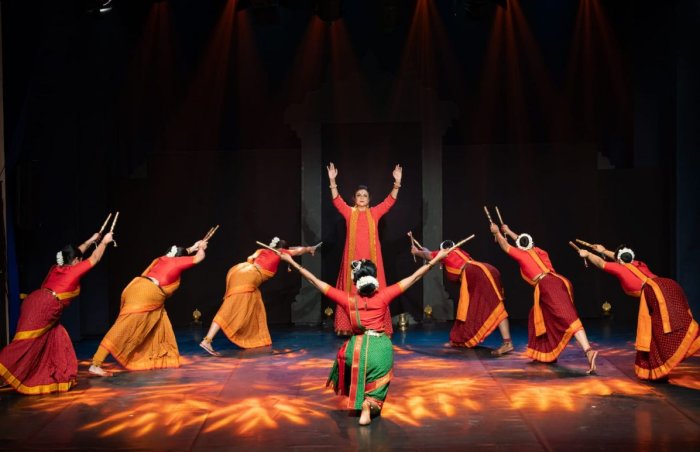 Naachiyar Next (Photo: Adithya Narayanan) I must share my heartfelt gratitude for the tremendous response to our January performance of NAACHIYAR NEXT. Tickets were sold out and as many as 75 people were turned away. The rousing ovation and the effusive comments after the show reminded me of the new wave of ANDAL popularity that has resurfaced once again. 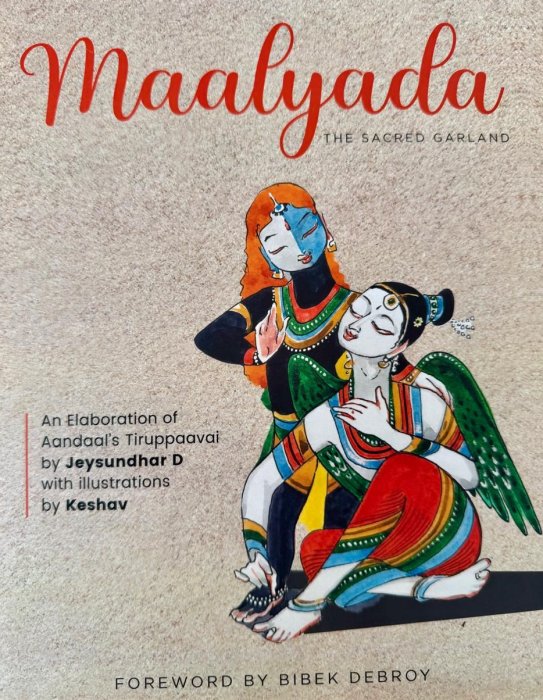 With Rama Vaidyanathan's MAALYADA (the sacred garland) now touring India, it is a personal moment of satisfaction that the words and imagination of GODA, the brilliant teenage poet who not only captured Lord Vishnu's heart, is mesmerising audiences everywhere. 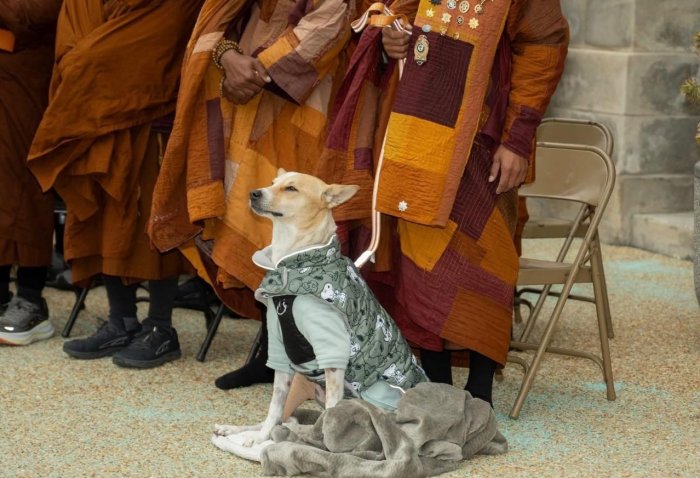 Aloka A heartwarming image has taken the internet by storm. A rescued street dog from India named ALOKA has been walking with monks across India and the USA. The march was started to remind global citizens about the urgent need to consider peace on earth. Let's close with the positive thoughts from tech billionaire Elon Musk from Davos, Switzerland. "I would encourage everyone to be optimistic and excited about the future. For quality of life, it is better to err on the side of being an optimist and wrong rather than a pessimist and right." So, until next time... JUST STAY SAFE AND HEALTHY! Dr Anita R Ratnam On the road again... anitaratnam.com Connect with us on Instagram and Facebook     Post your comments |
