
|     |
|
| |

ANITA SAYS..... Aug 1, 2025 "The death of classical ballet, long predicted, Never happens because a new generation of dancers always find themselves entranced by its discipline and drama" - Sarah Compton, dance writer in THE OBSERVOR, UK 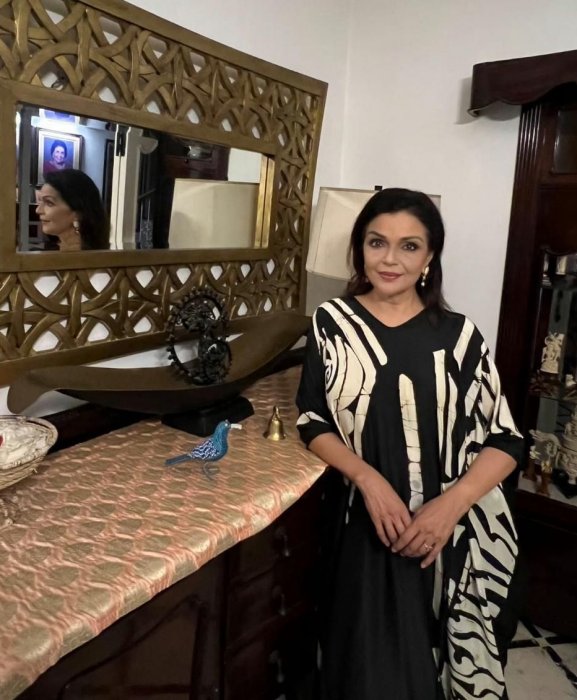 Hello everyone and welcome to August. The above quote, from a dance writer, can also be applied to Indian classical dance. Every year, we seniors knit our eyebrows in concern about falling standards, shorter time spans to train a student and the relentless pull of influencers and social media in shrinking imaginations. However, the inflow of new students in dance classrooms does not reduce. More and more parents seem to want their offspring to learn the classical arts. This month, I will discuss a diva's crossing over from centre stage to front page. A chameleon like cross dresser enduring across 7 decades, the growing menace of fake news exacerbated by technology and the power of movement to heal the plight of Parkinson's victims - there is a lot to unpack so let's dive right in! DIVA DEVI DANCER 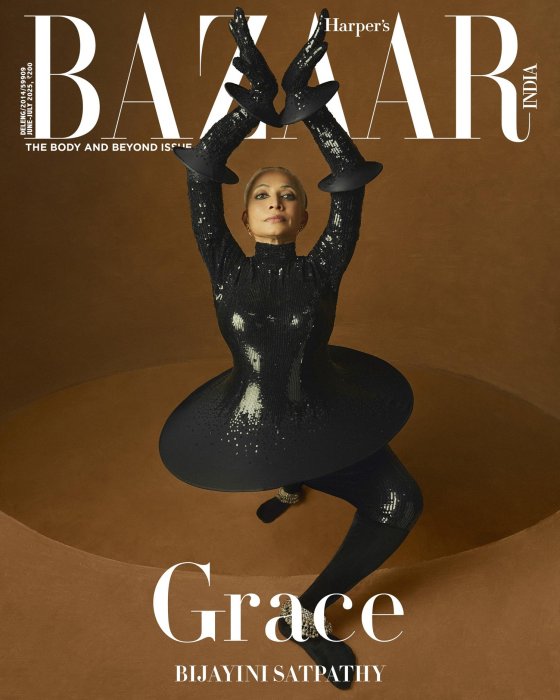 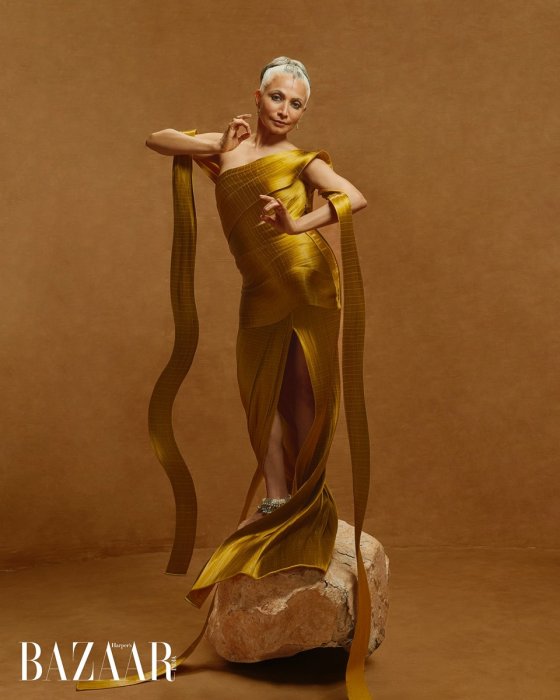 Bijayini Satpathy Just look at her! The powerful Odissi diva Bijayini Satpathy was glowing on the cover of BAZAAR INDIA. In shimmering black, photographed in a lunge that exuded star power, this 50-year-old global dance phenomenon has blazed her own trail ever since she departed from the NRITYAGRAM fold several years ago. In this arresting set of fashion/dance images, Bijayini spoke about the form she inherited from her gurus and the trajectory of exploration and expansion she has embarked upon. The pandemic brought her daily exercise and fitness routine to global audiences and her now impressive following of over 150k fans devour her fierce adherence to stamina, fitness and flexibility. Her Instagram reels are raw and unfiltered without many edits or clever camera angles. "Earlier we had 20 movements, 10 Chauka, 10 Tribhangi. I have expanded it to over 500 unique units. Each carries the essence of Odissi. Let it grow, let people try things. As long as the ODISSINESS remains, everything is welcome." I love fashion and have modelled from my teenage years for several brands and have even walked the ramp in fashion shows - one in Delhi directed by the OG couture diva Ritu Kumar. It fills me with joy to see another dancer making that cross over into national headlines. There are not that many performers who have a natural affinity to the changing modes of Indian fashion and the BAZAAR edition with Bijayini in stunning drapes and photography propelled her in a totally new avatar. The photo series was titled GRACE and each image contained that as well as a coiled sense of power. Bravo! Bijayini is one dancer who uses her Instagram handle to share parts of her process. With weights, exercise bands and other props, she has moulded her body to dance to full capacity. Today's younger generation has taken Instagram perhaps a tad too seriously - hoping that a cleverly edited reel will garner them not just followers but also performance gigs. Today, there are several presenters across the world (not yet happening in India) who look at a dancer's social media presence and curate accordingly. There are dangers to this method. In most cases, the Insta dancers are not able to fulfil the demands of a live performance and the fan following does not always translate into "bums on seats". Instagram and the stage are two vastly different and parallel realities. ARE YOU A SWAYAMBHU? One glaring aspect emerges from scrolling through many young dancers' handles. Among the many eye-catching images on the grid, one question emerges. WHO IS THE GURU? Almost always, there is no mention of their training or who they learned from. The short bio below their profile picture is mostly filled with clever turns of phrase but the guru's name? Almost never mentioned. These Insta-Divas and Devas actually believe that the follower count, Story replies, Reels and Posts gives them absolute authority over the dance eco system. They actually believe in their own carefully manicured mythology. Throwing malicious innuendoes and gossip on another's character and not following up with proof is another irresponsible danger of social media. Here I have to acknowledge the power of digital Influencers and their ability to endorse, spotlight and have access to multiple freebies and glamorous red carpet events. Restaurants, retail establishments, hotels and consumer enterprises now regularly hire Instagram and YouTube stars, paying a hefty fee, to bring customers to their physical spaces. However, that is not the reality in the Indian or global dance world. Bijayini's growing fan following brings her fans and students. However, international curators are not swayed merely by her Instagram presence. They know that it takes more than a 3 or 5 second opening to bring audiences into the theatre again and again. An hour-long dance performance unfolds slowly with a gradual building dramatic arc. The social media reels serve only as a "hook" to draw students to her immersion capsules and perhaps a small percentage of audiences into her real world of dynamic charisma ON STAGE. REEL LIFE AND REAL LIFE 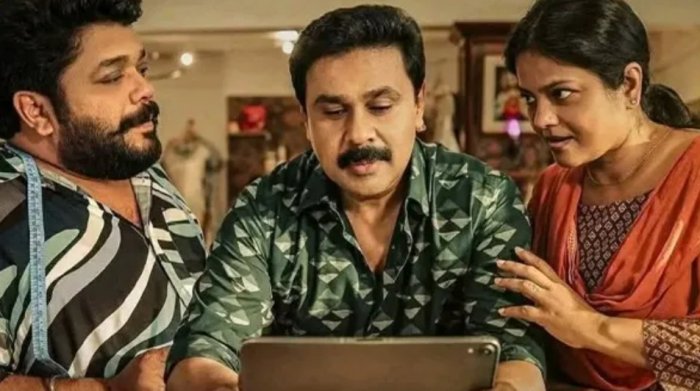 Prince and Family The dangers of becoming obsessed with social media has been amplified in an excellent Malayalam film PRINCE AND FAMILY. A shy man marries an extrovert who is bent on increasing her social media presence. She ropes in her in-laws from bedroom to kitchen like a reality show and also fakes her pregnancy for views. The bubble of excitement bursts when her obsession threatens her marriage and her fan following. Real life and Reel life collide and combust. The reduced ant like image of a dancer on our hand-held devices or Ipads may be like a business card for potential presenters and curators. However, unless a full-length video of the performer is shared, there is no sure way of assessing his/her/their capacities and talent. To put in that daily grind (there is no other way of describing the ABHYAASA) is the ONLY way to climb those steep steps to becoming a compelling stage performer. A clever camera person, a telegenic presence and a skilful editor do not make for the reality of a Bijayini Satpathy and other remarkable artistes of today. 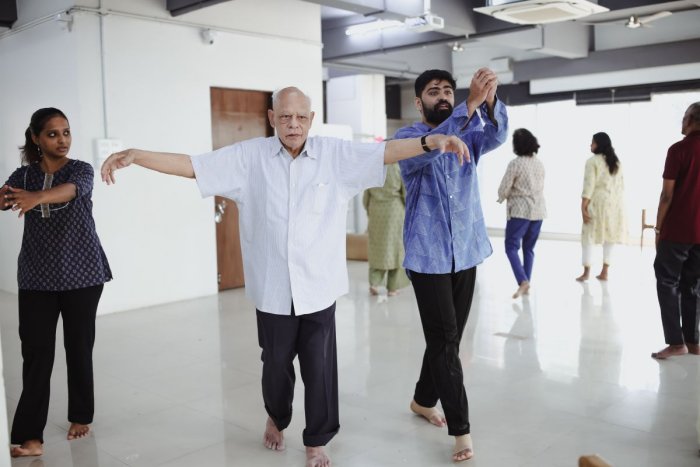 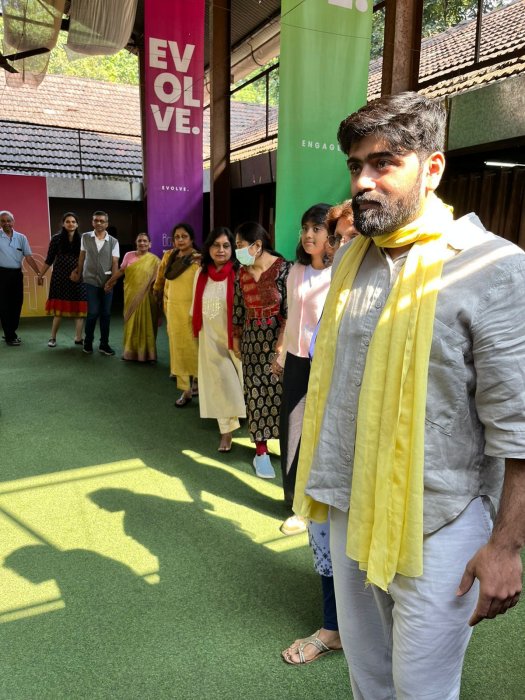 Hrishikesh Pawar with Parkinson's patients Everyone wants to be on stage these days. However, there are some dancers who have veered course and have taken their training, coupled with huge dollops of empathy, to teach movement as a cure for Parkinson's Disease. This condition that gradually attacks the central nervous system is often characterised by hands and the head constantly trembling. It has been proven that gentle movements akin to a dance can make a significant difference to the patients. It boosts Serotonin which in turn helps elevate the mood. That is what Pune based contemporary artist Hrishikesh Pawar has devoted his life to. It is a difficult and certainly not a glamorous role, to patiently guide patients to move. Just watching their faces light up in relief and positivity are moments that Hrishikesh waits for. While I have not observed him in Pune, where he lives, I had the opportunity to attend a session that he conducted a couple of years earlier at the Natya Kala Conference in Chennai. It was just a glimpse into the intense patience, perseverance and commitment that Hrishikesh and his team show in this very delicate area of physical and mental health that was most revelationary for the observers. In today's climate of LOOK AT ME, these moments remind us of the fragility of our bodies and how short-sighted our horizons can be. AN OUT OF SYNC TRADITION July 10 was Guru Purnima, the day to honour our teachers and guides in the journey of learning and self-discovery. Growing up in South India, we dance students did not observe this day which is celebrated enthusiastically in the North. It was only on Dussera/Vijaya Dasami, the 10th day of Navaratri, that we South Indians visited our guru with a tray of sweets and a gift. Even today, Dussera is the day when new students in South India are enrolled to begin their own journey in dance. We were never told that washing the guru's feet was a traditional practice. Touching a guru's feet before and after class was perhaps a ritual in some schools. In Kalaripayettu class, we reached our fingers to the lamp that was lit in one corner as a homage. We did not touch the Kalari Asan's feet before or after class. This year, however, on Guru Purnima day, we were assaulted on social media by cringe worthy images of numerous teachers having their feet washed by students. This practice may have had some relevance a century ago but it is time to end these regressive practices. A different method must be imagined to recognise our elders and teachers. In a rapidly changing world, this act screams of regressive feudalism and hierarchical divisions that do nothing to advance the positive image of the classical arts. DIGITAL DANCE CONTENT 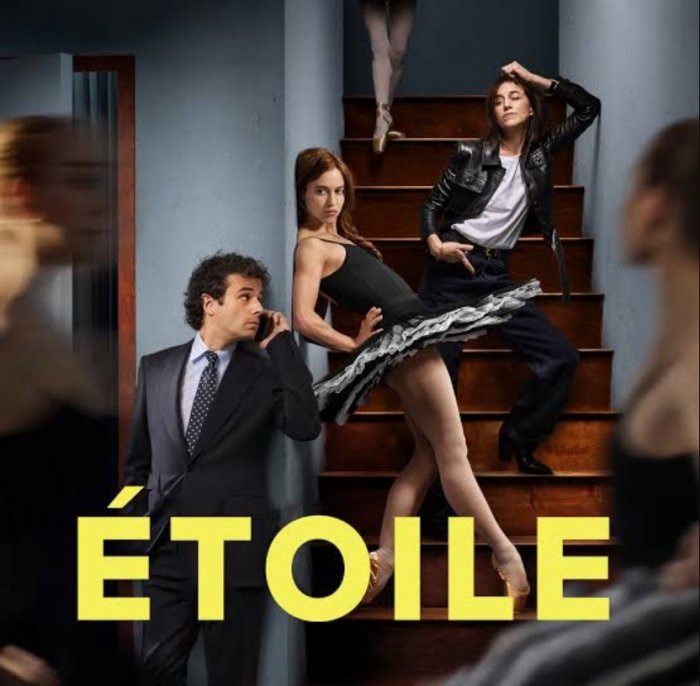 We are all watching films and television shows on streaming platforms but there are not that many engaging fictional stories about dance and dancers online. On the recommendation of a friend from Los Angeles, I started watching the ballet inspired drama-comedy show ETOILE. Two struggling ballet companies, in New York and Paris, embark on an ambitious plan to revive their flagging fortunes. In a daring marketing plan, they swap their major dancing stars across the ocean. What ensues is cultural confusion, fiery arguments and ego clashes. What we also see is the arduous, often punishing rehearsal routines, backstage drama and fragile personalities of dancers. The enormous demands of the art and the punishing fallouts of failure. Superb dancing, great cinematography help a scattered story line. If you are a dancer or love dance, do give ETOILE a look. It has been cancelled after Season 1 with poor ratings but I loved the entire 8 episodes. 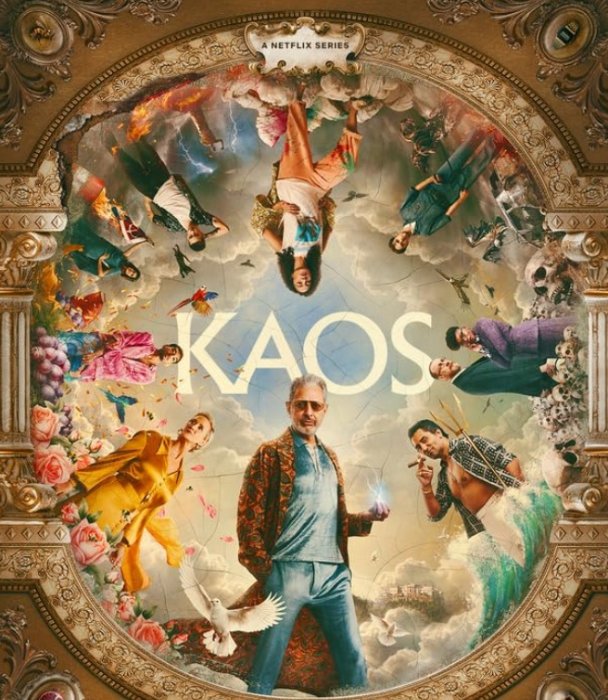 Do we take ourselves too seriously? Yes, we do. With the classical arts being yoked to temple, ritual, respect, sacred poetry, mythology and beyond, many of us walk around with imaginary halos believing that WE are the divine incarnate. While this attitude alienates so many from our phenomenal art, most of the intention of the classical arts is not filled with humour or moments of mirth. It is with this thought in mind that I highly recommend the Greek mythological mini series called KAOS. It is a contemporary and lighthearted reimagining of well-known stories, led by the selfish Zeus and his feuding wife Athena. There is the play of power politics, gender equality and life in this divine realm. If we examine Indian mythology closely, there are many a "faux pas" that our Gods, Goddesses and other characters make. Flubs, atrociously bad decisions, infidelity, monstrous egos that end up as an embarrassing mess, making the heavens scramble to save their heroes from total disaster. In today's atmosphere of cancel culture we are not allowed to even mention these incidents. That is what makes KAOS special. It unabashedly pokes fun at all the stories, the icons and their laughable posturing. The great Gods and Goddesses are sometimes petty, childish and so "human". I watched KAOS with a smile on my face throughout. Give it a try. DEBUTS AND MORE The ARANGETRAM season is coming to a close. While I speak about the world of Bharatanatyam, especially in the diaspora, there are hundreds of Arangetrams being staged right here in India. If anyone has examined the list of dance items that are listed on the expensive brochures of the debut student, there is almost always no mention of a Jatiswaram or a Sabdam. Today, both dance pieces, essential building blocks to a student's learning ladder, are conspicuously missing. For anyone who has rehearsed the sequence of ALARIPPU, JATISWARAM and SABDAM before arriving at the VARNAM, they can vouch for the enormous amount of stamina and energy reserves that is required to get through the first three pieces before embarking on the expansive VARNAM. Nowadays, the opening items are mostly MALLARI, a KAUTHUVAM, another light piece and then directly to the VARNAM. This feels unfinished and one does not get the true measure of the young dancer's ability. With teachers becoming gurus as early as in their twenties, there is also the YOUTUBE trap that many have fallen into. Dance pieces are studied on this digital platform and then added to the repertoire. The historical context of the composition, the meaning of the lyrics and other important markers are cast aside. Professional mridangists who are busy during this season often accompany the debutante dancer by LOOKING DOWN AND AWAY from the stage and not at the feet of the dancer! They do this, they say, as to not become confused with the out of rhythm of the performer and the wrong way of "nattuvangam" that many of the younger gurus make! Hmmmm!!! I have attended many Arangetrams where the teacher/guru only wields the cymbals/nattuvangam with the mridangist saying the "bols" or "jathi" patterns. So, it has come to become a rarity that a guru can actually conduct a dance performance by being able to utter the pneumonic syllables AND play the talam. What have we come to???? I am also including the one-upmanship that so many parents are attempting during this season of presenting their daughters on stage. By now we are all used to the lavish brochures, buffet meals, take home goody bags that accompany these Arangetrams. Now imagine large life size image of the debut dancer as an ICE SCULPTURE? Yes, this has also happened! In the sweltering heat of July or August, the arriving audience is greeted by an ice sculpture melting in the heat! Don't be surprised if the dancer arrives in a helicopter soon! The mounting expenses and ostentatious "show-off-manship" for these "once in a lifetime" Arangetram events will continue to amaze us! Now, if only the parents who have invested 10 to 12 years in their child's cultural education can continue their generosity to the institution that gave their beloved offspring such valuable tutoring by becoming patrons, board members and advocates for dance, the economy will not be in a perpetual state of poverty. There is also a provision of endowing an annual donation to an arts institution as part of one's will. If only the debut dancers themselves stay connected to their Alma Maters and support the institutions through their professional lives, so much more can be developed in the eco system that is currently running on the poverty train to nowhere. 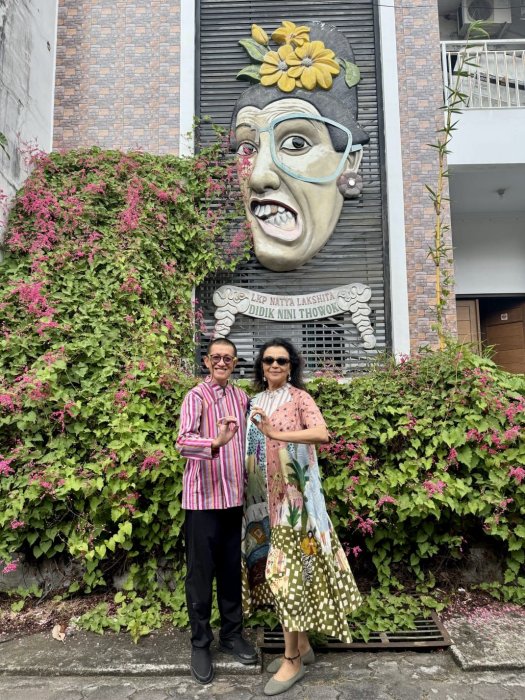 With Didik Nini Thowok I cannot think of a month where I was in two countries with two dance icons and enjoying their company both on and off stage. Early in July, I spent a day with the Indonesian performer and national star DIDIK NINI THOWOK. His studio in Yogyakarta is like a veritable museum, filled with costumes, awards, posters, plaques, art installations and much more. This 70-year-old maestro is a master of dance, music, shadow puppetry and is a national icon of cross dressing. From watching him unpack a new costume which he carefully placed on me, to conducting a Javanese dance class that looked like a perfect movement meditation and ending the day watching him on stage in a prologue cameo before the country's beloved RAMAYANA play, I was amazed at Didik's ability to morph into various avatars using a variety of props, masks, head dresses and changing body language. A master of disguise, movement and acting, I knew I was in the presence of an extraordinary artiste. And his humility was the icing on the cake! 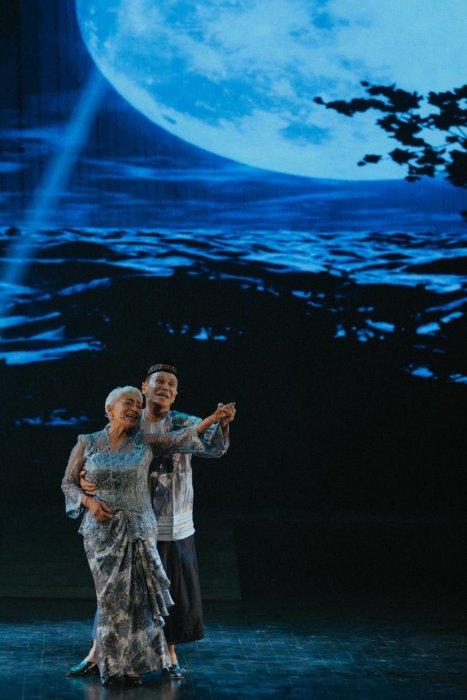 Ramli Ibrahim & Mazlan Othman in Meniti Cakerwala 2.0 Later in July, I was invited to watch the Kuala Lumpur presentation of DATO RAMLI IBRAHIM's newest stage adventure MENITI CAKERWALA 2.0. In what is a first for Malaysian theatre and dance, Ramli has collaborated with renowned Astro Physicist Mazlan Othman in a coming together of contemporary dance, multimedia and music. The story of the galaxy, the arrival of Haley's Comet, the Black Hole, combustion of Atoms and more were discussed briefly in short sequences by Tan Sri (one of the greatest titles like a PADMA VIBHUSHAN) Mazlan Othman. She was surrounded by the SUTRA dancers and sometimes even moved gently with them. The intellectual first half was followed by a more engaging second section where the Sun (Aditya/Surya) and the moon appeared. It is here that the audiences, in the gracious presence of Malaysian royalty, truly warmed up. Ramli became narrator, actor and dancer - even singing an old popular Malaysian love song in a charming duet with Mazlan. The unusual evening ended with the poem of the Irish master wordsmith William Butler Yeats' CLOTHS OF HEAVEN. I have spread my dreams under your feet Tread softly because you tread on my dreams 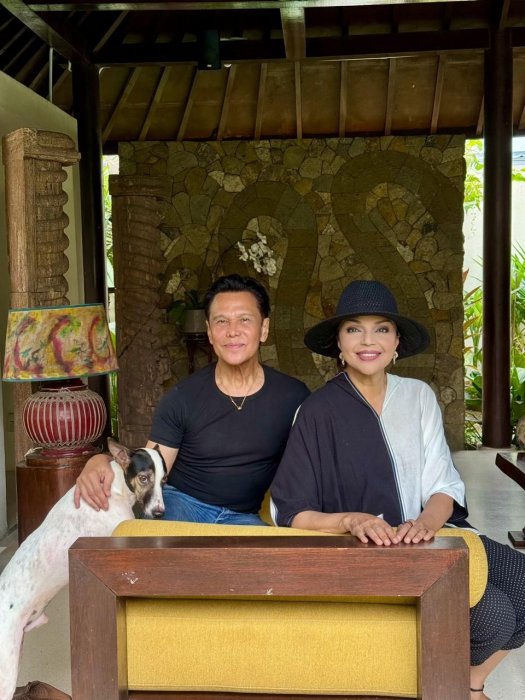 With Ramli Ibrahim With Ramli Ibrahim, I share 45 years of friendship. Both students of Guru Adyar K Lakshman, we have remained connected through dance and much more. When I visit and stay as a guest in his gorgeous home, filled with trees, lush landscapes and pools brimming with Koi fish, I am truly grateful to have a life filled with opportunities to link with extraordinary individuals who have committed to the live arts in an age of instant everything. It takes more than a lifetime to make a dancer. Years and years of commitment in the pursuit of improvement. As we listened to a jazz singer and sipped coffee at this favourite bistro on a lazy Sunday, I felt a wave of gratitude to be able to connect through the "sutra" of dance with Ramli and so many other "NATYA SOULS" on this planet. Watching Ramli's SUTRA dancers on stage reminded me of the fact that they are exposed to perhaps one of the most diverse training pedagogies in Indian dance today. Besides Bharatanatyam and Odissi, Ramli teaches them the basics of ballet (pirouettes, twirls and leaps), some elements of modern dance from Martha Graham, Jose Limon and some exercises to facilitate floor work. I could spot the many strands during the performance and admired the way some of the senior dancers like Geetika Sri had synthesised these movements over 20 years without any kinetic conflict in her body. 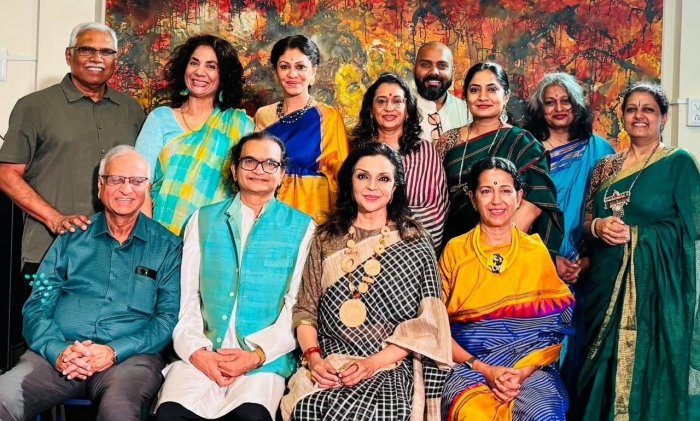 Board of Natya Institute of Kathak & Choreography The month concluded with my new position as the Chairperson of Guru Maya Rao's NATYA INSTITUTE OF KATHAK in Bengaluru. I had served as Vice Chairperson of this dance organisation for several years and now my responsibilities have increased. There is a landmark conference being planned in New Delhi in November and a film on the life and art of visionary guru Maya Rao, who also was one of the founders of NATYA BALLET CENTRE. Now, 60 years later, her daughter, award winning contemporary dancer Madhu Nataraj, is bringing her mother's grand legacy to the national stage. 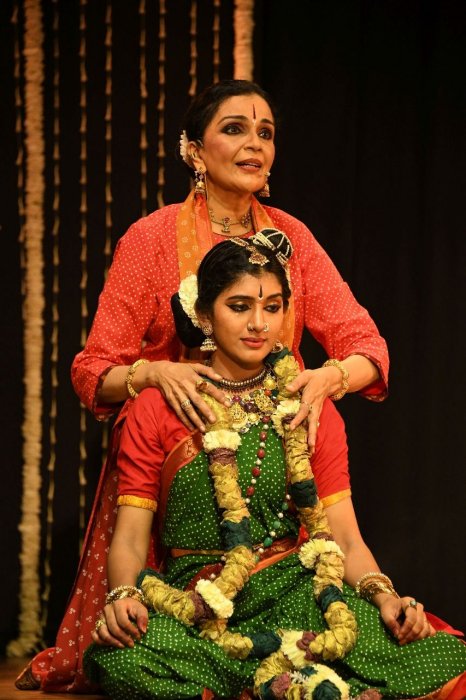 Naachiyar Next As my dancers regroup for another round of touring and performances for NAACHIYAR NEXT, I close with the prayer for all in the group and for all those young dancing energies out there. I am meeting the NAACHIYAR group after a break of 4 months and so much has happened in their lives. To bring freshness and a NOW factor in a beloved production takes a lot of thought. Why tamper with success, I often feel. But there is more to do. A gesture here, a moment held for a second longer there. My own narration and body language, which requires a careful re-examination. ANDAL lives on in many forms. She deserves my close attention and respect each and every time. 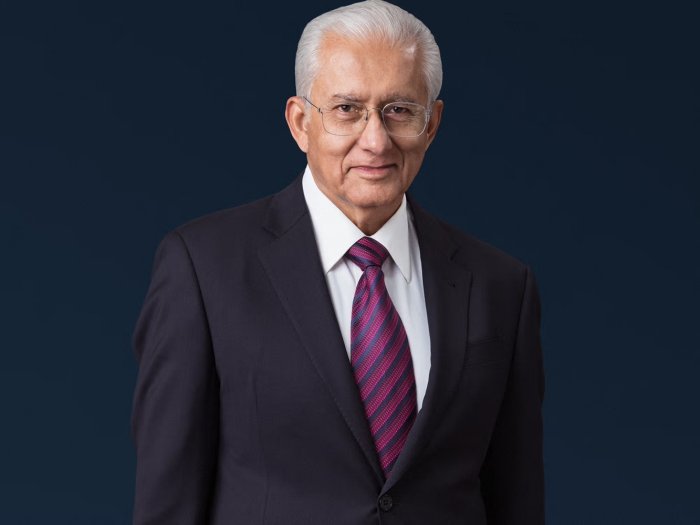 Tino 'Anupam' Puri I close with the unfortunate news of the passing of TINO (Anupam) PURI in New York City. For decades, Tino, as he was known to friends and family, was the champion and supporter of Indian dance in New York City. He completely believed in his wife, Rajika Puri's vision for the mainstream visibility of Indian dance in the competitive arts landscape of the Big Apple. Through his generosity, Rajika was able to create and sustain so many individual dancers as well as build brands like DANCING THE GODS, the annual Indian dance festival. I was grateful to have met Tino while I was in the city in May. His urbane charm, intelligence and an affinity for all the finer aspects of life and living was indeed unique. Our thoughts are with Rajika Puri, who is herself very unwell. We may never witness such a period of generosity and cheerleading for Indian classical dance in NYC again. The spirit of generosity should never stop. To care for our bodies that tell the stories we share. To honour our elders and colleagues in this incredible dance art that binds us. To cherish every breath we take until the final horizon. Until next time, Anita R Ratnam anitaratnam.com Connect with us on Instagram and Facebook     Post your comments |
