
|     |
|
| |

ANITA SAYS..... Apr 1, 2026 Behind all these manifestations, Is the one radiance Which shines through all things The function of art is to reveal this radiance Through the created object - American mythologist Joseph Campbell In the TV series THE POWER OF MYTH 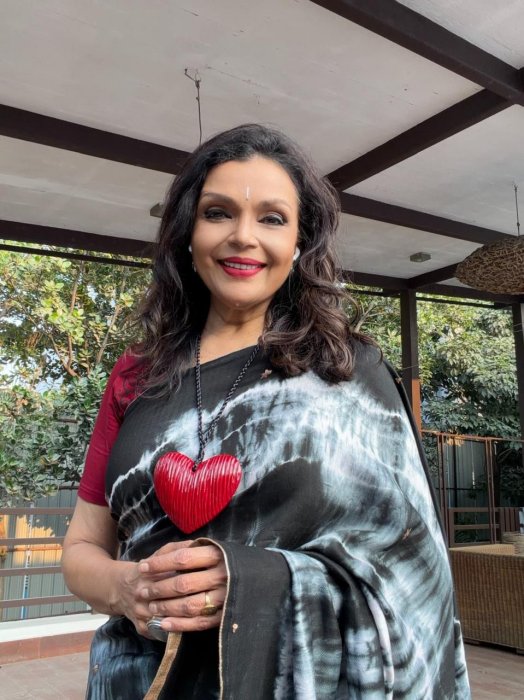 In the shadow of a brutal war still continuing in the Middle East and its consequences spreading across the globe, I share my monthly musings. To be honest, it feels strange to talk about "dance", "performance", "culture" and the Arts when all we see and read is more and more bloodshed and devastation in the news cycles. And to think that I transited through the now damaged Dubai airport on my way home from South America barely 4 days before the mayhem began! My personal thoughts about the value of the live arts in the current "theatre of war" seem almost puerile against the bombardment of heritage buildings and precious architecture that we are seeing crumble before our eyes. Perhaps this is the very contradiction that should be a sobering reminder of what really matters in our lives. March started with a flood of dance performances. It felt like a wave of excess after my sabbatical in February. For eyes like mine, who have seen so many performances across the world for 50 years, it needs something very special to make me focus and sit up. Fortunately, some dancers did make me smile in admiration. The JHARNA dance festival, curated by Satyajit Dhananjayan and team, has emerged as an alternate space for neo classical and experimental dance presentations that are rooted in classical vocabulary. For the past 5 iterations, the Bharata Kalanjali auditorium has attempted to transform itself as a hub for classical learning, experimental ideas and multi genre presentations. Though situated outside Chennai's hub of Mylapore, Adyar and T Nagar, the dance centre is gradually becoming an interesting venue for classical dancers who dream differently. 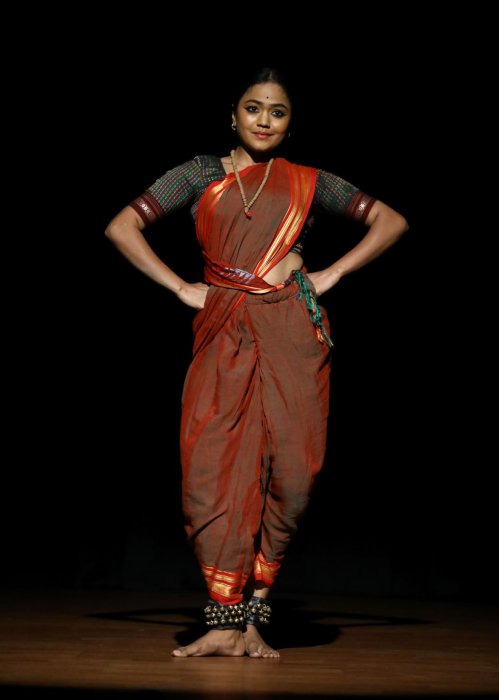 Vaishnavi Dhore (Photo: Iyappan) On the day I attended, the opening solo was by Vaishnavi Dhore, a student of Rama Vaidyanathan. Vaishnavi was imagining the life of a Marathi Bhakti poet Bahinabai Chaudhary through a riveting performance. Beautifully danced with a stunning sound track led by the powerful vocals of Sruthi Veena Viswanath, the life and devotion of Bahinabai left every audience member stirred and emotional. The dramaturgical aspect needs some work and the flow of the piece can benefit with some pacing adjustments, but here is a dancer worth watching. 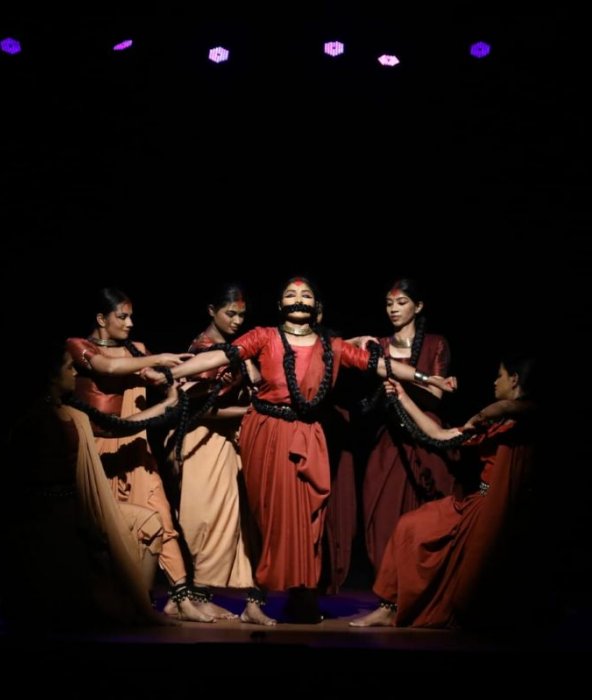 Pinnal 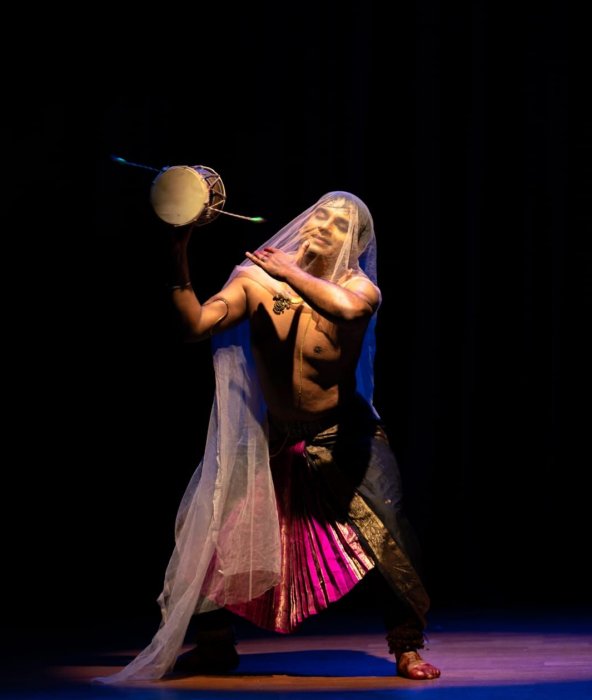 Himanshu Srivastava I heard many compliments on the performances of Divya Nayar (PINNAL) and Himanshu Srivastava (THE FORGOTTEN GOPI) and am very pleased to see the rise of these two noteworthy talents in the dance scene. Himanshu illuminated the lesser known story of how Lord Siva yearned to watch the spectacle of the MAHARAAS in Brindavan where Krishna led thousands of Gopis in a circular trance. As only women were allowed to participate, Lord Siva was then forced to transform into a feminine form to witness the event. The fluidity of inner transformation, the awakening of intuition and empathy was narrated to me 25 years ago by Sadguru himself at the ISHA centre near Coimbatore, Tamilnadu. My dance ensemble created a choreography on the spot as he was sharing this rare tale to his assembly of devotees. I have written about Divya Nayar after the December 2025 SERENDIPITY FESTIVAL in Goa. There she did a solo titled BHAGAVATHI. For JHARNA she presented her DAKSHINA repertory in PINNAL, a layered narrative about women, sisterhood and resilience quilted by the visual representation of a woman's braid. The remarks I heard from several rasikas was that it was "well conceptualized and excellently executed". NN & GEN NEXT 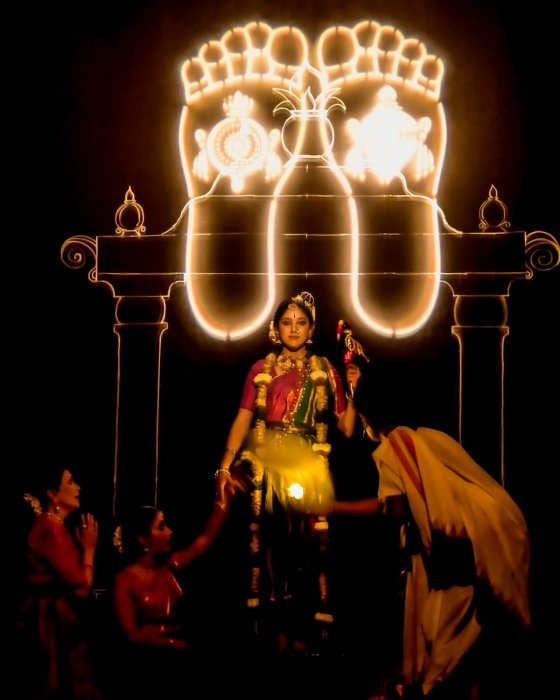 Naachiyar Next (Photo: Aswin Vijay) Working with dancers nearly 50 years my junior for yet another iteration of NAACHIYAR NEXT was a huge learning curve. This widely admired and lauded work, created in 2019, has embraced many dancers in its 7 year avatar. For this latest outing, four of our regular dancers were unavailable and it forced us to audition and select 6 dancers (we auditioned nearly 65 in Bengaluru and Chennai). The audition itself was an eye opener, watching bodies with poor posture - rounded shoulders from too many hours of digital watching - displaying technical competence but mechanical dancing. When it came to the final selections and the moment of transference of the choreography, it developed more challenges. The new set of dancers were all in their twenties and are firmly ensconced in their own silos. Students of well known gurus, it was surprising to see a lack of ensemble awareness in group dynamics. Perhaps because each of them were from different schools of Bharatanatyam and had never met each other before, the camaraderie had to be built from scratch. Fortunately, some of the senior dancers took charge in teaching them the choreography before I stepped in. My normally impatient tongue was held firmly in check. I was told by a wise Arts Manager that today's generation of dancers are akin to a PLUG AND PLAY community. Concentrate on them during the rehearsals and do not expect research or reading to be done after the sessions are concluded. Learn to give them just enough context to absorb and stay interested while not overwhelming them with dance history (zero interest). Do not invest emotionally in them. It only wears us out. Very wise words indeed! It is only when travelling that we observe the personalities and attitudes of the dancers outside their home environments. We notice who is willing to go the extra mile - helping with the luggage, props, costumes, green room etiquette AND reporting on time. Gurus who are reading this will be nodding their heads vigorously because each dancer reveals an individual personality. Group cohesion comes gradually, and in this case, we did not have the time to develop this aspect with the NAACHIYAR NEXT ensemble. Still, some in the new set of dancers surprised me with their willingness to go the extra mile to ensure that everything went smoothly backstage. One hour on stage and 23 hours together reveals a great deal about character, adaptability, the ability to adjust and a readiness to think on one's feet. Today, when train travel for artistes has almost disappeared, there is less time to gauge a dancer's off-stage persona. As we prepare for the next season of this acclaimed show, a new awareness has seeped in. Rehearse the dancers, stay emotionally distant (as much as possible) and make each rehearsal count. Keep extra dancers as back up and prepare for last minute health emergencies. Millenials and Gen Z dancers! You keep us on our toes! Never a dull moment! WHO REALLY CARES? (For BALLET, OPERA or BN?) 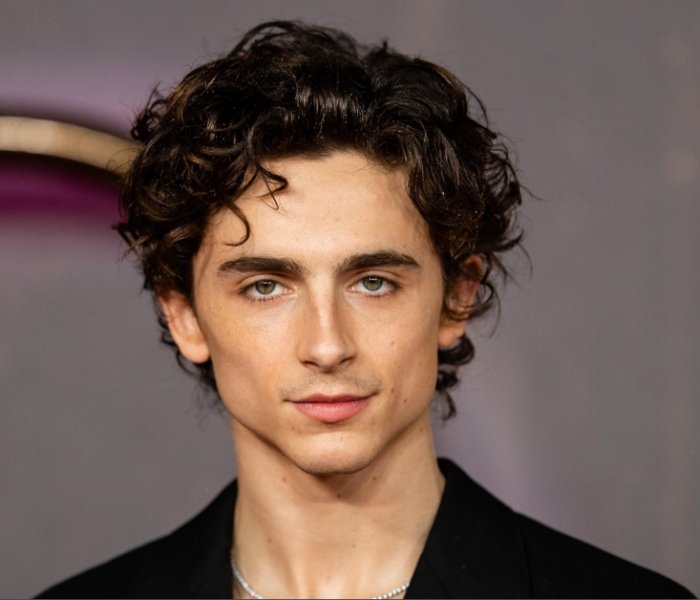 Timothee Chalamet Who would have thought that a careless remark about ballet and opera would create such a firestorm across the US? Oscar nominated Hollywood actor Timothee Chalamet uttered a remark on the CNN television network that made headlines and spurred the dance and arts community to respond swiftly and strongly. Chalamet referred to the diminishing interest in opera and ballet. "No one cares about this (Ballet and Opera) anymore. I don't want to work on keeping this thing alive." Ironically, the actor's grandmother, mother and sister were trained in classical ballet. So, the actor did grow up in the atmosphere of dance and its demanding discipline. His comments unleashed a storm of protest across ballet and opera companies in the USA who came out in strong defence of the classical forms. Memes, snarky retorts, several dance companies offering him discount tickets flooded social media. The controversy reached a peak at the 98th Academy awards on Sunday March 15, where prima ballerina Misty Copeland came out of retirement to do a short performance and the Academy committee staged a cameo of an opera singer and a ballet dancer as a duo. The actor himself arrived on the red carpet wearing a ballet TUTU. Chalamet lost his Oscar bid but his stoic behaviour and public take down during this entire episode was also noteworthy. What if we transplant this comment to the Indian context? Who really cares about the classical arts any longer? Especially classical dance? Fewer and fewer it seems. Teachers are slogging away in their respective studios and modest rehearsal spaces teaching groups of dancers in what is essentially a solo classical art. The financial support from corporate shows has shifted from classical presentations and neo classical work to mostly film and folk accented group dancing for conventions and urban gatherings. Often, there is a mandate that the crowd must engage with the dancers at the end of the show to represent "inclusivity". So, often these glamorous urban bubbles culminate in a free for all Bhangra/Garba or whatever moves and shakes the individual. It reduces years of hard work and discipline to a public Tamasha. Even the embassies are requesting this kind of mish mash from travelling dance companies! The more important question is - IF THESE SENTIMENTS WERE EXPRESSED BY ANYONE WHOSE FAMILY HAD A CLOSE CONNECTION WITH INDIAN CLASSICAL DANCE, WOULD THERE BE THE SAME REACTION AND OUTRAGE FROM THE INDIAN DANCE COMMUNITY, PRESENTERS, ARTISTES AND CULTURAL ORGANISATIONS? I doubt it. H-I and AI Alarm bells have sounded about the havoc that AI can wreak and is wreaking upon many job sectors. As thousands and thousands of workers are rapidly becoming irrelevant with this new technology, it is the HI - Human Intelligence of the live arts - dance, music, theatre and puppetry - that will endure as living examples of what AI cannot achieve. The discipline, focus, clarity, adaptability, technique, execution, research & development process and delivery mechanisms rival any scientific laboratory or manufacturing process. Engaging with anyone in the left brain world will reveal how much dance can lead this new collaboration with AI. The on-the-spot improvisation and explorations (MANODHARMA and SANCHARI) are an area that AI cannot enter. The going "off script", especially in the Indian classical arts is a gift we often overlook. Life experience, wisdom from failures, being deeply human is what AI can never grasp, no matter how sentient it becomes. While lighting and costume designers are using the AI template to begin mapping their ideas, there are some independent projects in India utilizing AI technology to create stand alone projects. 108 KARANAS coming alive using mathematical calculations and AI to come alive as dancing sculptures. A contemporary dancer paired with an AI avatar for a duet. As musician and educator Anil Srinivasan summed up succinctly: "Human factor recognition is instinctive and faster than AI. Think of it as a collaborator and not a competitor." OLD IS GOLD For all those millennials who sleep with their phones under their pillows and wake up to scroll as the first activity of the day, take pause and reflect on this. 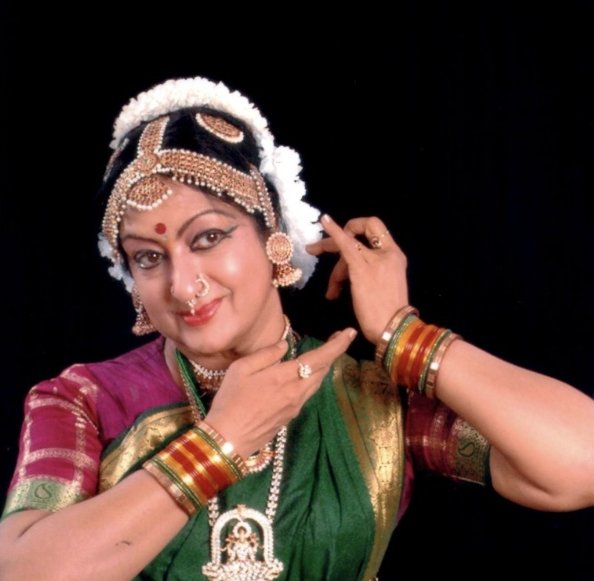 Padma Subrahmanyam 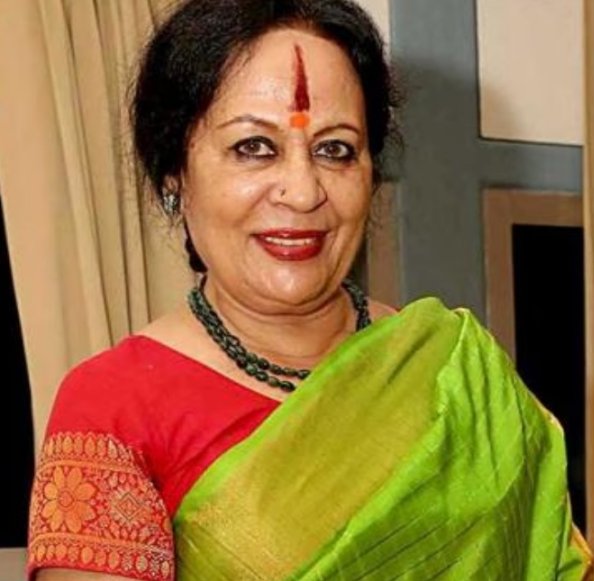 Sonal Mansingh Two stellar dancers - 84-year-old Padma Subrahmanyam and 82-year-old Sonal Mansingh captivated New Delhi audiences with separate solo shows in March. Admiration and applause for their long and illustrious careers of over 65 years! Staying the course, not flinching from controversy and keeping a fierce focus on the power and purpose of the live arts has been their calling. And what great examples they both are! 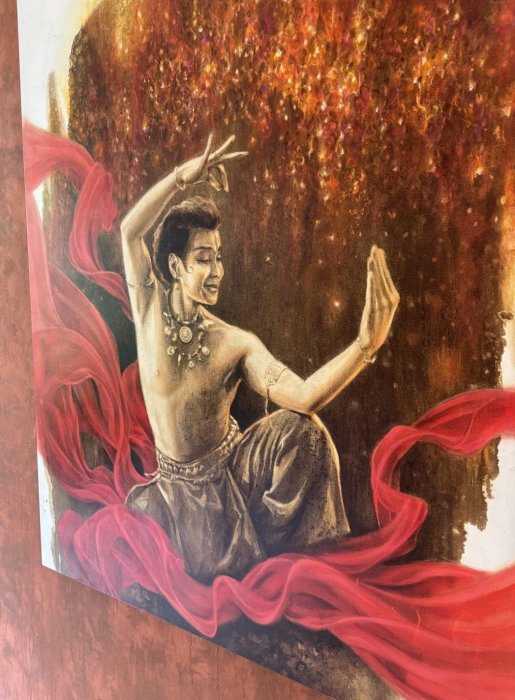 Ramli Ibrahim As is Malaysia's icon and India's darling Ramli Ibrahim. He is always present in the media glare and loving every minute of his continuing career as he approaches 75 years. In Pune, on a national tour of his Odissi inspired painting exhibition, LET A THOUSAND FLOWERS BLOOM, Ramli danced through the expansive exhibition with his familiar flowing energy and then proceeded to tell the admiring audience how his SUTRA HOUSE in Kuala Lumpur had become a magnet for painters and artistes to reimagine the classical form of Odissi as visual art. No Indian dancer has accumulated so many art works dedicated to a particular dance style and honouring the dance artiste like Ramli. I did feel a twinge of combined envy and admiration for my GURU BHAI's relentless pursuit of amplifying his favourite dance form towards international attention. Koti Koti pranams to these amazing stalwarts! PAST THEIR "PRIME" 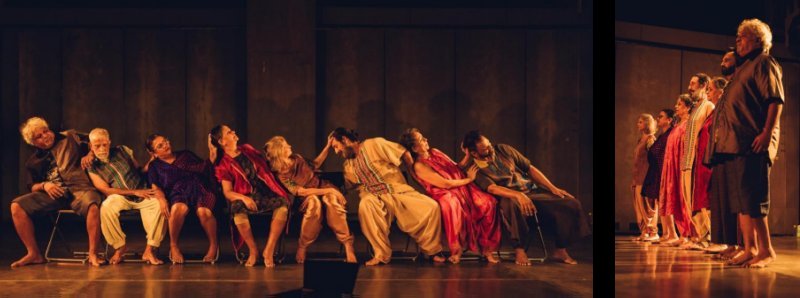 Prime (Photos: Mayank Sharma) A nostalgic and heart warming evening of contemporary performance was unveiled at the annual MARCH DANCE event in Chennai. Jointly supported by Goethe Institute and Alliance Francaise, choreographer Avantika Bahl assembled dancers, actors and fitness enthusiasts - all over age 60 - towards an evening length presentation titled PRIME. I smiled as 71-year-old Odissi senior Jhelum Paranjpe broke out into impromptu moves and also did a splendid deep seated CHOWKA. The entire ensemble revealed their inner lives and the many crests and dips in their journey. Clever devices of tossing balls, a boom box playing popular music and an overall acceptance of their maturity and life's unexpected curve balls were shared with remarkable equanimity. Avantika's own solo as the opening act was not necessary. She could have trusted her senior performers to carry the show. They brought authenticity and a powerful presence that only Time can reveal. INSULT AND BE AWARDED 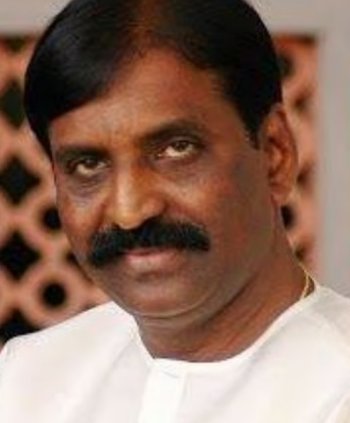 Vairamuthu 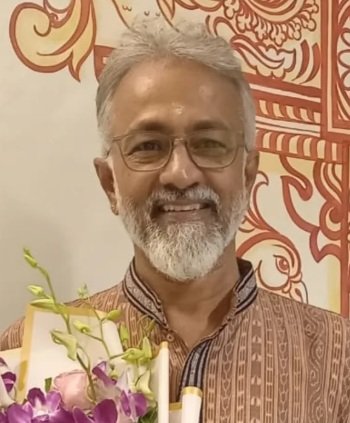 G Narendra The selection of a prominent ME TOO accused for the nation's highest literary award sent shockwaves through the cultural world. The JNANPITH AWARD to Tamil lyricist and poet Vairamuthu unleashed a storm of protest and commentary. Is public memory so short as to push the voices of several affected women under the carpet? Does anyone actually care? And what about the selection of Bharatanatyam soloist G Narendra? A very talented performer, it was not too long ago that many in the community were listening to his savage criticism of the Sabha system and myopic programming. Caustic and scathing in his opinions, G Narendra did not hold back his disdain of the system. And then what happens? He receives Sri Krishna Gana Sabha's stellar NRITYA CHOODAMANI title last year and is the recipient of the NRITYA KALANIDHI from the Madras Music Academy this year. 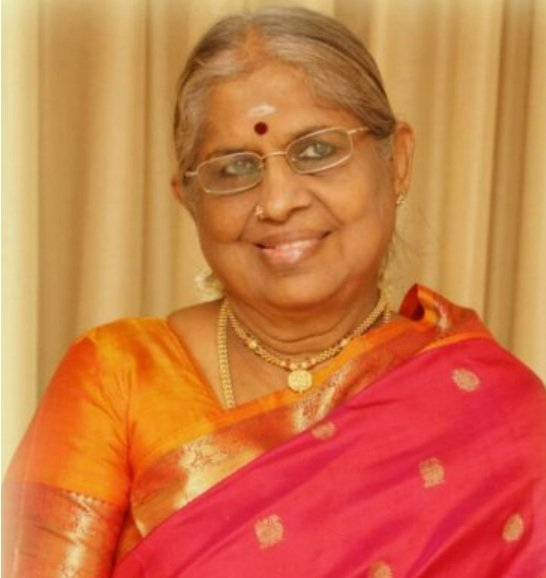 S Rajeshwari 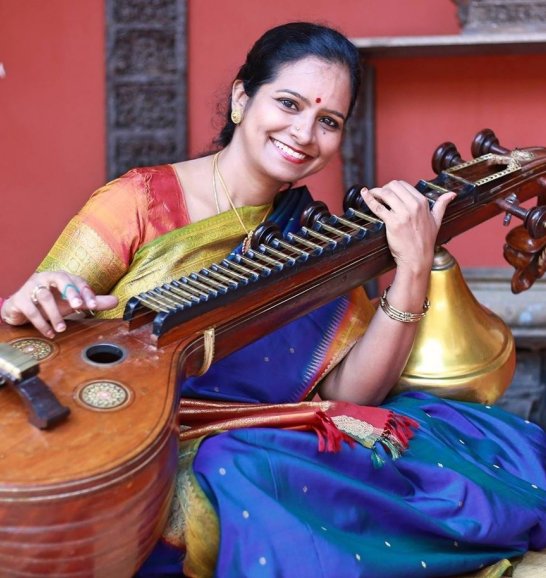 Jayanthi Kumaresh For me personally, the selection of Carnatic vocalist S Rajeshwari for the DANCE MUSICIAN AWARD was most satisfying. A student of Vidwan Madurai N Krishnan, Raji was the accompanist for my Bharatanatyam performances for several years before I left for the USA. Her voice was able to adapt to the many moods of any composition and she was a keen observer of the dancer on stage, never needing notes to prompt her. I applaud the Music Academy in expanding their list of awardees to include musicians for dance as well as senior gurus like A JANARDHANAN for the title NRITYA KALA ACHARYA. The luminous Jayanthi Kumaresh finally gets her long overdue honour of the SANGITA KALANIDHI. In its 100th year, these awardees will be honoured at a very special function on January 1, 2027. A SEED THAT STOOD ITS GROUND 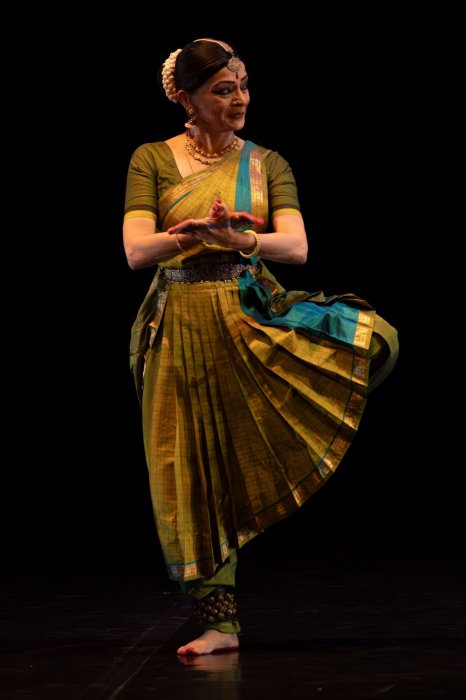 Malavika Sarukkai (Photo: Innee Singh) Always passionate about ecology, especially trees, Malavika Sarukkai delved into the idea of how nature can inform us about the interconnected nature of life and the fragility of our every breath. In BEEJA, the earth seed, I felt that Malavika, for the first time, had invited three other elements as equal co-performers. The stunning surround sound design (Sai Sravanam) that blended recorded and live music (Krithika Arvind and Nellai Balaji), and the evocative lighting by Niranjan Gokhale. Without these performative elements, BEEJA - the earth seed would have seemed over long and repetitive. The most effective moments were the 2 vignettes of urban sounds- rampant tree cutting, cell phones and the corrosive nature of greed. The lighting and the silhouette of the dancer in a hunched position begged to be extended and fleshed out. Malavika was grotesque, frightening and almost cannibalistic with the lighting aiding the mood. I salute this remarkable dance artiste for her continuing dedication, passionate involvement and continuing to walk the path of her convictions. Malavika Sarukkai's agility, softened NRITTA is a visual testament to how a dancer maintains her physical form as Time marches on relentlessly. Meeting some younger dancers after the show got me wondering about how these artistes - now aged between 35 and 45 - are going to negotiate the uphill task of management, marketing, maintaining a company and touring. Fees have not increased while costs have. How does one create a momentum when many venues are not willing to take a chance on a talented but yet unknown dance ensemble? How can they sustain their daily practice and keep the company members motivated when the economic structures are either wobbly or non-existent? These are valid questions and concerns for so many gurus who are unable to advise their talented students on a way forward. I have raised these issues repeatedly, but it seems to disappear in a dark hole. AND SO IT GOES The weather is warming up. The earth is blazing with bombs, bullets and hate. We have marked a full month of the war. We wake up to a daily dose of dire news, wondering what tomorrow will bring. This IS the moment to ask ourselves why we do what we do. Why we push ourselves through the chaos to make sense of the world through movement. Why is DANCE vital to our existence? Or is it? March 2026 marked a full 6 years since the horror of Covid, the endless lockdowns and a changed planet. I remember the flurry of activity among the dance world during that time. Creativity was peaking. Dancers emerged as videographers and content creators and I now realise how busy all of us were, dreaming up various ways of staying connected. What a bizarre and intense time that was! And here we are - 6 years later - in a world that is more confused and permanently distracted! The month ahead is full of dance events. WORLD DANCE DAY is coming up APRIL 29. Artistes are already in the USA singing and dancing to reduced audiences. Some artistes have postponed their USA tours citing the huge hike in visa fees. In spite of all the unrest, long airport lines and mutiny on the streets, the USA remains the main magnet for our performers. Ah well! Until we meet next month, Anita R Ratnam Here and there within India… anitaratnam.com Connect with us on Instagram and Facebook     Post your comments |
