
|
    |
|
|
|


Akram Khan: An intriguing dancer - Dr. Sunil Kothari e-mail:sunilkothari1933@gmail.com November 15, 2009 Akram Khan is known as one of the most intriguing dancers on the international dance scene today for metamorphosing Indian classical Kathak dance into contemporary dance language with his training in contemporary dance. The speed and the power with which he performs are amazing. He has a stage presence, performs energetically and leaves you spellbound. It is volcanic, mesmerizing and absolutely riveting. Trained by Birju Maharaj's disciple Pratap Pawar in London, Akram Khan is a Bangladeshi, born and brought up in London. He has great reverence for his guru and senior Kathak artists. But, as he says, when he found it suffocating to continue classical Kathak as it was performed, he ran away from his home, and started studying contemporary dance at De Montfort University in Leicester, Northern School of Contemporary Dance in Leeds and then at Anne Teresa De Keersmaeker's school in Brussels. With his colleague, friend and now producer Farooq Chaudhry who is also a trained modern dancer, they started working together. His rise as a performer and choreographer is meteoric. The rest is history. We met briefly after the opening night of his dance- theatre, duet 'In-I' with Academy award winner French actor Juliette Binoche at BAM, New York (https://narthaki.com/info/gtsk/gtsk12.html) and decided to meet at Mariotte Hotel, Brooklyn Bridge, one morning for an interview. Excerpts: Sunil Kothari: Congratulations, Akram. Now what next? Akram Khan: Thanks Sunil-ji. It has been a long time, since we met last at Sadler's Wells after Sacred Monsters in London two years ago. I am glad you saw 'In-I.' This is the last part of the trilogy .The first was with Sidi Larbi Cherkaoui in Zero Degrees…. SK: I missed it. But hope to catch up with it when it will be presented at some international festivals. I have seen Sidi Larbi Cherkaoui's work at Monaco. AK: Our next project is in Abu Dhabi. I am going to work with performers entirely from Arab world. From Egypt, Afghanistan, Iran, Turkey. Some of them will be dancers, some will be poets, musicians, actors, gymnasts. SK: Why Arab world? AK: The more we learn about other cultures, the more we learn about ourselves. As you know, in Kathak we tell stories. I am fascinated by storytelling, especially mythology and how different people from different backgrounds differ. I try to find a common denominator. 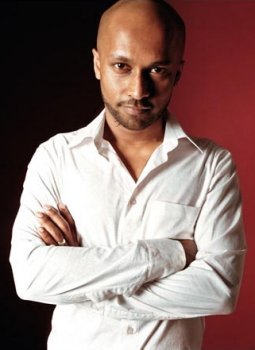 Akram Khan ; Photo: Rankin 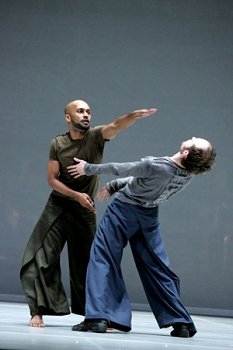 Zero Degrees ; Photo: Tristram Kenton SK: You worked with National Ballet of China for your choreographic work Bahok. That must have been quite difficult. Language problem and.. AK: The first two thirds of Bahok we made in the U.K. For the final stage we went to China, and it was of course challenging. Language, the whole rhythm and what have you! But the Chinese dancers were very open and willing to explore with me. SK: I am told you asked dancers to tell their stories? AK: Yes, when I told them my story during the rehearsals, they were shocked. But then they loosened up and it worked. SK: How did you decide to do Bahok? AK: I was in Japan. Once we were stuck in an elevator. A Japanese girl, a South African and I. After some time we all started talking even though we did not know each other. I thought it is in times of crisis we come together, whether we know a language or have common culture and we start communicating. The problems were there with Chinese ballet which in fact is governed by the Chinese government. But we managed. Now it is touring internationally. No, I am not dancing in it. SK: I learn from Farooq that you have now three companies. AK: Yes, Khan Chaudhry Productions, which is high profile, like these collaborations with Sylvie and Juliette, sculptor Anish Kapoor, and others. The other is Akram Khan Company which does ensemble work like Kaash, Bahok. It is like my testing ground. The third is Akram Khan Charity Company. We earn enough. My needs are limited. With the amount of money we are making, we decided to assist up and coming young talented artists, film directors, writers, by giving bursaries, grants. Among them young dancers like Akash, Yuko, Gregory, a South African to name a few. We have extended assistance to them under this scheme. 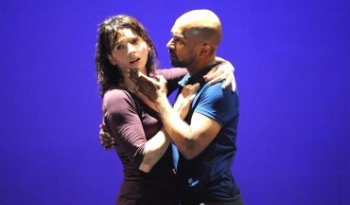 In-I ; Photo: Tristram Kenton 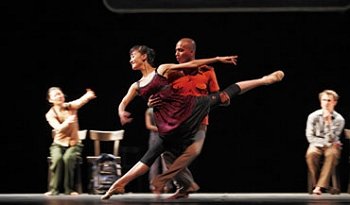 Bahok ; Photo: Liu Yang SK: As Associate Artist at Sadler's Wells, you are mounting two weeks of Indian Dance and Music Festival in November this year. AK: I find the young generation is losing fast the influence of our classical dance and music traditions. If we present artists from young generation at their peak, it would certainly make an impact. From India, Aditi Mangaldas (Kathak), Priyadarsini Govind (Bharatanatyam); from Paris Shanatala Shivalingappa (Kuchipudi); from Leicester Akash and the Japanese dancer Yuko - Kumudini Lakhia has choreographed a work in Kathak for them; Carnatic musician Mandolin U Srinivas; in theatre Neelam Mansingh Chowdhry's play Kitchen Katha, my own solo in classical Kathak, followed by my contemporary work Gnosis, also Nitin Sawhney with whom I have worked for music, few excerpts from Zero Degrees and other works and in conversation with him and so on. If this succeeds, we shall mount such festivals every two years. SK: After you performed at Anita Ratnam and Ranvir Shah's The Other Festival in Chennai, nearly ten years ago, you have not performed in India… AK: There are some negotiations going on. The organizers of Jaipur Literary Fest are interested in bringing us to Jaipur, but we have to work out the time frame, from our busy schedule. But I would love to perform in India any day. SK: Do you practice Kathak? AK: Every day for a minimum of one and half hours. It is my religion. I love Kathak. I am very fond of Birju Maharaj and Kumudini Lakhia. I adored Durgalal-ji who passed away. Ah, what a dancer he was! I often see his video and marvel at his artistry. I am concerned about the future of classical dances of India. What a great legacy it is. SK: How do you feel the young generation is responding to classical dances? AK: The young do not know its value. Classical ballet is also osing its footing, but ballet has elite class with money supporting it and it survives. Classical Indian dance forms need that sort of support and I am confident that those who value and understand their responsibilities would do their level best to maintain its high standards and extend all support. By performances, and in whatever way I can, I shall always support it. We talk about his various future plans, collaborations, making a film with a young Bengali director, his plans to direct an Opera, and choreographing for French ballet. We plan to meet in London. Akram Khan with all the adulation he has been receiving round the world has remained very humble. That is an endearing quality. I inquire about his parents. He says with deep love: “They live in the next street in Wimbledon, where I live. I am conservative. I shall look after them. I am not like present British young generation to leave them in their old age somewhere in an old age home. I will always serve them.” I am touched by his feelings. We embrace each other and part. Dr. Sunil Kothari, dance historian, scholar, author, is a renowned dance critic, having written for The Times of India group of publications for more than 40 years. He is a regular contributor to Dance Magazine, New York. Dr. Kothari is a globetrotter, attending several national, international dance conferences and dance festivals. |
