
|     |
|
| |

 Maximum India An unprecedented celebration of Indian arts and culture in Washington, D.C - Dr. Sunil Kothari e-mail: sunilkothari1933@gmail.com Photos courtesy: Maximum India Festival March 31, 2011 We were awaiting with bated breath, the opening of the Maximum India Festival (March 1 - 20, 2011) at the Kennedy Center for the Performing Arts on the evening of March 1 at the Terrace of the Center which was turned into a traditional shamiana, with a canopy of colourful Indian fabrics. We went by elevator from the Hall of Nations where were displayed fabulous saris, in consultation with our 'one and only' Martand Singh (Mapu Singh) to the terrace and through passages lit up imaginatively with subtle lighting, crossing floor and were ushered into a large hall with several tables. On either side of the hall were two stages and one in the center.  Kennedy Center My host, the renowned Kuchipudi exponent Nilimma Devi and I were to sit on Table number 1 near the table reserved for Her Excellency, Indian Ambassador Smt. Meera Shankar, Director General of Indian Council for Cultural Relations (ICCR) Mr. Suresh Goel, and their counterparts, the dignitaries of US government and office bearers of the Kennedy Center, the President of the Kennedy Center Mr. Michael M Kaiser. Prior to that, we were led to the inauguration of the exhibitions to the exhibition halls and the galleries where, as usual cocktails were served. The donors, the 'festival leaders,' the foundations, the platinum, gold, silver and bronze category of donors, the various agencies and the sponsors were there in a large number, dressed in their finest clothes, American women paying tributes to India clad in saris, Indian women with glittering diamonds and exquisite fashionable designer's garments, greeting their friends, in a cheerful atmosphere set the mood and tone for celebrations. Jatin Das was seen distributing some excellent handmade fans from Orissa as gifts to dignitaries and friends, as selected fans from his vast collection were on display.  Alicia Adams Yes, of course at the Kennedy Center! But those of us who participated in and grew up with the Festivals of India in UK, USA, France, Russia (former USSR), Germany and other countries had some idea of the 'dimensions' and also the 'limitations' of the 'Maximum India.' I also knew that since it was organized as a part of the International Programming agenda of the Kennedy Center, it was bound to have a character of 'their version' of India. The curator Alicia Adams, Vice President of the International Programming of the Kennedy Center, is literally the face of the Kennedy Centre. She had the privilege and opportunity during curatorial journeys to visit 60 countries around the world to see artistic works, experience traditions, hear stories, explore culture and geography, meet future collaborators and make friends.She has an enviable track record of having curated over the last decade and half, memorable international festivals, including 'African Odyssey', representing 44 out of 54 countries of the continent which was a four year initiative. 'Americartes' celebrated artists from Brazil, Argentina, Mexico, Peru and practically every country in Latin America; for the 'Festival of China' she brought 900 artists including Guo Qlang's explosion event to the Potomac River and the Peking Opera to the Center's main stage; 'Japan! Culture + Hyper Culture' explored the exquisite work of 600 of Japan's finest artists, architects - even robots! In 2009 she looked to the artists of Arab countries. The 'Arabesque' festival had on display the arts of 22 Arab countries! In all these endeavours, Alicia received help from her colleague and co-curator Gilda Almeida and a dedicated team of workers. Therefore it would be inappropriate to fault her and the Kennedy Center for certain omissions, as India presents a very complicated, complex picture to any outsider - even amongst Indians we have such diversity and we indeed are argumentative Indians, find it difficult to agree - but we are also glad 'we agree to disagree.' Stuffing India's diverse culture into three weeks is of course an impossibility, but the Kennedy Center has taken its best shot with the ambitious Maximum India festival. They have managed for Americans and Indian Diaspora to explore a 'plethora' of all things Indian, including film screenings, music and theatre performances, author readings, and exhibitions of modern art and traditional crafts. With a staggering variety - rock band music, bhangra, Bollywood performers, visual installations, paintings, jewelry exhibition, display of saris, food festival, Indian market place and brisk sale of Indian goods, videos, books, and what have you. Never has the Kennedy Center seen such milling crowds and from day to day the number of visitors kept increasing, including, not only Indian Diaspora crowds but also Americans, and Diasporas from other countries, Chinese, Japanese, Koreans, Puerto Ricans, Europeans, multi-cultural crowds... and of course Indians have taken over - Gujjus, Punjs, Kannadigas, Maharashtrians, Oriyas, Bongs, Malayalis, Tamilians, Telugus and in particular the young generation of funk, rock band music lovers - they seemed to have a field day.  Ratan Thiyam  Nati Binodini   Naseeruddin Shah  Shabana Azmi Neither Alicia Adams nor Gilda Almeida, the two women curators had expected such unprecedented success, with only 'a slice of India'!! Perhaps (this is my guess) they had not taken into account that during the last three decades, we as Indian Diaspora have 'out numbered' other Diaspora communities in America and we have money to buy tickets and people did buy online months in advance, so when the box office was full and there were capacity 'house full' auditoria, one could see that Kennedy Center had won in achieving their aim and with the help from Indian Embassy and ICCR, they had indeed pulled off a 'hat trick.'  Malavika Sarukkai  Kathakali  Shantala Shivalingappa I do not know what was the reason that all the eight Indian groups sponsored by ICCR were a part of Millennium Stage presentation in the evenings, including Kathakali troupe form Kerala, at 6pm FREE to public, as per the policy of KC to give round the year for 365 days free shows, and dance, music, folk music, group choreographic works of dance like Tanushree Shankar's dance, Sharmila Biswas's group work in Odissi, the ace violin maestro L Subramanyam and his son (prodigy) Ambi, rock bands, a few films screenings, author readings, literary forums were all 'FREE' and it was indeed a master stroke to have Indian food festival at the Terrace restaurant, always full, with mostly Indians and also Americans, savoring the Indian dishes, what Taj Hotels managed to offer. Quite pricey and some Indians complained but nonetheless paid the price and enjoyed eating with family members, some bringing home made dishes and opening boxes and eating (ignoring all the rules of not to bring their own food to terrace restaurant) - they could not care less, it turned out for them to be a picnic holiday, celebrating Maximum India having an outing!  On one day, I saw crowds running to occupy the best seats in that cavernous Eisenhower auditorium, pushing the elderly lady ushers, who wisely made way for them to run and occupy seats, Indians yelling and shouting, inviting their friends for whom they had reserved the seats, taking food, (even when not allowed, inside the auditorium), spilling on carpets, throwing foils of chocolates and what have you - embarrassing Indians who indeed seeing that, cursed those who damaged the image of Indians! Lo and behold! We as Indians had made up our minds to turn 'spic and span' theatre into a mela, what with children running all over in the huge auditorium. Even the author readings during literary forums were chockablock with mixed crowds listening to the likes of Ashish Nandy and Gayatri Chakravorty Spivak on Tagore and Gandhi and their concepts of nationalism; Ganesh Devy who has been working for decades on the issue of vast majority of Indian literature inaccessible to English readers. His Bhasha institution publishes stories of Adivasis from Gujarat, preserving the oral tradition and a Dalit writer Faustina Bana's stories drawing our attention to the issues of inequality, caste, gender, class. It was moderated by Ritu Menon (of 'Kali for Women' fame) who conceptualized these excellent literary panels; the lively panel discussion about three cities Mumbai, Kolkata and Delhi, with Suketu Mehta, author of 'Maximum City: Bombay Lost and Found'(the 'Maximum India' title of the festival is taken from his book) holding the fort, at the end of the session, for signing ceremony for the books when the authors were in the foyer of Family Theatre, the Gujjus (Gujarati crowd ) surrounded Suketu Mehta (he is a Gujarati), and I was surprised to see being a Gujju myself, so many Gujjus converging in Washington DC to listen to him. Among them were two eminent Gujarati Diaspora poets Panna Naik and Natwar Gandhi and my student from Sydenham College in Mumbai, a well established journalist, Salil Tripathi winging his way from London to attend the literary forum!! Maximum India indeed aroused such emotions that Gujjus, Punjs, Kannadigas, Bongs, Mylapore maamis in their colourful Kanjeevaram saris, 'tam bam' Tamilians and Telugus, met each other with such emotion and joy! Ah 'Jai Ho!' I would have loved to sing aloud, the song from 'Slumdog Millionaire.' In the third week of the festival, I was dying 'to shake a leg' listening to Bhangra Boy Panjabi MC who has moved dance floors around the world with his trademark mix of hip-hop and Bhangra beats, but it's not every day he brings the noise to a national cultural center like the Kennedy Center. Since beginning his career on the decks 20 years ago, the British MC, DJ, and producer has expanded into Bollywood film scores and reached American audiences with his work on Jay-Z's remix of "Beware of the Boys." That breakout track blended the familiar beat of the 'Knight Rider' theme song with Bhangra, native to rural Punjab that has crossed over into mainstream culture in recent years. He says, "Punjabi music is the hip-hop of India." This amazing musician born Rajinder Singh Rai in Coventry, England, where he still lives is "not a fan of the hustle of the city," he dreads going to London! Also New York based DJ Rekha's Bhangra Dance Party run by London born DJ, curator, producer, and activist Rekha has paved the way for Bhangra music in North America. Her monthly Basement Bhangra event has been running into New York for more than a decade. She is regarded as a pioneer in the South Asian music community and is also an adjunct faculty member of New York University where she has taught courses in South Asian pop culture. Her free Bhangra class was a runaway success. When we were returning from the Eisenhower Theater after seeing Sharmila Biswas's breathtaking group Odissi presentation, we heard an American couple, saying aloud, "This is not fair - this festival should be for three months and the Kennedy Center must bring this once again." We agree with the American couple. 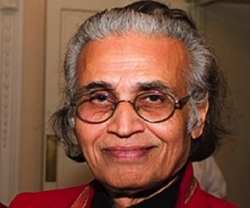 Dr. Sunil Kothari, dance historian, scholar, author, is a renowned dance critic, having written for The Times of India group of publications for more than 40 years. He is a regular contributor to Dance Magazine, New York. Dr. Kothari is a globetrotter, attending several national, international dance conferences and dance festivals. He has to his credit more than 14 definitive works on Indian classical dance forms. Kothari was a Fulbright Professor and has taught at the Dance Department, New York University; has lectured at several Universities in USA, UK, France, Australia, Indonesia and Japan. He has been Vice President of World Dance Alliance Asia Pacific (2000-2008) and is Vice President of World Dance Alliance Asia Pacific India chapter, based in New Delhi. A regular contributor to narthaki.com, Dr Kothari is honored by the President of India with the civil honor of Padma Shri and Sangeet Natak Akademi award. He recently received the Senior Critic award from Dance Critics Association, NYC. |
